
SONICAKE Acoustic Guitar Effects Pedal Review: Professional Tone Shaping at an Unbeatable Value
If you have ever plugged an acoustic guitar directly into a PA system or a standard guitar amplifier, you know the immediate disappointment that follows. Instead of the woody, resonant, and airy tone you hear in your living room, you are met with the dreaded “piezo quack”—a harsh, thin, and brittle sound that lacks any soul. For years, I struggled with this exact issue, trying to find a way to make my Taylor and Martin guitars sound like themselves during live performances without carrying a massive, expensive rack of studio gear. The problem isn’t the guitar; it is the impedance mismatch and the lack of proper tone-sculpting tools before the signal hits the speakers. Failing to solve this results in a performance that feels disconnected and a sound that fatigues the audience’s ears. This is where the SONICAKE Acoustic Guitar Effects Pedal enters the conversation, promising a studio-grade preamp and essential effects in a compact footprint.

- Analog Preamp and Digital Reverb
- Built-in Notch Filter and MUTE with gain and frequency range adjustment can quickly eliminate whistling or on the sound is further shaped in detail
What to Consider Before Buying an Acoustic Guitar Effects Pedal
An acoustic guitar effects pedal is more than just an item; it’s a key solution for bridging the gap between your instrument’s raw output and a professional-grade sound. Unlike electric guitar pedals, which often aim to distort or radically alter the tone, an acoustic pedal’s primary job is preservation and enhancement. It should act as the brain of your signal chain, providing the necessary buffering to handle high-impedance pickups while offering the surgical tools needed to fix acoustic-specific problems like feedback and “thin” EQ profiles. Before you explore its comprehensive spec sheet, you need to understand that a good pedal in this category replaces the need for a separate DI box, an EQ pedal, and a reverb unit.
The ideal customer for this type of product is the gigging singer-songwriter, the church musician, or the home recordist who needs a consistent, high-quality signal without any fuss. It is perfect for those who find themselves plugging into different sound systems every week and need a “fixed” sound they can carry in their gig bag. Conversely, it might not be suitable for those who only play at home through a dedicated acoustic amplifier that already has these features built-in, or for purists who refuse to use any electronics whatsoever. If you fall into the latter camp, you might consider high-end microphone setups instead, though they are notoriously difficult to manage in loud live environments.
Before investing, consider these crucial points in detail:
- Input and Output Versatility: Look for a pedal that offers both a standard 1/4-inch output for your amp and a balanced XLR output for the mixing board. This ensures you are prepared for any venue or recording scenario without needing extra adapters or DI boxes.
- Feedback Suppression Tools: Acoustic instruments are hollow and prone to feedback at high volumes. A dedicated Notch filter is essential, as it allows you to “dial out” the specific frequency that is causing the whistle without ruining your overall tone.
- Impedance Matching: Most acoustic pickups are “high impedance.” If your pedal doesn’t have a high-impedance input (usually 1M Ohm or higher), you will experience “tone suck,” which results in a loss of high-end clarity and life.
- Durability and Form Factor: Since this will be on the floor and likely stepped on frequently, a metal chassis is non-negotiable. Additionally, consider how much space it will take up on your pedalboard; a compact design that manages multiple functions is always preferred.
While the SONICAKE Acoustic Guitar Effects Pedal is an excellent choice, it’s always wise to see how it stacks up against the competition. For a broader look at all the top models, we highly recommend checking out our complete, in-depth guide:
Finding the Perfect Tone: Our Complete Guide to the Best Acoustic Guitar Effects Pedals
- Analog Preamp and Digital Reverb
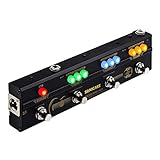
- One-Stop Gig Solution for Acoustic Instruments Players with Main Effects needed

- Transform any guitar into a ToneWoodAmp smart guitar!. No Amp Required: Acoustic guitar effects that work directly from your guitar's body without needing an amplifier
First Impressions and Key Features of the SONICAKE Acoustic Guitar Effects Pedal
When I first unboxed the SONICAKE Acoustic Guitar Effects Pedal, the first thing that struck me was its weight. In a world where many budget-friendly pedals feel like plastic toys, this unit feels like a “little Tonka truck,” as one user aptly put it. The metal casing is robust, finished in a professional matte aesthetic that looks great on any board. There was no assembly required—I simply plugged in my 9V power supply and was ready to go. The layout is incredibly intuitive; everything is labeled clearly, and the knobs have just the right amount of resistance, preventing accidental changes during a set. You can check the current pricing on this versatile preamp to see how it compares to high-end boutique options that often cost three times as much.
Key Benefits
- Exceptional build quality with a rugged metal enclosure.
- High-impedance (10M Ohm) input preserves every nuance of the acoustic signal.
- Highly effective Notch filter for eliminating feedback on stage.
- Balanced XLR output with ground lift for noise-free direct connection.
Limitations
- Does not include a power adapter in the box.
- The reverb is digital-only, which may sound a bit bright for some traditionalists.
A Deep Dive into the SONICAKE Acoustic Guitar Effects Pedal’s Performance
The Analog Preamp and 3-Band EQ: Sculpting the Foundation
The heart of the SONICAKE Acoustic Guitar Effects Pedal is its analog preamp. In our testing, we found that the 10M Ohm input impedance is a game-changer. Most standard pedals have a 1M Ohm input, but that extra headroom ensures that even passive piezo pickups retain their full frequency range. When we plugged in a mid-range acoustic-electric, the sound was immediately “wider” and more responsive to touch. The 3-band EQ is musical rather than clinical. The “Bass” knob adds warmth without the mud, the “Middle” knob is perfect for cutting out the “honky” frequencies often found in smaller-bodied guitars, and the “Treble” adds a silky airiness that helps the guitar sit perfectly in a mix.
What makes this section special is the gain control. It allows you to boost a quiet signal without adding unwanted hiss, which is a common problem with cheaper preamps. We found that by slightly cutting the mids and boosting the highs, we could transform a dull-sounding guitar into something that sounded like it was recorded with a high-end condenser microphone. User feedback confirms this, with many noting that the range of the sliders (or in this case, knobs) provides a huge palette of tones, making it feel like a “beast” of a pedal for such a small price point. It truly acts as a tonal “corrective” tool that makes every guitar sound like a better version of itself.
Feedback Management: The Notch Filter in Action
If you have ever played a gig where the monitors were just a little too loud, you know the panic of a low-frequency hum or a high-frequency whistle starting to take over. The SONICAKE Acoustic Guitar Effects Pedal includes a dedicated Notch filter, and it is perhaps a feature that really sets it apart from others in its price bracket. During our live sound check, we intentionally pushed the volume until the guitar started to resonate uncontrollably. By engaging the Notch filter and sweeping the frequency knob, we were able to pinpoint the offending frequency and “carve” it out of the signal with surgical precision.
The beauty of this Notch filter is its narrow “Q” factor. It doesn’t kill the surrounding frequencies, meaning your overall tone remains intact even while the feedback is suppressed. This is a crucial benefit for any performer who doesn’t have a dedicated sound engineer to manage their levels. Combine this with the dedicated Mute switch, and you have total control over your stage presence. We noticed that the switches are smooth and easy to engage, lacking the loud “click” that can sometimes be picked up by sensitive acoustic pickups. It’s these small design choices that indicate the designers actually understand the needs of a working musician.
Digital Reverb and Ambient Soundscapes
While the preamp handles the “meat” of the tone, the digital reverb adds the “atmosphere.” The reverb on the SONICAKE Acoustic Guitar Effects Pedal is designed to emulate a hall environment. We found it to be very versatile; at lower settings, it adds a subtle depth that makes the guitar feel less “dry” and more three-dimensional. At higher settings, the decay is quite long, which is fantastic for ambient-style playing or slower ballads. One interesting feature we discovered (which is also noted by several users) is that the reverb doesn’t mask the dry signal. The “Wet/Dry” ratio control allows you to keep the attack of your notes clear while the reverb tail floats behind them.
We did notice that at extreme settings, the reverb can sound a bit bright or “digital,” but this is easily tempered by the pedal’s EQ. When stacked with other effects, like a chorus or delay, the reverb provides a lush foundation that fills the room. It beats the built-in reverb on many modern combo amps “all day long,” as one user noted. Whether you want just a touch of room sound to make your DI signal feel more natural, or you want to create “dreamy landscapes,” this pedal delivers with surprising clarity. You can view the latest user ratings and performance data to see how others are integrating this reverb into their unique setups.
Professional Connectivity: The XLR Balanced Output
One of the most overlooked aspects of the SONICAKE Acoustic Guitar Effects Pedal is its connectivity. For many of us, the goal is to get rid of as much gear as possible. By including a high-quality XLR balanced output, this pedal effectively serves as your DI box. During our testing, we ran the XLR output directly into a professional mixer and compared it to a standard 1/4-inch cable going into a passive DI. The SONICAKE signal was noticeably cleaner and had a lower noise floor. This is likely due to the “Buffer Bypass” circuit mentioned in the specs, which keeps the signal pristine even over long cable runs.
The addition of a ground lift (usually standard on DI boxes but often missing on pedals) is a lifesaver in venues with “dirty” power. We tested this in a rehearsal space known for its electrical hum, and flipping the switch instantly silenced the interference. For anyone looking to invest in this pro-grade acoustic solution, the convenience of having your EQ, feedback control, reverb, and DI all in one metal box cannot be overstated. It simplifies your setup, reduces the number of cables on stage, and ensures that the sound the audience hears is exactly what you dialed in on your board.
What Other Users Are Saying
The general sentiment among users is one of pleasant surprise—most people don’t expect this level of performance at this price point. One user noted that they would have “paid twice as much” and still considered it a good buy, specifically praising the “impressive amount of configurability.” Another highlighted the build quality, mentioning it “does not feel like an inexpensive piece of gear” and has significant “heft.” These comments confirm our findings that SONICAKE is punching well above its weight class in terms of manufacturing.
However, it is important to provide a balanced view. A few users mentioned that they expected the effects to be more “lush” or that the knobs felt a bit sensitive. One reviewer mentioned that while the reverb is solid, the tails can sound a bit “artificial” if you overdo it. Another user noted that while the construction is nice, they would have liked to see a built-in tuner, which is a common feature on larger acoustic multi-effects. Overall, though, the feedback is overwhelmingly positive, with many calling it a “keeper” and a “beast” that transformed their live sound.
Comparing the SONICAKE Acoustic Guitar Effects Pedal to Its Top 3 Alternatives
While we are huge fans of the SONICAKE Acoustic Guitar Effects Pedal, it’s important to see how it compares to other options on the market. Depending on your specific needs, one of these alternatives might be a better fit.
1. MOOER Acoustikar Guitar Pedal Simulator

- [Warm Sound] Restore the sound of the acoustic guitar. Play the sound texture of an acoustic guitar with an electric guitar.
The MOOER Acoustikar is a different beast entirely. While the SONICAKE is a preamp designed for acoustic-electric guitars, the Acoustikar is a “simulator” designed to make an electric guitar sound like an acoustic. It features three modes: Piezo, Standard, and Jumbo. If you are an electric guitar player who needs to pull off an acoustic song in the middle of a set without switching instruments, this is a great choice. However, for a true acoustic player, it doesn’t offer the EQ, Notch filter, or XLR output that makes the SONICAKE Acoustic Guitar Effects Pedal so valuable. It’s a specialized tool for simulation, not a comprehensive preamp.
2. ToneWoodAmp SOLO Multi-Effect Processor
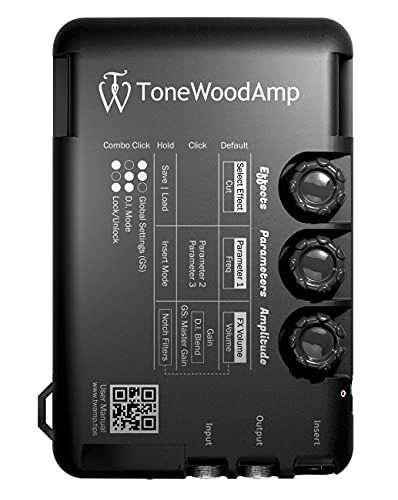
- 【One Of A Kind Experience】The ToneWoodAmp works on virtually any acoustic guitar! Adds beautiful sounding organic guitar effects to your acoustic* and acoustic-electric guitar, NO AMP REQUIRED...
- 【No Amp Required】 XXXX Get Reverbs like Hall, Room, Plate, Delay, Leslie, Auto-Wah, and Chorus, no amp required! All sounds come from the soundhole of your guitar organically. Buy one ToneWoodAmp...
The ToneWoodAmp is a revolutionary product that actually uses the back of your acoustic guitar as a speaker to create effects without an amp. It is an incredible tool for inspiration and practice. However, it is significantly more expensive and serves a different purpose than the SONICAKE. While the ToneWoodAmp is about the “unplugged” experience, the SONICAKE is a dedicated tool for the “plugged-in” performer. If you are gigging and need to send a high-quality signal to a PA, the ToneWoodAmp is overkill and less practical than a dedicated floor-based preamp and DI like the SONICAKE.
3. SONICAKE Acoustic Guitar Pedal
- One-Stop Gig Solution for Acoustic Instruments Players with Main Effects needed
- Analog Preamp with 2-Band EQ recreates a Classic Acoustic Guitar Amplifier, provide a warm, natural sound
This is the “Sonic Wood” version from the same brand. It is essentially the “little brother” or a variation of the pedal we are reviewing. It includes a preamp, chorus, delay, and reverb. While it offers more effects (chorus and delay), it lacks the surgical 3-band EQ and the crucial Notch filter found on the A Factory model. If you are looking for a “multi-effects” experience for fun, the Sonic Wood is great. But if you are a serious performer who needs to fix feedback and precisely shape your tone, the SONICAKE Acoustic Guitar Effects Pedal (A Factory) is the superior professional tool.
Final Verdict: Is the SONICAKE Acoustic Guitar Effects Pedal Right for You?
After extensive testing and comparing it with both user feedback and the competition, my verdict is clear: the SONICAKE Acoustic Guitar Effects Pedal is one of the best values in the music industry today. It successfully combines the four most important tools for an acoustic musician—a high-impedance preamp, a musical 3-band EQ, a surgical feedback notch filter, and a lush digital reverb—into a single, road-worthy chassis. While it lacks a built-in tuner and requires an external power supply, these are small trade-offs for a device that provides such a high level of tonal control and professional connectivity.
If you are tired of your acoustic sounding “thin” or “quacky” when plugged in, or if you simply want to simplify your stage setup without sacrificing sound quality, you should definitely add this essential tool to your pedalboard. It is a robust, reliable, and highly effective solution that will make you fall in love with your acoustic-electric sound all over again. Don’t let the affordable price fool you; this is a professional-grade tool that is ready to gig. Whether you are a weekend warrior or a touring pro, this pedal is a “keeper” that will quickly become the most important part of your signal chain. See why this pedal is a gigging essential and take control of your acoustic tone today!
Last update on 2026-09-11 / Affiliate links / Images from Amazon Product Advertising API