
LingTing Acoustic Guitar Simulator Review: Is This Compact Pedal the Ultimate Gig-Bag Essential for Electric Players?
We have all been there. You are halfway through a high-energy set, the crowd is leaning in, and the next song on the setlist starts with a delicate, woody acoustic intro before exploding into a full-band electric anthem. In a perfect world, you would have a roadie handing you a vintage Martin, but in the real world of club dates and cramped stages, you are fumbling with a guitar stand, unplugging cables, and praying your acoustic stayed in tune under the stage lights. It is a logistical headache that kills the momentum of a performance. This is exactly why a high-quality simulator is not just a luxury; it is a necessity for the working musician.
The LingTing Acoustic Guitar Simulator enters this space with a bold promise: to transform your electric guitar’s signal into a convincing acoustic tone with the click of a button. When we first encountered this pedal, we were skeptical. Can a box the size of a candy bar really replicate the complex harmonics of a hollow wooden body? Failing to find a solution to this problem often means carrying extra heavy gear or settling for a “clean” electric tone that sounds thin and out of place. We decided to put this unit through its paces to see if it truly delivers that “nature and smooth” sound promised by the manufacturer, or if it is just another digital approximation that falls flat.
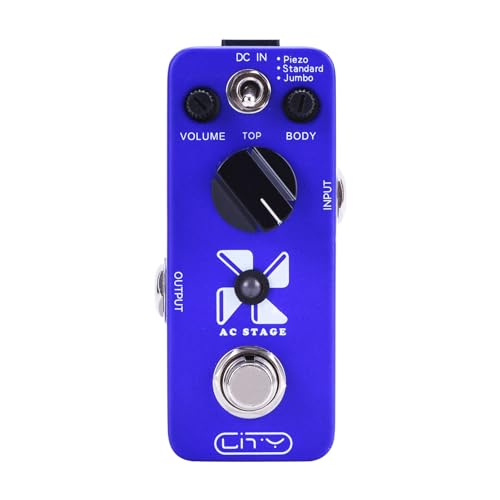
- [Warm Sound] Restore the sound of the acoustic guitar. Play the sound texture of an acoustic guitar with an electric guitar.
- [3 Modes] 3 Working Modes: Piezo/Standard/Jumbo. Owning an Acoustikar is equivalent to owning multiple acoustic guitars.
What to Consider Before Investing in Acoustic Guitar Effects
An Acoustic Guitar Effects pedal is more than just an item; it’s a key solution for guitarists who need versatility without the physical burden of multiple instruments. The primary problem these pedals solve is “tonal range.” Most electric guitars are designed to interact with magnetic pickups and high-gain amps, which inherently lack the percussive “thump” and high-end shimmer of a bronze-stringed acoustic. By using specialized filtering and resonance modeling, these effects bridge the gap, allowing you to stay on your comfortable electric neck while delivering the sonic texture the song requires.
The ideal customer for this type of product is the gigging cover band guitarist, the session player, or the home recordist who needs a quick acoustic track without setting up microphones. It is a perfect fit for someone facing limited stage space or those who travel light. On the other hand, it might not be suitable for the acoustic purist or the solo folk artist who relies on the physical feedback and nuances of a real acoustic body. If you are recording a solo acoustic album, no pedal will replace a high-end dreadnought, but for 90% of live applications, the convenience of the LingTing Acoustic Guitar Simulator is hard to beat.
Before investing, consider these crucial points in detail:
- Dimensions & Space: In the world of modern pedalboards, real estate is at a premium. We look for “mini” formats that provide maximum utility without forcing us to remove our favorite overdrive. The LingTing Acoustic Guitar Simulator is designed with this in mind, utilizing a micro-housing that fits into the tightest gaps.
- Circuitry & Signal Integrity: Does the pedal suck the life out of your tone when it’s turned off? We always prioritize pedals with “True Bypass” switching. This ensures that when the simulator is inactive, your electric guitar’s natural signal passes through completely unaltered, maintaining your core tone.
- Tonal Versatility (Modes): Not all acoustics sound the same. A small-body parlor guitar has a mid-forward “honk,” while a Jumbo has a deep, resonant bass. Before buying, check if the pedal offers multiple modes to simulate these different body styles, which allows you to match the “acoustic” sound to the genre you are playing.
- Build Quality & Power Requirements: Since these pedals live on the floor and get stepped on repeatedly, a full metal shell is a must. Additionally, check the current draw; a low mA requirement (like the 17mA found here) means it won’t strain your power supply, though you must remember that most mini pedals do not have room for a 9V battery.
Choosing the right simulator can redefine your live performance, making your transitions seamless and your sound professional. However, the market is crowded with options ranging from budget-friendly clones to high-end processors. To help you navigate this landscape, we have compared the LingTing Acoustic Guitar Simulator against the very best in the industry.
While the LingTing Acoustic Guitar Simulator is an excellent choice, it’s always wise to see how it stacks up against the competition. For a broader look at all the top models, we highly recommend checking out our complete, in-depth guide:

- Transform any guitar into a ToneWoodAmp smart guitar! No Amp Required: Acoustic guitar effects that work directly from your guitar's body without needing an amplifier

- Analog Preamp and Digital Reverb
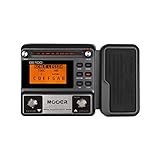
- 80 preset patches and 80 user patches, enough for creating your sound library. You can save any preferred tones by simply pressing down the SAVE button.
First Impressions and Key Features of the LingTing Acoustic Guitar Simulator
Upon unboxing the LingTing Acoustic Guitar Simulator, the first thing that strikes you is the weight. Despite its diminutive size, the full metal shell feels incredibly robust. It doesn’t feel like a cheap plastic toy; it feels like a professional tool. We found the finish to be clean, and the knobs have a satisfying resistance to them, which is vital for making precise adjustments on a dark stage. It is clear that LingTing wanted to provide a premium feel at a budget-friendly price point. Before you even plug it in, you can see its full feature set and user reviews that highlight just how compact this unit really is.
The layout is intuitive: a large central footswitch, a three-way toggle for mode selection (Piezo, Standard, Jumbo), and three control knobs (Level, Body, Top). This “set it and forget it” design is exactly what we look for. During our initial setup, we noticed that the input and output jacks are slightly offset, which helps with cable management on tight boards. While it doesn’t come with a power cord—a common trend with modern pedals—it runs on any standard 9V center-negative supply. We recommend you check the latest price and availability to ensure you grab a power supply if you don’t already have one in your kit.
Key Benefits
- Incredibly compact footprint that saves vital pedalboard space.
- Three distinct modes (Piezo, Standard, Jumbo) offer genuine tonal variety.
- True Bypass switching ensures zero tone-sucking when the pedal is off.
- The “Body” and “Top” knobs allow for deep customization of the simulated resonance.
Limitations
- No 9V battery option due to the micro-size (requires external power).
- Requires careful EQ balancing on your amp to avoid “quacky” high-end frequencies.
A Deep Dive into the LingTing Acoustic Guitar Simulator’s Performance
The Three-Mode Architecture: Piezo, Standard, and Jumbo
We spent several hours testing the three primary modes of the LingTing Acoustic Guitar Simulator, and the results were surprisingly distinct. In the “Standard” mode, we found the pedal creates a balanced, mid-range focused tone that works perfectly for strumming along with a band. It captures that “dreadnought” essence where the notes are clear but have a bit of warmth behind them. We found that this mode was the most versatile, sitting comfortably in a mix without demanding too much EQ work from the front-of-house engineer.
Switching to “Jumbo” mode, the low-end response is immediately boosted. We felt the simulation of a larger body cavity was quite impressive for an analog circuit. It adds a “thump” to the low E and A strings that mimics the air movement of a large acoustic guitar. This is the mode we would choose for solo sections where the guitar needs to fill more sonic space. Conversely, the “Piezo” mode delivers that bright, sharp attack characteristic of under-saddle pickups. While some might find it a bit “crispy,” it is absolutely perfect for cutting through a dense rock mix where you need the percussive “clack” of the strings to be heard over drums and bass. To truly understand the versatility, you should explore the technical specs of the LingTing and see how these modes interact with different pickup types.
Sculpting the Sound: Body and Top Resonance Controls
What sets the LingTing Acoustic Guitar Simulator apart from simpler one-knob simulators is the inclusion of the “Body” and “Top” knobs. In our testing, the “Body” knob acted almost like a resonance filter. As we turned it up, we could hear the “woodiness” increase, adding a simulated depth that made our Telecaster sound significantly more hollow. It’s a subtle effect, but it’s what prevents the pedal from sounding like a simple EQ boost. It adds a layer of complexity to the harmonic structure that feels natural to the ear.
The “Top” knob, on the other hand, controls the high-frequency brilliance and string detail. We found that a little goes a long way here. When we pushed it past 2 o’clock, the sound became very “glassy”—great for a modern pop sound, but perhaps a bit much for traditional folk. However, having this level of control is a feature that really sets it apart from other budget clones. It allows you to compensate for the darkness of your electric guitar’s humbuckers or the brightness of your single coils. We were able to dial in a usable tone regardless of which guitar we plugged in, which is a testament to the pedal’s well-thought-out frequency centers. You can a feature that really sets it apart from competitors is this ability to fine-tune the high-end sparkle without losing the low-end “thump.”
Pedalboard Integration and True Bypass Reliability
From a mechanical perspective, the LingTing Acoustic Guitar Simulator is a dream for the gigging musician. During our “stress test,” we toggled the switch dozens of times to check for popping or signal degradation. Thanks to the True Bypass circuitry, the switch is silent. There is no audible “click” through the amp when engaging the effect, which is crucial for those quiet acoustic intros. Furthermore, when the pedal was disengaged, our signal remained pure. We compared the tone with the pedal in the chain (off) versus plugged directly into the amp, and we could detect no loss of high-end or gain.
The current draw is a mere 17mA, which is impressively low. This means you can easily daisy-chain it with other pedals without worrying about noise floors or power surges. We found that even on a budget power brick, the pedal remained whisper-quiet. One user mentioned that the pedal doesn’t “suck any tone,” and our expert evaluation confirms this. It is a “set it and forget it” tool that lives at the start of your signal chain, ready to transform your sound whenever the setlist demands it. If you’re looking for a reliable, low-maintenance addition to your board, the LingTing Acoustic Guitar Simulator is a solid investment.
Real-World Usability: From Studio to Stage
We took the LingTing Acoustic Guitar Simulator into a mock rehearsal scenario to see how it handled the transition from clean electric to simulated acoustic. The results were highly favorable. One of the biggest challenges with simulators is the volume jump—or drop—that occurs when you engage the effect. The dedicated “Level” knob on this unit allowed us to perfectly match the acoustic volume to our bypassed electric volume. This might seem like a small detail, but it’s the difference between a professional transition and a distracting jump in levels.
In a recording context, we found that running the LingTing Acoustic Guitar Simulator directly into an audio interface provided a very usable “direct” acoustic sound. While it won’t fool a Grammy-winning engineer into thinking you tracked a $5,000 Taylor, it is more than adequate for laying down demos or adding texture to a background vocal track. As one user noted, it “does sound acoustic-like and it will do in a pinch.” We agree, but we would go further: for many live players, this is more than just a “pinch” solution; it’s a high-quality alternative that simplifies your entire rig. Many players see its full feature set and user reviews as a testament to its value in real-world gigging environments.
What Other Users Are Saying
The general sentiment among users who have integrated the LingTing Acoustic Guitar Simulator into their setups is one of pleasant surprise. Most agree that for the price, the build quality and tonal variety exceed expectations. One user highlighted that it “brings the guitar to life” and doesn’t introduce unwanted noise, which is a common complaint with cheaper analog simulators. Another user mentioned that it is a “really good little pedal for the price,” noting that even compared to more expensive alternatives, it holds its own in terms of sound quality.
However, no product is without its critics. Some users felt the sound was only “meh,” describing it as “acoustic-like” rather than a perfect replica. This is a fair assessment; as we noted, it is a simulator, not a replacement. A common frustration mentioned in reviews was the lack of a power cord in the box. While this is standard for the industry, it can be a letdown for beginners who expect a plug-and-play experience out of the box. Despite these minor gripes, the consensus is clear: it is a reliable, budget-friendly tool that performs exactly as advertised.
Comparing the LingTing Acoustic Guitar Simulator to the Competition
While we are impressed with the LingTing, it is always helpful to see how it compares to other popular options in the market. Here are three alternatives that offer different takes on the acoustic simulation problem.
1. SONICAKE Acoustic Guitar Effects Pedal
- Analog Preamp and Digital Reverb
- Built-in Notch Filter and Mute with gain and frequency range adjustment capabilities to quickly eliminate whistling and shape your sound in detail
The SONICAKE A-Factory is a different beast entirely. Unlike the LingTing’s mini format, this is a larger multi-effect pedal that includes an analog preamp and digital reverb. It also features a dedicated XLR output, which is a massive advantage if you want to send your acoustic signal directly to the PA system while sending your electric signal to an amp. We recommend the SONICAKE for players who want an all-in-one “acoustic station” rather than a simple simulator. It’s more expensive and takes up more space, but the added reverb and D.I. capabilities make it a powerful tool for professional stage use.
2. MOOER Acoustikar Guitar Pedal Simulator

- [Warm Sound] Restore the sound of the acoustic guitar. Play the sound texture of an acoustic guitar with an electric guitar.
The MOOER Acoustikar is perhaps the closest direct competitor to the LingTing. It features an almost identical layout with Piezo, Standard, and Jumbo modes. In our side-by-side comparison, the MOOER has a slightly different frequency curve, leaning a bit more into the “Standard” mode’s warmth. However, many users find the LingTing to have a slightly more robust build quality and a more responsive “Top” control. If you are looking for a micro-pedal and can’t find the LingTing, the MOOER is a fantastic secondary choice, though we feel the LingTing offers a slightly more “natural” decay in the Jumbo setting.
3. ToneWoodAmp SOLO Multi-Effect Processor
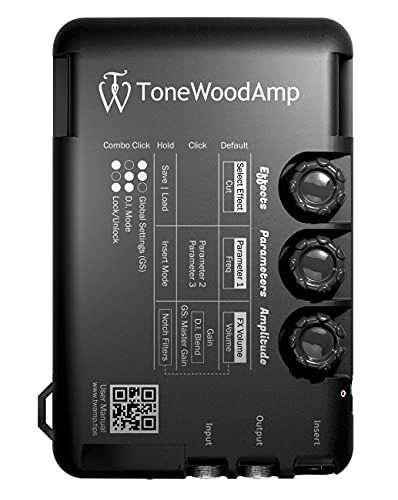
- 【One Of A Kind Experience】The ToneWoodAmp works on virtually any acoustic guitar! Adds beautiful sounding organic guitar effects to your acoustic* and acoustic-electric guitar, NO AMP REQUIRED...
- 【No Amp Required】 XXXX Get Reverbs like Hall, Room, Plate, Delay, Leslie, Auto-Wah, and Chorus, no amp required! All sounds come from the soundhole of your guitar organically. Buy one ToneWoodAmp...
The ToneWoodAmp SOLO is in a completely different category and price bracket. It is not a floor pedal but a device that attaches to the back of an actual acoustic guitar to enhance its natural sound with effects like reverb and delay—without an amp. We include it here to show the “other side” of acoustic effects. If your goal is to make your *actual* acoustic guitar sound better, the ToneWoodAmp is the gold standard. However, if your goal is to make your *electric* guitar sound like an acoustic, it won’t help you. It’s a premium choice for the acoustic purist, whereas the LingTing is the choice for the versatile electric player.
The Final Verdict: Is the LingTing Acoustic Guitar Simulator Right for You?
After extensive testing and comparison, we can confidently say that the LingTing Acoustic Guitar Simulator is one of the best value-for-money pedals in its class. It successfully solves the problem of needing an acoustic tone on demand without the hassle of a guitar swap. While it may not replace a high-end acoustic in a recording studio, its three distinct modes and precise resonance controls make it a formidable tool for live performance. It is rugged, compact, and most importantly, it respects your original tone through its True Bypass design.
If you are a gigging musician looking to lighten your load, or a hobbyist who wants to explore new sonic textures, this pedal is a “no-brainer.” It offers a professional level of control in a format that fits in your pocket. Don’t let the small size fool you; this is a serious piece of gear that delivers on its promises. To take your rig to the next level and simplify your stage setup, we highly recommend you grab the LingTing Acoustic Guitar Simulator today and hear the difference for yourself.
Last update on 2026-10-25 / Affiliate links / Images from Amazon Product Advertising API