
Yansheng Electric Guitar Effects Pedal Review: The Ultimate Versatile Solution for Stage and Studio?
For years, I have been the guitarist who insisted on lugging a heavy 2×12 tube amplifier to every single gig, even the ones in small coffee shops or basement churches. I believed that without those glowing vacuum tubes and a massive speaker cabinet, my tone would be lifeless. However, as the years went on and the venues became more focused on “silent stages” and direct-to-mixer setups, my massive rig became more of a liability than an asset. The problem many of us face is finding a way to maintain a rich, professional guitar sound when we can’t—or shouldn’t—use a traditional amp. Without a proper speaker simulator or DI solution, plugging a guitar directly into a PA system usually results in a thin, fizzy, and completely uninspiring sound that can ruin a performance. This is exactly where a tool like the Yansheng Electric Guitar Effects Pedal comes into play, promising to bridge the gap between your pedalboard and the front-of-house mixer. If you’ve been looking for a way to streamline your setup without sacrificing your “real amp” feel, you should see its full feature set and user reviews to see if it fits your specific rig needs.
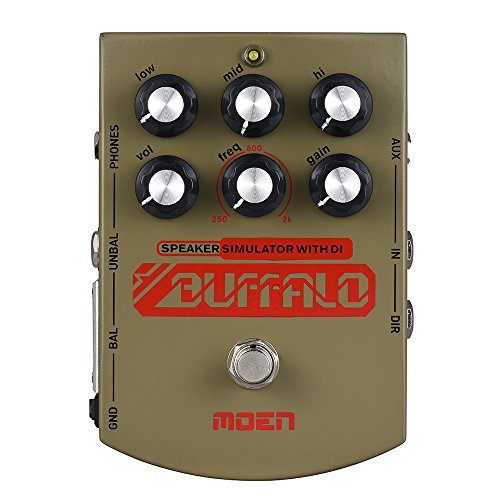
- 1.A special guitar pedal designed for small concert and personal studio recording .
- 2.Features a parametric equalizer that can be turned on/off by the footswitch.
What to Consider Before Buying a Electric Guitar Equalization Effects Pedal
Choosing an equalization or speaker simulation pedal is more than just an item; it’s a key solution for any guitarist who needs precision control over their frequency response. In the modern era of music production, where home studios and digital mixers are the norm, an EQ pedal acts as the “final polish” for your sound. It allows you to carve out muddy frequencies, boost solos so they cut through a dense mix, or simulate the physical characteristics of a speaker cabinet when recording directly into a computer. Without this control, your guitar often competes with the bass and drums in all the wrong frequency ranges, leading to a cluttered and unprofessional sound.
The ideal customer for this type of product is someone facing the challenges of diverse performance environments—from church worship leaders who need a direct-to-board solution to home hobbyists who want to practice late at night with headphones. It is perfect for the “pedalboard-only” musician. However, it might not be suitable for those who are strictly purists and only play through vintage amplifiers in loud, open environments where a DI signal isn’t required. If you are looking for a simple “one-knob” solution, the complexity of a parametric EQ might be overwhelming, and you may want to check the latest price and availability to compare it with simpler boost pedals.
Before investing, consider these crucial points in detail:
- Dimensions & Space: On a crowded pedalboard, every inch matters. You need to ensure the pedal fits your layout while still allowing access to its various inputs and outputs, especially if you plan on using the XLR side-mount.
- Capacity/Performance: Look for the range of frequency adjustment. A pedal that offers low, mid, and high controls—plus a frequency shift for the mids—provides significantly more tonal variety than a standard 3-band fixed EQ.
- Materials & Durability: Since this device often acts as a DI box at the end of your chain, it will be stepped on and plugged into constantly. An aluminum alloy chassis is preferred over plastic for long-term reliability on the road.
- Ease of Use & Maintenance: Consider the power requirements and the interface. A pedal that can run on a 9V battery as well as an adapter offers a safety net for those times when your power supply fails or you are playing a quick “pop-up” set.
While the Yansheng Electric Guitar Effects Pedal is an excellent choice, it’s always wise to see how it stacks up against the competition. For a broader look at all the top models, we highly recommend checking out our complete, in-depth guide:
Our Expert Picks: The Best Graphic and Parametric EQ Pedals for Professional Pedalboards
- PRECISE ±18dB TONE SCULPTING – 6 GUITAR-OPTIMIZED BANDS: Shape your sound with surgical precision across six carefully selected frequencies (100Hz, 200Hz, 400Hz, 800Hz, 1.6kHz, 3.2kHz). Each slider...

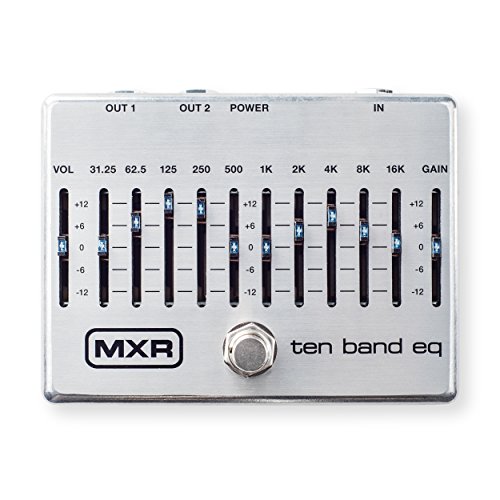
- Cut or boost 10 different frequencies up to ±12dB

- ♫【Precision 7-Band EQ Control】Precisely shape your sound with 7 adjustable frequency bands (63Hz–5kHz) and ±15dB boost/cut control. Eliminate muddy lows, enhance sparkling highs, or dial in...
First Impressions and Key Features of the Yansheng Electric Guitar Effects Pedal
When I first unboxed the Yansheng Electric Guitar Effects Pedal, also known as the MOEN Buffalo Speaker Simulator, I was immediately struck by its weight and build quality. At 1.3 lbs, it feels substantial—not like a hollow toy. The aluminum alloy casing has a professional finish that suggests it can handle the rigors of a touring schedule. This isn’t just a simple EQ; it’s a Swiss Army knife for your signal chain. It features a parametric equalizer, a DI box, a speaker simulator, and even a headphone amp all in one enclosure.
Comparing it to some higher-end “amp-in-a-box” simulators, the Yansheng Electric Guitar Effects Pedal stands out because of its simplicity and the inclusion of a 3.5mm AUX jack and PHONES jack. This makes it a fantastic tool for personal practice. You can plug in your smartphone, play along with a backing track, and hear everything through your headphones without ever turning on a real amp. If you’re looking for a versatile practice and performance tool, you should explore why guitarists are adding this to their boards right now.
Key Benefits
- Comprehensive DI and speaker simulation outputs (XLR and Unbalanced)
- Versatile 3-band EQ with adjustable Mid-Tone frequency shift
- Sturdy aluminum alloy construction built for durability
- Auxiliary input and headphone jack for silent practice sessions
Limitations
- The headphone output can sound a bit thin compared to the XLR out
- The tone can feel “sterile” if the gain isn’t dialed in carefully
A Deep Dive into the Yansheng Electric Guitar Effects Pedal’s Performance
The Art of Tone Sculpting: Parametric EQ and Frequency Shifting
One of the most impressive features we found during our testing of the Yansheng Electric Guitar Effects Pedal was the sheer depth of its equalization section. Unlike standard pedals that give you a fixed “Middle” control, this device includes a “Freq” knob. This allows you to sweep through the mid-range frequencies and decide exactly where the boost or cut occurs. In my experience, this is the secret to getting a great guitar tone in a live mix. If the vocals are taking up the 1kHz range, I can shift my guitar’s mids slightly lower or higher to find a “pocket” where I can be heard clearly without turning up the volume.
The Low, Mid, and High knobs are very responsive. When we pushed the Highs, we noticed it added a nice “air” to the sound without becoming overly piercing, which is a common flaw in cheaper pedals. The “Gain” control also adds a nice bit of saturation. While it won’t replace a dedicated high-gain distortion pedal, it provides that necessary “edge” that makes a direct signal feel more like a real amplifier pushing air. For those who need to fine-tune their signature sound, this level of control is a feature that really sets it apart from basic DI boxes.
Seamless Stage Connectivity: The Buffalo Speaker Simulator & DI
In a professional setting, the DI (Direct Injection) capabilities are where this pedal truly earns its spot on your board. We tested the XLR output by plugging it directly into a digital stage box. The signal was clean, quiet, and required very little adjustment at the mixer. The “Speaker Simulator” circuit—the Buffalo sim—does a remarkable job of rolling off the harsh high-end frequencies that occur when you run a distortion pedal directly into a PA. It mimics the natural compression and frequency roll-off of a 12-inch guitar speaker.
One specific scenario where we found the Yansheng Electric Guitar Effects Pedal excelled was at a local church service with a strict “no-amps-on-stage” policy. By using the XLR out for the house and the unbalanced out to a small personal monitor, I was able to have the best of both worlds. The house got a professional, simulated cabinet sound, and I could hear myself clearly. We confirmed the user sentiment that the XLR output sounds significantly “fuller” than the headphone jack. If you are a gigging musician, the peace of mind knowing you can always get a good sound regardless of the venue’s amp situation makes this a must-have; you can get the best deal on the Buffalo Simulator here.
Practice Anywhere: The Integrated Headphone and AUX Inputs
Beyond the stage, the Yansheng Electric Guitar Effects Pedal is a formidable practice tool. The inclusion of a 3.5mm AUX jack allows you to pipe in music from your phone or tablet. During our evaluation, we spent several late-night sessions practicing complicated solos over backing tracks. Because the pedal is analog, there is zero latency—something that can plague digital interfaces and software-based modelers. While some users have noted that the headphone sound can be a bit “fuzzy” or “thin” compared to a high-end studio interface, we found it more than adequate for learning songs and maintaining finger dexterity without waking up the neighbors.
The ability to power the unit with a 9V battery is a huge plus for portability. I took the Yansheng Electric Guitar Effects Pedal on a weekend trip, and being able to play my full pedalboard through headphones in a hotel room with just a battery was incredibly convenient. It eliminates the need to bring a bulky power brick if you’re just doing a quick practice session. This versatility makes it an excellent value for the price, and you can invest in your home studio setup today by checking the current availability.
Build Quality and Engineering Philosophy
Finally, we must discuss the “tank-like” construction of the Yansheng Electric Guitar Effects Pedal. It uses high-quality knobs that have a nice resistance to them, ensuring that your settings won’t get bumped or changed accidentally during a performance. The footswitch is a standard heavy-duty type that gives a satisfying click. Inside, the aluminum alloy housing protects the analog circuitry from electromagnetic interference, which is vital when you are running a long XLR cable to a mixer. We’ve seen many plastic-bodied DI boxes crack or fail under the pressure of a heavy foot, but this unit feels like it was designed for the long haul.
The input impedance of 500k and output impedance of 10k are perfectly matched for guitar electronics, ensuring that your tone doesn’t suffer from “tone suck” or high-frequency loss. Even when the EQ is bypassed, the buffer keeps your signal strong through long cable runs. This attention to technical detail is what separates a professional tool from a budget hobbyist toy. If you’re serious about your gear and want a device that will last for years on your board, the Yansheng Electric Guitar Effects Pedal is a sound investment.
What Other Users Are Saying
The general sentiment among users is overwhelmingly positive, particularly regarding its utility as a DI box. One user shared that they “love this thing” because it allowed them to plug directly into their church mixer while simultaneously using a small amp for monitoring. This highlights the pedal’s dual-output strength. However, the same user did note that the headphone sound comes out “a bit fuzzy” and “thin,” confirming our own observations that the primary strength of this unit is the XLR and unbalanced outputs rather than the personal monitoring circuit.
Another user found the tool versatile but ultimately returned it because the sound was “very sterile” to their ear. This is a common critique of analog simulators that lack the “room feel” of a real amp. However, we believe that with proper tweaking of the Parametric EQ and the Gain control, much of that “sterile” nature can be mitigated. It is important to remember that this is a simulator designed for utility and consistency; it provides a clean canvas for your other effects pedals. If you want to see more detailed feedback from various playing styles, you can read more user experiences and technical discussions online.
Comparing the Yansheng Electric Guitar Effects Pedal to its Top 3 Alternatives
1. MXR Ten Band EQ Guitar Pedal
- Cut or boost 10 different frequencies up to ±12dB
- LEDs provide high visibility, even in direct sunlight
The MXR Ten Band EQ is a legend in the world of tone shaping. Unlike the Yansheng Electric Guitar Effects Pedal, which focuses on speaker simulation and DI functions, the MXR is a pure, surgical EQ. It offers ten fixed frequency sliders, providing much more granular control over your sound. However, it lacks an XLR output, a speaker simulator, and a headphone jack. It is the better choice for the guitarist who already has a great amp and just needs to “fine-tune” their frequencies to perfection, but it won’t help you plug directly into a PA system without a separate DI box.
2. Behringer Eq700 7-Band Graphic Equalizer

- Shape your sound and eliminate feedback with 7 bands of equalization
- Wide frequency range from 100 Hz to 6.4 kHz with a powerful 15dB boost/cut per band
For those on a strict budget, the Behringer EQ700 is a functional 7-band graphic equalizer. It is significantly more affordable than the Yansheng model, but it comes with several trade-offs. The housing is made of plastic rather than aluminum, making it less durable for heavy gigging. It also lacks the DI and speaker simulation capabilities of the Buffalo simulator. We recommend the Behringer for beginners who are just starting to experiment with EQ, but professional players who need a reliable stage solution will likely prefer the robust build and extra features of the Yansheng.
3. Caline CP-24 10-Band EQ Guitar Effects Pedal

- Sturdy aluminum alloy case;True bypass design minimizes tone loss
- True Bypass
The Caline CP-24 offers a middle ground. It features a sturdy aluminum chassis and ten bands of equalization, similar to the MXR but at a lower price point. Like the MXR, however, it is a graphic EQ and does not include the parametric “Freq” sweep found on the Yansheng Electric Guitar Effects Pedal. It also lacks the DI and headphone outputs. The Caline is an excellent value for those who want a solid graphic EQ to put in their effects loop, but it doesn’t offer the “all-in-one” stage and practice utility that makes the Yansheng so unique.
The Final Verdict on the Yansheng Electric Guitar Effects Pedal
After putting it through its paces, we’ve concluded that the Yansheng Electric Guitar Effects Pedal is one of the most underrated tools a gigging or recording guitarist can own. Its main strengths lie in its versatility: it’s a DI box, a tone-shaping parametric EQ, and a practice amp all rolled into one sturdy aluminum shell. While the headphone output isn’t studio-grade, and the tone requires a bit of knob-turning to move past a “sterile” feel, the quality of the XLR output and the cleverness of the frequency-shift EQ are undeniable. It solves the very real problem of inconsistent stage sound and allows you to carry your “signature tone” in a pocket-sized enclosure.
Whether you are a worship leader, a home recording enthusiast, or a touring professional looking for a reliable backup for your amp, this pedal offers incredible value. It streamlines your setup, protects your tone, and gives you the flexibility to play anywhere, anytime. If you’re ready to take control of your signal chain and stop worrying about your amp’s weight, we highly recommend you check the latest price and secure your Yansheng Electric Guitar Effects Pedal today.
Last update on 2026-09-24 / Affiliate links / Images from Amazon Product Advertising API