
BG Silver-Plated Alto Saxophone Ligature Review: Is It the Ultimate Upgrade for Your Saxophone Tone?
As saxophonists, we spend countless hours practicing scales, long tones, and overtones, all in pursuit of that elusive, perfect sound. We obsess over finding the ultimate saxophone, shell out hundreds of dollars on premium hard rubber mouthpieces, and carefully select our reeds. Yet, so many players overlook the humble piece of hardware holding that reed in place: the ligature. If you are still using the cheap, basic stock metal ligature that came with your instrument, you are likely stifling your sound without even realizing it. A poorly designed ligature pinches the reed, dampens its natural vibrations, and makes low notes stuffy and high notes thin. The frustration of fighting your setup to get a clear, focused tone is a quick way to drain the joy out of playing. That is exactly why we set out to put the BG Silver-Plated Alto Saxophone Ligature through its paces to see if it truly provides the effortless response and rich acoustic profile that discerning woodwind players demand.

What to Consider Before Buying an Alto Saxophone Ligature
An alto saxophone ligature is more than just an item; it’s a key solution for bridging the gap between your breath, your mouthpiece, and your reed. Its primary job is to secure the reed firmly to the mouthpiece table while allowing it to vibrate as freely as possible. The material, contact points, and weight of a ligature can completely transform how your setup responds, altering the resistance, color, and dynamic range of your instrument. Selecting the right one can make your low register speak with a whisper and help your altissimo register scream with ease.
The ideal customer for this type of product is an intermediate to professional alto saxophonist—or a dedicated student looking to upgrade—who wants to refine their tonal core, reduce playing effort, and maximize the dynamic range of their current mouthpiece. It is perfect for classical players who require a focused, clean articulation, as well as jazz musicians looking for extra projection and power. On the other hand, it might not be suitable for absolute beginners who are still developing basic embouchure control and cannot yet benefit from subtle acoustic upgrades, nor is it ideal for players who prefer heavy, dark, fabric-based dampening systems. In those cases, looking into heavier leather or synthetic-weave alternatives might be a better path forward.
Before investing, consider these crucial points in detail:
- Dimensions & Space: Make sure the ligature fits your specific mouthpiece shape. Hard rubber mouthpieces (like a classic Meyer or Selmer S80) have a wider body diameter than slim metal mouthpieces. A ligature must be sized appropriately to clamp down securely without slipping or requiring you to over-tighten the adjustment mechanism.
- Capacity & Performance: Look at the contact point design. Some ligatures clamp the entire reed, while advanced “floating” or rail-based designs only touch the reed at specific points. Minimal contact allows the reed to vibrate more naturally, providing an open, vibrant sound with faster articulation response.
- Materials & Durability: Metal ligatures (such as stainless steel or brass) offer bright projection and crisp articulation, while plating (like gold or silver) adds warmth and refinement. Ensure the construction is robust, with durable screw threads that will not strip after a few months of heavy use.
- Ease of Use & Maintenance: A single-screw design is often preferred by gigging musicians because it allows for lightning-fast reed changes and minor adjustments on stage. Additionally, look for a package that includes a high-quality protective cap to shield your expensive mouthpieces and delicate reeds during storage.
Keeping these critical factors in mind is the best way to avoid the endless cycle of buying accessories that do not fit your setup or your musical style. Let us take a moment to look at how this model fits into the wider marketplace before we dive into our hands-on testing.
While the BG Silver-Plated Alto Saxophone Ligature is an excellent choice, it’s always wise to see how it stacks up against the competition. For a broader look at all the top models, we highly recommend checking out our complete, in-depth guide:

- The metal buckle of sax mouthpiece ligature can quick and precise to fasten mouthpiece, Great protection for your mouthpiece


- DARK LIGATURE. Great for players seeking an easy-to-use, multi-genre ligature. This is considered the "go-to" ligature for music educators.
First Impressions & Key Features of the BG Silver-Plated Alto Saxophone Ligature
When we first unboxed the BG Silver-Plated Alto Saxophone Ligature, we were instantly struck by its elegant aesthetic and lightweight, premium build. The polished silver plating gleams beautifully, immediately conveying a professional sense of craftsmanship. Holding it in hand, the stainless steel construction feels exceptionally durable yet incredibly light—weighing in at a mere 0.422 ounces. This light weight is crucial, as it avoids adding unnecessary mass to your mouthpiece, allowing the acoustic assembly to remain responsive and resonant.
The standout feature of this inverted, single-screw design is the “Duo” floating rail system. Instead of pressing flatly against the reed, the ligature features minimal contact points that suspend the reed, allowing it to vibrate freely from side to side. It also comes complete with a high-quality, snug-fitting protective cap, which is a great addition for maintaining your setup on the gig. While some multi-screw metal models on the market can feel cumbersome or overly rigid, this BG model strikes a brilliant balance between structural rigidity and acoustic flexibility right out of the box.
Key Benefits
- Inverted single-screw design makes quick adjustments and reed swaps effortless.
- Silver-plated finish provides a focused, clear, and elegant acoustic profile.
- Floating design reduces contact with the reed, maximizing vibration and resonance.
- Fits a remarkably wide range of alto saxophone mouthpiece diameters.
Limitations
- Premium pricing represents a significant investment for casual players.
- Despite being marketed as a “Duo” for clarinet, it is too tight and stiff for standard Bb clarinet mouthpieces.
In-Depth Performance Analysis: Putting the BG Duo to the Test
To truly understand what makes this accessory stand out, we spent several weeks testing the BG Silver-Plated Alto Saxophone Ligature across various musical settings, from quiet home practice sessions to loud, high-energy rehearsals. We analyzed how it affected our tone, our ease of playing, and our physical setup workflow.
The Floating Duo Design: Unlocking Reed Vibration
The magic of this ligature lies in how it interacts with the cane. Traditional ligatures wrap tightly around the entire circumference of the reed, which often chokes the sound and limits the reed’s natural flexibility. The BG Duo utilizes a brilliant inverted design with minimal, precision-engineered contact rails. When we slipped the ligature onto our mouthpiece, we observed that it only contacts the reed along the outer rails of the heel, leaving the center of the reed completely untouched.
During our play tests, this resulted in an immediate, noticeable increase in reed resonance. The reed felt as though it had much more freedom to vibrate, translating our breath into sound with significantly less physical effort. Low notes, particularly low Bb and B, spoke instantly without the stuffiness or resistance we often encounter with cheaper models. If you want to experience this difference firsthand, you can see its full feature set and user reviews to understand how it changes the acoustic playability of the instrument.
Ergonomics, Durability, and the Single-Screw System
We have all dealt with frustrating two-screw ligatures where one screw is tight, the other is loose, and the reed is constantly slipping out of alignment. The single-screw adjustment mechanism on this BG model is a breath of fresh air. The threads are incredibly smooth, allowing you to easily tighten or loosen the assembly with just one hand. We found that you do not need to crank the screw down to get a secure hold; the precise shape of the flexible stainless steel naturally hugs the contours of the mouthpiece.
The durability of the stainless steel build is highly reassuring. Many cheap metal ligatures stretch, warp, or strip their threads over time. This model feels incredibly solid and maintains its shape even after being slipped on and off multiple times a day. The polished silver plating is not just for show either; it acts as a protective barrier against the moisture, sweat, and oils that naturally transfer from your hands during daily play sessions, ensuring the accessory keeps its striking look for years to come.
Mouthpiece Compatibility and Universal Sax Fit
One of our favorite discoveries during our test period was just how versatile this ligature is when it comes to mouthpiece compatibility. We tested it on several popular alto saxophone mouthpieces, including a Selmer S80 C*, a vintage Meyer NY medium chamber, and a modern Jody Jazz hard rubber mouthpiece. In every single case, the BG Duo slid on easily and adapted perfectly to the outer diameter of the mouthpiece body.
It holds the reed securely without slipping, even when you are pulling the mouthpiece out or pushing it in to tune on the neck cork. This wide compatibility is a massive relief for saxophonists who maintain a collection of different mouthpieces for classical and jazz gigs, as it means you do only need to carry one high-reliability ligature. To confirm this compatibility with your own gear, you can check the latest price and availability to see if it is the right match for your performance needs.
Tonal Focus, Projection, and Reed Sealing
We noticed a significant shift in our overall tone quality when swapping to the BG Silver-Plated Alto Saxophone Ligature. The silver-plated construction brings a clean, brilliant, and highly focused core to the sound. When paired with small chamber mouthpieces, it helped us cut through loud ensembles with brilliant projection and power. When swapped to medium chamber mouthpieces, it retained that core focus while adding a gorgeous warmth to the lower harmonics.
However, we must note an important aspect of its lightweight, flexible construction: reed sealing. Because the ligature is designed to minimize contact and let the reed vibrate freely, it relies heavily on the reed itself having a flat, true table. During our testing, we performed standard suction tests (sealing the bottom of the mouthpiece with a hand and drawing air out to create a vacuum). When using high-quality, balanced reeds, the seal was absolutely flawless, and the sound was breathtaking. However, if we used an uneven or warped reed, the lightweight steel did not have the crushing force needed to flatten out the warp against the mouthpiece. This is not necessarily a design flaw—in fact, it encourages better reed selection—but it is something to keep in mind if you tend to play on inconsistent, budget reeds.
What Other Users Are Saying
To complement our own expert findings, we analyzed feedback from seasoned alto saxophonists who have integrated this ligature into their daily setups. The general consensus is highly positive, with many players expressing amazement at the immediate acoustic differences they experienced.
One professional player noted that this ligature is absolutely worth the price, stating that the floating design allows their reeds to vibrate with immense freedom while maintaining a secure grip. They specifically highlighted how beautifully it pairs with small chamber mouthpieces when you need extra cutting power, while still offering great warmth on medium chambers. Another parent who bought this for their daughter, a seasoned school saxophonist, shared that she felt an immediate difference in tone and that playing required far less effort compared to her stock metal ligature.
However, some critical feedback is worth noting to ensure you make an informed decision. One multi-instrumentalist pointed out that while this ligature is advertised as a “Duo” model meant to fit both alto sax and clarinet mouthpieces, it is definitely not sized correctly for standard Bb clarinet mouthpieces. On a clarinet mouthpiece, it had to be forced on and over-tightened, which we confirmed in our own compatibility checks. Therefore, we highly recommend purchasing this strictly as an exceptional alto saxophone ligature rather than a dual-purpose accessory. Additionally, some users noted that because of its light weight, it can be slightly “hit or miss” when trying to seal unbalanced reeds during suction tests. To read more of these detailed user experiences, you can explore the full specifications and customer reviews online.
How the BG Duo Compares to Its Top Alternatives
Before making your final choice, it is helpful to look at how this model compares to other popular options on the market. Below, we compare the BG Duo to three highly respected alternatives from Rovner.
1. Rovner Alto Sax Ligature MKIII
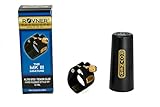
- MKIII LIGATURE. Often selected by concert band/orchestra players but is great for a variety of genres and play settings.
- DARK, WARM AND HEFTY TONE. Similar to the Dark, but responds with a heftier tone. A premium ligature that gives greater weight and tonal substance than either the Light or Dark
The Rovner MKIII is a classic, heavy-duty fabric ligature designed specifically for hard rubber alto saxophone mouthpieces. Unlike the metallic, brilliant sound of the silver-plated BG Duo, the Rovner MKIII utilizes a thick synthetic fabric that naturally dampens some of the higher overtones. This results in a much darker, warmer, and more blended sound. It is incredibly forgiving on warped reeds, as the fabric wraps completely around the reed to ensure a perfect seal every time. We recommend the Rovner MKIII for classical concert band players who want to blend in seamlessly with the woodwind section, whereas the BG Duo is better for players seeking crisp articulation, brilliant projection, and an open, free-blowing feel.
2. Rovner Ligature for Bb Clarinet

- LIGHT LIGATURE. Often selected by jazz band players and rock/blues players, this ligature is a variation on the dark model for those seeking a more contemporary sound.
- RESPONSIVE AND FREE-PLAYING. This ligature provides a responsive and free-playing sound and affords a full range of musical expression for jazz improvisation.
If you are a multi-instrumentalist who specifically needs an upgrade for your Bb clarinet setup, the Rovner Light Ligature for Bb Clarinet is a much safer bet than trying to stretch the BG Duo to fit. Since the BG Duo is ultimately shaped and sized for the wider taper of an alto sax mouthpiece, it feels clumsy on a clarinet. This Rovner model, however, is precisely molded for hard rubber clarinet mouthpieces. It offers a free-blowing, lively response with a warm tonal core. If your primary instrument is the clarinet, skipping the sax-centric BG Duo and selecting this dedicated Rovner model will save you from setup headaches and potential mouthpiece scratches.
3. Rovner LGX Ligature for Tenor Slim Saxophone

- LGX LIGATURE. Perfect for players who push the envelope of dynamics and expression. Superb for jazz, rock, marching, and military band players.
- INCREDIBLE CUT AND PROJECTION. Superior articulation and increased facility. Competes with amplified instruments even when played acoustically.
For players who double on tenor saxophone or use slim, metal alto mouthpieces, the Rovner LGX is a fantastic heavy-metal alternative. The LGX is specifically engineered for slim metal mouthpieces, offering a secure, slip-free grip that standard ligatures simply cannot manage on slippery metal surfaces. While our BG Duo is the king of hard rubber alto mouthpieces, the Rovner LGX is the heavy-duty solution you want if you are playing high-energy rock or commercial jazz gigs on a metal tenor setup. It provides incredible projection and an ultra-secure hold that will not budge during intense stage performances.
The Final Verdict on the BG Silver-Plated Alto Saxophone Ligature
After weeks of intensive play testing, we can confidently state that the BG Silver-Plated Alto Saxophone Ligature is a premium, high-performance accessory that delivers on its promises. By utilizing an innovative floating rail design, it liberates your reed from the stuffiness and acoustic dampening common to basic stock ligatures. The result is a highly resonant, clear, and focused tone that makes playing feel effortless across all registers of the saxophone. While it represents a real financial investment and is not suited for Bb clarinet mouthpieces despite the “Duo” naming, its outstanding build quality, easy single-screw adjustments, and universal fit on alto sax mouthpieces make it an incredibly worthy upgrade for any serious player.
If you are ready to stop fighting your gear, unlock the true acoustic potential of your favorite mouthpiece, and experience a dramatic improvement in your instrument’s responsiveness, we highly recommend giving this professional accessory a permanent home in your sax case. To take your sound to the next level, click below to order this premium performance upgrade today and experience the difference for yourself.
Last update on 2026-09-26 / Affiliate links / Images from Amazon Product Advertising API