
KGU Alto Saxophone Leather Ligature Review: Is This Artisan Woodwind Accessory Worth the Investment?
For saxophone players, the search for the ultimate tone is an ongoing, lifelong journey. We spend thousands of dollars on hand-engraved horns, obsess over mouthpiece tip openings, and hoard boxes of cane reeds in search of the perfect playability. Yet, one of the most critical links in our sound production chain is often treated as an afterthought: the ligature. A poor ligature can choke your reed, warp its rails, and leak air, turning an expensive setup into a stuffy, unresponsive nightmare. Many players turn to standard metal ligatures, which can sometimes sound overly bright or harsh, or traditional fabric wraps that, while warm, frequently muffle the delicate upper harmonics of the reed.
When we encountered the KGU Alto Saxophone Leather Ligature, we were intrigued but skeptical. Leather ligatures have a reputation in the woodwind community for deadening projection. However, KGUmusic promised a premium solution: combining the natural dampening and organic warmth of genuine Crazy Horse leather with a rigid, high-performance brass clamping mechanism. We took this striking accessory into our studio for weeks of rigorous testing to see if it truly delivers the best of both worlds, or if it falls victim to the typical pitfalls of leather woodwind gear.
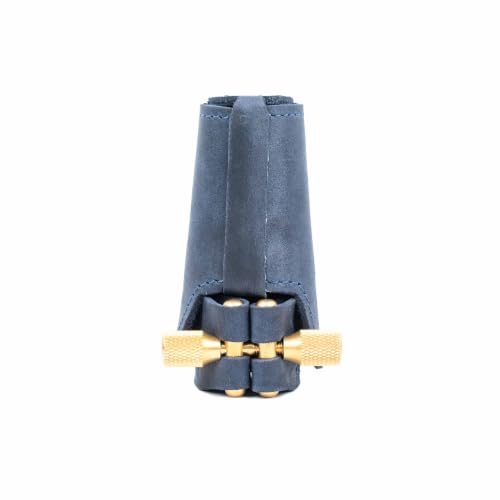
- Premium Crazy Horse leather construction offers durability and a wide range of color choices.
- Intricately inlaid screws with natural stones to enhance visual appeal.
What to Consider Before Buying an Alto Saxophone Ligature
An Alto Saxophone Ligature is more than just a piece of metal or leather; it’s a key solution for securing the reed to the mouthpiece table to ensure a perfect, airtight seal while allowing the reed to vibrate as freely as possible. The way a ligature holds the reed directly affects your articulation, altissimo response, and overall tonal warmth. If the ligature is too tight or poorly designed, it can pinch the sides of the reed, hindering response. If it’s too loose, the reed will shift mid-performance, causing squeaks and sudden drops in intonation.
The ideal customer for this type of product is an intermediate to professional saxophone player who wants to customize their acoustic response and appreciates premium, artisan-crafted aesthetics. It’s perfect for classical, chamber, or jazz players who want a rounder, warmer tone without sacrificing projection. On the other hand, it might not be suitable for student players who need simple, indestructible gear, or players who strictly use very slim metal mouthpieces, where bulkier leather wraps simply cannot tighten down sufficiently. For those players, a slim metal ligature or a minimalist mechanical wrap would be a more appropriate alternative.
Before investing, consider these crucial points in detail:
- Dimensions & Space: Mouthpieces vary wildly in external dimensions. While most hard rubber mouthpieces share a similar profile, metal mouthpieces are much slimmer. You must ensure the ligature’s inner diameter matches your specific mouthpiece model, as leather has physical limits to how far it can stretch or contract.
- Capacity & Performance: Look at how the ligature contacts the reed. High-end ligatures often utilize interchangeable pressure plates. This feature allows you to alter the contact points against the reed’s heel, letting you toggle between a free-blowing, bright response and a darker, more resistant feel.
- Materials & Durability: Metal ligatures offer longevity and crisp projection but can scratch delicate hard rubber mouthpieces. Leather and fabric offer warmth and protect your gear, but they are susceptible to moisture from saliva and water, meaning they require more careful maintenance and can stretch over time.
- Ease of Use & Maintenance: A good ligature should be quick to adjust on a dark stage. Single-screw systems are generally the fastest, while dual-screw or multi-part clamping mechanisms offer highly precise tension distribution but can be fussy to handle if you frequently swap reeds during a gig.
Understanding these variables will help you make an informed decision and avoid purchasing an accessory that doesn’t align with your performance workflow or mouthpiece collection.
While the KGU Alto Saxophone Leather Ligature is an excellent choice, it’s always wise to see how it stacks up against the competition. For a broader look at all the top models, we highly recommend checking out our complete, in-depth guide:
Discover Our Complete Guide to the Best Leather Alto Saxophone Ligatures

- The metal buckle of sax mouthpiece ligature can quick and precise to fasten mouthpiece, Great protection for your mouthpiece


- DARK LIGATURE. Great for players seeking an easy-to-use, multi-genre ligature. This is considered the "go-to" ligature for music educators.
First Impressions and Key Features of the KGU Alto Saxophone Leather Ligature
Right out of the box, the KGU Alto Saxophone Leather Ligature makes a statement of pure luxury. This is not some mass-produced piece of plastic or stamped brass. The deep blue Crazy Horse leather has a rugged yet refined texture that is soft to the touch, and the matching leather cap is a gorgeous addition that protects your mouthpiece in style. The absolute showstopper, however, is the brass hardware. The clamping screws are beautifully polished and feature natural Lapis Lazuli stone inlays, giving the ligature the appearance of high-end jewelry rather than a utilitarian tool.
Inside the package, KGUmusic includes two interchangeable pressure plates—one hard and one soft—that attach to the inside of the leather strap via a hook-and-loop fastening system. We immediately noticed the substantial weight of the brass mechanism, which adds a reassuring sense of durability. Unlike standard fabric ligatures that can feel cheap and flimsy, this hybrid leather-and-metal design feels robust, solid, and incredibly well-crafted, promising to elevate both the visual aesthetic of your saxophone and your overall tactile experience during setup.
Key Benefits We Loved
- Exquisite artisan craftsmanship featuring genuine Crazy Horse leather and Lapis Lazuli stone screw inlays.
- Incredible tonal flexibility thanks to the inclusion of two removable pressure plates (hard and soft).
- Produces a rich, warm sound profile while maintaining excellent projection and high-frequency presence.
- Comes complete with a high-quality, matching leather protective mouthpiece cap.
Drawbacks to Consider
- The dual-screw brass mechanism can be fussy, with the nuts prone to falling off if unscrewed too far.
- The leather requires an initial stretch period and may run slightly too large for slim metal mouthpieces.
Deep Dive: Putting the KGU Alto Saxophone Leather Ligature to the Test
To truly understand how this luxury accessory performs, we spent over thirty hours in the practice room and studio, testing the KGU Alto Saxophone Leather Ligature across various musical genres and mouthpiece configurations. We evaluated everything from its acoustic response and tonal color to its physical fit, break-in period, and hardware ergonomics. Here is our detailed, first-person breakdown of how this ligature performs under real-world playing conditions.
Acoustic Response and the Custom Plate System
We began our playtesting with a healthy dose of skepticism. Having played the saxophone for nearly three decades, we have tried almost every ligature design on the market. Our usual preference runs toward rigid metal ligatures because traditional leather wraps often muffle the vibration of the reed, creating a dark, stuffy, and restricted sound. However, the KGU Alto Saxophone Leather Ligature completely redefined our expectations.
When we installed the hard pressure plate, we were met with a surprisingly vibrant, bright, and free-blowing acoustic response. The reed vibrated with clean, crisp energy, and we didn’t experience any of the dampening effects typically associated with leather. The low register popped with immediate response, and the altissimo register remained clear, centered, and projecting. Switching to the soft pressure plate mellowed out the tone beautifully, offering a rounder, darker sound that is perfect for classical ensembles or intimate jazz settings. This dual-plate system gives the player genuine control over their sonic envelope, making this one of the most versatile leather ligatures we have ever tested.
The Break-In Period and Mouthpiece Compatibility
One critical characteristic of genuine Crazy Horse leather is its inherent flexibility and tendency to stretch. When we first attempted to fit the KGU Alto Saxophone Leather Ligature onto a standard hard rubber Yamaha mouthpiece, we noticed it was a very tight squeeze. We actually had to slide the ligature onto the bare mouthpiece without a reed and let it sit for two days to stretch and mold to the mouthpiece’s taper. Once this brief break-in period was complete, the leather held the mouthpiece like a custom-tailored glove.
However, sizing is a factor you must keep in mind before you choose this artisan leather ligature. Because leather is naturally thick, this ligature has a bulkier footprint than minimalist metal models. We found that while it fits beautifully on standard hard rubber alto mouthpieces, it is simply too large for slim-profile metal mouthpieces. When we tried to mount it on a slim metal jazz mouthpiece, we tightened the brass screws all the way down until they bottomed out, yet the ligature remained loose, allowing the reed to shift. For standard rubber or synthetic mouthpieces, it works brilliantly, but metal mouthpiece players should look elsewhere.
Hardware Ergonomics: Elegant Design with a Fussy Side
The brass clamping mechanism is undeniably gorgeous. The gold-toned metal contrasted against the deep blue leather, capped by the glittering Lapis Lazuli stone inlays, makes your sax look like a million dollars. The large, knurled adjustment knobs are easy to grip, allowing you to apply precise, even pressure across the reed table.
However, during fast reed changes in a dark studio, we encountered some usability quirks. The tensioning system utilizes a two-part screw and nut mechanism. If you loosen the ligature too far to reposition your reed, the small brass nut end can easily spin completely off the screw threads and drop onto the floor. More than once, we found ourselves searching under a desk for a tiny piece of brass hardware. Additionally, unlike single-screw ligatures that can be tightened with one hand, this double-ended system often requires you to use one hand to hold the nut in place while your other hand turns the adjustment knob. It is highly precise, but it requires a level of patience and dexterity that might frustrate gigging musicians who need to make rapid, stress-free adjustments on stage.
Long-Term Durability and Moisture Management
Saliva, condensation, and water are unavoidable realities of playing a woodwind instrument. Because the KGU Alto Saxophone Leather Ligature is crafted from genuine leather, we were highly concerned about how it would handle moisture over time. After weeks of heavy wet-playing sessions, we monitored the leather closely.
Crazy Horse leather is highly resilient because of its high wax content, which naturally repels light moisture. However, it is not completely impervious. If you leave the ligature soaking wet inside a dark, humid saxophone case, the leather can lose its shape, stretch prematurely, and even begin to smell. To maintain its integrity, we found it crucial to wipe the ligature dry after every playing session and allow it to air out. If you take care of it, the leather will develop a beautiful, personalized patina over time, but it does require slightly more diligent maintenance than a standard gold-plated metal ligature.
What Other Woodwind Players Are Saying
To ensure our findings align with the wider woodwind community, we analyzed feedback from several other saxophonists who have integrated the KGU Alto Saxophone Leather Ligature into their gear setups. The consensus is overwhelmingly positive, with a few consistent warnings regarding sizing and hardware management.
One professional player, who has been active in the music industry for nearly 30 years, noted that they usually stay away from leather-wrapped ligatures because they muffle the sound. However, they were “pleasantly surprised” by the KGU model, stating that it completely made them reconsider their past experiences due to its open acoustic response and stunning aesthetics. Another jazz saxophonist praised the double-plate system, finding the tonal contrast between the hard and soft plates incredibly useful for switching between commercial studio gigs and classical recitals.
Conversely, critical feedback echoed our findings regarding the dual-screw hardware and sizing. Multiple users reported that the small brass nuts easily fall off and get lost during adjustments if you aren’t careful. A few players who primarily use slim mouthpieces, such as Dukoff or Meyer models, confirmed that the ligature was too large to secure a tight clamp on their setups, leading to reed slippage. These reviews highlight that while the acoustic performance and visual beauty are top-tier, buyers must pay close attention to their mouthpiece dimensions and handle the hardware with care.
How the KGU Alto Saxophone Leather Ligature Stacks Up Against the Competition
To help you decide if this is the right fit for your performance style, we compared the KGU Alto Saxophone Leather Ligature against three industry-standard alternatives.
1. Rovner Ligature for Bb Clarinet

- LIGHT LIGATURE. Often selected by jazz band players and rock/blues players, this ligature is a variation on the dark model for those seeking a more contemporary sound.
- RESPONSIVE AND FREE-PLAYING. This ligature provides a responsive and free-playing sound and affords a full range of musical expression for jazz improvisation.
Although originally designed for Bb clarinet, the Rovner Ligature for Bb Clarinet is frequently adapted by saxophone players looking for a budget-friendly, highly durable fabric ligature. Crafted from a proprietary synthetic material, this Rovner model is virtually indestructible, completely impervious to moisture, and incredibly simple to adjust with its single-screw design. However, it lacks the gorgeous aesthetic appeal, premium genuine leather feel, and the versatile dual-pressure plate system of the KGU model. If you want a basic, workhorse ligature that can handle abuse, Rovner is a classic choice, but if you are seeking a refined tone and artisan luxury, KGU is the clear winner.
2. Vandoren LC07P Alto Sax Ligature

- Quick and precise tightening
- Expression with freedom
The Vandoren LC07P Alto Sax Ligature is widely considered one of the gold standards for professional metal ligatures. It features a brilliant gilded finish and comes with three interchangeable metal pressure plates that slide into a highly secure track. Performance-wise, the Vandoren Optimum offers unmatched precision, crisp articulation, and effortless reed security. However, it lacks the organic, warm, and rounded tonal characteristics that only a leather strap can provide, and its metallic look is vastly different from the rustic, natural beauty of the KGU design. Classical players who demand absolute precision may lean toward Vandoren, while those looking for warmth and a unique visual style will prefer KGU.
3. Rovner Alto Sax Ligature
- MKIII LIGATURE. Often selected by concert band/orchestra players but is great for a variety of genres and play settings.
- DARK, WARM AND HEFTY TONE. Similar to the Dark, but responds with a heftier tone. A premium ligature that gives greater weight and tonal substance than either the Light or Dark
The Rovner Alto Sax Ligature (MKIII) is a reinforced fabric ligature designed to provide a darker, more centered tone for hard rubber mouthpieces. It offers excellent reed stability and is far less delicate than the KGU leather model. While the MKIII is fantastic for players who want to eliminate harsh high frequencies, it can sometimes sound a bit too dark or stuffy for jazz soloists who need to cut through a big band. The KGU Alto Saxophone Leather Ligature surpasses the MKIII in both visual elegance and tonal flexibility, thanks to the KGU’s premium Crazy Horse leather and customizable dual-plate system, though the Rovner remains the more practical choice for students and marching band environments.
The Final Verdict: Is the KGU Alto Saxophone Leather Ligature Right for You?
The KGU Alto Saxophone Leather Ligature is a stunning marriage of aesthetic luxury and acoustic innovation. KGUmusic has successfully challenged the stereotype that leather ligatures must sound muffled and dark. By combining premium Crazy Horse leather with a rigid brass clamping system and interchangeable pressure plates, they have created an accessory that offers both the warm, velvety core of leather and the crisp, singing projection of metal.
While the double-screw hardware can be a bit fussy to handle, and the sizing requires a brief break-in period on standard hard rubber mouthpieces, the trade-off is more than worth it. Your saxophone will look like a handcrafted work of art, and your tone will gain a new level of customizable depth. If you are a serious woodwind player looking to elevate your setup, don’t hesitate. To experience this premium blend of artisan design and acoustic flexibility for yourself, get your own KGUmusic leather ligature today.
Last update on 2026-09-26 / Affiliate links / Images from Amazon Product Advertising API