
PJB BP-800 Bass Amplifier Head Review: The Ultimate High-Power Solution for Tone Purists
For years, bass players have been caught in a frustrating tug-of-law. On one side, we crave the earth-shaking headroom and clarity that only high-wattage amplifiers can provide. On the other, we are tired of lugging around “refrigerator” heads that weigh as much as a small car. I’ve spent decades on stages ranging from tiny jazz clubs to outdoor festivals, and the struggle is always the same: finding an amp that delivers professional-grade power without requiring a team of roadies to transport. When you’re dealing with a low-power amp, you lose the definition of your low B string the moment the drummer starts hitting hard. If you don’t solve this power-to-weight ratio problem, you’re either sacrificing your tone or your physical health. That is exactly why the PJB BP-800 Bass Amplifier Head caught our attention—it promises to bridge the gap between “ultralight” and “ultra-powerful” without breaking a sweat.
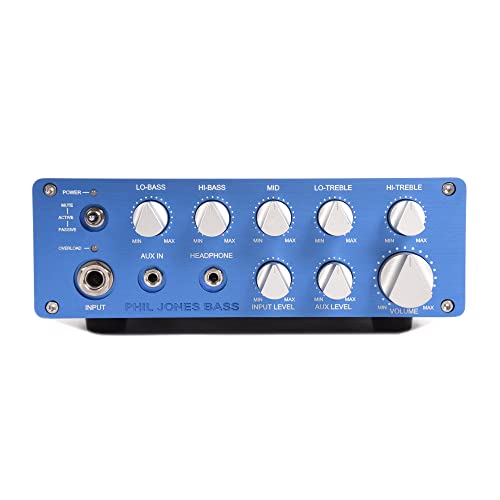
- BP-800 800W Bass Amp Head
What to Consider Before Buying a Bass Guitar Amplifier Head
A Bass Guitar Amplifier Head is more than just an item; it’s a key solution for translating the vibration of your strings into a physical force that moves the air and the audience. In the modern era, the “head” serves as the brain of your rig, determining the EQ, the gain structure, and ultimately, the character of your performance. Whether you are practicing at home or headlining a theater, the amplifier head is the most critical link in your signal chain after the instrument itself. Choosing the wrong one can lead to “muddy” mixes, technical failures during a gig, or a sound that simply doesn’t inspire you to play.
The ideal customer for this type of product is a professional or semi-professional bassist who demands tonal transparency and reliability. It is specifically designed for those who value “clean” power—jazz players, session musicians, and theater pit players who need their bass to sound exactly like their bass, only louder. However, it might not be suitable for those who strictly play heavy metal or “dirt-heavy” rock and want their amplifier to provide the distortion. If you are looking for a “gritty” tube-style breakup, you might find this digital precision a bit too sterile without a dedicated preamp pedal.
Before investing, consider these crucial points in detail:
- Dimensions & Space: In the world of modern gigging, “small is king.” You want a head that can fit into a standard backpack or a laptop bag. This allows for easier load-ins and less clutter on stage. However, it must still be large enough to house high-quality components and provide enough surface area for heat dissipation.
- Capacity/Performance: Wattage isn’t just about volume; it’s about headroom. An 800-watt amp allows you to play at moderate volumes with absolute clarity, ensuring that your transients (the “attack” of the note) aren’t compressed or clipped. Look for an amp that can handle 4-ohm and 8-ohm loads comfortably.
- Materials & Durability: Since an amp head is moved constantly, the chassis must be rugged. Aluminum or high-grade steel is preferred over plastic. The knobs and switches should feel “weighty” and move smoothly, indicating high-quality internal potentiometers that won’t get scratchy over time.
- Ease of Use & Maintenance: A complicated interface can be a nightmare on a dark stage. You want an EQ section that is intuitive. Additionally, consider the cooling system. While many high-power amps use loud fans, cutting-edge designs like the PJB BP-800 Bass Amplifier Head use advanced heat-sinking technology to remain silent, which is a massive plus for studio recording.
Once you understand these foundational requirements, you can better appreciate how a specific piece of gear fits into your workflow. While the PJB BP-800 Bass Amplifier Head is an excellent choice, it’s always wise to see how it stacks up against the competition. For a broader look at all the top models, we highly recommend checking out our complete, in-depth guide:
- 500 Watt portable micro bass head amplifier for stage and studio

First Impressions and the “Blue” Aesthetic of the PJB BP-800 Bass Amplifier Head
Unboxing the PJB BP-800 Bass Amplifier Head is a revelation in minimalist engineering. Out of the box, the first thing that strikes you is the weight—or lack thereof. At just 4 pounds, it feels more like a high-end piece of boutique hi-fi equipment than a piece of heavy-duty musical gear. The sleek, blue brushed-aluminum finish is a signature Phil Jones touch, and it looks stunning under stage lights. It doesn’t look like a generic black box; it looks like a precision instrument. To see its full feature set and user reviews, you only have to look at the layout of the front panel, which is remarkably clean.
When we first plugged it in, the most immediate “feature” we noticed was actually the silence. There is no fan. Most 800-watt amplifiers sound like a small jet engine taking off as soon as you flip the power switch. The BP-800 uses a sophisticated convection cooling system that makes it 100% silent. For a bassist who also spends time in the studio or plays quiet jazz settings, this is a revolutionary change. Compared to market leaders in the Class D space, the PJB feels denser and more intentionally designed, lacking the “cheapness” often associated with lightweight digital amps.
Key Benefits
- Massive 800-watt output provides incredible headroom and clarity.
- Ultra-lightweight (4 lbs) and compact enough to fit in a gig bag.
- Dead-silent operation with no cooling fan noise.
- Highly musical 5-band EQ for precise tonal shaping.
Limitations
- Tone is very clean; might require a pedal for “growl” or distortion.
- The 2.5 connector type might require specific cable considerations for some rigs.
A Deep Dive into the PJB BP-800 Bass Amplifier Head’s Performance
The Power of 800 Watts: Headroom and Response
In our testing, the “800-watt” rating isn’t just a marketing number; it’s a statement of capability. When we paired the PJB BP-800 Bass Amplifier Head with a high-quality 4×10 cabinet, the result was a wall of sound that remained articulate even at high volumes. We found that the low-end response is exceptionally tight. Many digital amps suffer from a “squishy” feel when pushed, but the BP-800 feels fast and immediate. This is largely due to the high-voltage power supply and the efficiency of the Class D power stage. If you play a 5-string bass, you know how hard it is to get a low B string to sound clear through a small head. With this unit, the B string sounds just as punchy and defined as the G string. You can check the latest price and availability to see how this power compares to other boutique options, but in our experience, this level of headroom is rare in this weight class.
What makes this power so special is how it translates to the “feel” of the instrument. When you dig in with your right hand, the amp responds instantly. There is no latency and no sag. For slap players, the “pop” is crisp and percussive, while fingerstyle players will appreciate how every nuance of their touch is amplified without coloration. This is the hallmark of a Phil Jones design: it doesn’t try to hide your playing; it magnifies it. We tested this in a large rehearsal space and found that we never had to push the master volume past noon to keep up with a heavy-hitting drummer, leaving us plenty of room for those moments when you really need to step out in the mix.
Mastering the 5-Band EQ: Precision over Coloration
The EQ section on the PJB BP-800 Bass Amplifier Head is a masterclass in functional design. Unlike a standard 3-band EQ, the 5-band system allows you to target specific frequencies that are crucial for bass guitar. We found the “Lo-Mid” and “Hi-Mid” controls to be the secret weapons of this amp. The Lo-Mid (around 200Hz) allows you to add “girth” and “thump” without making the sound muddy, while the Hi-Mid (around 1kHz) is perfect for adding “finger noise” or “definition” to help the bass cut through a dense mix of guitars and keyboards. This is a feature that really sets it apart from more simplistic heads that often leave you struggling to find your place in the frequency spectrum.
During our evaluation, we used an active Jazz Bass and a passive Precision Bass to see how the EQ responded. For the Precision, a slight boost in the Lo-Mids and a cut in the Highs gave us that classic Motown “thump.” For the Jazz Bass, boosting the Bass and Treble while slightly cutting the Mids gave us a modern, “hi-fi” slap tone that was breathtakingly clear. The knobs themselves have a very fine “notched” feel, making it easy to return to your favorite settings. The transparency of the EQ means that even with extreme settings, the natural character of your bass remains intact. It doesn’t sound like “an amp,” it sounds like “your bass, perfected.”
Silent Operation and Studio Excellence
One of the most impressive aspects of the PJB BP-800 Bass Amplifier Head is its absolute silence. As one user noted, the lack of a fan is a game-changer. Most high-powered amps require a noisy fan to prevent the digital components from overheating. PJB has managed to use the heavy-duty aluminum chassis as a giant heat sink. This is a critical benefit for anyone who does session work or records at home. There is nothing more frustrating than having a perfect bass take ruined by the “whirring” of an amp fan in the background. We found that even after two hours of heavy playing, the chassis was warm but never hot, proving that the convection cooling is more than adequate.
The DI (Direct Injection) output on the back is also worth mentioning. It is studio-grade, featuring a balanced XLR output that is incredibly low-noise. When we ran the DI into our recording interface, the signal was so clean that we didn’t need to use a separate dedicated DI box. This makes the PJB BP-800 Bass Amplifier Head an incredible “all-in-one” tool for the modern professional. You can read more about the technical specifications of the DI output, but suffice it to say, it provides a “pre” or “post” EQ signal that sound engineers will love. It eliminates the need for extra gear in your signal path, simplifying your setup without compromising quality.
Versatility Across Genres: From Upright to Electric
While some amps are built for one specific sound, the PJB BP-800 Bass Amplifier Head is a chameleon. Because of its high input impedance and ultra-clean signal path, it is perhaps the best amp on the market for upright bass players. Piezo pickups (common on uprights) often sound “quacky” or “harsh” when plugged into standard electric bass amps. However, the BP-800 handles the impedance mismatch gracefully, delivering a natural, acoustic-sounding tone. We tested it with a double bass and were blown away by how it captured the woody resonance of the instrument. If you are a doubler who plays both electric and upright, this is likely the only head you will ever need.
For electric players, the versatility comes from its “pedal-platform” nature. Since the amp is so transparent, any pedal you put in front of it sounds exactly as intended. We ran a vintage-style overdrive pedal into the front end, and it sounded glorious—the amp provided the clean power needed to let the pedal’s character shine without adding any digital “harshness.” Whether you’re playing intricate jazz lines, pop-funk grooves, or even clean-toned blues, the BP-800 adapts to your style. We recommend you check out the various user configurations to see how others are using this head in different musical contexts.
What Other Users Are Saying
The general sentiment among owners of the PJB BP-800 Bass Amplifier Head is one of relief and satisfaction. Users frequently mention that they have “finally found the amp they’ve been waiting for.” The most common praise centers on the “super clean” and “noise-free” operation. Jazz and blues players, in particular, seem to gravitate toward this model because it respects the natural tone of the instrument. As one reviewer noted, the amp is “perfect for jazz” but might be “too clean” for those who want a “dirtier” rock sound without using pedals.
Another point of praise is the price-to-performance ratio. While Phil Jones Bass is often considered a “boutique” brand, users find that the 800 watts of power provided here is “not too expensive” compared to other high-end manufacturers. We also found a few mentions of the “good impedance for upright bass,” confirming our findings that this is a top-tier choice for double bassists. The only real “negative” feedback comes from those who misunderstand the amp’s purpose; if you buy this expecting it to sound like a distorted tube amp, you will be disappointed. However, for those who want accuracy, power, and silence, the consensus is that the BP-800 is nearly flawless.
Comparing the PJB BP-800 Bass Amplifier Head to Its Top Alternatives
While the PJB is a powerhouse, the market offers several other interesting options depending on your specific needs, whether it’s extreme portability, budget-friendly features, or a headphone-only solution.
1. HOTONE Thunder Mini Bass Amp

- Inspired by the ampeg SVT, high quality tone with volume and gain controls
- 3 Band eq controls for shaping your tone
The HOTONE Thunder Mini is a completely different beast compared to the PJB. At only 5 watts, it’s obviously not designed for gigging. However, for home practice or very low-volume “coffee shop” jam sessions, it’s a fun and incredibly affordable alternative. It’s tiny enough to fit in the palm of your hand and offers a “Class AB” style tone that actually has a bit more grit and character than the PJB. If you are a beginner looking for your first practice amp head or a professional who needs a “living room” amp that doesn’t take up any space, this is a great choice. However, it lacks the professional features, DI output, and, most importantly, the 800 watts of power found in the PJB BP-800 Bass Amplifier Head.
2. Behringer ULTRABASS BXD3000H 2 Channel Bass Amplifier Head

- Clean channel with dedicated gain control
- Revolutionary class-d amplifier technology: enormous power, incredible sonic performance and ultra-lightweight
The Behringer BXD3000H is the “utility player” in this comparison. With 300 watts of power and two channels, it offers more onboard features than the PJB, including a dedicated compressor and the “FBQ Spectrum Analyzer” which helps you visualize your frequencies. It’s a fantastic value for budget-conscious players who need a giggable head but can’t justify the price of a boutique unit. However, you definitely notice the difference in build quality and “noise floor.” The Behringer is significantly larger and heavier, and its cooling fan is quite audible. It’s a great “workhorse” for a weekend warrior, but it lacks the refined tone, silent operation, and high-end aesthetics that make the PJB a professional standard.
3. VOX VGH Series Bass Guitar Amplifier

- Plug and Play: Simply plug your VOX VGH Amplifier Headphones into your Guitar and practice straight away with great amp sounds and effects. If you want to just listen to music simply switch the...
- ROCK: The VGH BASS headphone model has an amplifier that provides a wide dynamic range for all Bass Guitar styles at enough volume to suit all bass players
The VOX VGH Series isn’t technically a “head” in the traditional sense; it’s a set of high-quality headphones with a bass amplifier built directly into them. This is the ultimate alternative for the player who only needs to practice silently and doesn’t plan on connecting to a speaker cabinet. It features built-in effects and a very convincing analog-style tone. If your “gigs” are strictly happening in your bedroom or on long bus rides, this is a much more practical and portable solution than a full head like the PJB. But if you ever need to play with a drummer or perform on a stage, the VOX won’t help you. The PJB BP-800 Bass Amplifier Head remains the superior choice for anyone who needs to move air and perform for an audience.
The Final Verdict: Is the PJB BP-800 Bass Amplifier Head Right for You?
After putting the PJB BP-800 Bass Amplifier Head through its paces, our conclusion is clear: this is a world-class piece of engineering designed for the discerning bassist. Its combination of 800 watts of clean power, a dead-silent convection cooling system, and a feather-light 4-pound chassis makes it one of the most versatile and professional-feeling amps on the market today. It solves the age-old problem of “power vs. portability” without making the compromises usually found in digital amplifiers. While rock players might miss the “built-in” grit, the transparency of the BP-800 makes it the perfect foundation for any pedalboard or the ultimate choice for the jazz purist.
We highly recommend this amp for professional gigging musicians, studio engineers, and upright bassists who refuse to settle for mediocre tone. It is a reliable, beautiful, and incredibly powerful tool that will likely become the centerpiece of your rig for years to come. If you’re ready to upgrade your sound and save your back, we encourage you to experience the power and clarity of the BP-800 for yourself and see why Phil Jones Bass continues to lead the industry in innovation.
Last update on 2026-10-26 / Affiliate links / Images from Amazon Product Advertising API