
EBXYA XLR Microphone Cable Review: The Ultimate Budget-Friendly Cure for Cable Clutter
If you have ever stood behind a Front of House (FoH) rack or crawled behind a packed studio desk with a flashlight between your teeth, you know the absolute nightmare of cable clutter. You are trying to connect four wireless microphone receivers to your mixing console’s local input/output bank. Instead of a clean, streamlined signal flow, you end up with a tangled, chaotic nest of individual three-foot patch cables. They twist around power lines, trap dust, snag on rack rails, and make fast-paced troubleshooting completely impossible during a live show. When a channel drops or a mysterious buzz invades your soundboard, tracing individual cables in a dark venue can turn a minor issue into a show-stopping disaster.
This is precisely where multi-channel snake cables step in to save the day. Rather than dealing with four separate, loose cords, a consolidated snake groups your lines into a single, unified jacket. In this hands-on evaluation, we put the EBXYA XLR Microphone Cable through its paces to see if this highly affordable, 4-channel patch snake can clean up our equipment racks, eliminate signal noise, and stand up to the rigorous demands of both mobile live setups and sedentary project studios.
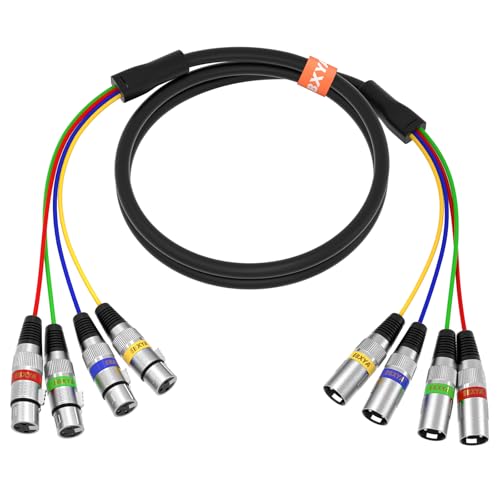
- 4-Channels in One: Supports connecting to 4 XLR microphones, DI boxes, or other balanced audio sources simultaneously using a single, organized cable. Saves space, reduces trip hazards, and speeds up...
- True Balanced Audio: The internal structure uses a copper core high-density weaving shield to resist external interference, thereby transmitting clear and pure sound quality. And use an oxygen-copper...
What to Consider Before Buying a Recording Snake
A recording snake is more than just an item; it’s a key solution for any audio enthusiast or professional who needs to route multiple audio channels over a single path without sacrificing signal integrity. Whether you are running a home recording studio, managing a church sound system, or mixing a live band, a high-quality snake minimizes stage clutter, drastically reduces setup and teardown times, and protects your delicate audio runs from physical wear and environmental interference.
The ideal customer for this type of product is someone facing spatial and organizational challenges in their audio setup, such as live sound engineers patch-paneling rack gear, or home studio owners connecting multichannel audio interfaces to external preamps. It is a game-changer for those who need things neat, labeled, and highly reliable. Conversely, it might not be suitable for those who only use a single microphone for simple voiceovers, or touring professionals who require ultra-heavy-duty, armored, tour-grade trunk cables designed to be run over by forklifts on festival stages. For those users, larger-scale stage boxes or ruggedized modular systems would be a more appropriate, albeit much more expensive, alternative.
Before investing, consider these crucial points in detail:
- Dimensions & Space: Make sure you measure the exact distance between your source equipment and your destination board. A cable that is too short will cause strain on your hardware connectors, while an excessively long cable creates unnecessary coils that can collect electromagnetic interference. For tight rack patches, a short 3-foot layout like the EBXYA XLR Microphone Cable is usually the sweet spot to keep things perfectly neat.
- Capacity/Performance: Determine how many channels you need to route simultaneously. It is often wise to buy a snake with slightly more channels than you currently need to future-proof your setup, though for compact wireless mic racks or simple 4-channel drum setups, a 4-channel snake is exceptionally efficient and lightweight.
- Materials & Durability: Look for snakes built with Oxygen-Free Copper (OFC) conductors and robust shielding, such as high-density copper braiding or spiral shielding. The outer jacket should be flexible yet tough enough to handle tight bends, and the XLR connectors should have solid strain relief to prevent the internal solder joints from snapping under tension.
- Ease of Use & Maintenance: Color-coding or clear numerical labeling on each channel is an absolute necessity. When you are working in low-light environments, being able to quickly identify Channel 1 from Channel 4 by color alone saves precious minutes during soundcheck and troubleshooting sessions.
By understanding these core requirements, you can easily select a snake cable that fits your workflow perfectly, ensuring your signals remain pristine and your workspaces stay uncluttered.
While the EBXYA XLR Microphone Cable is an excellent choice, it’s always wise to see how it stacks up against the competition. For a broader look at all the top models, we highly recommend checking out our complete, in-depth guide:

- 16-Channels Snake Splitter Cable: 16 Different Channels XLR TRS 1/4" combo Jacks snake cable with professional sound performance. It has 2 trunks with male connectors, one is 5 Feet long, another is...

- Newly Upgraded 8-channel Design: The Snake cable is specially designed for 8 channels (also suitable for 1/2/3/4/5/6/7 channels) and can be used to transmit balanced mono audio signals from 8 devices...

- 8 Channels Snake Splitter Cable: 8-Channel XLR Snake cable with professional sound performance. It has 8 different channels to the stage box. The XLR connectors on box are female and the fantail...
First Impressions and Key Features of the EBXYA XLR Microphone Cable
Out of the box, the EBXYA XLR Microphone Cable feels surprisingly agile and lightweight. Many traditional audio snakes are thick, stiff, and incredibly difficult to bend around the tight corners of a standard 19-inch equipment rack. EBXYA has taken a different approach here, delivering a highly flexible 3-foot snake that feels remarkably nimble in the hand. The main trunk of the cable is wrapped in a smooth, matte-black outer jacket that splits into four color-coded leads at each end.
The connectors feature metal housings that feel quite robust, paired with nickel-plated male and female contacts. The colored boots—blue, green, orange, and red—provide immediate visual reference points for patching. It’s a clean, straightforward design that prioritizes fast deployment. While it does not have the massive weight and thick outer armor of high-end studio installation snakes, its lightweight profile makes it an incredibly practical choice for quick jumper runs where heavy-duty physical abuse isn’t a factor.
Key Benefits
- Highly flexible and lightweight jacket, making it incredibly easy to route through tight spaces.
- Bright, distinct color-coded boots on each channel for effortless, split-second visual identification.
- True balanced design with high-density copper shielding that keeps the signal remarkably quiet.
- Incredibly cost-effective, offering professional-grade utility at a fraction of the cost of premium brands.
Limitations
- The individual channel leads are somewhat thin, requiring careful handling in heavy-touring environments.
- Red-green colorblind users may find it slightly difficult to differentiate between the green and red channels in dark settings.
A Deep Dive into the EBXYA XLR Microphone Cable’s Performance
1. Rack Integration and Setup Efficiency
When we integrated the EBXYA XLR Microphone Cable into our mobile front-of-house rack, the difference in organization was immediate. Previously, we used four separate, standard XLR cables to jump signals from our wireless receiver unit to the local analog inputs of our digital console. Those four individual cables created an unmanageable bulk of excess slack that we had to zip-tie to the rack’s support bars. It made swapping out components a tedious, time-consuming chore.
Deploying this 4-channel snake cleared up that mess instantly. Because the main trunk consolidates the four channels into a single, sleek run, we went from managing four independent paths to managing just one. The 3-foot length is absolutely perfect for rack patching. There is just enough slack to allow comfortable routing without any excessive, dangling loops hanging out the back of the rack. The flexibility of the outer jacket made it simple to sneak the cable through tight gaps between the rack rails and the side panels of our flight case. For anyone looking to tidy up their patch bays or rack equipment, this snake is an incredibly satisfying and efficient organizational tool.
2. Noise Suppression, Shielding, and Signal Fidelity
An organized rack means nothing if the cables introduce hum, buzz, or electromagnetic interference into your pristine audio path. We tested the signal integrity of the EBXYA XLR Microphone Cable by running high-gain condenser microphones through it, as well as pushing line-level signals from our multichannel wireless receivers. We specifically routed the snake directly alongside several high-voltage power cables inside our rack—a notorious breeding ground for 60Hz hum.
We were highly impressed by the silence of the signal. Thanks to the true balanced audio design, oxygen-free copper conductors, and high-density copper weaving shield, we detected absolutely no audible noise floor increase or hum. The signal remained clean, transparent, and completely free of crosstalk between the channels. Whether we were whispering into a sensitive microphone or blasting high-output line signals, the snake maintained excellent audio fidelity with crisp highs and solid, uncompromised low-end response. It proves that you do not need to spend a fortune to achieve reliable, noise-free audio transmission.
3. Connector Build Quality and Channel Identification
The connectors on any snake cable are always the first point of failure. Cheap plastic casings or poorly soldered pins will quickly ruin a gig. We examined the nickel-plated 3-pin XLR contacts on this EBXYA snake and found them to be solidly seated within their metal housings. The male connectors click into place with a satisfying, reassuring snap, and the female ends latch securely onto microphones and mixer inputs without any wiggle or play.
The strain reliefs on these connectors do a commendable job of protecting the internal solder joints from being pulled or twisted. Furthermore, the color-coded boots (Red, Orange, Green, Blue) make patching an absolute breeze. In a dark, chaotic backstage environment, you don’t have time to squint at tiny engraved numbers. Being able to say “Red is Mic 1, Blue is Mic 4” simplifies your workflow immensely. The only minor drawback we noted is for colorblind audio engineers; the red and green boots can look quite similar under dim, warm venue lights, so adding a small piece of white console tape with written numbers can be a helpful, quick customization for those affected.
4. Lightweight Performance: Live Gigs vs. Studio Environments
We found that the physical weight and thickness of the EBXYA XLR Microphone Cable make it uniquely suited for specific environments. Weighing in at just under 12 ounces, it is incredibly lightweight and highly portable. For mobile DJs, weekend warriors, and corporate AV tech setups where you are constantly packing up and moving gear, this lightweight design is a massive blessing. It doesn’t add unnecessary weight to your equipment bags, and it coils up effortlessly at the end of the night.
In a permanent studio installation, this cable is equally fantastic for semi-permanent patches between preamps, audio interfaces, and patch bays. However, because the individual channel breakout lines are on the thinner side, we would caution against using this snake as a primary stage snake where musicians are constantly stepping on the lines, dragging heavy speaker stands over them, or pulling them aggressively across concrete floors. As long as you keep it safely tucked away inside a rack, patch bay, or behind a studio desk, it will deliver stellar, long-lasting performance.
What Other Users Are Saying
The general consensus among audio professionals and hobbyists who have integrated this snake into their rigs is overwhelmingly positive. Many users highlight its exceptional utility as a short patch run. A prominent live sound technician shared that they use these snakes specifically in their Front of House racks to tie wireless receiver outputs directly into the local console I/O, noting that they experienced zero noise, fast delivery, and highly reliable quality.
Other users frequently praise the value-to-cost ratio, stating that the cables “do exactly what they need them to do” while remaining highly affordable. The lightweight feel and decent flexibility are constantly mentioned as standout positive traits. On the critical side, some users noted that the cables are on the thinner side compared to heavy-duty studio trunks, indicating they are best kept in protected rack environments rather than strewn across active stages. Additionally, a colorblind user pointed out that replacing the green wire boot with a high-contrast white boot would make it much easier for colorblind individuals to patch the lines under poor lighting conditions. Overall, users agree that for the price, the quality and performance are exceptionally hard to beat.
How the EBXYA XLR Microphone Cable Compares to its Top Alternatives
1. Seismic Audio 24-Channel XLR Snake Cable

- Model #: SACB-24x8x100
- Sends: 24 XLR Male Connectors
If your audio routing needs extend far beyond a simple 4-channel rack patch, the Seismic Audio 24-Channel XLR Snake Cable is a massive step up in both capacity and scale. Featuring a heavy-duty 100-foot run, a low-profile steel stage box, and 24 distinct channels, this snake is built for large-scale live concert stages and multi-room recording studios. While the EBXYA XLR Microphone Cable is designed for short, lightweight rack jumper runs, this Seismic Audio system is a heavy, permanent installation piece meant to carry a whole band’s inputs from the stage back to the mixing console. Choose this alternative if you are setting up a large venue or a professional studio tracking room.
2. Seismic Audio 12-Channel XLR Snake Cable

- Model Number: SAEM-12x4x50 (12 Channel Snake Cable) 50 feet
- Sends: 12 XLR Male Connectors - Returns: 4 XLR Female Connectors
For mid-sized setups that require more inputs than a 4-channel patch but don’t need the massive footprint of a 24-channel snake, the Seismic Audio 12-Channel XLR Snake Cable is an excellent middle ground. This 50-foot snake features 12 sends and 4 XLR returns, making it perfect for small bands, churches, and rehearsal spaces. It is color-coded and numerically labeled, featuring heavy-duty construction designed to handle stage traffic. While the EBXYA snake is ideal for organizing tight patches inside a single rack, this 12-channel Seismic Audio option is built for bridging the physical distance between a stage and a mixing board at the back of a room.
3. Hosa 25-Foot XLR Cable


If you are looking for a highly trusted, industry-standard brand name for medium-distance patching, the Hosa 25-Foot XLR Cable (often referred to in the “Little BRO” sub-format) is a fantastic, highly durable alternative. Hosa is legendary for producing reliable, gig-ready utility cables that live in almost every professional
Last update on 2026-10-04 / Affiliate links / Images from Amazon Product Advertising API