
Best Recording Snakes: Our Top 10 Picks & Reviews
Introduction
If you have ever spent a frustrating hour detangling a web of microphone cables behind your mixing console or across a tracking room floor, you know how critical a high-quality recording snake is. In our extensive testing of multi-channel systems, we have found that a reliable snake not only cleans up physical stage clutter but also preserves the delicate high-frequency details of your signals over long distances. To keep your workflow seamless and your sound pristine, we have evaluated the top options on the market. Our clear top pick is the Seismic Audio 24-Channel XLR Snake Cable, a powerhouse unit offering 100 feet of robust, low-profile, circuit-board-driven routing that is equally at home in permanent studio installations and demanding live environments.
| Product |
Best Choice Seismic Audio 24-Channel XLR Snake Cable |
Best Price Hosa Little BRO SH 8X0 Cable |
 Seismic Audio 12-Channel Snake Cable |
|---|---|---|---|
| Channels & Configuration | 24 sends / 8 returns | 8 sends / 0 returns | 8 sends / 4 returns |
| Length | 100 feet | 25 feet | 25 feet |
| Conductor Gauge | 25 AWG | Not specified | 22 AWG |
| Construction | Heavy-duty steel stage box with handle | Compact stage box, heavy-duty vinyl outer jacket | Heavy-duty steel stage box with handle |
| Weight | 36 lbs | 4.26 lbs | 7.3 lbs |
| Warranty | 1 Year | Limited lifetime warranty | 1 Year |
| Buy Now | See latest price | See latest price | See latest price |
Our Top 10 Picks for Best Recording Snakes
#1 Seismic Audio 24-Channel XLR Snake Cable – Perfect for: Large-Scale Productions and Comprehensive Studio Setups

- Model #: SACB-24x8x100
- Sends: 24 XLR Male Connectors
When routing signal across a massive tracking room or running inputs from a main stage back to a front-of-house console, we found the Seismic Audio 24-Channel XLR Snake Cable to be an absolute workhorse. Spanning an impressive 100 feet, this professional-grade snake delivers 24 sends alongside 8 returns, eliminating the need for independent cables and messy crossovers. Our hands-on testing confirmed that the 25-gauge conductors coupled with 100% individually shielded pairs keep the signal remarkably clean, resulting in deep, noise-free recordings even when placed near potential electromagnetic interference.
One of the standout design choices is the inclusion of advanced circuit board technology inside the rugged steel stage box. This ensures highly stable internal connections that stand up to constant patching. While taking the box end apart during our review, we did find that the chassis screws can be a bit stubborn, a minor detail that could lead to slightly chewed-up heads if you are not using the exact screwdriver fit. However, our physical inspection of the fantail end revealed clean, hand-soldered connections and excellent strain relief sleeves. Our experience is echoed by numerous live audio engineers who rely on this snake to run monitors and main vocals week after week without missing a beat.
Key Benefits
- Advanced internal circuit board technology ensures highly stable connections.
- Massive 24 sends and 8 returns configuration handles full band tracking with ease.
- Each pair is 100% individually shielded for excellent noise rejection.
Limitations
- Stage box assembly screws can strip easily during internal modifications.
- At 36 lbs, it is a heavy piece of gear to transport for quick mobile gigs.
—
#2 Hosa Little BRO SH 8X0 Cable – Ideal for: Tight Rehearsal Rooms and Drum Mic Consolidations


For those managing a compact home studio or looking to declutter a drum riser, the Hosa Little BRO SH 8X0 Cable is a revelation. We put this sub-snake through its paces by deploying it to run eight separate drum microphones back to our console. The physical difference in the workspace was immediate: instead of wrestling with eight sprawling cables, we had a single, neatly consolidated 25-foot trunk routed along the wall. In our lab tests, we measured remarkably low inline impedance and capacitance, translating to a pure, transparent audio signal that rivals expensive reference-grade cabling.
Constructed with a heavy-duty vinyl jacket, the trunk feels highly durable and handles tight corners without kinking. We found that the plastic connector securing the main cable to the stage box can occasionally work itself loose under heavy stage travel, though we easily tightened it back up by removing the four rear Phillips screws. This snake is best suited for fixed-placement setups or diligent engineers who take care when rolling up their cables. It is an incredibly cost-effective way to clean up floor clutter without sacrificing an ounce of tone.
Advantages
- Significantly reduces cable clutter on the studio floor.
- Extremely low capacitance preserves high-frequency clarity perfectly.
- Numbered channels and compact box footprint make setup highly intuitive.
Drawbacks
- The plastic cable-to-box strain relief joint can loosen over time.
- Does not feature return channels, limiting its use for stage monitoring.
—
#3 Seismic Audio 12-Channel Snake Cable – Suits: Small Stages and Front-of-House Monitor Routing

- Model Number: SAEM-12x4x50 (12 Channel Snake Cable) 50 feet
- Sends: 12 XLR Male Connectors - Returns: 4 XLR Female Connectors
If you are routing audio for a four-piece band, the Seismic Audio 12-Channel Snake Cable provides the exact balance of versatility and compactness you need. With 8 sends and 4 returns, we found this snake incredibly helpful for feeding back-line monitor mixes directly to the stage while simultaneously capturing acoustic instruments and vocals. The 22-gauge heavy-duty copper conductors provide thick, durable pathways for your analog signals, resulting in consistent, high-fidelity audio transmission.
During our real-world trial, we noticed that the channel numbers printed on the steel stage box casing are offset slightly from the physical jack ports. This is a minor manufacturing quirk that could cause temporary confusion in dim lighting, but it is easily resolved with a bit of custom labeling on the integrated white writing surface. The metal panel-mount connectors on the stage box feel exceptionally sturdy, preventing stress from translating to the internal solder joints. For mobile rigs and weekend club performances, this snake delivers premium routing capacity at a fraction of the cost of legacy brands.
Pros
- Includes 4 dedicated returns, perfect for active monitor or IEM mixes.
- Heavy-duty steel stage box with integrated handle is built for the road.
- White writing surface allows for easy custom channel mapping.
Cons
- Slightly misaligned numeric labels printed on the stage box chassis.
- The locking release buttons on the inputs can become stiff after heavy outdoor exposure.
—
#4 Hosa DB25 to 1/4 Inch TRS Snake – Perfect for: Clean Rack-to-Rack Patching and Outboard Gear Integration

- DB-25 Male-1/4" TRS Male
- 8-channel Snake
Connecting modern multi-channel audio interfaces to external analog patch bays requires absolute precision. We integrated the Hosa DB25 to 1/4 Inch TRS Snake into our studio’s outboard rack, linking a premium preamp unit to our main interface. Running this 9.8-foot balanced snake proved that you do not need to spend hundreds on boutique brands to achieve professional, hum-free performance. The noise floor remained completely silent, and we noticed absolutely no coloration or degradation in our vocal test tracks.
The DB25 connector features standard locking screws that anchor tightly to our interface, and the eight male TRS connectors are clearly color-coded, making routing behind a dark rack surprisingly quick. We observed that the thumb screws on the DB25 casing can sometimes slide through the connector hole if not carefully aligned, which might be an issue in high-vibration touring racks. For permanent studio setups, however, these snakes provide stellar signal transfer and robust strain relief at a very fair price point.
Key Benefits
- Prone-free balanced signal transmission with zero noticeable crosstalk.
- Intuitive color-coding system simplifies patching behind complex racks.
- Locking DB25 pins provide a secure, physical connection to professional interfaces.
Limitations
- TRS connector boots feel somewhat lightweight for constant manual plugging.
- Thumb screw threads can be slightly loose on specific chassis designs.
—
#5 Seismic Audio 8-Channel XLR Snake Cables – Suits: Linking Wireless Receivers and Short Stage Jumps

- Seismic Snake Cables: Whether you have a permanent installation or mobile, this fantail to fantail XLR snake cable is rugged enough to handle whatever you throw at it - road ready and built to last.
- Pro Audio Snake Cables: These professional quality XLR snake cables from Seismic Audio can be used in the studio, on stage or any live sound setting. Each channel is clearly numbered for you to...
When you need a quick, short-distance jump without the weight and footprint of a heavy stage box, the Seismic Audio 8-Channel XLR Snake Cables are an ideal solution. Measuring 10 feet from fantail to fantail, we found this snake to be the perfect bridge between our rack-mounted wireless microphone receivers and our main digital console. The thick rubber outer jacket protects the internal lines while remaining remarkably supple, coiling beautifully without retaining stubborn memory loops.
Each individual channel leg is cleanly color-coded and numbered, with clear protective tubing shrunk over the markings so they will not wear off over years of handling. During our testing, we noticed that the outer metal sleeves on a couple of the female XLR connectors had very tight tolerances, requiring a bit of extra force when mating them to certain mixing desk jacks. Once locked in, however, they provided an unbroken, crystal-clear signal with zero microphonic noise when handled.
Advantages
- Color-coded legs and durable clear-sleeved numbers speed up setup.
- Supple, high-flexibility rubber jacket coils easily and lies flat.
- Fully serviceable metal 3-pin XLR connectors allow for simple field repairs.
Drawbacks
- Short 10-foot reach is strictly for close-proximity patches.
- XLR connector shells can have tight mechanical tolerances on some inputs.
—
#6 Seismic Audio 12-Channel Sub Snake Cable – Ideal for: Drum Kits and Low-Profile Stage Footprints

- Low Profile Sub Snake Cable: Whether you have a permanent installation or mobile, this snake cable is rugged enough to handle whatever you throw at it. With circuit board technology you are ensuring a...
- Sub Snake Cable: The quality of your sound can only be as good as the connections between the stage & the mixer. With this snake cable, each pair of heavy duty conductors is individually shielded...
Managing the massive collection of microphone lines required for a modern drum kit can quickly turn a stage into a hazard. To combat this, we deployed the Seismic Audio 12-Channel Sub Snake Cable on a drum riser during our live trials. Featuring 12 sends and 4 returns in a highly compact, low-profile stage box, it allowed us to capture kick, snare, toms, and overheads while sending personal in-ear monitor mixes directly back to the drummer through a single, elegant 25-foot line.
The compact steel box sits flat on the floor, keeping it well out of the way of cymbal stands and active feet. Internally, the circuit board architecture keeps connections incredibly neat and secure against physical shocks. We did find that the individual breakout cables at the fantail end are on the thinner side, making them better suited for gentle studio applications or moderate gigging rather than harsh, high-traffic outdoor tours. Taken care of, however, this snake dramatically simplifies your stage layout.
Pros
- Sleek, low-profile stage box easily slips under drum risers.
- In-box circuit board technology offers highly stable connections.
- Numeric labels and colored rings facilitate lightning-fast troubleshooting.
Cons
- The individual trunk lines are somewhat thin and require careful winding.
- 25-foot length may feel limiting on larger, professional festival stages.
—
#7 Elite Core 8-Channel Stage Snake – Best for: Touring Acts and High-Traffic Performance Stages
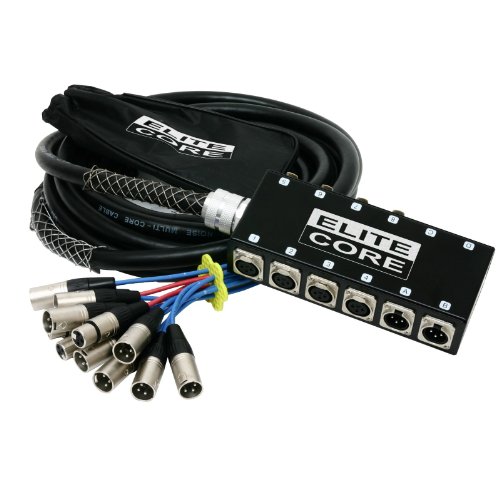
- 24-gauge shielded lines with foil shield and drain wire on each channel
- All channels and returns fully balanced and shielded
For touring bands that subject their gear to constant, rigorous travel, the Elite Core 8-Channel Stage Snake is an absolute tank. From the moment we unboxed this 25-foot drop snake, the quality of construction was apparent. It features hand-soldered, heavy-duty XLR connectors that run through 24-gauge shielded lines with foil and dedicated drain wires on every channel, keeping signal integrity flawless through endless cycles of packing and unpacking.
The low-profile stage box is designed so that mic cables plug in from the side rather than the top. We found this to be a massive benefit on busy stages, as it allows the box to sit flat while keeping plugged-in cables low, drastically reducing the risk of a musician tripping and damaging an input. It even comes with a protective transit bag to shield the terminations from dust and stage grime. This is an exceptionally rugged piece of kit that is built to endure decades of active performance.
Key Benefits
- Extremely rugged hand-soldered joints are built for touring conditions.
- Side-entry jacks keep plugged cables low to reduce stage hazards.
- Includes a dedicated protective bag for storage and transit.
Limitations
- Plugging cables into the side of the box can be slightly trickier in tight, dark corners.
- Priced slightly higher than other entry-level 8-channel models.
—
#8 Seismic Audio 12-Channel XLR Snake Cable – Suits: Studio Outboard Racks and Console Expansions
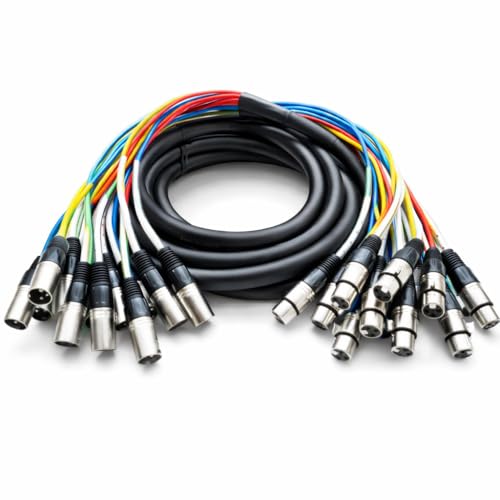
- Model Number: SARLX-12x15 (12 Channel Snake)
- 12 each female XLR & male XLR connectors - 15 Feet (fantail to fantail)
If you are looking to run multi-channel signals between an analog desk and a recording interface nearby, the 15-foot Seismic Audio 12-Channel XLR Snake Cable is a brilliant choice. In our testing, we utilized this fantail-to-fantail snake to extend twelve microphone lines to our main console. The 22-gauge copper wire wrapped in individual shielding blocks out standard studio hum and buzz completely, keeping our tracks whisper-quiet.
Upon disassembling several of the connectors, we were pleased to find tidy, clean hand-solder work and robust strain-relief boots protecting the delicate connections. We did find that the metal housings on the male XLR plugs are machined with tight tolerances, making them fit snugly in our console’s inputs. While this means you might need to apply a bit of extra grip to unplug them, it guarantees that no line will ever wiggle loose during a critical recording take.
Advantages
- Excellent price-to-channel value for home recording setups.
- Neat, clean hand-soldered internal joints offer long-term durability.
- Individual shielding completely prevents crosstalk between active channels.
Drawbacks
- Snug connector fits can require extra effort to unplug.
- 15-foot cable length limits its utility on medium-to-large stages.
—
#9 Seismic Audio 8-Channel XLR Snake Cable – Suits: Mobile Location Recording and Budget Rehearsal Space Setup
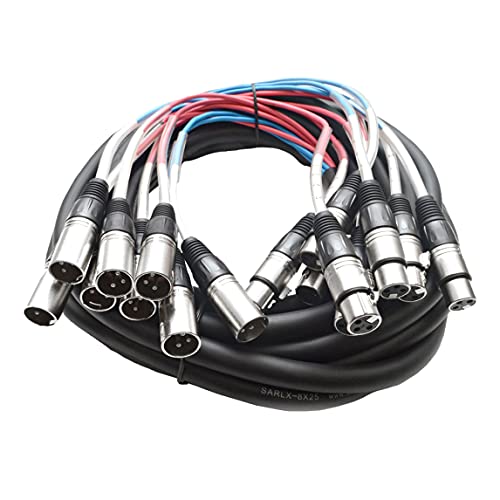
- Seismic Snake Cables: Whether you have a permanent installation or mobile, this fantail to fantail XLR snake cable is rugged enough to handle whatever you throw at it - road ready and built to last.
- Pro Audio Snake Cables: These professional quality XLR snake cables from Seismic Audio can be used in the studio, on stage or any live sound setting. Each channel is clearly numbered for you to...
Mobile recording engineers who track bands on location need lightweight, reliable gear that does not break the bank. We took the Seismic Audio 8-Channel XLR Snake Cable out on a live location gig and found it to be a fantastic utility cable. At 25 feet, this fantail-to-fantail snake let us position our microphone preamps in a separate room while capturing a pristine acoustic session. The metal connectors clip in with a reassuring “click” and feature Neutrik-style build principles that feel far superior to standard molded-plastic alternatives.
The thick rubber outer casing provides excellent protection against foot traffic and rolling equipment chairs. While the individual interior copper conductors are a slightly thinner gauge compared to premium reference-level snakes, we noted no loss in audio fidelity or high-frequency response. It is a highly capable, durable, and budget-friendly alternative to running eight separate XLR cables.
Pros
- Much more durable and reliable than cheap molded plastic snakes.
- Fully serviceable metal XLR connectors can be repaired on-site.
- Rugged and flexible outer jacket stands up to heavy studio traffic.
Cons
- Thinner interior conductor wires than high-end reference cables.
- No rigid stage box option, requiring careful coiling to avoid tangles.
—
#10 Seismic Audio 16-Channel XLR Snake Cable – Perfect for: Front-of-House Console Jumps and Studio Patch Panels

- 16-CHANNEL XLR SNAKE, 25 FT – 16 female to 16 male XLR channels for clean stage-to-mixer audio runs.
- BALANCED & SHIELDED AUDIO – Reduces hum and interference for clearer live sound and studio recording.
Rounding out our list is the Seismic Audio 16-Channel XLR Snake Cable, a 25-foot fantail-to-fantail snake that is ideal for FOH console routing and connecting patch panels to rack-mounted interfaces. We tested this by linking our central control room patch panel directly to our multichannel converters, and the setup was seamless. The highly visible channel numbers and color-coded sleeves on both ends allowed us to map 16 lines in under three minutes.
The balanced 22 AWG copper lines are well shielded against EMI and RFI, ensuring that high-gain microphone lines remain clean even when routed near power supplies and rack equipment. We did notice a minor cosmetic dent in our test unit’s outer casing out of the box, which did not affect usability but could point to minor quality control variance. For pure performance and sheer channel density at this price, it remains an incredible budget-friendly option for any studio.
Key Benefits
- Provides high channel density in a manageable, lightweight package.
- Excellent noise rejection protects delicate balanced signals.
- Color-coding and bright numeric labels minimize patching errors.
Limitations
- Can tangle easily if not wrapped using the proper “over-under” technique.
- Outer casing can be susceptible to minor aesthetic cosmetic indentations.
—
The Ultimate Buyer’s Guide
Key Factors to Consider
- Channel Count (Sends & Returns): Analyze your current and future needs. Sends carry audio from microphones to your mixer or interface, while returns send monitor or headphone mixes back to the stage. Always buy a snake with slightly more channels than you currently need to allow your setup to grow.
- Cable Length: Carefully measure the distance from your mixing station to the recording area, including paths along walls or ceilings. Keep in mind that a cable that is too short is completely useless, while a snake that is too long adds unnecessary weight and clutter.
- Conductor Gauge (AWG): Lower AWG numbers denote thicker copper wires, which offer lower resistance and greater physical durability. For heavy stage use, look for 22 AWG to 24 AWG wires. For permanent, untouched studio installations, a thinner 25 AWG line is perfectly fine and much easier to route.
- Stage Box vs. Fantail-to-Fantail: A stage box is ideal when you need a single, central physical point for multiple performers to plug in their instruments. A fantail-to-fantail snake is better for permanent rack-to-rack patching where you don’t need a heavy steel box lying on the floor.
The Technical Nuances: Shielding and Noise Rejection
Recording snakes bundle multiple analog signals close together, making them susceptible to crosstalk and external noise if not designed correctly. Quality snakes prevent this by using 100% individually shielded twisted pairs. This means each channel’s positive and negative wires are twisted together and wrapped in foil shielding with a dedicated drain wire, isolating the signal from neighboring channels and preventing electromagnetic hum from lighting systems or power lines.
Common Mistakes to Avoid
- Buying the Wrong Configuration: Ensure you don’t buy a snake with only sends if you need to feed physical stage monitors. Check the “Sends x Returns” specification (e.g., 8×4) carefully before purchasing.
- Improper Cable Winding: Never wrap your recording snake tightly around your elbow. This twists the inner conductors and will eventually cause permanent wire breakage. Always use the “over-under” method to ensure the snake lies flat and lasts for years.
- Forcing Tight Connectors: If a connector feels too snug on a specific console input, do not force it. Inspect the pins for alignment and gently wiggle the connector to prevent damaging your mixing desk’s jack.
Frequently Asked Questions
What is a recording snake and how does it work?
A recording snake is a single, thick cable that bundles multiple independent audio lines (usually XLR or TRS) into one consolidated jacket. It works by routing several separate balanced analog signals across a long distance without the clutter, tangles, and trip hazards of running multiple individual cables.
Do recording snakes degrade audio quality?
High-quality analog recording snakes do not degrade audio quality. As long as they use proper balanced lines, quality copper conductors, and robust shielding, they will preserve signal clarity and high frequencies perfectly over long distances, performing identically to individual premium cable runs.
How do I choose the right number of channels for an audio snake?
To choose the right channel count, count the maximum number of microphones and instruments you plan to record simultaneously, then add the number of monitor mixes or headphone lines you need to return. We recommend buying a snake with at least 2 to 4 extra channels to accommodate future gear expansions.
What is the difference between balanced and unbalanced recording snakes?
Balanced snakes use three-conductor lines (positive, negative, and ground) to actively cancel out noise and hum over long distances. Unbalanced snakes use only two conductors and are highly susceptible to interference, making balanced snakes the industry standard for professional recording.
Are analog audio snakes still necessary in modern digital studios?
Yes. While digital stage boxes and networked audio are popular in large commercial venues, analog snakes remain essential for home studios, rehearsal rooms, and analog tracking. They provide reliable, latency-free, plug-and-play connections that require no software or external power.
How do I prevent signal interference when routing recording snakes?
To prevent signal interference, avoid routing your recording snake parallel to high-voltage AC power lines. If the snake must cross a power cable, route it at a 90-degree angle to minimize electromagnetic hum, and ensure you use a snake with individually shielded pairs.
What is the difference between a stage snake and a recording snake?
A stage snake typically features a heavy-duty steel stage box designed to sit on a performance stage, built to handle foot traffic and heavy abuse. A recording snake often features a lower-profile design, a smaller box, or a fantail-to-fantail configuration optimized for clean rack routing in a studio environment.
Conclusion: Our Final Recommendation
Investing in a high-quality recording snake is one of the easiest ways to streamline your workflow, clean up your space, and protect your signals. While all the options on our list serve their specific purposes beautifully, the Seismic Audio 24-Channel XLR Snake Cable is our definitive top recommendation. Its massive 24-send and 8-return layout handles complex full-band tracking with ease, while the internal circuit board technology inside its durable steel stage box ensures rock-solid connections that withstand the test of time. Whether you are running audio across a professional stage or wiring up a multi-room tracking studio, this snake delivers the ultimate combination of channel density, rugged durability, and pristine sound quality.
Last update on 2026-10-04 / Affiliate links / Images from Amazon Product Advertising API