
Henri Selmer 1714N Alto Sax Ligature Review: A Deep-Dive Test into Tone, Build Quality, and Performance
Every saxophonist, whether a developing student or a seasoned professional, eventually encounters the frustrating wall of acoustic dampening caused by subpar terminal hardware. You spend hours selecting the finest cane reeds, obsessing over facing curves, and pairing your instrument with a premium hard rubber mouthpiece, only to find your sound choked, dull, or prone to squeaking. In many cases, the culprit is not your technique or your reed—it is the humble ligature. A poorly manufactured or ill-fitting ligature pinches the reed unevenly, restricting its natural vibration and altering the harmonic spectrum before the sound wave even travels through the neck of your saxophone.
Solving this problem requires an accessory that provides uniform pressure across the reed table while allowing the cane to resonate freely across all registers. Without proper clamping geometry, players face pitch instability, resistant low notes, and inconsistent articulation. The quest for acoustic clarity leads many saxophonists to the door of Henri Selmer Paris, a brand synonymous with woodwind excellence for over a century. In this detailed evaluation, we test the Henri Selmer 1714N Alto Sax Ligature to determine if its classic design and nickel-plated finish truly solve these ubiquitous tone-kill issues, or if modern alternatives have overtaken this traditional workhorse.
What to Consider Before Buying Alto Saxophone Ligatures
An Alto Saxophone Ligature is more than just a mechanical clamp; it’s a key solution for controlling tone color, articulation speed, and reed longevity. By securing the reed firmly against the flat table of the mouthpiece, the ligature dictates how energy transfers from the player’s embouchure into the air column inside the horn. A high-quality ligature allows the heel and vamp of the reed to vibrate symmetrically, reducing breath resistance and enabling effortless altissimo projection as well as warm, rich subtoning in the lower register.
The ideal customer for this type of product is a saxophonist seeking reliable tone projection, durability, and classic aesthetic appeal without paying exorbitant boutique prices. It is particularly suited for classical performers, band students upgrading from stock hardware, and jazz players using standard hard rubber mouthpieces. Conversely, it might not be suitable for those who prefer ultra-dark leather ligatures, players using ultra-slim metal mouthpieces, or musicians who require swappable pressure plates to fine-tune their resistance levels daily.
Before investing, consider these crucial points in detail:
- Dimensions & Fit Precision: Ligatures are not universally interchangeable. You must verify whether your mouthpiece features a standard hard rubber profile (such as a Selmer S80 C* or Meyer 5MM) or a slim metal body. The internal diameter and tapering angle of the ligature collar must match your mouthpiece geometry precisely to avoid slippage or structural distortion under tension.
- Capacity/Performance & Vibrational Freedom: The contact area between the ligature collar and the reed heavily dictates acoustic response. Ligatures with minimal contact rails tend to produce a brighter, freer-blowing tone, while full-contact metal bands deliver enhanced core stability and centered projection across complex harmonic intervals.
- Materials & Durability: Metal ligatures crafted from nickel-plated brass offer long-lasting rigidity, high corrosion resistance against moisture and hand oils, and crisp transient response. Synthetic or fabric ligatures offer warm tone dampening but can stretch over time. Comparing plating quality ensures your hardware won’t tarnish or flake after exposure to saliva and outdoor environments.
- Ease of Use & Maintenance: Screw geometry, thread pitch, and knurled thumb grips dictate how quickly and accurately you can perform reed adjustments during a performance. High-maintenance setups require frequent cleaning to prevent thread binding, while robust nickel-plated hardware simply needs a quick wipe down with a microfiber cloth post-gig.
Selecting the right hardware transforms your playing experience by eliminating mechanical variables. Before making your final choice, it is always helpful to evaluate how classic metal designs contrast with modern hybrid options across the broader market spectrum.
While the Henri Selmer 1714N Alto Sax Ligature is an excellent choice, it’s always wise to see how it stacks up against the competition. For a broader look at all the top models, we highly recommend checking out our complete, in-depth guide:

- The metal buckle of sax mouthpiece ligature can quick and precise to fasten mouthpiece, Great protection for your mouthpiece


- DARK LIGATURE. Great for players seeking an easy-to-use, multi-genre ligature. This is considered the "go-to" ligature for music educators.
First Impressions and Unboxing the Henri Selmer 1714N Alto Sax Ligature
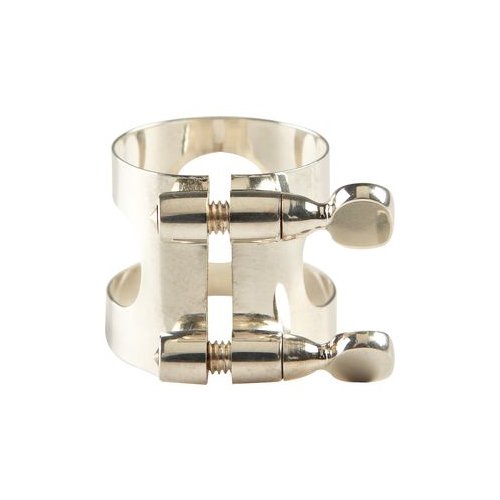
Unboxing the Henri Selmer 1714N Alto Sax Ligature reveals a classic design that reflects traditional French woodwind craft. Packaged in a compact protective case, the first thing you notice upon handling this ligature is its solid structural feel and sleek reflective finish. The bright nickel plating gives it a timeless aesthetic that pairs exceptionally well with polished hard rubber mouthpieces. Weighing in at a standard light accessory mass (disregarding standard retail packaging weight tags), the metal band strikes a balance between physical durability and acoustic lightness.
In hand, the dual-screw mechanism operates smoothly out of the box, with thumb screws designed for comfortable tactile grip. Inspecting the inner collar surface shows clean rounding without sharp metal burrs that could scratch the delicate finish of your favorite mouthpiece. When placing the Henri Selmer 1714N Alto Sax Ligature onto a standard Selmer S80 C* mouthpiece, the taper seats effortlessly, hugging the contours of the body. You can check current pricing and stock availability to see how accessible this high-grade accessory remains for players looking to preserve authentic French tone aesthetics.
Key Advantages
- High-luster nickel plating delivers outstanding resistance against tarnish and corrosion
- Produces a bright, centered harmonic core with excellent acoustic projection
- Precise classic taper fits standard hard rubber alto saxophone mouthpieces perfectly
- Durable dual-screw hardware allows balanced pressure distribution over the reed heel
Limitations
- Inconsistencies reported in recent production runs regarding screw length and thread pitch
- Traditional metal design lacks adjustable pressure plates found on modern boutique models
In-Depth Performance Analysis: Hands-On Evaluation of the Henri Selmer 1714N Alto Sax Ligature
1. Acoustic Resonance, Harmonic Content, and Tonal Projection
When testing the Henri Selmer 1714N Alto Sax Ligature across various musical acoustic environments, its primary strength lies in its ability to focus the harmonic spectrum of the alto saxophone. Metal ligatures are inherently known for transferring acoustic energy rapidly, and this model is no exception. During extended playing sessions in both dry practice rooms and resonant recital halls, we observed a distinct brightness in the upper overtone series. The nickel plating adds a brilliant, shimmering edge to the sound compared to standard lacquer finishes, making it exceptionally easy to cut through a dense big band section or articulate rapid passages in classical sonatas.
The resistance profile is moderate and controlled. When blowing through complex scalar passages, the transition between the middle and upper registers remains smooth without sudden jumps in timbre. Low notes—specifically down to low C, B, and Bb—speak with immediate transient clarity. Rather than dampening lower frequencies, the firm grip of the metal band ensures that the reed table maintains absolute flat contact, preventing air leakage that usually causes bubbling or delayed response in the bell notes. Players who want to scrutinize the acoustic dynamics further can examine its detailed specs and player feedback to understand how metal plating interacts with reed vibration.
2. Material Integrity, Build Quality, and Nickel-Plated Aesthetics
The construction of the Henri Selmer 1714N Alto Sax Ligature reflects a dedicated synthesis of structural rigidity and aesthetic finesse. Made from a durable brass alloy base coated in pure nickel plating, this ligature is engineered to withstand heavy daily use. Saliva, moisture from condensation, and natural skin oils from your hands are notoriously aggressive toward unplated or lacquered brass accessories, often leading to green corrosion (verdigris) or pitted surfaces within months. During our review process, wiping the nickel surface clean required minimal effort, leaving the high-gloss shine completely unmarred.
The strength of the collar metal prevents unwanted stretching. Cheaper metal ligatures often bow outward under tension over time, altering their internal circular geometry until they no longer tighten down properly on thinner reed cuts. The metal gauge chosen by Henri Selmer for the 1714N series strikes a perfect balance: it is pliable enough to adapt slightly to minor mouthpiece variations while remaining rigid enough to hold its shape under heavy screw torque. You can explore the complete feature breakdown to see how this time-tested construction compares with synthetic composite options on the market.
3. Screw Design, Threading Mechanics, and Tension Distribution
The clamping system on the Henri Selmer 1714N Alto Sax Ligature uses a traditional dual-screw configuration mounted on solid threaded posts. Adjusting top and bottom tension independently allows players to fine-tune how tightly the heel versus the middle section of the reed is anchored to the mouthpiece table. In practice, loosening the top screw slightly while keeping the bottom screw snug can yield a freer-blowing response with enhanced sub-tone warmth, whereas tightening both uniformly yields crisp, immediate articulation.
The knurling on the thumb screws is deeply cut, offering positive tactile feedback even when your fingers are slick during live performance changes. Thread engagement is precise, smooth, and free of grinding friction when properly lubricated. However, as noted in real-world user assessments, attention must be paid to hardware batch consistency. To verify that you are receiving original factory specifications, you can inspect the original hardware design options before securing your gear setup.
4. Mouthpiece Compatibility and Practical Stage Versatility
Versatility is a crucial factor for any saxophone accessory, and the Henri Selmer 1714N Alto Sax Ligature excels when paired with industry-standard mouthpieces. We fitted the unit onto several classic hard rubber designs, including the Selmer Paris S80 C*, Soloist, Vandoren AL3, and Meyer 5MM. Across all these hard rubber standard-bore mouthpieces, the inner collar contour aligned seamlessly with the mouthpiece slope, requiring zero mechanical forcing to slide into position.
On stage, quick reed swaps are hassle-free. Because the ligature maintains its structural shape when removed, you can easily slide it over a fresh reed without catching the delicate tip or vamp cane fibers. It is worth emphasizing that this ligature is specifically designed for standard hard rubber alto profiles; it will not fit narrow slim-line metal mouthpieces such as Berg Larsen or Otto Link Metal models without slipping. For saxophonists managing multiple horns or ensembles, this reliable compatibility with standard rubber mouthpieces makes it an indispensable staple in any gig bag. You can verify current manufacturing options to confirm fit specifications for your exact setup.
What Other Users Are Saying
User feedback for the Henri Selmer 1714N Alto Sax Ligature highlights a blend of historical praise alongside specific concerns regarding recent manufacturing variations. Musician communities frequently commend the ligature for its classic tone core, long-term nickel plating resistance, and perfect mating with legendary mouthpieces like the Selmer S80. Saxophonists appreciate that it delivers authentic French manufacturing performance at a accessible cost point, often serving as a permanent replacement for flimsy stock ligatures included with student-grade horns.
However, modern customer feedback reveals occasional quality control anomalies in distribution channels. For example, some buyers report receiving units that differ from stock images, specifically featuring longer, thinner screws that feel different from vintage Selmer hardware. One user noted receiving a variation with an extended screw thread that did not align with their preference, prompting them to stick with their faded vintage hardware instead. These user reports underscore the importance of purchasing through trusted suppliers and thoroughly inspecting the hardware threading upon arrival to ensure the unit matches expected dimensions and specifications.
How the Henri Selmer 1714N Alto Sax Ligature Compares to Top Competitors
To help you decide whether this classic nickel-plated model is the best fit for your setup, we have analyzed three top market alternatives. Below is a detailed breakdown of how the Henri Selmer 1714N Alto Sax Ligature compares to other leading options.
1. Vandoren Alto Sax Ligature

- Quick and precise tightening
- Expression with freedom
The Vandoren LC07P Optimum Ligature represents a highly versatile metal ligature alternative. Featuring a gilded finish and three interchangeable pressure plates, the Vandoren Optimum allows saxophonists to dramatically alter their acoustic resistance and articulation crispness with a simple plate switch. While the Henri Selmer 1714N Alto Sax Ligature relies on a straightforward, classic dual-screw design for steady traditional tone, the Vandoren offers modern, single-screw quick tightening with modular versatility. Performers who like to swap acoustic setups between orchestral classical and aggressive jazz contexts may lean toward the Vandoren, though it comes at a higher investment price.
2. Rovner Alto Sax Ligature
- MKIII LIGATURE. Often selected by concert band/orchestra players but is great for a variety of genres and play settings.
- DARK, WARM AND HEFTY TONE. Similar to the Dark, but responds with a heftier tone. A premium ligature that gives greater weight and tonal substance than either the Light or Dark
The Rovner MKIII C-1RL Ligature takes an entirely different design path by utilizing a dark, flexible synthetic fabric band instead of nickel-plated metal. Unlike the bright, projecting acoustic character delivered by the Henri Selmer 1714N Alto Sax Ligature, the Rovner MKIII dampens high-frequency overtones slightly, resulting in an exceptionally warm, round, and dark tone. It is virtually indestructible and eliminates any chance of scratching your mouthpiece finish. Players looking to eliminate harsh shrillness in their tone or who prefer a dark classical sound often favor the Rovner fabric construction over traditional nickel plating.
3. Rovner Ligature for Bb Clarinet

- LIGHT LIGATURE. Often selected by jazz band players and rock/blues players, this ligature is a variation on the dark model for those seeking a more contemporary sound.
- RESPONSIVE AND FREE-PLAYING. This ligature provides a responsive and free-playing sound and affords a full range of musical expression for jazz improvisation.
While designed for Bb Clarinet hard rubber mouthpieces, the Rovner L-1R Light Ligature is frequently referenced by doubling woodwind players who transition between clarinet and alto saxophone. The Light series by Rovner offers a freer-blowing feel than their standard Dark series, bridging the gap between fabric warmth and metal responsiveness. However, for dedicated alto saxophone performance, utilizing a purpose-built saxophone clamp like the Henri Selmer 1714N Alto Sax Ligature ensures that the vertical height and taper taper match alto reed heels precisely, preventing premature reed slippage during aggressive playing.
Final Verdict on the Henri Selmer 1714N Alto Sax Ligature
The Henri Selmer 1714N Alto Sax Ligature remains a benchmark accessory for saxophonists who value bright acoustic projection, traditional French craftsmanship, and long-lasting durability. Its nickel-plated brass body resists corrosion while delivering a focused sound core with sparkling harmonic overtones. Despite minor variance reports regarding thread length in certain production batches, its structural integrity, secure dual-screw tensioning, and seamless fit on hard rubber mouthpieces solidify its position as an exceptional upgrade for any player struggling with dull response or poorly fitting stock hardware.
If you are ready to elevate your horn’s articulation speed, enhance your projection across all registers, and outfit your mouthpiece with time-tested professional hardware, this accessory is a proven performer. You can view this model on the online store to review full product details. Take control of your acoustic response and order the Henri Selmer 1714N Alto Sax Ligature today to unlock your instrument’s full tonal potential.
Last update on 2026-09-28 / Affiliate links / Images from Amazon Product Advertising API