
Vandoren Alto Sax Ligature Review: Classical Resonance Meets Modern Woven Craftsmanship
Every saxophonist eventually hits an annoying acoustic wall. You spend hundreds of hours honing your embouchure, carefully selecting aged cane reeds, and investing in a high-end hard rubber mouthpiece, only to find your sound burdened by harsh, metallic overtones or an unpleasant “spitty” edge. For classical saxophonists and tone purists alike, finding a ligature that secures the reed tightly without choking its fundamental vibration is an ongoing challenge. Traditional metal ligatures often clamp down with uneven point-pressure, while hand-wrapped string ligatures—long revered by European conservatory masters for producing an ultralight, perfectly centered voice—are notoriously tedious to wrap, adjust, and maintain during high-stakes rehearsals or live performances.
That is precisely why we put the Vandoren Alto Sax Ligature through rigorous real-world acoustic testing. Designed to combine the effortless setup of a modern mounting system with the legendary sonic warmth of traditional hand-bound string ligatures, this accessory promises to transform your horn’s front-end response. If you have been struggling to eliminate unwanted buzz, soften your articulation, or achieve a rich, homogenous tone from the bottom of the horn up into the altissimo register, this detailed evaluation reveals whether this classical-style woven ligature deserves a permanent place in your instrument case.
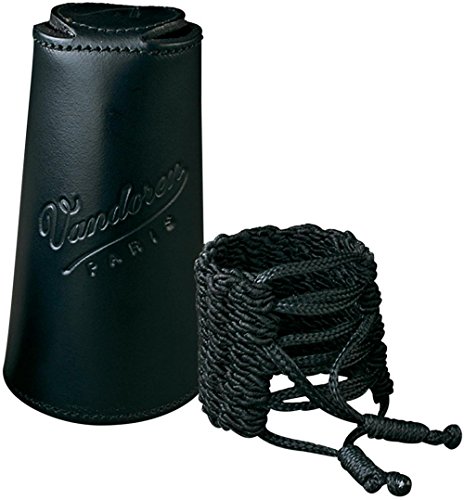
- Adjustable and easy to fit woven ligature
- Precisely fits the reed to the mouthpiece
What to Consider Before Buying an Alto Saxophone Ligature
An alto saxophone ligature is far more than a simple mechanical clamp; it is a critical acoustic bridge that directly influences how your reed vibrates against the mouthpiece rail and table. The way a ligature distributes clamping force alters your reed’s harmonic response, resistance level, and attack clarity. Choosing the wrong design can stifle your dynamic range or introduce unwanted harshness into your sound, making it essential to understand your specific acoustic goals before making an investment.
The ideal customer for a classical string-style ligature is an intermediate to professional saxophonist, conservatory student, or ensemble performer seeking a dark, warm, and tightly centered acoustic profile with clean articulation. Conversely, it might not be suitable for commercial, rock, or funk players who require maximum edge, sizzle, and cutting projection, where modern gold-plated metal or bright inverted ligatures often excel. If you fall into the latter category, metal alternatives with heavy mass plates may better suit your performance demands.
Before investing, consider these crucial points in detail:
- Dimensions & Compatibility: Saxophone mouthpieces vary significantly in exterior circumference and beak taper. While standard hard rubber mouthpieces fit standard ligatures comfortably, ultra-slim hard rubber models or specialized custom facings require a ligature with sufficient adjustment range to secure the reed firmly without running out of tension thread or track.
- Capacity/Performance & Acoustic Dampening: Different materials absorb energy differently. Woven string and textile ligatures naturally dampen high-frequency metallic buzz, yielding a pure fundamental frequency, whereas metal ligatures reflect bright harmonics for enhanced cut and projection.
- Materials & Durability: Traditional string ligatures require intricate hand-knotting that can unravel or stretch over time. Modern woven cord synthetic formulations provide stretch resistance, moisture protection, and long-term structural integrity while maintaining the organic acoustic properties of traditional thread.
- Ease of Use & Maintenance: Fast reed changes on stage require an intuitive tightening mechanism. Sliding tension winders eliminate the need for traditional thumb screws, but they require a gentle, precise touch during initial alignment and routine reed readjustment.
Selecting the right mounting system can entirely reshape your instrument’s playing feel and tonal balance. Before diving deeper into our hands-on experience, you can explore its full specifications and current deals to see how it fits your budget.
While the Vandoren Alto Sax Ligature is an excellent choice for players seeking refined classical warm tone, it is always wise to see how it stacks up against the broader market. For a broader look at all the top models, we highly recommend checking out our complete, in-depth guide:

- The metal buckle of sax mouthpiece ligature can quick and precise to fasten mouthpiece, Great protection for your mouthpiece
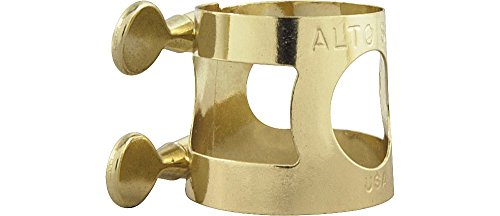


- DARK LIGATURE. Great for players seeking an easy-to-use, multi-genre ligature. This is considered the "go-to" ligature for music educators.
First Impressions & Key Features of the Vandoren Alto Sax Ligature
Unboxing the Vandoren Alto Sax Ligature reveals an understated, elegant design that immediately feels distinct from typical brass or leather ligatures. Weighing a negligible 0.64 ounces, the ligature consists of a high-density, woven black synthetic cord precision-engineered into a continuous sleeve. Rather than using traditional brass thumbscrews, tension is controlled via two dual sliding string windings that glide smoothly along the cord harness, allowing you to fine-tune clamping pressure across the top and bottom of the reed heel independently.
In the hand, the micro-woven textile material feels surprisingly stiff and durable, designed specifically to resist stretching even when under high tension against moist cane reeds. The package includes a sturdy, black molded plastic protective cap engineered to slip comfortably over the setup. When we mounted the unit onto standard hard rubber classical mouthpieces, the installation felt smooth, secure, and visually refined, giving the instrument an understated, old-world European aesthetic reminiscent of vintage German clarinet setups.
Key Benefits
- Emulates traditional hand-wrapped string acoustic tone with modern ease
- Dual sliding winders provide precise, customizable reed tension distribution
- Eliminates unwanted spitty artifacts and bright metallic overtones
- Exceptionally lightweight, minimalist design enhances reed vibration
Drawbacks & Limitations
- Included cap is rigid plastic rather than soft leather
- May reach sliding limit on extremely slim-bodied custom mouthpieces
Deep Dive Performance Analysis: Hands-On Evaluation
1. Traditional String Concept with Woven Precision Mechanics
The core philosophy behind the Vandoren Alto Sax Ligature is the faithful emulation of traditional hand-bound string stringing. For generations, classical woodwind masters wrapped raw cord directly around the reed and mouthpiece to achieve absolute, uniform contact around the entire circumference of the hard rubber body. Modern metal ligatures, even higher-end inverted models, rely on rigid pressure points that can warp the reed table or create micro-gaps along the side rails if tightened unevenly. Vandoren tackles this age-old mechanical dilemma by replacing rigid hardware with a continuous, flexible woven cord matrix.
During our dynamic playing tests, we immediately noticed how effortlessly the woven sleeve self-conforms to the exact contours of the reed’s heel and the mouthpiece’s top curve. Because the woven material flexes laterally, it applies equal 360-degree clamping pressure across the entire contact surface. Adjusting the double-sliding string winders feels smooth and deliberate. Pushing the winders closer together increases tension across the reed table, locking the reed tightly in position without creating crushing pinpoint pressure. This balanced pressure distribution prevents table distortion, allowing cane reeds to swell naturally with moisture while maintaining a perfectly flat seal against the mouthpiece rails. For saxophonists who appreciate precise craftsmanship, this simple yet effective tension mechanism is a feature that really sets it apart from standard single-screw metal ligatures.
2. Acoustic Response, Intonation, and Tonal Clarity
When evaluated in a controlled acoustic space, the sonic impact of the Vandoren Alto Sax Ligature becomes instantly apparent. Standard metal ligatures tend to emphasize high-frequency upper harmonics, which can translate into a bright, occasionally harsh or “spitty” attack during soft staccato passages. Switching from a standard metal or heavy metal-plated ligature to this woven model produces a noticeably warmer, darker, and significantly more centered sound core. The subtle dampening effect inherent to synthetic cord dampens erratic upper frequencies while letting the fundamental resonant core of the instrument shine through unimpeded.
During extensive scales, arpeggios, and wide interval leaps across the range of the alto saxophone, the consistency of response was striking. Notes in the problematic low register (from Low C down to Low Bb) speak with exceptional warmth and immediate air response, eliminating the fuzzy attack that frequently plagues stiff reeds. In the palm keys and altissimo register, tone remains round, full, and singing, completely free of the shrill, thin brittleness associated with low-mass metal clamps. Articulation feels clean, light, and nimble; single-tonguing and double-tonguing passages feel smooth because the reed rebounds freely without mechanical choking. The result is a sound that feels distinctly dark, focused, and acoustically refined, perfectly suited for classical solo performance, chamber quartets, and concert band environments.
3. Fitment, Mouthpiece Compatibility, and Sizing Specifics
A critical factor when choosing any specialized woodwind accessory is sizing versatility. We tested the Vandoren Alto Sax Ligature across a wide range of standard hard rubber classical mouthpieces, including the popular Vandoren Optimum AL3, AL4, AP3, as well as standard Selmer S80 C* and Soloist models. On standard-sized hard rubber bodies, the woven harness sits cleanly and securely, providing plenty of adjustment travel on the sliding winders to dial in exact tension levels regardless of whether you are using thick-heeled unfiled reeds or thinner cut options.
However, players who utilize specialized, slender-profile mouthpieces should take note of structural geometry. When mounted on ultra-slim mouthpieces—such as the Selmer Concept—combined with thinner-cut reed heels (like traditional French-filed cuts or thin-profile synthetic options), the sliding string winders must be pulled significantly further apart to achieve maximum tightness. In our testing on smaller-diameter beaks, the winders occasionally approached the maximum physical limit of their sliding track. While the ligature held the reed securely in place during standard playing conditions, players who use exceptionally thin mouthpiece profiles should ensure their reed heel thickness provides sufficient clearance for full tensioning. When fitted to standard-dimension hard rubber mouthpieces, the clamping system remains rock solid and dependable.
4. Ergonomics, Longevity, and Practical Protection
Beyond acoustic performance, daily usability and maintenance durability play a major role in a product’s long-term value. Traditional string ligatures were prone to loosening over the course of a long practice session due to thread stretching, moisture absorption, and thermal expansion. Vandoren solves this durability issue by manufacturing the cord harness from an advanced, non-stretching synthetic polymer formulation. Throughout hours of continuous playing tests, the woven cord held its exact tension setting without needing frequent readjustment or re-tightening between pieces.
The aesthetic visual presentation of the ligature on the horn is undeniably striking. The black woven cord offers a sleek, unobtrusive, timeless aesthetic on stage that appeals to players who prefer minimalist visual design over flashy brass hardware. Regarding accessory protection, the package includes a molded black plastic cap designed to safeguard the delicate tip of your reed and mouthpiece rails in your case. While some players might visually expect a traditional leather cap based on older accessory stock photos, the included rigid plastic cap is sturdy, functional, easy to wipe clean, and provides impact protection against accidental drops or bumps in the rehearsal room.
What Other Users Are Saying
Real-world feedback from the woodwind community confirms our expert testing findings, highlighting the ligature’s distinct acoustic warmth and unique physical operation. Many saxophonists report a noticeable tonal improvement when upgrading to the Vandoren Alto Sax Ligature from metal ligatures like the Vandoren M/O, consistently praising the elimination of “spitty” or harsh high-frequency noise in favor of a smoother, crystal-clear center. Users frequently highlight the dual sliding string winders, noting that once you understand how the tension mechanism glides, it holds the reed firm and motionless even during long, demanding practice sessions.
Additionally, experienced saxophonists clarify a common point of confusion found in online product listings: this string-style model intentionally does not feature “interchangeable pressure plates,” as its continuous woven cord design distributes pressure uniformly without needing metal contact plates. On the downside, a few players utilizing unusually slim mouthpiece profiles—such as the Selmer Concept—note that the cord winders can reach the bottom of their clamping travel if paired with thinner reeds. Lastly, international buyers confirm that while the included protective cap is sturdy black molded plastic rather than soft leather, it fits securely and performs its protective duties perfectly. Overall, player sentiment remains overwhelmingly positive, especially among classical saxophonists looking for an authentic string acoustic response without the hassle of tying raw cord.
Comparing the Vandoren Alto Sax Ligature to Top Alternatives
1. Rovner Alto Sax Ligature MKIII

- MKIII LIGATURE. Often selected by concert band/orchestra players but is great for a variety of genres and play settings.
- DARK, WARM AND HEFTY TONE. Similar to the Dark, but responds with a heftier tone. A premium ligature that gives greater weight and tonal substance than either the Light or Dark
The Rovner MKIII offers a distinctly different approach to soft fabric ligature design compared to the Vandoren woven cord model. Constructed from a thick, heavy-duty neoprene-impregnated fabric sleeve with brass metal hardware, the Rovner MKIII is built for maximum durability and dense tonal dampening. While the Vandoren Alto Sax Ligature uses lightweight micro-woven string to preserve high-end harmonic resonance and light articulation, the Rovner MKIII offers a slightly heavier, darker sound profile with added resistance. Players seeking extreme dampening and robust single-screw convenience may favor the Rovner, whereas classical purists looking for fluid articulation, quick air response, and true string-emulated tone will prefer the delicate acoustic clarity of the Vandoren woven design.
2. Vandoren LC07P Optimum Ligature and Cap

- Quick and precise tightening
- Expression with freedom
For saxophonists who prefer metal ligatures with mechanical customization, the Vandoren LC07P Optimum represents the pinnacle of traditional brass engineering. Featuring a gilded finish, a double-track vertical screw tightening mechanism, and three interchangeable pressure plates, the Optimum allows players to adjust resistance, response, and articulation styles on the fly. While the LC07P Optimum delivers unmatched projection, crisp dynamic bite, and rigid hold, it is significantly heavier and yields a brighter, more metallic core tone than the woven Klassik model. Saxophonists focused on solo orchestral playing or dark chamber blend will lean toward the string Klassik ligature, while orchestral lead players desiring customizable dynamic punch will appreciate the Optimum’s interchangeable plate system.
3. Rovner L-1R Bb Clarinet Ligature and Cap

- LIGHT LIGATURE. Often selected by jazz band players and rock/blues players, this ligature is a variation on the dark model for those seeking a more contemporary sound.
- RESPONSIVE AND FREE-PLAYING. This ligature provides a responsive and free-playing sound and affords a full range of musical expression for jazz improvisation.
While designed primarily for hard rubber Bb clarinet mouthpieces, the Rovner L-1R Light Ligature is frequently utilized by woodwind doublers and saxophonists operating on ultra-slim, narrow-beak alto saxophone mouthpieces. The light neoprene construction offers quick response and a free-blowing feel that closely mimics a basic metal ligature without the harsh metallic ring. However, compared to the Vandoren Alto Sax Ligature, the Rovner Light lacks the nuanced dual-zone tensioning provided by Vandoren’s sliding string winders. Doublers who want a simple, budget-friendly clamp for slender mouthpieces may turn to the Rovner L-1R, but dedicated alto saxophonists prioritizing dark tone, elegant aesthetics, and flexible reed control will find the Vandoren Klassik superior in every acoustic metric.
Final Verdict on the Vandoren Alto Sax Ligature
The Vandoren Alto Sax Ligature successfully bridge the gap between historic string-wrapping techniques and modern mechanical reliability. By replacing rigid metal screws with a high-density, woven synthetic cord harness and dual sliding tension winders, Vandoren has crafted an accessory that removes harsh metallic overtones, smooths out articulation, and delivers a centered, dark voice across the entire register of the alto saxophone. Its lightweight construction lets the reed vibrate freely while maintaining steady, uniform pressure against the mouthpiece table.
While saxophonists playing on ultra-slim mouthpiece profiles should verify fitment compatibility, for the vast majority of classical performers, conservatory students, and tone enthusiasts playing on standard hard rubber mouthpieces, this ligature is an outstanding performance upgrade. It combines aesthetic elegance, reliable durability, and superior acoustic warmth into a single, compact package. If you are ready to eliminate spitty attacks and elevate your horn’s acoustic purity, we highly recommend that you grab your Vandoren Alto Sax Ligature today and experience the difference true string resonance makes in your daily playing.
Last update on 2026-09-28 / Affiliate links / Images from Amazon Product Advertising API