
Henri Selmer Alto Sax Ligature Review: Is This Classic French Hardware Still the Standard?
As saxophonists, many of us have experienced the baffling frustration of a muffled tone. You invest hundreds—or even thousands—of dollars into a hand-crafted horn, pair it with a premium hard rubber mouthpiece, and carefully select high-grade cane reeds, only to feel as though your sound is trapped behind a curtain. In many cases, the hidden bottleneck isn’t your neck cork, your mouthpiece chamber, or your blowing technique. It is the humble ligature holding your reed in place.
A poorly manufactured or ill-fitting ligature acts as an acoustic dampener, pinching the delicate vamp of the reed, deadening overtones, and restricting vibration transmission down the body tube. For generations, players looking for uninhibited response have turned to classic French brassware. We brought the Henri Selmer Alto Sax Ligature onto our testing bench and into rigorous rehearsal environments to determine if this minimalist, lacquer-finished standard-setter still delivers the pure, light, and transparent tone modern saxophonists demand. Before we dive into our hands-on findings, you can check the latest price and availability for this iconic accessory.
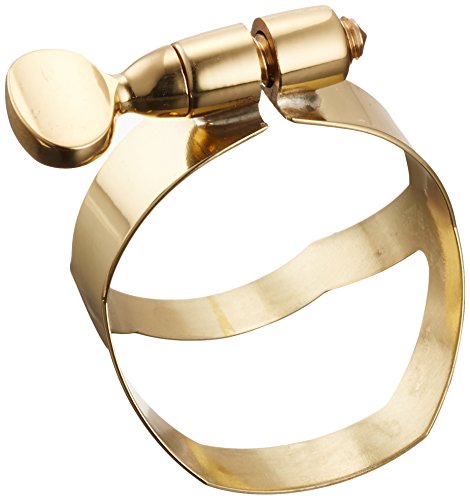
- The ideal design was completed after trial and error to transmit the vibrations of the lead to pure, as long as possible
- This is an ultra-standard ligature, loved by players of all genres
What to Consider Before Buying an Alto Saxophone Ligature
An Alto Saxophone Ligature is more than just a mechanical clamp; it’s a key solution for dictating how freely your reed vibrates, how cleanly your attacks articulate, and how stable your intonation remains across extreme dynamic ranges. Choosing the wrong style can result in unwanted altissimo resistance, dull subtones, or inconvenient slipping during high-pressure live performances.
The ideal customer for this type of product is an intermediate to professional player, or a serious student upgrading from stock kit hardware, who seeks a light, neutral, and uncolored acoustic response. It is specifically tailored for musicians playing standard hard rubber alto mouthpieces who value traditional aesthetic elegance and maximum harmonic purity. Conversely, it might not be suitable for players who prefer heavy, synthetic leather dampening to darken an overly bright horn, or those utilizing modern, ultra-slim metal mouthpieces that require specialized narrow ligatures.
Before investing, consider these crucial points in detail:
- Dimensions & Space: Mouthpiece outer dimensions vary significantly between brands and styles. A standard alto saxophone ligature is designed to contour precisely around traditional hard rubber profiles (such as the Selmer S80, Soloist, or Claude Delangle models). Ensure the inner circumference aligns with your specific mouthpiece beak geometry so the metal band seats evenly without biting or warping.
- Capacity/Performance: Acoustic resonance depends directly on mass and contact point density. Lightweight thin-band metal ligatures allow the reed to vibrate with maximum freedom, yielding a bright, projection-heavy tone with crisp articulation. Heavier fabric or weighted-plate designs absorb high-frequency chatter, favoring a darker, rounder, but sometimes less responsive acoustic profile.
- Materials & Durability: Brass construction coated in high-grade protective lacquer provides exceptional resistance against corrosion, moisture, and finger oils. Thread machining on tension screws is equally critical; high-tensile metal threads prevent stripping under repeated tightening, ensuring your setup remains locked during long practice sessions.
- Ease of Use & Maintenance: Double-screw traditional setups offer independent tension adjustment over the heel and tip of the reed table. While this allows fine-tuned custom clamping pressure, it requires slightly more patience when aligning reeds on stage compared to single-screw, quick-release mechanisms.
Finding the precise match for your instrument set-up requires weighing these physical factors against your desired tonal personality. When you examine its full feature set and specifications, you can better judge whether a classic brass band aligns with your playing goals.
While the Henri Selmer Alto Sax Ligature is an excellent choice, it’s always wise to see how it stacks up against the competition. For a broader look at all the top models, we highly recommend checking out our complete, in-depth guide:

- The metal buckle of sax mouthpiece ligature can quick and precise to fasten mouthpiece, Great protection for your mouthpiece


- DARK LIGATURE. Great for players seeking an easy-to-use, multi-genre ligature. This is considered the "go-to" ligature for music educators.
First Impressions and Key Features of the Henri Selmer Alto Sax Ligature
Unboxing the Henri Selmer Alto Sax Ligature immediately reveals the refined simplicity that French woodwind manufacturers have championed for decades. Free from unnecessary weight or overly complex mechanical hinges, this piece of hardware presents an ultra-clean, classic brass band geometry polished to a brilliant gold lacquer luster. Held in hand, its lightweight nature is instantly apparent—weighing barely a third of an ounce—foreshadowing its low-mass acoustic profile.
The overall build quality highlights traditional European craftsmanship. The metal band is stamped with delicate precision, featuring rounded edges that prevent gouging the exterior finish of your mouthpiece. The dual knurled tuning screws turn smoothly through their tapped brass blocks without binding or mechanical play. When test-fitting the ligature over standard hard rubber mouthpieces, the metal body flexes slightly to form a uniform, snug wrap along the reed stock. If you want to see its current market details, its timeless aesthetic seamlessly blends with vintage and contemporary saxophones alike.
Pros
- Delivers a pure, neutral, and light acoustic characteristic that highlights natural reed timbre.
- High-quality French brass construction with a durable, lustrous polish lacquer finish.
- Precision contour engineered specifically for seamless fit on standard hard rubber alto mouthpieces.
- Low-mass design maximizes overtone resonance and dynamic response across all registers.
Cons
- Can slide on the mouthpiece body if grasped directly while making rotational tuning adjustments.
- Double-screw configuration requires a few extra seconds during fast on-stage reed changes.
In-Depth Performance Analysis: Hands-On Evaluation
1. Acoustic Transmission and Tone Profile: Pure, Neutral, Uncolored
Our practical evaluation began in a deadened acoustic studio environment, allowing us to evaluate the raw sonic impact of the Henri Selmer Alto Sax Ligature without room coloration. The primary objective of this design is to transmit reed vibrations into the mouthpiece table with maximum purity and minimal acoustic dampening. Upon blowing our first scale passages, the most striking quality was the complete absence of tonal artificiality. Where heavy leather or rubberized ligatures tend to swallow high-frequency harmonics, this metal band lets the natural, buzzing upper overtones of cane reeds shine through unimpeded.
The sound characteristic is best described as light, nimble, and acoustically neutral. It does not force your saxophone into an artificially dark or overly harsh direction; rather, it amplifies whatever tonal qualities your mouthpiece and reed combination already possess. Subtones in the low register speak instantly with minimal air effort, while palm keys and altissimo notes project with clear, knife-edge focus. This transparent sound signature allows players to experience pure resonant response whether performing classical chamber music or cutting through a big band horn section.
2. Mouthpiece Synergy and Mechanical Fit
A ligature can only perform as well as it fits the mouthpiece architecture. We tested the Henri Selmer Alto Sax Ligature across several industry-standard hard rubber alto mouthpieces, including the Selmer S80 C*, the modern Selmer Claude Delangle model, and traditional Vandoren Optimum rubber bodies. In every instance, the curvature of the band wrapped smoothly around the beak, distributing clamping pressure evenly across the reed stock without twisting or pinching off one side of the table.
The contact rails hold the heel of the reed firmly against the mouthpiece window without requiring excessive screw torque. Because the metal band is engineered with slight elasticity, tightening the twin screws creates uniform radial pressure. This prevents the reed table from warping over time—a common issue with single-point pressure plate systems that apply isolated force. The resulting seal is airtight, allowing immediate response during rapid staccato passages and delicate pianissimo entrances.
3. Build Quality, Polish Finish, and Long-Term Durability
Constructed in France from premium brass alloy, the structural integrity of the Henri Selmer Alto Sax Ligature lives up to the reputation of the legendary Parisian workshop. The deep gold lacquer finish is thick and evenly applied, acting as a robust barrier against moisture, skin oils, and atmospheric oxidation. Throughout our testing weeks, daily handling and sweat exposure caused no flaking, discoloration, or pitting along the band interior.
The threaded screw housings are silver-brazed onto the band with immaculate structural joints. Under moderate torque, the threads operate smoothly without slop or stripping risk. For players who frequently swap reeds or play long gigging schedules, this rugged simplicity ensures the hardware won’t fail midway through a show. You can explore user feedback and finish options to confirm how reliably this classic design maintains its lustrous look over years of regular performance use.
4. Ergonomics, Handling, and Stability in Practice
From an operational standpoint, the classic dual-screw system presents distinct practical characteristics. Having independent control over the rear screw (near the reed heel) and front screw (near the vamp) enables subtle customization of clamping force. Loosening the front screw slightly can open up reed response for a freer blow, while tightening it stabilizes pitch focus during classical solos. The knurled screw heads feature deep grip grooves, making precise adjustments easy even with damp hands during performances.
However, players must be mindful when adjusting their overall mouthpiece position on the neck cork. Because the thin metal band relies on precise friction, grabbing the horn by the ligature to twist the mouthpiece can cause the band to shift slightly on the hard rubber shell unless tightened firmly. The simple workaround—and best practice—is to grip the body of the mouthpiece itself when tuning. Once understood, this minor handling detail in no way detracts from the superb playability and tactile feedback of the setup.
What Other Users Are Saying
Synthesizing feedback from players around the globe confirms that our expert findings align closely with the broader woodwind community. The overwhelming consensus praises the Henri Selmer Alto Sax Ligature for its clean tone, immediate playability, and classic French heritage. A common sentiment among saxophonists is that this hardware serves as the “ideal complement” for modern Selmer rubber mouthpieces, specifically pointing out how flawlessly it pairs with specialized models like the Selmer Claude Delangle alto mouthpiece and vintage Selmer Mark VII jazz rigs.
Many musicians highlight the noticeably upgraded response when replacing generic stock ligatures, noting that it brings out an uninhibited, singing high register. On the critical side, a few users noted that if you prefer to adjust your mouthpiece position on the neck cork by grabbing the ligature body, the band can slide unless cinched down tight. One user mentioned a preference for vintage double-knurl thumb screws, but acknowledged that the sound output remains remarkably good. Overall, players agree that its straightforward design and sonic neutrality make it a dependable staple—a primary reason why players worldwide continue to invest in authentic French hardware.
How the Henri Selmer Alto Sax Ligature Compares to Top Alternatives
1. Rovner MKIII Ligature for Alto Saxophone
- MKIII LIGATURE. Often selected by concert band/orchestra players but is great for a variety of genres and play settings.
- DARK, WARM AND HEFTY TONE. Similar to the Dark, but responds with a heftier tone. A premium ligature that gives greater weight and tonal substance than either the Light or Dark
The Rovner MKIII Ligature represents a fundamentally different philosophy compared to the Henri Selmer Alto Sax Ligature. Constructed from a proprietary synthetic fabric strap with nickel-plated metal hardware, the MKIII is designed to dampen harsh high frequencies and yield a dark, warm, and highly focused tone. Players struggling with an overly bright or brittle horn sound often gravitate toward Rovner’s soft-material approach. However, for saxophonists who crave crisp articulation, bright projection, and clear harmonic overtones, the metallic brass ring of the Selmer offers superior acoustic energy transfer and a much faster blowing response.
2. Rovner LGX Ligature for Tenor Sax

- LGX LIGATURE. Perfect for players who push the envelope of dynamics and expression. Superb for jazz, rock, marching, and military band players.
- INCREDIBLE CUT AND PROJECTION. Superior articulation and increased facility. Competes with amplified instruments even when played acoustically.
While engineered specifically for slim metal tenor saxophone mouthpieces, comparing the Rovner LGX to our reviewed alto ligature highlights how geometry influences sound across the instrument family. The LGX utilizes metal contact ribs embedded within a fabric sleeve to blend dark fabric warmth with metallic core projection. While tenor saxophonists utilizing metal mouthpieces require this specialized narrow sizing, alto players on standard hard rubber mouthpieces will find the tailored, form-fitting circumference of the classic Selmer alto model far superior for stability and tone production on their horn.
3. Vandoren LC07P Alto Sax Ligature

- Quick and precise tightening
- Expression with freedom
The Vandoren LC07P Optimum Ligature is a heavy-duty, single-screw mechanism complete with interchangeable pressure plates. Gilded with an elegant finish, it offers extensive tonal customization by letting players swap out internal plates to alter vibration characteristics. While the Vandoren system provides high mechanical versatility, it is noticeably heavier and substantially more expensive. The Henri Selmer Alto Sax Ligature stands out for players who prefer low-mass purity, streamlined simplicity, and a light, unencumbered blowing feel without managing loose pressure components.
Final Verdict: Is the Henri Selmer Alto Sax Ligature Worth It?
In an era filled with overly complex, expensive woodwind gadgets, the Henri Selmer Alto Sax Ligature stands as a testament to the enduring power of classic engineering. By focusing strictly on low-mass construction, precise brass geometry, and premium lacquer finishing, Selmer has delivered an accessory that lets your reed, mouthpiece, and saxophone communicate with total transparency. It provides an uncolored, light tone profile that responds effortlessly across the entire acoustic compass of the alto saxophone.
Whether you are a jazz soloist seeking nimble articulation, a classical student building an authentic setup, or a seasoned gigging artist in need of reliable hardware, this ligature delivers professional-grade performance at an accessible price point. If you are ready to remove acoustic bottlenecks and unleash your instrument’s true voice, we strongly recommend that you get your Henri Selmer Alto Sax Ligature today.
Last update on 2026-09-28 / Affiliate links / Images from Amazon Product Advertising API