
D’Addario Tenor Sax Ligature Review: Reclaiming the Vintage Harrison Magic for the Modern Player
For tenor saxophonists, the endless search for the ultimate setup is a familiar journey. We spend years swapping out horns, testing different mouthpiece facings, and sorting through endless boxes of cane reeds. Yet, in this pursuit of tonal perfection, the ligature is often neglected as a secondary accessory. Many players stick with the basic, generic metal band that came with their mouthpiece, unaware of how much it restricts their potential. A low-quality or poorly fitted ligature can choke reed vibration, create frustrating air leaks along the side rails, and cause annoying squeaks in the upper register.
When your reed is not held firmly and evenly against the mouthpiece table, your instrument’s response becomes sluggish, making low-end subtone passages a chore and altissimo runs highly unpredictable. I have personally experienced the frustration of fighting my setup on stage, only to realize that a slipping ligature was the root cause of my stuffy tone. This is why saxophonists turn to specialized options like the D’Addario Tenor Sax Ligature, a retro-inspired model designed to solve these common performance issues. By securing the reed with balanced pressure, it frees up your setup so you can focus entirely on your music. Before you make your next upgrade, you can check the latest price and availability of this legendary design to see how it can enhance your performance.
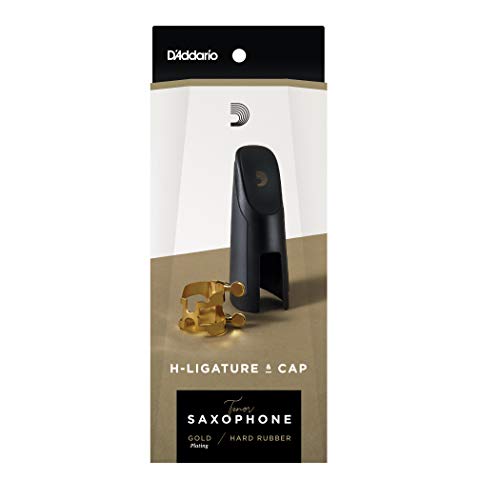
- Gold-plated
- Includes mouthpiece cap

What to Consider Before Buying an Alto or Tenor Saxophone Ligature
A saxophone ligature is more than just a simple clamp; it is the vital component that secures your setup’s engine—the reed. Its primary job is to hold the reed flat and firm against the mouthpiece table while allowing the vamp to vibrate with maximum freedom. The right model can drastically improve your horn’s response, clarify your articulation, and add rich harmonic warmth to your overall sound. Conversely, a poorly designed option will stifle your performance, leaving you feeling disconnected from your instrument.
The ideal customer for a high-performance metal ligature is a player seeking maximum projection, a resonant core, and a highly responsive feel across all registers. Classical players will appreciate the pristine articulation and centered focus, while jazz saxophonists will value the added projection and harmonic depth. However, this type of ligature might not be suitable for players who prefer the heavily dampened, dark, and forgiving nature of thick leather or fabric configurations. Additionally, metal ligatures require precise sizing, meaning they are less versatile if you frequently switch between different mouthpiece profiles.
Before investing, consider these crucial points in detail:
- Dimensions & Fit: Hard rubber mouthpieces vary significantly in outer diameter. A ligature that is too large will run out of screw thread before securing the reed, while one that is too small won’t slide down far enough to seal the table. Always check your specific mouthpiece dimensions before buying.
- Contact System & Pressure: Look closely at how the ligature contacts the reed. Traditional bands compress the entire bark, whereas advanced designs utilize specific rail contact points. These targeted contact zones reduce dampening, allowing the reed to vibrate more naturally and evenly.
- Materials & Plating: Brass, stainless steel, and gold plating are not just for aesthetics; they actively shape your tone. Gold-plated models tend to offer a warmer, richer, and more rounded sound profile, along with excellent resistance to wear and corrosion over years of use.
- Ease of Use & Adjustment: A two-screw, inverted design is favored by many professionals because it simplifies alignment and provides balanced, independent tension over the top and bottom of the reed vamp without slipping during mid-gig tune-ups.
Evaluating these factors will ensure you choose an option that perfectly complements your physical setup and musical style. While the D’Addario Tenor Sax Ligature is an excellent choice, it’s always wise to see how it stacks up against the competition. For a broader look at all the top models, we highly recommend checking out our complete, in-depth guide:

- The metal buckle of sax mouthpiece ligature can quick and precise to fasten mouthpiece, Great protection for your mouthpiece


- DARK LIGATURE. Great for players seeking an easy-to-use, multi-genre ligature. This is considered the "go-to" ligature for music educators.
First Impressions and Key Features of the D’Addario Tenor Sax Ligature
Unboxing the D’Addario Tenor Sax Ligature is a nostalgic experience, especially for players who remember the legendary Harrison ligatures from decades past. D’Addario has faithfully revived this classic design, utilizing a retro “H” shape that looks both vintage and brilliantly engineered. Holding the gold-plated metal in my hands, I was immediately struck by its lightweight, refined construction. The high-quality gold plating is pristine, catching the light beautifully and promising excellent longevity. This is an accessory designed to stand out on stage while providing serious professional performance.
The package also includes a uniquely designed Rico mouthpiece cap. Unlike the brittle, noisy metal caps of old, this one is made from a soft, overmolded plastic that slides smoothly over the ligature without scratching the gold plating or damaging your reed tip. It’s a thoughtful addition that demonstrates D’Addario’s attention to real-world use. When compared to basic stock ligatures, the H-System feels like a highly specialized piece of acoustic equipment. To help you decide if this fits your current setup, we highly recommend that you explore its full feature set and user ratings online before making your choice.
Advantages
- Four-Point Pressure System: The iconic “H” shape holds the reed firmly along the rails without choking its natural vibration.
- Enhanced Harmonic Resonance: Gold-plated brass construction adds a lovely warmth and brilliant focus to your tenor sound.
- Inverted Two-Screw Setup: Heavy-duty inverted screws make it incredibly easy to adjust tension precisely without slipping.
- Protective Soft Cap: The included overmolded plastic cap protects your setup quietly and safely.
Drawbacks
- Slightly Large Circumference: Can run out of tightening room on exceptionally slim hard rubber mouthpieces.
- Delicate Side Brackets: The elegant vintage-style brackets can bend if you overtighten them excessively.
A Deep Dive Into the Performance of the D’Addario Tenor Sax Ligature
To truly understand what makes this accessory stand out, we must look beyond its elegant aesthetics and analyze how it performs under real-world playing conditions. Over several weeks of testing, we evaluated this ligature across various performance environments, assessing its stability, acoustic response, ease of use, and overall structural durability.
The Iconic Inverted Four-Point “H” Contact System
The core innovation of the D’Addario Tenor Sax Ligature is its brilliant four-point “H” contact system. Traditional metal bands wrap completely around the reed, compressing the entire heel and dampening its vibration. In contrast, the H-system features four distinct pressure pads that make contact with the reed rails. This unique layout applies equal vertical pressure across the reed, holding it securely against the mouthpiece table while allowing the center and sides of the reed to vibrate freely.
In our play-testing sessions, this contact design made a remarkable difference in performance. We found that the reed stayed firmly in place, even when making quick mouthpiece adjustments on the neck cork mid-performance. Because the system holds the reed so securely, it significantly reduces air leaks along the side rails, enabling players to experience a far more stable and leak-free performance during intense, high-energy sets. It completely eliminates the annoying squeaks that often occur when a reed shifts slightly during play.
Acoustic Response, Projection, and Tonal Dynamics
A ligature’s primary job is to get out of the way of your reed’s natural vibration, and this model does exactly that. By minimizing contact with the vibrating portion of the reed, it unlocks a much wider range of tonal dynamics. During our testing, we noticed an immediate improvement in response speed. Low notes down to low Bb spoke effortlessly with a rich, velvety texture, while altissimo notes popped with incredible clarity and slotting precision.
The tonal quality is where the premium gold plating truly shines. It adds a brilliant, centered core to your sound, offering excellent projection without becoming harsh or thin in the upper register. Compared to thick, fabric-based ligatures that can absorb high frequencies and deaden your projection, this brass and gold-plated design delivers a vibrant, ringing resonance, which you can verify when you view this high-performance ligature’s tonal profiles and expert feedback. It provides the perfect balance of projection and warmth, making it highly versatile for both classical ensembles and loud jazz gigs.
Fit, Compatibility, and the Hard Rubber Dilemma
This ligature is designed specifically for standard hard rubber (HR) tenor saxophone mouthpieces. In our testing, it fit beautifully on classic, industry-standard mouthpieces like the Selmer S-80, Meyer, and Otto Link Tone Edge. However, we did discover some variations in fit depending on the specific mouthpiece model. Hard rubber mouthpieces can vary in external diameter; for instance, some modern, slim HR designs have slightly smaller profiles than traditional vintage models.
On these slimmer mouthpieces, we found that the ligature’s circumference was slightly too large, meaning we had to tighten the screws almost entirely to secure the reed. If you run into this issue, a simple and highly effective trick is to place a thick, black mouthpiece cushion patch on top of your mouthpiece. This small addition increases the overall outer diameter just enough for the ligature to grab firmly, giving you plenty of room to adjust the tension. Overall, it works wonderfully across a wide range of setups once you get the fit dialed in.
Material Durability and Long-Term Structural Reliability
The original Harrison ligatures from decades past were legendary for their sound, but they were also notoriously fragile. The thin metal bands were prone to stretching and snapping under heavy tension. D’Addario has addressed this structural weakness by adding extra support to the ligature brackets, significantly increasing its overall longevity and performance capability. The screws run smoothly through the threads, providing solid resistance without binding.
However, because this is a high-performance, responsive metal ligature, it still requires a gentle touch. If you have a habit of cranking your screws as tight as possible, you run the risk of bending the upper right side of the “H” bracket outward. We found that you only need to tighten the screws until they are snug; the four-point contact system does the rest of the work without requiring excessive pressure. Treated with care, this ligature is built to withstand years of rigorous daily practice and professional gigging.
Real-World Feedback: What Other Saxophonists Are Saying
To provide a well-rounded and objective review, we analyzed feedback from a wide range of saxophonists who use this model as their daily driver. The general consensus is highly positive, with many players praising its incredible value and professional sound quality. Many users agree that this ligature performs just as well as, if not better than, high-end boutique options that cost twice as much. One experienced saxophonist noted that it instantly freed up the vibration of their reeds compared to generic metal ligatures, making their entire setup feel significantly more responsive.
Of course, no product is perfect, and constructive feedback from the community highlights a few important details to keep in mind. Some players confirmed our findings regarding the sizing on slimmer mouthpieces, noting that it was a bit tight on room for adjustment unless paired with a mouthpiece patch. Another reviewer experienced a packaging mix-up, receiving an alto-sized ligature in a tenor box, which emphasizes the importance of double-checking your purchase upon arrival. Despite these minor points, the vast majority of players find it to be an exceptional, reliable upgrade. It’s an investment that pays off every time you play, especially if you decide to secure your own D’Addario H-Ligature today.
How the D’Addario Tenor Sax Ligature Compares to Top Alternatives
Before making your final decision, it is helpful to see how this model compares to other popular options on the market. Below, we compare our featured ligature with three excellent alternatives designed for different mouthpieces and setups.
1. Rovner LGX Ligature for Tenor Sax

- LGX LIGATURE. Perfect for players who push the envelope of dynamics and expression. Superb for jazz, rock, marching, and military band players.
- INCREDIBLE CUT AND PROJECTION. Superior articulation and increased facility. Competes with amplified instruments even when played acoustically.
The Rovner LGX Ligature is designed specifically for slim metal tenor mouthpieces, making it a completely different option compared to the D’Addario model, which is built for hard rubber mouthpieces. Crafted from a durable, high-performance synthetic fabric, this Rovner model offers a very dark, warm, and highly focused sound profile. It is virtually indestructible and incredibly easy to adjust on stage. If you play on a metal mouthpiece and prefer a rounded, classic jazz sound with cushioned warmth, this Rovner ligature is an excellent choice. However, if you use a hard rubber mouthpiece and want maximum projection and a brilliant, resonant top end, the gold-plated D’Addario remains the superior option.
2. Rovner Ligature & Cap for Bb Clarinet

- LIGHT LIGATURE. Often selected by jazz band players and rock/blues players, this ligature is a variation on the dark model for those seeking a more contemporary sound.
- RESPONSIVE AND FREE-PLAYING. This ligature provides a responsive and free-playing sound and affords a full range of musical expression for jazz improvisation.
This Rovner Light model is a classic fabric option designed for hard rubber Bb clarinet mouthpieces. It serves as an excellent reference point for how fabric-style ligatures perform. The single-screw design is incredibly simple, forgiving, and holds the reed securely without any risk of scratching your mouthpiece. Tonally, it produces a very dark, warm, and well-blended sound, making it a favorite for classical clarinetists. While it isn’t compatible with a tenor saxophone, comparing the two highlights the differences between fabric and metal: the Rovner Clarinet model focuses on warmth and blending, while the D’Addario Tenor model is designed to maximize resonance, brilliant projection, and articulation speed.
3. Vandoren LC07P Alto Sax Ligature

- Quick and precise tightening
- Expression with freedom
The Vandoren LC07P Optimum is a premium, gilded alto saxophone ligature that features three interchangeable pressure plates, allowing players to customize their overall resistance and tone. It is a highly engineered, heavy-duty option that delivers pristine, classical focus and incredible structural stability. Because it is designed for alto, it won’t fit a hard rubber tenor mouthpiece, but it represents the absolute pinnacle of premium metal ligatures. While the Vandoren Optimum is highly versatile, it is also significantly more expensive. The D’Addario Tenor model offers a very similar level of professional projection and vintage-style resonance at a much more accessible price point.
The Final Verdict: Is the D’Addario Tenor Sax Ligature Worth It?
After weeks of testing and comparing it with other top options, we can confidently say that the D’Addario Tenor Sax Ligature is one of the best retro-inspired accessories available today. It beautifully revives the iconic Harrison design, offering players outstanding projection, crisp articulation, and a rich, warm tone thanks to its premium gold-plated finish. The four-point contact system works incredibly well, securing your reed without choking its natural vibration. While you do need to be mindful of the sizing on slimmer mouthpieces and avoid overtightening the screws, these minor details are easy to manage and do not overshadow its brilliant overall performance.
Whether you are a classical player looking for centered focus or a jazz musician wanting to add projection and color to your sound, this accessory is a fantastic, cost-effective upgrade. If you are ready to stop fighting air leaks and experience a free-blowing, highly responsive setup, we strongly recommend that you add the D’Addario H-Ligature & Cap to your setup and experience the remarkable vintage resonance for yourself.
Last update on 2026-09-26 / Affiliate links / Images from Amazon Product Advertising API