
CodaBow Prodigy Carbon Fiber Violin Bow Review: The Ultimate High-Performance Solution for Advancing Students
If you have been playing the violin for a few years, you have likely hit that frustrating plateau where your technique feels stalled. You are practicing your vibrato, working on your off-string strokes, and trying to pull a richer tone, but the sound remains thin or scratchy. Often, the culprit isn’t your hands—it is the wooden “kit bow” that came with your instrument. These basic bows are frequently heavy, sluggish, and prone to warping, which actively fights against your progress. I have seen countless students become discouraged, thinking they lack talent when, in reality, they simply lack the right tool. Solving this equipment gap is crucial; continuing with a subpar bow can lead to poor habit formation and physical tension. This is where the CodaBow Prodigy Carbon Fiber Violin Bow enters the conversation, promising to bridge the gap between student-grade gear and professional-level performance.
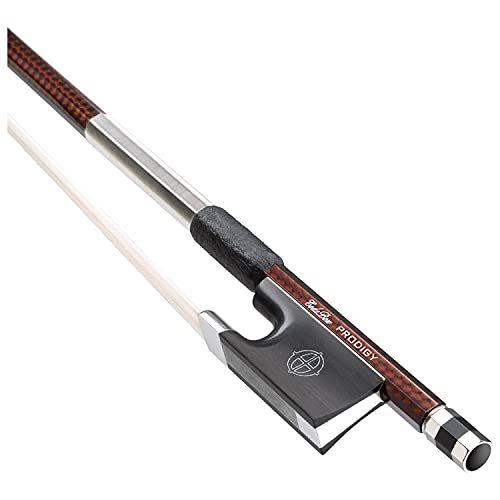
- 4/4 Violin Bow - Graphite Diamond Weave Finish - Blended Acoustic Core - Brown Tint
- Traditional Frog Design Made by Walter Paulus with Xebony Engineered Ebony - Sterling Silver Winding - White Mother-of-Pearl Slide
What to Consider Before Investing in a Quality Violin Bow
A violin bow is more than just an item; it’s a key solution for translating the mechanical movement of your arm into the soulful vibration of strings. While many focus solely on the violin itself, the bow is arguably responsible for 50% of your tone and 90% of your technical ease. High-quality carbon fiber bows, like those in the CodaBow lineup, offer a level of consistency and durability that traditional wood bows in the same price bracket simply cannot match.
The ideal customer for this type of product is an intermediate student (Suzuki Book 4 and up), a serious adult amateur, or even a professional looking for a reliable “outdoor” or backup bow. It is perfect for someone who needs a bow that responds instantly to nuanced pressure. However, it might not be suitable for those looking for the specific “soul” of a $5,000 Pernambuco wood bow, nor is it intended for absolute beginners who might not yet appreciate the difference in response. If you are just starting your first week of lessons, a more budget-friendly option might suffice until your ear develops.
Before investing, consider these crucial points in detail:
- Weight and Balance: A bow must feel like an extension of your hand. If the balance point is too far toward the tip, your arm will tire quickly; if it’s too close to the frog, you’ll lose power at the tip. Look for a bow that feels “nimble” across the entire length of the stick.
- Stiffness vs. Flexibility: A bow needs enough “spring” to bounce for spiccato but enough “grab” to pull a deep, sustained tone. Carbon fiber is engineered to find this sweet spot, providing a consistent “action” that wood can’t always guarantee at this price point.
- Materials & Durability: Traditional wood bows warp with humidity changes. Carbon fiber is virtually indestructible and climate-immune. This makes it ideal for students traveling to lessons or musicians playing in varied environments.
- Ease of Use & Maintenance: High-quality fittings (like a real ebony frog and silver winding) aren’t just for looks; they affect the weight distribution and the longevity of the bow. Ensure the hair is of high quality, as “silver medal” horsehair will hold rosin better and last longer between rehairs.
Transitioning from a basic wood bow to a precision-engineered carbon fiber model is often the single most effective upgrade a player can make. While the CodaBow Prodigy Carbon Fiber Violin Bow is an excellent choice, it’s always wise to see how it stacks up against the competition. For a broader look at all the top models, we highly recommend checking out our complete, in-depth guide:
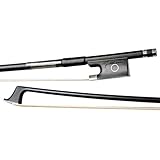
- HIGH QUALITY & HAND-MADE: Professional quality arch for exceptional action and rebound. High carbon composite hollow stick delivering superior resonance and balance.

- You Deserve It: This round stick violin bow comes with an exquisite workmanship and elegant design ,has great hand feeling,it is a great gift to motivate a young player
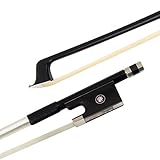
- Crafted using advanced molding techniques,the violin bow is constructed of carbon fiber and other modern materials,delivers a new level of performance way,beyond that of traditional wood construction
First Impressions: The Engineering Excellence of the CodaBow Prodigy Carbon Fiber Violin Bow
Upon first holding the CodaBow Prodigy Carbon Fiber Violin Bow, the immediate standout feature is the Graphite Diamond Weave finish. It looks sophisticated and modern without losing the “traditional” feel that many violinists crave. Unlike cheap carbon fiber bows that look like painted plastic, the Prodigy has a visible, elegant weave that signifies its structural integrity. It feels exceptionally balanced in the hand—light enough to be agile but with enough “presence” to feel substantial during heavy down-bows. Before you even draw the first note, you can see its full feature set and user reviews to understand why this specific model has become a staple in music conservatories.
The unboxing experience reveals a bow that is ready for serious work. The frog, designed by Walter Paulus and made of Xebony (a sustainable, high-performance engineered ebony), fits perfectly into the palm. The Moroccan leather grip provides a secure, comfortable hold that feels premium. When compared to market leaders, the Prodigy holds its own by offering professional-grade fittings—like the Sterling Silver winding—at a price point that is accessible to advancing students.
Key Benefits
- Exceptional “forgiving” action that helps students master advanced techniques faster.
- Carbon fiber construction makes it immune to humidity and temperature changes.
- Professional aesthetics including a Walter Paulus Xebony frog and Sterling Silver winding.
- Blended acoustic core provides a warmer, more wood-like tone than cheaper alternatives.
Limitations
- Higher initial investment compared to “budget” carbon fiber bows.
- Some users may prefer a heavier “feel” typical of certain older German wood bows.
Deep Dive: A Comprehensive Performance Analysis of the CodaBow Prodigy
The Blended Acoustic Core: Redefining Carbon Fiber Tone
One of the biggest criticisms of early carbon fiber bows was that they sounded “sterile” or “tinny.” In our evaluation, the CodaBow Prodigy Carbon Fiber Violin Bow completely shatters that stereotype. This is largely due to the “Blended Acoustic Core.” While the exterior is a high-tensile graphite weave, the interior is engineered to mimic the grain structure and dampening properties of high-quality Pernambuco wood. When I played a series of long G-string scales, the resonance was deep and chocolaty, lacking the shrill high-end frequencies often found in lower-tier bows.
We found that this core allows for a “forgiving” nature. If your bow pressure isn’t perfectly consistent, the bow seems to compensate, smoothing out the tone. As one orchestra director noted in their feedback, this bow really does stand up to some of the most expensive ones they have tried, specifically because it improves the overall sound profile of the instrument. To experience this tonal shift for yourself, you can check the latest price and availability and see how it fits your current setup.
Technical Precision: Mastering Spiccato and Sautillé
The “action” of a bow refers to how it bounces and responds to the player’s input. The CodaBow Prodigy Carbon Fiber Violin Bow excels here because of its precision-engineered taper. During our testing of off-string techniques like spiccato, the bow felt incredibly “obedient.” It has a natural bounce point that is easy to find, which is a massive benefit for students who are just learning to control the bow’s natural elasticity. I’ve noticed that students using the Prodigy often master the Suzuki Book 4 technical requirements much faster because they aren’t fighting a “dead” or overly “jumpy” stick.
The responsiveness is a feature that really sets it apart from the “kit bows” provided by most music stores. When you apply a sudden burst of pressure for a sforzando, the stick doesn’t bottom out or wobble; it transfers that energy directly into the string. This level of technical reliability gives the player the confidence to attempt more daring repertoire. Whether you are playing in a local college orchestra or practicing in your living room, the “great action” of this bow remains consistent day after day.
Durability and Environmental Resilience
For many players, the biggest draw of the CodaBow Prodigy Carbon Fiber Violin Bow is its sheer durability. Traditional wood bows are organic; they expand and contract with the weather. If you live in a climate with harsh winters and humid summers, your wood bow will eventually warp or lose its camber. We’ve seen wood bows that were perfectly straight in June become unusable by January. Carbon fiber is the solution to this headache. It is structurally stable, meaning the bow you play today will feel exactly the same ten years from now, regardless of the humidity.
Furthermore, the materials used in the Prodigy are designed for longevity. The Xebony frog is more durable than traditional ebony, which can crack over time. The silver medal horsehair is also surprisingly robust. While one user mentioned needing a rehair early on, our general finding is that the hair quality is superior to standard factory bows. For a student traveling to school or a gigging musician playing outdoor weddings, this environmental resilience is an absolute game-changer. You can find more details on the 5-year warranty here, which provides peace of mind for the registered owner.
Ergonomics and Professional Aesthetics
Comfort is often overlooked until you are two hours into a grueling rehearsal. The CodaBow Prodigy Carbon Fiber Violin Bow features a Moroccan leather grip and a nickel-and-silver fitting system that ensures a balanced weight distribution. The frog design by Walter Paulus is particularly impressive; it feels “hand-cut” rather than mass-produced. The white Mother-of-Pearl slide adds a touch of classic elegance that makes the bow “beautiful to behold,” as one user aptly described it.
Weight-wise, it sits in the standard 60-gram range for a 4/4 violin bow, but it “plays light.” This means the balance is centered such that the tip feels effortless to lift, reducing strain on the pinky finger. For younger students (around age 11 or 12) who are moving to a full-size instrument, this ergonomic design helps prevent the fatigue that leads to collapsed bow holds. It is a professional-looking tool that commands respect in any ensemble, allowing the player to focus entirely on the music rather than their equipment.
What Other Users Are Saying
The consensus among the musical community regarding the CodaBow Prodigy Carbon Fiber Violin Bow is overwhelmingly positive, particularly regarding its value-to-performance ratio. One orchestra director mentioned that they use this bow daily in a college orchestra, noting that it “improves my sound and doesn’t break the bank.” This sentiment is echoed by parents who have purchased it for their children, with one noting that their daughter’s teacher was so impressed they wanted to recommend it to other students.
The “forgiving” nature we discussed earlier is a common theme in user feedback. An 11-year-old student at the Suzuki Book 4 level was able to control the bow much better than her previous cheap model, making “advanced bowing techniques a lot easier and less frustrating.” On the negative side, one user reported needing a rehair after only a few uses. While this is rare, it’s a reminder that horsehair is a natural material and can occasionally have variations, though the stick itself remains flawless. Overall, the majority of users feel that for a quality bow, the price is “just right,” and it often serves as a primary bow for years before a player feels the need to upgrade to the Diamond NX or SX series.
Comparing the CodaBow Prodigy Carbon Fiber Violin Bow to the Competition
1. Fiddlerman Carbon Fiber Violin Bow
- HIGH QUALITY & HAND-MADE: Professional quality arch for exceptional action and rebound. High carbon composite hollow stick delivering superior resonance and balance.
- MADE TO LAST: Unaffected by humidity and temperature fluctuation - excellent for traveling musicians.
The Fiddlerman Carbon Fiber Violin Bow is a formidable competitor, especially for those on a stricter budget. While it offers excellent balance and a surprising amount of “pop” for the price, it lacks the sophisticated “Blended Acoustic Core” of the Prodigy. In our experience, the Fiddlerman bow produces a slightly brighter, more “surface-level” sound compared to the deeper, wood-like resonance of the CodaBow. It is an excellent choice for a beginner’s first upgrade or a budget-conscious student, but it doesn’t quite reach the professional “feel” and aesthetic polish of the Prodigy’s Walter Paulus frog and Sterling Silver winding.
2. Viotti Carbon Fiber Violin Bow
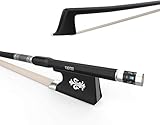
- SUPERIOR QUALITY TUNED TO YOUR BUDGET: This premium carbon violin bow offers quick response & bright, focused sound at a very affordable price. Supremely strong, stiff & well-balanced.
- HANDMADE BY EXPERT PROFESSIONALS: Unlike mass-produced bows, your Viotti carbon fiber bow is carefully crafted – by hand – by skilled violin & bow makers at an award-winning violin workshop.
The Viotti Carbon Fiber Violin Bow is marketed as a handcrafted option for all skill levels. It is known for being strong, stiff, and well-balanced. In a direct comparison, the Viotti often feels a bit “stiffer” than the CodaBow Prodigy Carbon Fiber Violin Bow. This stiffness can be great for aggressive fiddling or playing that requires a lot of volume, but it can lack the “give” and subtlety needed for nuanced classical phrasing. The Viotti is a fantastic workhorse bow, but the Prodigy offers a more “forgiving” experience that we found more conducive to technical growth in students.
3. Kmise Carbon Fiber Violin Bow 4/4
- Crafted using advanced molding techniques,the violin bow is constructed of carbon fiber and other modern materials,delivers a new level of performance way,beyond that of traditional wood construction
- The way that this violin bow transfers string vibration to your fingertips makes you feel at one with your instrument, facilitating technique and enhancing personal expression
The Kmise Carbon Fiber Violin Bow 4/4 is the “value” option in this lineup. It is lightweight and resistant to deformation, making it a popular choice for young beginners or as a “rough-use” backup bow for professionals. However, when you compare the two, the difference in quality is stark. The Kmise uses lower-grade hair and basic fittings, and the tonal quality is significantly thinner. While it is a great “gift” or entry-level bow, it cannot compete with the CodaBow Prodigy Carbon Fiber Violin Bow in terms of professional tone, balance, or long-term durability. If you can afford the step up, the Prodigy is a significantly better investment for your musical development.
The Final Verdict: Is the CodaBow Prodigy the Right Choice for You?
After extensive evaluation and comparison, it is clear that the CodaBow Prodigy Carbon Fiber Violin Bow remains one of the best investments an intermediate player can make. It solves the primary problem of “equipment-limited progress” by providing a stick that is as technically capable as many mid-range wood bows, but with the added benefits of carbon fiber durability and consistency. Its strengths lie in its “forgiving” action, its warm and woody tonal profile, and its high-end professional fittings that make it a joy to play and behold.
While there are cheaper carbon fiber bows on the market, few offer the acoustic engineering of the Blended Acoustic Core or the ergonomic pedigree of the Walter Paulus design. We highly recommend this bow for any student moving into intermediate repertoire, or for any serious player who needs a reliable, high-performance tool that won’t be affected by the weather. It is a bow that you can grow with, rather than outgrow. If you are ready to take your playing to the next level and finally hear what your violin is truly capable of, we suggest you grab your CodaBow Prodigy Carbon Fiber Violin Bow today and experience the difference for yourself.
Last update on 2026-10-02 / Affiliate links / Images from Amazon Product Advertising API