
LR Baggs Align Session Acoustic Guitar Effects Pedal Review: The Studio Secret for Your Live Board?
Every acoustic guitarist has been there: you spend years finding the perfect instrument, a guitar that resonates with woody warmth and complex harmonics when played in your living room. Then, you head to the gig, plug into the PA system, and—disaster. That beautiful instrument suddenly sounds thin, clinical, and plagued by the dreaded “piezo quack.” The problem is that standard pickups often strip away the very character that makes an acoustic guitar special. We’ve spent countless hours trying to fix this with EQ, but standard EQ often feels like a blunt instrument, cutting out the “bad” but taking the “good” with it. This frustration is exactly why a tool like the LR Baggs Align Session Acoustic Guitar Effects Pedal exists. Without a way to restore that lost harmonic richness and tame the wild peaks of a live signal, your performance can feel detached and sterile, leaving both you and your audience underwhelmed by a sound that doesn’t match the quality of your playing.
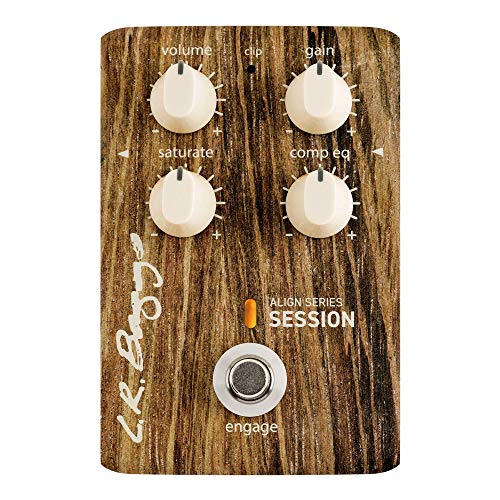
- Analog Saturation enhances warmth and harmonic content
- Compression / EQ smoothes out common problem frequencies
What to Consider Before Buying an Acoustic Guitar Effects Pedal
An acoustic guitar effects pedal is more than just an item; it’s a key solution for bridging the gap between the raw, unplugged sound of your guitar and the processed signal required for a high-quality live performance. Unlike electric guitar pedals, which often aim to radically change the tone, an acoustic pedal’s primary job is usually “tone restoration.” You are looking for something that adds “air,” “girth,” and “presence” without masking the natural voice of your Martin, Taylor, or Gibson. In our experience, these pedals are the glue that holds a live mix together, providing the polish that usually requires a rack of expensive studio gear and a dedicated sound engineer.
The ideal customer for this type of product is someone facing the challenges of frequent live performances in varying venues, where they need a consistent, “album-quality” sound regardless of the PA system. It’s also perfect for the solo performer who needs their guitar to fill more sonic space without becoming muddy. However, it might not be suitable for those who already use high-end, all-in-one digital modelers or those who prefer a completely dry, “folk-pure” signal and only play in treated rooms with high-end microphones. If you are looking for heavy distortion or wacky modulation, this is not the category for you; these tools are about refinement and professional-grade signal conditioning.
Before investing, consider these crucial points in detail:
- Dimensions & Space: On a crowded pedalboard, every inch matters. You want a pedal that offers a significant sonic upgrade without requiring its own zip code. The LR Baggs Align Session Acoustic Guitar Effects Pedal is designed with a vertical orientation that fits perfectly into standard board layouts, making it easy to see its full feature set and user reviews regarding board integration.
- Capacity/Performance: Look for how the pedal handles different pickup types. Does it have enough headroom for active systems but enough gain for passive ones? A high-quality pedal should be “touch-sensitive,” meaning it responds to your playing dynamics—compressing more when you dig in and opening up when you play softly.
- Materials & Durability: Since these will be stepped on repeatedly at gigs, metal chassis construction is non-negotiable. Plastic housings are a liability on the road. The internal components, particularly the footswitch and the pots, should feel robust and offer enough resistance to prevent accidental setting changes mid-song.
- Ease of Use & Maintenance: While studio-grade processing is the goal, you don’t want a studio-grade learning curve. In a live setting, you need “set and forget” controls. Look for intuitive layouts where the relationship between the knobs—like saturation and compression—is clear and easy to tweak on the fly if the room acoustics change.
While the LR Baggs Align Session Acoustic Guitar Effects Pedal is an excellent choice, it’s always wise to see how it stacks up against the competition. For a broader look at all the top models, we highly recommend checking out our complete, in-depth guide:

- Analog Preamp and Digital Reverb
- One-Stop Gig Solution for Acoustic Instruments Players with Main Effects needed

- 🎸🎸【9 AMP Models & 8 IR CAB】LEKATO Multi-functional Guitar Effects Pedal with Chorus,Tremolo,Delay,Reverb effects, including 9 Amp preamps and 8 classic IR cabinets body model, Support IR...

First Impressions and Key Features of the LR Baggs Align Session Acoustic Guitar Effects Pedal
When we first pulled the LR Baggs Align Session Acoustic Guitar Effects Pedal out of its packaging, the first thing that struck us was the build quality. It feels dense—0.3 kg of high-grade engineering packed into a small, brown enclosure that aesthetically matches the “organic” vibe of an acoustic instrument. It doesn’t look like a flashy rock-and-roll pedal; it looks like a piece of high-end hi-fi equipment. The knobs have a satisfying, heavy throw, and the “Align” branding suggests exactly what the pedal aims to do: align your live sound with your studio expectations.
The layout is remarkably simple: Volume, Gain, Saturation, and Comp EQ. This simplicity is deceptive, however. Under the hood, this pedal is running proprietary circuitry that LR Baggs developed for their “Session” series, specifically designed to mimic the processing used by Nashville’s elite session engineers. It’s not just a compressor; it’s a three-band dynamic EQ. It’s not just a drive pedal; it’s a harmonic saturator. This approach sets it apart from budget competitors that often use generic chips not voiced for the specific frequency response of an acoustic guitar. To see this engineering in detail, you should check the latest price and availability of this professional-grade tool.
Key Benefits
- Analog Saturation adds warmth and “girth” that makes piezo pickups sound like they are moving real air.
- The 3-band Comp EQ automatically tames problematic frequencies (the “thump” and the “quack”) in real-time.
- The “Touch-sensitive” nature of the circuitry preserves the player’s natural dynamics and expression.
- Versatile Gain control allows it to work seamlessly with both active and passive pickup systems.
Limitations
- The effects are intentionally subtle; users looking for an “obvious” effect might find it too transparent.
- It lacks a built-in DI (XLR) output, which is surprising for a pedal aimed at live acoustic players.
A Deep Dive into the Performance of the LR Baggs Align Session
The Magic of Analog Saturation: More Than Just “Distortion”
When most guitarists hear the word “saturation,” they think of a fuzzy tube amp or a vintage overdrive. In the context of the LR Baggs Align Session Acoustic Guitar Effects Pedal, saturation is a much more elegant beast. We found that as we dialed the saturation knob toward the 12 o’clock position, the guitar didn’t get “dirty”; it got “thick.” It’s the difference between looking at a photograph and looking at a 3D object. The saturation adds harmonic content—specifically those rich, even-order harmonics—that are often lost when an acoustic signal travels through a copper cable and into a digital mixer.
We tested this with a Martin D-28 equipped with an undersaddle piezo. Normally, that setup can sound a bit “clicky” and thin. With the saturation engaged, the low-mids filled out beautifully, giving the guitar a sense of authority and weight. It mimics the way sound behaves when it hits a high-end studio transformer or a reel of analog tape. This is a feature that really sets it apart from standard boost pedals. As one user aptly noted, it adds a “presence and life” that makes people ask if there’s a hidden microphone inside the guitar. It’s that subtle “studio sheen” that makes a live performance sound like a finished record. If you’re looking to add that professional polish, you should read more about the technical specifications and user feedback regarding the saturation circuit.
Three-Band Comp EQ: The Smartest Compression on the Market
Compression is often the most misunderstood effect in an acoustic player’s arsenal. Too much, and your guitar sounds like it’s being squeezed through a straw; too little, and your volume jumps are jarring for the audience. The LR Baggs Align Session Acoustic Guitar Effects Pedal solves this by using three narrowly focused bands of compression. Instead of squashing the whole signal, it “listens” for problematic frequencies. When we played a heavy G-chord, the pedal tames the low-end boom; when we hit the high-E string hard, it smoothed out the piercing treble.
The beauty of this “Comp EQ” is that it’s dynamic. It doesn’t just sit there like a static EQ setting. It reacts. We found that it acts as an invisible hand on the fader, constantly adjusting the tone to keep it in the “sweet spot.” During our testing, this was particularly effective during fingerstyle passages where the thumb-notes often become overwhelming. The LR Baggs Align Session kept everything balanced, allowing the melody lines to sing through without the bass notes “woofing” out the speakers. This level of sophisticated processing is why so many choose this pedal for their live rig.
Touch Sensitivity and Gain Staging: Professional Control
One of the biggest hurdles in acoustic amplification is the wide variety of pickup outputs. We tested the LR Baggs Align Session Acoustic Guitar Effects Pedal with everything from a high-output active system in a Taylor 414 to a very quiet K&K passive pickup. The adjustable gain control on the back of the pedal is a lifesaver. It allows you to optimize the signal-to-noise ratio before the signal even hits the saturation and compression circuits. This ensures that the effects are working at their peak efficiency regardless of your guitar.
Once the gain is set, the pedal’s touch sensitivity really shines. We’ve used pedals in the past that felt like they were “fighting” the player—robbing the performance of its nuance. The LR Baggs Align Session does the opposite. It feels like an extension of the instrument. When playing soft, delicate passages, the pedal stays out of the way, providing just a touch of warmth. When you dig in for a raucous strumming chorus, the saturation and compression kick in to provide a controlled, powerful sound that doesn’t clip the PA. It provides a “girth” to the sound that is especially noticeable in a solo or duo setting where the acoustic guitar needs to be the foundation of the sound. It truly is built like a tank and easy to learn, making it a must-have for the serious acoustic performer.
Integration and Build Quality: Designed for the Road
The “Align” series is clearly designed to work together, but this pedal plays very well with others. We placed it right after a tuner and before a reverb pedal, and it acted as a perfect “preamp” stage to shape the signal. The 9V power requirement is standard, though it can also run on a battery, which is a nice touch for buskers or quick “open mic” setups. The true bypass footswitch ensures that when the pedal is off, your signal remains completely pure, though we found that once we turned it on, we never wanted to turn it off again.
The brown color and sleek design make it look great on any board, but it’s the lack of noise that really impressed us. Many saturation and compression pedals introduce an annoying “hiss” into the signal chain. The LR Baggs Align Session is remarkably quiet, even with the knobs pushed past 12 o’clock. This low noise floor is critical for studio recording. In fact, we found it to be just as useful in the studio as it is on stage. Plugging the pedal directly into an audio interface yielded some of the best “direct” acoustic tones we’ve ever achieved, rivaling expensive plugin chains. For anyone considering adding this to their recording setup, the LR Baggs Align Session is currently available at most major specialized retailers.
What Other Users Are Saying
The general consensus among the guitar community is that the LR Baggs Align Session Acoustic Guitar Effects Pedal is a “secret weapon” that you don’t realize you need until you hear it. Most users praise its ability to make a standard piezo pickup sound like a professionally mic’d instrument. One user mentioned that they had tried numerous pedals to fix their “messy” pedalboard, and only the LR Baggs Align Session provided the “depth they were missing,” noting that the effect isn’t noticeable until you shut it off—the hallmark of a great acoustic tool.
Another professional performer stated that they “Love. Love. LOVE this pedal,” highlighting how it enriches the sound with a depth and feel that is stunning upon first listen. They recommended it as the “one pedal to invest in” if you are an acoustic performer. A user who often records direct into Logic and Garageband was equally impressed, noting a significant jump in sound quality when using the pedal as a preamp stage.
On the critical side, some users pointed out that the effects are very subtle. One reviewer mentioned that “saturation & eq/compression effects are subtle – don’t expect a huge sound difference.” They argued that if you already have extensive EQ abilities on your mixer or preamp, the pedal might feel redundant. Another user warned: “DO NOT BUY THIS—unless you are happy to NEVER PLAY WITHOUT IT,” which is a humorous way of saying the improvement is so addictive that playing “dry” feels disappointing afterward. This feedback highlights that while the LR Baggs Align Session isn’t a “wild” effect, it is a essential “tone sweetener.”
Comparing the LR Baggs Align Session to Its Top Alternatives
1. SONICAKE Acoustic Guitar Effects Pedal
- Analog Preamp and Digital Reverb
- Built-in Notch Filter and MUTE with gain and frequency range adjustment can quickly eliminate whistling or on the sound is further shaped in detail
The SONICAKE is a completely different animal, aimed at the budget-conscious player who wants an all-in-one “fly rig” solution. While the LR Baggs Align Session focuses on high-end analog saturation and dynamic EQ, the SONICAKE offers a preamp, reverb, and a DI output in a single strip. It’s much more “obvious” with its effects, but it lacks the nuance and studio-grade “sheen” of the LR Baggs. If you are a beginner looking for your first acoustic pedal and need a DI out to plug into the PA, the SONICAKE is a fantastic value. However, for a professional seeking to “elevate” an already good tone, the LR Baggs’ specialized circuitry is far superior in terms of audio fidelity.
2. MOOER Acoustikar Guitar Pedal Simulator

- [Warm Sound] Restore the sound of the acoustic guitar. Play the sound texture of an acoustic guitar with an electric guitar.
The MOOER Acoustikar is actually an “acoustic simulator” meant for electric guitarists who want to sound like they are playing an acoustic. While some people use it to “re-shape” their actual acoustic guitar signal, it uses digital modeling that can often sound a bit “plastic” compared to the analog warmth of the LR Baggs Align Session. The Mooer is tiny and very affordable, making it great for a backup or for someone who only needs an acoustic sound for one song in a set. But if you are an acoustic purist, the MOOER will likely feel like a step backward in tone, whereas the LR Baggs feels like a major step forward.
3. ToneWoodAmp SOLO Multi-Effect Processor
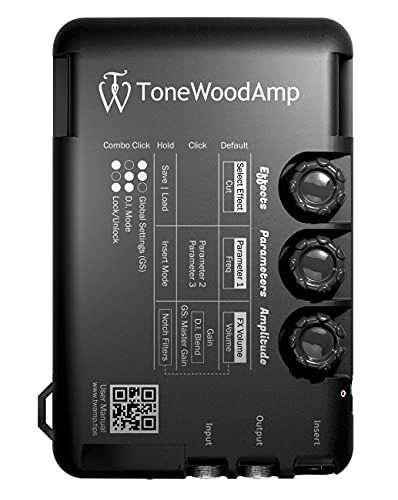
- 【One Of A Kind Experience】The ToneWoodAmp works on virtually any acoustic guitar! Adds beautiful sounding organic guitar effects to your acoustic* and acoustic-electric guitar, NO AMP REQUIRED...
- 【No Amp Required】 XXXX Get Reverbs like Hall, Room, Plate, Delay, Leslie, Auto-Wah, and Chorus, no amp required! All sounds come from the soundhole of your guitar organically. Buy one ToneWoodAmp...
The ToneWoodAmp is a revolutionary device that actually attaches to the back of your guitar and uses the guitar body itself as a speaker. It’s an incredible tool for “unplugged” playing, providing reverb and delay without an amp. However, when it comes to the specific task of signal conditioning for a PA system, it doesn’t offer the same “session-style” compression and harmonic saturation that the LR Baggs Align Session Acoustic Guitar Effects Pedal provides. They are actually complementary tools; you could use the ToneWoodAmp for your on-stage monitoring and the LR Baggs to send a polished, studio-quality signal to the front-of-house engineer. If you have to choose one for live gigs, the LR Baggs is the more practical tool for the sound guy.
The Final Verdict: Is the LR Baggs Align Session a Must-Have?
After extensive testing and comparing it with both budget alternatives and studio plugins, we can confidently say that the LR Baggs Align Session Acoustic Guitar Effects Pedal is an essential tool for any serious acoustic performer. It doesn’t try to change your guitar into something else; it simply makes it the best version of itself. The combination of harmonic saturation and dynamic 3-band compression provides a level of professional polish that was previously only available in high-end recording studios. While it is a subtle effect, the “before and after” is undeniable—it removes the “quack,” adds the “thump,” and brings a sense of three-dimensional life to your amplified sound.
If you are tired of your acoustic guitar sounding like a toy when you plug it in, and you want a pedal that is built to last a lifetime, this is it. It’s a “set and forget” masterpiece that will quickly become the most important part of your signal chain. We recommend it to solo singer-songwriters, session players, and anyone who values tonal integrity above all else. Don’t settle for a thin, clinical sound any longer. You should invest in the Align Session to transform your tone today and experience what your guitar is truly capable of in a live setting.
Last update on 2026-07-25 / Affiliate links / Images from Amazon Product Advertising API