
MOOER Acoustikar Guitar Pedal Simulator Review: The Ultimate Solution for Electric-to-Acoustic Transformation?
If you have ever played a set that requires you to switch between a high-gain electric lead and a delicate acoustic ballad, you know the logistical nightmare that follows. Lugging two hardshell cases, managing two separate wireless units (or trip-hazard cables), and finding space on a cramped stage for multiple stands is a headache most of us would rather avoid. I have spent years trying to find a shortcut. For a long time, the only real solution was a dedicated acoustic guitar, but when you are playing a thirty-minute set in a packed club, those transitions are momentum killers. This is exactly why the search for a convincing acoustic simulator exists. We want that woody, resonant chime without the physical baggage. The MOOER Acoustikar Guitar Pedal Simulator promises to bridge that gap, offering a way to turn your Stratocaster or Les Paul into a believable dreadnought with the click of a switch. Solving this problem isn’t just about saving your back; it is about maintaining the flow of your performance. If you’ve been hesitant to try a simulator because you fear a thin, “plastic” sound, you can see its full feature set and user reviews to see how far the technology has come.

- [Warm Sound] Restore the sound of the acoustic guitar. Play the sound texture of an acoustic guitar with an electric guitar.
Choosing the Right Acoustic Simulator: A Comprehensive Buyer’s Guide
An Acoustic Guitar Effects pedal is more than just an item; it’s a key solution for guitarists who need versatility without the footprint. In the world of signal processing, simulating the complex physics of a hollow wooden box using a solid-body electric guitar is one of the hardest tasks to achieve. These pedals use advanced DSP (Digital Signal Processing) to recreate the body resonance, the “snap” of the strings, and the specific frequency response of an acoustic instrument. The main benefit is convenience, but for many, it is also about the unique textures these pedals can add to a layered recording.
The ideal customer for this type of product is the gigging professional who needs to cover a wide variety of genres, or the bedroom producer who wants to add acoustic flavors to their tracks without setting up expensive microphones. It is also a godsend for worship leaders or wedding musicians who need to switch styles instantly. However, it might not be suitable for those who are “acoustic purists” and demand the exact tactile response and harmonic complexity of a $3,000 Martin. For those players, a high-end preamp or an actual acoustic guitar is the only real answer.
Before investing, consider these crucial points in detail:
- Dimensions & Space: In the modern era of pedalboards, real estate is at a premium. You want a pedal that delivers high-quality sound without forcing you to buy a larger board. Micro pedals are the gold standard here, providing professional-grade algorithms in a housing that fits in the palm of your hand. This is a major factor if you already have a crowded signal chain.
- Capacity/Performance: Look for pedals that offer multiple “modes.” Not all acoustic guitars sound the same; a small-body parlor guitar has a mid-forward punch, while a jumbo has a booming low end. Having a toggle switch to move between these profiles ensures your electric guitar can mimic different types of acoustic instruments effectively.
- Materials & Durability: Since this is a foot-activated device, the housing must be rugged. A full metal shell is non-negotiable for anyone planning to take the pedal out of the house. Plastic housings might be cheaper, but they rarely survive a year of consistent stomping. Check the quality of the knobs and the footswitch “click” to ensure long-term reliability.
- Ease of Use & Maintenance: You don’t want to spend twenty minutes menu-diving just to get a usable sound. The best simulators have intuitive controls like “Top” (for high-end shimmer) and “Body” (for low-end resonance). Maintenance is usually minimal for these analog-digital hybrids, but ensuring they run on standard 9V power is essential for integration into your existing power supply.
While the MOOER Acoustikar Guitar Pedal Simulator is an excellent choice, it’s always wise to see how it stacks up against the competition. For a broader look at all the top models, we highly recommend checking out our complete, in-depth guide:

- Analog Preamp and Digital Reverb
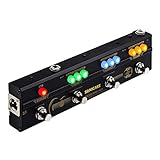
- One-Stop Gig Solution for Acoustic Instruments Players with Main Effects needed

- 🎸🎸【9 AMP Models & 8 IR CAB】LEKATO Multi-functional Guitar Effects Pedal with Chorus,Tremolo,Delay,Reverb effects, including 9 Amp preamps and 8 classic IR cabinets body model, Support IR...

First Impressions: The MOOER Acoustikar Guitar Pedal Simulator Out of the Box
When I first pulled the MOOER Acoustikar Guitar Pedal Simulator out of its box, I was immediately struck by its diminutive size. We often talk about “mini” pedals, but Mooer truly pioneered this form factor. Despite being tiny, it has a reassuring heft. The all-metal casing feels like it could withstand a drop from a significant height, and the paint job is clean and professional. The layout is remarkably simple: one large “Level” knob and two tiny pots for “Top” and “Body,” along with a three-way toggle switch for the modes (Piezo, Standard, Jumbo). In a market where pedals are becoming increasingly complex, the simplicity of the MOOER Acoustikar Guitar Pedal Simulator is a breath of fresh air. It feels like a tool meant to be used, not a computer meant to be programmed. For those who want a “plug and play” experience, you can check the latest price and availability to see if it fits your current rig setup.
What We Like
- The incredible micro footprint that fits on even the most crowded pedalboards.
- Three distinct modes (Piezo, Standard, Jumbo) that offer genuine tonal variety.
- The “Body” and “Top” knobs allow for precise sculpting of the acoustic resonance.
- Solid metal construction that feels road-ready and durable.
What We Didn’t Like
- Some slight hiss/noise can be introduced when the “Top” knob is maxed out.
- The tiny pots for Body and Top can be difficult to adjust on a dark stage.
Deep Dive: Putting the MOOER Acoustikar Guitar Pedal Simulator to the Test
We spent several weeks with the MOOER Acoustikar Guitar Pedal Simulator, running it through various amplifiers—from clean solid-state combos to high-headroom tube amps—and even directly into a PA system using a DI box. Here is our detailed breakdown of how it performed in the real world.
Tonal Versatility via the Three Mode Toggles
The heart of the MOOER Acoustikar Guitar Pedal Simulator is its three-way mode switch. We found that these aren’t just subtle EQ shifts; they fundamentally change the “shape” of the sound. The “Piezo” mode is designed to simulate the bright, percussive sound of an under-saddle pickup. When using the neck pickup of a Stratocaster, we found this mode provided that immediate, snappy attack that sits so well in a busy pop or country mix. It cuts through without being harsh, though you have to be careful with your guitar’s tone knob.
The “Standard” mode is the most balanced. It aims for a mid-sized folk guitar sound. We found this to be the most “natural” of the three. It adds a woody warmth to the low-mids that an electric guitar naturally lacks. Finally, the “Jumbo” mode simulates a large-bodied acoustic. We were impressed by the depth of the low end here. It doesn’t just sound like a bass boost; it sounds like the air moving inside a large wooden cavity. If you are looking for a deep, strumming sound for solo performances, this is the mode to engage. You can a feature that really sets it apart in this price bracket, as many competitors only offer a single “acoustic” sound profile.
Sculpting the Simulation: Top and Body Controls
Many budget simulators fail because they give you a “take it or leave it” sound. The MOOER Acoustikar Guitar Pedal Simulator avoids this by providing “Top” and “Body” controls. In our testing, the “Body” knob was essential for counteracting the thinness often associated with electric guitar pickups. Turning it up adds a girth to the sound that mimics the resonance of an acoustic guitar’s top wood. We found that setting it at about 2 o’clock provided the sweet spot for a rich, full-bodied tone.
The “Top” knob controls the brilliance and string noise. This is where the “simulation” either succeeds or fails. We found that a moderate amount of “Top” adds that essential crystalline shimmer. However, we did confirm some user reports that cranking this knob past 3 o’clock can introduce a bit of digital hiss, especially if you are using a noisy power supply. To get the most out of this pedal, we recommend using a high-quality isolated power source. When dialed in correctly, the “Top” control creates a very convincing illusion of bronze strings vibrating against a fretboard, rather than nickel electric strings. It’s a level of control that makes the MOOER Acoustikar Guitar Pedal Simulator a professional-grade tool rather than just a novelty.
Micro Form Factor and Build Integrity
We cannot overstate how convenient the size of the MOOER Acoustikar Guitar Pedal Simulator is. Measuring just 3.54 x 3.54 x 1.18 inches, it takes up about a third of the space of a traditional Boss pedal. For a “utility” pedal—something you might only use for two songs a night—this is perfect. We found it easy to tuck into the corner of a board. Despite the small size, the weight of 0.16 kg and the metal shell make it feel incredibly sturdy. As one user noted about Mooer’s micro line, “The photos do not do justice to how small this pedal is… yet it still feels solid.”
During our “stress test,” we engaged the footswitch repeatedly and found the “True Bypass” to be excellent. There was no noticeable signal loss or “tone suck” when the pedal was off. This is a crucial benefit for players who have long cable runs or complex pedalboards. The robustness of the MOOER Acoustikar Guitar Pedal Simulator means you won’t be worrying about it breaking mid-tour. If you’ve been looking for a way to maximize your board’s efficiency, you should see how it compares in size and build to your current gear.
Real-World Performance: Signal Chain Integration
One of the most important findings in our review was how the MOOER Acoustikar Guitar Pedal Simulator interacts with other gear. To get the most realistic acoustic sound, we found it best to place this pedal early in the chain, or even better, to run it into a dedicated acoustic amp or directly into the PA. Running a simulator through a high-gain electric amp with a 12-inch speaker will always color the sound with “electric” characteristics. However, when we ran the Acoustikar into a clean, full-range system, the results were startlingly realistic.
We also experimented with adding a touch of reverb after the Acoustikar. This helps “seat” the simulated acoustic sound in a 3D space, making the jumbo and standard modes feel much more authentic. We found that the pedal handles dynamics well; if you play softly, it responds with a gentle chime, and if you dig in, the “Top” control reacts with a sharp, percussive snap just like a real acoustic would. For players who need a reliable “secret weapon” on their board, this pedal delivers performance that far exceeds its price point. You can view more details on its technical compatibility to see how it might integrate with your specific setup.
What Other Users Are Saying: A Balanced Perspective
The general sentiment surrounding the MOOER Acoustikar Guitar Pedal Simulator and Mooer’s micro series is overwhelmingly positive, particularly regarding the value-to-performance ratio. Many users have expressed surprise at just how much technology is packed into such a tiny box. We found that users frequently praise the “Standard” mode for its realism, with one user noting it provided a “smooth warmth” that they hadn’t found in other simulators. The “True Bypass” is also a frequently cited plus, as it ensures the pedal doesn’t mess with your core electric tone when not in use.
On the negative side, some users have encountered issues with noise or durability when using non-isolated power supplies. One user mentioned that their pedal was “a little bit noisy,” though they added it was “to be expected” at this price point and actually “adds a nice punch” if used correctly. There were also isolated reports of pedals failing after a few weeks, highlighting that while Mooer has great engineering, their customer service can sometimes be a hurdle for international buyers. However, these seem to be the exception rather than the rule. Most players find that for under $100, the MOOER Acoustikar Guitar Pedal Simulator is an unbeatable bargain for adding acoustic textures to an electric rig. Before you commit, it’s always smart to read through the latest customer feedback to see if your specific concerns have been addressed.
Comparing the MOOER Acoustikar Guitar Pedal Simulator to the Competition
While we are big fans of the Acoustikar, it’s essential to look at the alternatives to ensure you are getting the right tool for your specific musical needs.
1. SONICAKE Acoustic Guitar Effects Pedal
- Analog Preamp and Digital Reverb
- Built-in Notch Filter and MUTE with gain and frequency range adjustment can quickly eliminate whistling or on the sound is further shaped in detail
The SONICAKE A Factory is a more comprehensive “all-in-one” solution compared to the MOOER Acoustikar Guitar Pedal Simulator. It includes an analog preamp and a digital reverb, along with a dedicated XLR output for going straight to a mixer. We found this to be a superior choice for players who don’t already have a reverb pedal and want a “fly rig” for acoustic sounds. However, it is significantly larger than the Mooer and lacks the specific “Jumbo” and “Piezo” modes that allow for finer tonal tailoring. If you need a DI box and reverb built-in, this is the way to go, but if you want the smallest footprint possible, the Mooer wins.
2. ToneWoodAmp SOLO Multi-Effect Processor
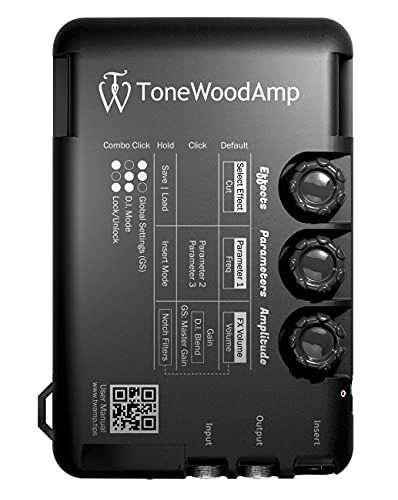
- 【One Of A Kind Experience】The ToneWoodAmp works on virtually any acoustic guitar! Adds beautiful sounding organic guitar effects to your acoustic* and acoustic-electric guitar, NO AMP REQUIRED...
- 【No Amp Required】 XXXX Get Reverbs like Hall, Room, Plate, Delay, Leslie, Auto-Wah, and Chorus, no amp required! All sounds come from the soundhole of your guitar organically. Buy one ToneWoodAmp...
This is a completely different beast and not a direct competitor in terms of format, but it’s an alternative for those looking for “acoustic effects.” The ToneWoodAmp attaches to the back of an actual acoustic-electric guitar and uses the guitar’s body as a speaker. It is significantly more expensive and requires you to actually own an acoustic guitar. We mention it here because if your goal is the *ultimate* acoustic experience with effects like delay and reverb, and you aren’t trying to make an electric guitar sound like an acoustic, this is a revolutionary piece of tech. It’s for the purist, whereas the MOOER Acoustikar Guitar Pedal Simulator is for the practical electric player.
3. SONICAKE Acoustic Guitar Pedal
- One-Stop Gig Solution for Acoustic Instruments Players with Main Effects needed
- Analog Preamp with 2-Band EQ recreates a Classic Acoustic Guitar Amplifier, provide a warm, natural sound
The Sonic Wood is another strong contender that leans more into the “preamp” territory. Like the Mooer, it is a micro-style pedal, but it focuses heavily on a 4-band EQ and integrated effects like chorus, delay, and reverb. We found that the Sonic Wood is great for someone who plays an acoustic-electric and wants a multi-effect strip. However, as a “simulator” for an electric guitar, it doesn’t quite have the specific “body resonance” algorithms found in the MOOER Acoustikar Guitar Pedal Simulator. The Mooer is a better choice for making a Strat sound like a Martin; the Sonic Wood is better for making a Martin sound like it’s in a stadium.
Final Verdict: Is the MOOER Acoustikar Guitar Pedal Simulator the Right Choice for You?
After extensive testing, we can confidently say that the MOOER Acoustikar Guitar Pedal Simulator is one of the most effective and efficient ways to expand your tonal palette. Its strengths lie in its incredible simplicity, its tiny footprint, and the surprisingly convincing “Jumbo” and “Standard” modes. While it won’t replace a high-end acoustic guitar for a dedicated studio session, it is more than capable of handling the “acoustic parts” of a rock or pop set. The metal build ensures it will survive the rigors of the road, and the “Top” and “Body” knobs give you enough control to dial out the “electric” artifacts that plague cheaper simulators.
We recommend this pedal to any gigging guitarist who is tired of carrying two guitars, or any home recorder who wants to quickly lay down acoustic-style textures without the hassle of microphones. It is a small investment that offers massive logistical relief. If you are ready to simplify your setup and give your back a break without sacrificing your sound, we highly recommend you pick up the MOOER Acoustikar Guitar Pedal Simulator today and start exploring the possibilities of acoustic simulation.
Last update on 2026-07-25 / Affiliate links / Images from Amazon Product Advertising API