
Zoom AC-3 Acoustic Pedal with Tone Restoration Review: The Ultimate DI Solution for Professional Natural Tone
Every acoustic guitarist who has ever stepped onto a stage knows the “piezo struggle.” You spend thousands on a high-end Martin or Taylor, appreciating the rich overtones and woody resonance in your living room, only to plug it into a PA system and hear a thin, “quacky,” and sterile sound. This disconnect between the natural unplugged beauty of the instrument and its amplified persona is a problem that has plagued performers for decades. We have all tried to fix it with basic EQ, but often, the more we tweak, the more artificial it sounds. This is exactly where a specialized tool like the Zoom AC-3 Acoustic Pedal with Tone Restoration comes into play. It isn’t just about adding reverb; it’s about reclaiming the acoustic soul that gets lost in translation through a copper wire. If you are tired of your premium guitar sounding like a budget toy through the speakers, understanding the depth of tone restoration is your first step toward a professional-grade performance.

- SIXTEEN PRESETS THAT KNOW YOUR GUITAR – Accurately recreates the sonic characteristics of 16 guitar body types and 15 specific guitar models with piezo and magnetic pickup selection, delivering...
- NINE EFFECTS, THREE-BAND EQ, AND A COMPRESSOR – Enhances your acoustic tone with 9 adjustable effects, a 3-band equalizer, and a single-knob compressor that smooths out dynamics for a full, balanced...

What to Consider Before Buying an Acoustic Guitar Effects Pedal
An Acoustic Guitar Effects pedal is more than just an item; it’s a key solution for bridging the gap between studio-quality sound and live convenience. Unlike electric guitar pedals, which often aim to radically transform the signal, acoustic-specific processors are primarily designed for restoration and enhancement. They solve the issues of impedance mismatch, feedback, and the loss of body resonance that occurs when using under-saddle pickups. By choosing a comprehensive unit, you are essentially carrying a professional recording chain—complete with a high-end preamp, compressor, and spatial effects—inside your gig bag.
The ideal customer for this type of product is someone facing regular live performance challenges, such as a solo singer-songwriter or a lead acoustic player in a full band, while it might not be suitable for those who only play at home or those who prefer a purely “purist” approach using only high-end microphones. If you find yourself frequently plugging directly into a mixer or a generic acoustic amp, the Zoom AC-3 Acoustic Pedal with Tone Restoration offers the precise controls needed to “mic” your guitar electronically. For those on an extremely tight budget who only need a simple volume boost, a basic preamp might suffice, but for serious tone shaping, a dedicated acoustic creator is the standard.
Before investing, consider these crucial points in detail:
- Dimensions & Space: Consider your pedalboard real estate. A unit like the Zoom AC-3 Acoustic Pedal with Tone Restoration is larger than a standard stompbox because it integrates a DI box and multiple switches. We found that its footprint is significant, so ensure you have roughly 6 by 9 inches of space available to accommodate the unit and its various cable connections.
- Capacity & Performance: Look for the “Source” and “Target” modeling capabilities. This determines how well the pedal can “read” your specific guitar type (Dreadnought, Parlor, Nylon, etc.) and apply the correct sonic thumbprint. High-quality internal processing (at least 24-bit/44.1kHz) is vital to ensure that the “restoration” doesn’t introduce unwanted digital artifacts.
- Materials & Durability: Since this is a floor unit, the chassis should ideally be metal to withstand the rigors of touring. While the internal components of modern pedals are highly reliable, the external hardware—switches and knobs—must be robust. We noticed that while many units use metal casings, some use plastic knobs which require more care during transport.
- Ease of Use & Maintenance: Acoustic players often want to “set it and forget it.” Look for intuitive controls where you can visually see your EQ and compression settings at a glance. Maintenance is usually minimal, but having a unit that can be powered by both an AC adapter and batteries offers a crucial safety net for outdoor gigs or venues with questionable power outlets.
Ultimately, your choice should reflect the complexity of your setup. If you use multiple guitars during a set, a pedal that allows for quick adjustments between body types is invaluable. To see how this unit compares to other options in the market, you can see its full feature set and user reviews to determine if it fits your specific workflow.
While the Zoom AC-3 Acoustic Pedal with Tone Restoration is an excellent choice, it’s always wise to see how it stacks up against the competition. For a broader look at all the top models, we highly recommend checking out our complete, in-depth guide:

- Transform any guitar into a ToneWoodAmp smart guitar! No Amp Required: Acoustic guitar effects that work directly from your guitar's body without needing an amplifier

- Analog Preamp and Digital Reverb
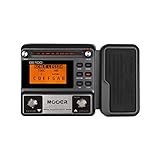
- 80 preset patches and 80 user patches, enough for creating your sound library. You can save any preferred tones by simply pressing down the SAVE button.
First Impressions and Key Features: Unboxing the Zoom AC-3 Acoustic Pedal with Tone Restoration
When we first took the Zoom AC-3 Acoustic Pedal with Tone Restoration out of the box, the immediate impression was one of professional utility. It feels substantial, weighing in at nearly 3 pounds, which gives it a grounded feel on stage—it won’t slide around when you go to stomp on the boost. The black metal chassis is sleek and looks high-end, though the silver plastic knobs were a slight point of contention for us initially. They feel smooth, but we suggest being mindful when packing them into a crowded gig bag to avoid any potential shearing. Compared to previous iterations like the AC-2, the AC-3 adds a much-needed layer of depth with its expanded effects section and dedicated compression knob.
The layout is remarkably intuitive. On the left, you have your “Source” guitar selection, which calibrates the input for your instrument’s specific body type. In the center, the “Target” dial allows you to choose the specific legendary guitar model you want to emulate. This dual-layer approach to tone is what truly sets this unit apart. To really understand the versatility of these presets, you should check the latest price and availability to see why so many professionals are making this their primary DI solution.
What We Like
- Exceptional tone restoration that virtually eliminates the “piezo quack.”
- Highly functional built-in compressor that adds professional polish with one knob.
- Comprehensive DI features including XLR stereo outputs and ground lift.
- Intuitive 3-band EQ and anti-feedback control that are lifesavers for live mixing.
What We Didn’t Like
- Cannot use Chorus and Delay effects simultaneously.
- The control knobs are plastic, which may be a durability concern for heavy touring.
A Deep Dive into the Performance of the Zoom AC-3 Acoustic Pedal with Tone Restoration
The Science of Tone Restoration and Modeling
The standout feature of the Zoom AC-3 Acoustic Pedal with Tone Restoration is, without a doubt, its ability to breathe life back into a dry pickup signal. During our testing, we found that the “Source” and “Target” settings work in a sophisticated mathematical tandem. By selecting your actual guitar body type—for example, a Dreadnought—the pedal understands the frequency response typically associated with that shape. When you then select a “Target” model, the AC-3 applies a complex EQ and resonance algorithm to mimic the characteristics of high-end, world-class instruments. This isn’t just a simple filter; it’s a reconstruction of the acoustic properties that your pickup fails to capture.
We evaluated this using a variety of guitars, from a mid-range Spruce-top to a high-end Martin. For the mid-range instrument, the transformation was staggering. The “boxy” mid-frequencies that often plague amplified acoustics were smoothed out, replaced by a rich, vibrating “air” that felt more like a studio microphone than a direct line. As one user noted, it makes a cheaper guitar sound significantly better, but even on high-end instruments, it provides a level of control over the “body” of the sound that is hard to achieve with a standard mixing board. This capability is a feature that really sets it apart from simpler DI boxes that only offer gain and basic EQ.
Preamp Quality and Single-Knob Compression
A great acoustic sound starts with a high-quality preamp, and the Zoom AC-3 Acoustic Pedal with Tone Restoration delivers a low-noise, high-headroom signal path that is impressively transparent. We were particularly impressed by the input selector, which allows you to toggle between Piezo and Magnetic pickups. This small detail ensures that the impedance is matched correctly, preventing the signal from becoming brittle or overly dark. The 3-band EQ is musical and well-calibrated, allowing for quick adjustments to help the guitar sit perfectly in a live mix without interfering with the bass or vocals.
However, the real hero of the control panel is the built-in compressor. Compression on an acoustic guitar can be tricky; too much, and you lose the natural dynamics of your playing; too little, and your fingerpicking gets lost behind the strumming. Zoom has implemented a “one-knob” solution that we found to be incredibly effective. As you turn the knob, it intelligently adjusts the threshold and ratio to keep the signal consistent. We found this especially useful for performers who switch between delicate fingerstyle and aggressive flatpicking within the same song. It keeps the volume levels stable while adding a “sizzle” to the high-end that feels professional and finished. You can view the detailed technical specs to see how this preamp handles signal gain without introducing hiss.
Effects Versatility and Spatial Depth
The Zoom AC-3 Acoustic Pedal with Tone Restoration includes 9 adjustable effects, ranging from Hall and Mod Reverbs to Tape Echo and Chorus. In our sessions, the reverbs were the clear winners. They sound lush, natural, and never “metallic.” The ability to add a subtle “Pad” effect or a wide Chorus allows for creative textures that can fill a room, especially in a solo performance setting. We particularly liked the “Pan” setting; when using the stereo XLR outputs, it creates a wide, immersive soundstage that makes a single guitar sound massive through a PA system.
There is, however, a minor limitation that we must address. You cannot engage Chorus and Delay at the same time, as they share the same effects engine. While this might be a drawback for players who want complex, layered ambient soundscapes, we found that for 95% of acoustic performances, it wasn’t a dealbreaker. Most players will choose a high-quality reverb—which is always available—and then toggle a secondary effect like chorus or delay as needed. The quality of the effects themselves is top-tier for this price bracket, providing a “shimmer” that feels integrated into the tone rather than just sitting on top of it. This is why many consider it an essential “all-in-one” solution for the gigging musician.
Gig-Ready Tools: Anti-Feedback, Boost, and Connectivity
If you have ever played a loud stage with an acoustic guitar, you know the terror of a sudden low-frequency howl. The Zoom AC-3 Acoustic Pedal with Tone Restoration features a dedicated anti-feedback footswitch that is incredibly effective. In our testing, engaging the filter instantly notched out the offending frequency without noticeably thinning out the overall tone. Combined with the built-in chromatic tuner—which is bright, fast, and easy to read even under stage lights—the AC-3 proves it was designed by people who actually play live. We also loved the +9dB boost switch, which is perfect for taking a solo or bringing out a quiet fingerstyle passage over a loud drummer.
The connectivity options are where the “AC” (Acoustic Creator) really earns its name. With dual XLR outputs and standard 1/4-inch jacks, you can send a stereo signal to the front-of-house mixer while simultaneously sending a mono signal to your stage monitor or amplifier. This versatility eliminates the need for extra DI boxes and clutter. For those interested in the logistical advantages, we recommend you see how it integrates with different PA systems through the user feedback gallery. This level of professional I/O is rarely found in pedals at this price point, making it a “Swiss Army Knife” for the modern acoustic performer.
What Other Users Are Saying
The general consensus among the guitar community is that the Zoom AC-3 Acoustic Pedal with Tone Restoration offers incredible “bang for the buck.” Many users who were previously skeptical of digital modeling have been won over by how intuitive the interface is. One user noted that while they were initially unimpressed, after spending twenty minutes “fiddling” with the source and target settings, they found tones that were far superior to going direct. Another player, using a Taylor 414 through a Bose L1 system, praised the unit for making their guitar sound “amazing” and providing “tons of effects to dial in the perfect sound.”
However, the feedback isn’t without its warnings. One specific user reported a hardware failure after a few weeks of use, noting a “slow death” where the signal became noisy. While this seems to be an outlier, it highlights the importance of the 1-year replacement warranty offered by the manufacturer. Another common critique is the inability to footswitch the reverb separately from the other effects. As one reviewer pointed out, “you can’t separately turn off the reverb with a footswitch unless your chosen ‘effect’ is reverb.” This means if you are using Chorus, you have to lean down to adjust the reverb level manually. Despite these minor workflow gripes, the overwhelming sentiment is that the unit makes guitars sound “better than they are,” reawakening enthusiasm for acoustic playing.
Comparing the Zoom AC-3 Acoustic Pedal with Tone Restoration to Its Top Alternatives
1. SONICAKE Acoustic Guitar Effects Pedal
- Analog Preamp and Digital Reverb
- Built-in Notch Filter and Mute with gain and frequency range adjustment capabilities to quickly eliminate whistling and shape your sound in detail
The SONICAKE A-Factory is a much more compact and budget-friendly alternative. It features an analog preamp and a digital reverb, focusing on the essentials rather than the deep modeling found in the Zoom. While it includes an XLR output, it lacks the sophisticated “Source/Target” tone restoration and the multi-effects versatility of the AC-3. We recommend this for the casual player or someone with a very crowded pedalboard who just needs a reliable DI and a touch of reverb. It’s a “utility” pedal, whereas the Zoom is a “tone-shaping” powerhouse.
2. MOOER Acoustikar Acoustic Guitar Pedal Simulator

- [Warm Sound] Restore the sound of the acoustic guitar. Play the sound texture of an acoustic guitar with an electric guitar.
The MOOER Acoustikar is a tiny, “mini-pedal” format simulator. It’s designed to make an electric guitar sound like an acoustic, or to change the profile of an acoustic guitar between Piezo, Standard, and Jumbo modes. It is incredibly simple and takes up almost no space. However, it lacks a preamp, EQ, compressor, and DI outputs. This is a great “effect” to add to an existing electric guitar board, but it cannot replace the comprehensive signal chain provided by the Zoom AC-3 Acoustic Pedal with Tone Restoration for a dedicated acoustic performer.
3. ToneWoodAmp SOLO Multi-Effect Processor
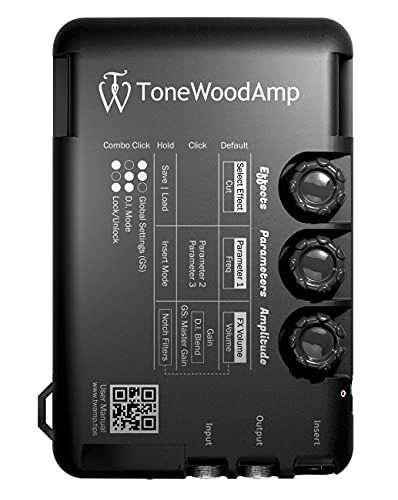
- 【One Of A Kind Experience】The ToneWoodAmp works on virtually any acoustic guitar! Adds beautiful sounding organic guitar effects to your acoustic* and acoustic-electric guitar, NO AMP REQUIRED...
- 【No Amp Required】 XXXX Get Reverbs like Hall, Room, Plate, Delay, Leslie, Auto-Wah, and Chorus, no amp required! All sounds come from the soundhole of your guitar organically. Buy one ToneWoodAmp...
The ToneWoodAmp is a radically different beast altogether. Instead of being a floor pedal, it attaches to the back of your guitar and uses the instrument’s own body as a speaker to produce effects like reverb and delay—no amp required. It is an amazing tool for practice and intimate unplugged performances. However, for a professional gigging musician who needs to plug into a PA system and control feedback while managing a complex signal chain, the Zoom AC-3 Acoustic Pedal with Tone Restoration remains the superior choice for traditional live sound reinforcement.
Final Verdict: Is the Zoom AC-3 Acoustic Pedal with Tone Restoration Right for You?
After our extensive hands-on evaluation, we can confidently say that the Zoom AC-3 Acoustic Pedal with Tone Restoration is one of the most comprehensive acoustic tools currently on the market. It successfully addresses the three pillars of acoustic performance: tone restoration, dynamic control, and spatial enhancement. While the plastic knobs and the inability to stack certain effects are minor drawbacks, the sheer quality of the modeling and the professional-grade DI outputs make it an indispensable asset for any serious acoustic guitarist. It simplifies your setup by replacing a bag full of separate boxes with one cohesive, intuitive unit.
If you are a gigging musician who wants to ensure that your audience hears the true beauty of your instrument—regardless of the venue’s acoustics—this pedal is a stellar investment. It bridges the gap between the raw pickup sound and the polished tone of a studio recording. To elevate your live sound and take full control of your acoustic identity, we highly recommend you get your own Zoom AC-3 Acoustic Pedal with Tone Restoration here and experience the difference that professional tone restoration can make.
Last update on 2026-10-25 / Affiliate links / Images from Amazon Product Advertising API