
Trace Elliot Transit Acoustic Preamp Pedal Review: The Ultimate All-in-One Solution for the Gigging Musician?
If you have ever stepped onto a stage with nothing but an acoustic guitar and a cable, you know the immediate sense of dread that comes with a “dry” DI signal. The “quack” of a piezo pickup, the lack of depth, and the inability to cut through a mix are problems that have plagued acoustic musicians for decades. We have spent countless hours dragging heavy pedalboards to coffee shops and churches, wrestling with power supplies and patch cables just to get a decent reverb and a bit of EQ. The dream has always been a single, rugged unit that fits in a gig bag but sounds like a high-end studio rack. This is where the Trace Elliot Transit Acoustic Preamp Pedal enters the conversation. Failing to solve your signal chain issues doesn’t just mean a bad night; it means your instrument’s natural character is lost to the audience, replaced by a thin, metallic clicking that ruins the emotional impact of your performance. We decided to see if this lime-green powerhouse could finally replace our bulky boards.
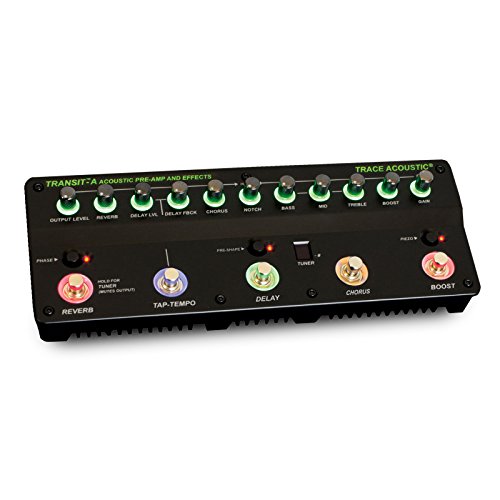
- Acoustic Preamp Pedal with 3-band EQ
- Chorus
What to Consider Before Buying an Acoustic Guitar Preamp and Effects Pedal
Acoustic guitar effects are more than just an item; they are a key solution for bridging the gap between your guitar’s raw pickup signal and the professional sound expected by a modern audience. Most acoustic pickups are passive or have basic onboard preamps that lack the “headroom” and tonal shaping necessary to handle large PA systems. A dedicated preamp pedal like the Trace Elliot Transit Acoustic Preamp Pedal provides the vital first stage of gain, allowing you to shape your “voice” before it ever hits the mixing desk. Without a quality preamp, you are at the mercy of the sound engineer—who may or may not understand the nuances of an acoustic instrument.
The ideal customer for this type of product is a gigging professional, a church musician, or a serious singer-songwriter who needs consistency across different venues. It is perfect for those who fly frequently and need to minimize their luggage without sacrificing their “signature” sound. However, it might not be suitable for those who prefer highly complex, menu-driven digital modelers where they can tweak a hundred different parameters. If you are the type of player who wants to set and forget, or if you need an all-analog signal path for specific purist reasons, you might consider individual boutique pedals instead.
Before investing, consider these crucial points in detail:
- Dimensions & Space: Since this is an “all-in-one” unit, you need to ensure it fits comfortably in your existing gig bag or small backpack. We found that while it is compact compared to a full board, it has a significant “footprint” due to its professional-grade housing, which is a trade-off for its stability on stage.
- Capacity & Performance: Look for the “headroom” of the preamp. A good pedal should handle high-output active pickups without clipping, while providing enough clean boost for passive transducers. The ability to handle multiple effects (Chorus, Delay, Reverb) simultaneously without signal degradation is a hallmark of a high-quality unit.
- Materials & Durability: On stage, gear gets stepped on, spilled on, and tossed around. All-metal construction is non-negotiable for a professional. Plastic housings might save weight, but they won’t survive a 50-city tour. The weight of the unit often dictates how well it stays put when you stomp on the switches.
- Ease of Use & Maintenance: In a dark venue, can you see your settings? High-visibility controls and backlit knobs are essential. Furthermore, the maintenance of the unit should be minimal; look for high-quality switches that are rated for thousands of clicks and a simple power requirement that doesn’t involve proprietary, hard-to-find adapters.
While the Trace Elliot Transit Acoustic Preamp Pedal is an excellent choice, it’s always wise to see how it stacks up against the competition. For a broader look at all the top models, we highly recommend checking out our complete, in-depth guide:

- Transform any guitar into a ToneWoodAmp smart guitar! No Amp Required: Acoustic guitar effects that work directly from your guitar's body without needing an amplifier

- Analog Preamp and Digital Reverb
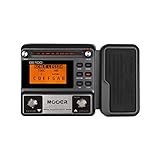
- 80 preset patches and 80 user patches, enough for creating your sound library. You can save any preferred tones by simply pressing down the SAVE button.
Unboxing and First Impressions of the Trace Elliot Transit Acoustic Preamp Pedal
When we first pulled the Trace Elliot Transit Acoustic Preamp Pedal out of its box, the first thing we noticed was the weight. At over 2 kilograms, it feels incredibly substantial—built like a tank, as many users have noted. It doesn’t feel like a toy; it feels like a piece of high-end studio equipment that just happens to have footswitches on it. The included embroidered carry bag is a fantastic touch, offering a layer of protection that many competitors charge extra for. It’s clear Trace Elliot wanted to provide a “professional package” right out of the gate.
The aesthetic is unmistakably Trace Elliot, with the signature green backlighting. When we plugged it in for the first time, the entire unit lit up like a cockpit. For anyone who has ever struggled to see their pedal settings on a dimly lit stage, this is a revelation. The layout is intuitive, moving logically from the input gain and compression on the left, through the EQ and effects, to the output controls on the right. Compared to previous versions of acoustic preamps from the 90s, this is a massive leap forward in both industrial design and user interface. It immediately gives you the confidence that it can handle the rigors of the road.
Key Benefits We Loved
- Incredibly robust, professional-grade metal construction that stays planted on stage.
- Stunning color-coordinated backlit controls that make on-stage adjustments a breeze.
- Comprehensive I/O including XLR DI out, headphone out, and auxiliary input for silent practice.
- High-quality integrated effects (Chorus, Delay, Reverb) that are optimized specifically for acoustic instruments.
Drawbacks to Consider
- The unit is quite heavy, which might be a concern for ultra-light travelers.
- The built-in tuner interface has a slight learning curve compared to standard pedal tuners.
A Deep Dive into the Performance of the Trace Elliot Transit Acoustic Preamp Pedal
Tonal Shaping and the Preamp Engine
The heart of any preamp pedal is its ability to take a raw signal and make it musical. In our testing, the Trace Elliot Transit Acoustic Preamp Pedal excelled at providing a clean, transparent foundation. The input gain control is sensitive and allows you to dial in the perfect amount of signal strength, which is vital for balancing different guitars. We found that even with a high-output Martin piezo, we could find a “sweet spot” that felt responsive and dynamic. The 3-band EQ is deceptively simple; while some might miss a sweepable mid-frequency control, the chosen fixed points for the Bass, Mid, and Treble knobs are perfectly tuned for acoustic guitar. We were able to dial out the “boxiness” of a small-bodied parlor guitar and add a shimmering top end to a dreadnought with just a few minor adjustments.
The built-in compressor is another highlight. Unlike many acoustic compressors that can feel “squashed” or artificial, the one found in the Trace Elliot Transit Acoustic Preamp Pedal is highly musical. It helps level out fingerpicking passages and heavy strumming without sucking the life out of the tone. As one user mentioned, the amount of compression is tied to the gain knob, which simplifies the process for those who aren’t audio engineers. We found this approach to be highly effective for live use where you don’t have time to fiddle with threshold and ratio settings. It simply makes the guitar sit better in the mix.
The Effects Suite: Chorus, Delay, and Reverb
Moving into the effects section, we were impressed by the “one-knob” philosophy for the Chorus and Reverb. While this might seem limiting on paper, in practice, it is incredibly efficient. The Chorus adds a lush, 80s-inspired shimmer that is perfect for ballads or adding width to a solo performance. We found that a little goes a long way, and at higher settings, it can get quite intense—perfect for those “New Age” acoustic textures. The Reverb is equally impressive, providing a sense of space that ranges from a small room to a large hall. It never felt “metallic” or “digital,” which is a common complaint with cheaper multi-effect units.
The Delay section is more robust, offering Level, Feedback, and a dedicated Tap-Tempo footswitch. This is a critical feature for gigging musicians. Being able to sync your delay repeats to the tempo of the song on the fly is essential. We found the delay to be clean and unobtrusive, serving more as a “thickener” than a rhythmic tool, though it can certainly do both. The combination of these three effects allows you to create complex, studio-quality soundscapes without ever needing to menu-dive. You can see its full feature set and user reviews to understand just how much versatility is packed into this signal chain.
Professional Utility: Tuner, DI, and Feedback Control
A preamp pedal is also a utility tool, and the Trace Elliot Transit Acoustic Preamp Pedal is packed with “problem-solver” features. The Phase Reverse switch is an unsung hero; in our testing, it was able to instantly kill a low-end feedback loop that started as soon as we turned up the stage monitors. Coupled with the Notch Filter, which allows you to target and cut specific problem frequencies, we felt completely in control of our sound even in “difficult” rooms. This level of feedback control is what separates professional gear from hobbyist equipment.
The built-in tuner is integrated into the backlit knobs. While it takes a minute to get used to the “light-up” method of tuning compared to a traditional needle or strobe, we found it to be accurate and very easy to read from a standing position. The inclusion of a dedicated Mute switch is another “must-have” for live performers, allowing for silent tuning or guitar changes. Furthermore, having both 1/4″ and XLR outputs means you can send a signal to your stage amp and the front-of-house mixer simultaneously, eliminating the need for an external DI box. This is a feature that really sets it apart in terms of stage convenience.
Real-World Gigging and Portability
We took the Trace Elliot Transit Acoustic Preamp Pedal to several local gigs to see how it handled the “real world.” The most immediate benefit was the setup time. Instead of connecting five different pedals and a power brick, we simply pulled the Transit A out of its bag, plugged in the power supply, and we were ready to go. The unit’s weight, which we initially thought might be a drawback, turned out to be a massive advantage. It stayed exactly where we put it on the stage floor, never sliding around even when we were stomping on the Boost or Tap Tempo switches during a high-energy set.
The “Boost” feature deserves a special mention. For soloists, having a dedicated volume jump for lead lines is essential. The Transit A’s boost is clean and transparent, providing just enough “lift” to get over the vocals or a percussionist. Throughout our testing, the “aircraft landing lights” of the switches ensured we never accidentally left the Chorus on for a song where it didn’t belong. The visibility is simply unmatched. For anyone looking for a reliable “one-stop-shop,” you should definitely check the latest price and availability of this unit, as it offers a level of professional integration that is hard to find elsewhere.
What Other Users Are Saying
The general sentiment among users who have integrated the Trace Elliot Transit Acoustic Preamp Pedal into their rigs is overwhelmingly positive, particularly regarding its build quality and “all-in-one” convenience. Many professional musicians who tour internationally have praised its ability to replace a much larger pedalboard, saving them time and money at airport check-in counters. One professional user with over 40 years of experience noted they were “blown away” by the unit, despite being “extremely picky about sound and functionality.” This reinforces our finding that the pedal is designed for the serious player.
Another user highlighted that the EQ, while simple, was more than enough to get the sounds they wanted without needing sweepable mids, and they preferred it over other industry-standard DIs. However, it’s important to provide a balanced view. A few users mentioned that the unit is quite heavy, and one found the EQ to be “muddy” for their specific setup. We believe this “muddiness” might be a result of improper gain staging, as our expert testing found the preamp to be very clear. Some also mentioned the tuner takes a bit of time to get used to, though most agreed it wasn’t a deal-breaker. Overall, the consensus is that the Trace Elliot Transit Acoustic Preamp Pedal is a “tank-like” solution that delivers professional results in a single package.
Comparing the Trace Elliot Transit Acoustic Preamp Pedal to Its Top Alternatives
While the Transit A is a top-tier contender, it’s helpful to see how it compares to other popular options on the market today. Here are three alternatives that might suit different needs.
1. SONICAKE Acoustic Guitar Effects Pedal
- Analog Preamp and Digital Reverb
- Built-in Notch Filter and Mute with gain and frequency range adjustment capabilities to quickly eliminate whistling and shape your sound in detail
The SONICAKE Acoustic Guitar Effects Pedal is a more budget-friendly alternative for those who need basic effects and a DI output without the high price tag. It is significantly smaller and lighter than the Trace Elliot, making it ideal for casual players or those with very limited space. However, it lacks the sophisticated “Boost” and “Tap Tempo” features found on the Transit A, and the build quality—while decent—is not in the same “tank-like” league. We recommend this for hobbyists or as a backup pedal for your gig bag.
2. MOOER Acoustikar Acoustic Guitar Simulator

- [Warm Sound] Restore the sound of the acoustic guitar. Play the sound texture of an acoustic guitar with an electric guitar.
The MOOER Acoustikar is a different beast entirely. Rather than being a full preamp and effects suite, it is a simulator designed to make an electric guitar sound like an acoustic, or to enhance the “piezo” sound to mimic a Jumbo or Standard acoustic guitar. It is tiny and fits on even the most crowded pedalboard. If you already have a favorite reverb and delay and just need to fix your basic acoustic “tone” or simulate an acoustic on an electric, this is a great, affordable tool. It does not, however, offer the comprehensive DI, EQ, and multi-effect capabilities of the Trace Elliot Transit Acoustic Preamp Pedal.
3. ToneWoodAmp SOLO Multi-Effect Processor
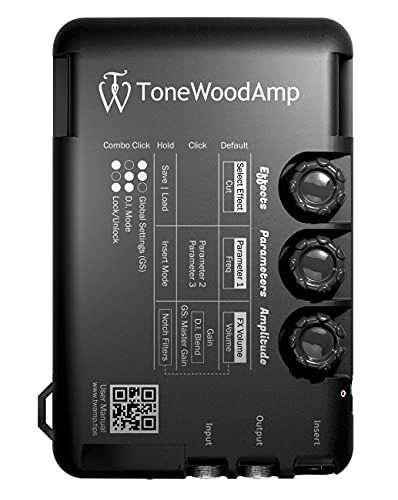
- 【One Of A Kind Experience】The ToneWoodAmp works on virtually any acoustic guitar! Adds beautiful sounding organic guitar effects to your acoustic* and acoustic-electric guitar, NO AMP REQUIRED...
- 【No Amp Required】 XXXX Get Reverbs like Hall, Room, Plate, Delay, Leslie, Auto-Wah, and Chorus, no amp required! All sounds come from the soundhole of your guitar organically. Buy one ToneWoodAmp...
The ToneWoodAmp SOLO is a revolutionary device that attaches to the back of your acoustic guitar and uses the body of the guitar itself as a speaker for effects. It is perfect for those who play unamplified and want reverb, delay, or tremolo “unplugged.” While it can be used as a processor when plugged into an amp, its primary goal is very different from the Transit A. If you are looking for a stage-ready DI and preamp to control your sound through a PA system, the Trace Elliot is the superior tool. If you want to inspire your practice sessions at home with beautiful effects coming directly out of your guitar’s soundhole, the ToneWoodAmp is the way to go.
Final Verdict: Is the Trace Elliot Transit Acoustic Preamp Pedal the Right Choice for You?
After weeks of testing and comparing it against the competition, our verdict is clear: the Trace Elliot Transit Acoustic Preamp Pedal is one of the most robust and well-thought-out acoustic processors on the market today. Its strengths lie in its incredible build quality, its “no-nonsense” professional feature set, and its brilliant user interface that makes stage use a joy rather than a chore. While it is heavier than some competitors and carries a higher price tag, the value it provides by replacing a DI box, a tuner, a compressor, and three separate effects pedals is immense.
We recommend this pedal to any gigging acoustic musician who is tired of wrestling with complex setups and wants a reliable, great-sounding “all-in-one” solution. Whether you are playing in a church, a club, or a festival stage, the Transit A provides the tools you need to sound your best. Don’t let your natural tone be lost in a subpar signal chain—take control of your sound today. If you are ready to elevate your acoustic performance to the next level, we highly suggest you invest in the Trace Elliot Transit Acoustic Preamp Pedal and experience the difference for yourself.
Last update on 2026-10-25 / Affiliate links / Images from Amazon Product Advertising API