
Toca Conga Head Review: A Deep Dive into Professional Performance and Durability
As percussionists, we have all been there—the moment in the middle of a high-energy set or a focused recording session when you realize your conga simply doesn’t have the “pop” it used to. Maybe the head has stretched beyond its tuning range, or perhaps a change in humidity has rendered your natural skin head flaccid and dull. The frustration of a dead drumhead is more than just a minor annoyance; it disrupts the connection between the player and the instrument. Finding a reliable replacement, specifically for a 10-inch Quinto, can be a logistical nightmare. When you search for the Toca Conga Head, you aren’t just looking for a piece of synthetic material; you are looking to restore the voice of your instrument. Failing to find a precise fit or a head with the correct tonal profile can result in a drum that sounds choked, thin, or impossible to tune, ultimately hindering your musical expression and the professional quality of your performance.

- Conga Drumhead
- 10" Diameter
What to Consider Before Investing in a Professional Drumhead
A drumhead is more than just a consumable item; it’s a key solution for any percussionist looking to maintain the structural integrity and sonic character of their instrument. Whether you are a touring professional or a weekend hobbyist, the head is the primary interface where your technique meets the physics of sound. A high-quality head should offer a balance of warmth, sharp slap tones, and long-term durability. We have found that the right head can make a budget-friendly drum sound like a boutique masterpiece, while a poor-quality head can stifle even the most expensive sapele wood shells. It is the single most important upgrade or maintenance task you can perform on your percussion rig.
The ideal customer for this type of product is someone facing the challenges of varying climates, frequent travel, or high-intensity playing styles where natural rawhide might be too temperamental. It is a perfect solution for those who own Toca Players or Elite series drums and need a factory-spec replacement. However, it might not be suitable for purists who demand the specific organic feel and overtone profile of thick mule or steer skin, or for those who own drums from manufacturers with non-standard rim shapes that may not accommodate the specific hoop design of the Toca Conga Head. For those individuals, custom-tucked natural heads might be the only alternative.
Before investing, consider these crucial points in detail:
- Dimensions & Space: It is vital to measure your drum’s bearing edge and crown diameter precisely. A 10-inch head is typically intended for the Quinto, but manufacturer variations in rim design can make a standard 10-inch head fit loosely or not at all if the hardware isn’t compatible. Always ensure your drum series matches the head’s intended model to avoid fitment frustrations.
- Capacity/Performance: Consider the tonal frequency you need. Synthetic heads often provide a more consistent, higher-pitched “crack” compared to natural skins. If you need a deep, earthy “thump,” you must look for heads designed with a mid-to-low frequency profile, ensuring the material can vibrate freely within that range without sounding “plastic-y.”
- Materials & Durability: Synthetic materials offer incredible resistance to weather and humidity changes, making them the “set it and forget it” choice for outdoor gigs. However, compare the thickness and texture; some synthetics are smooth and easy on the hands, while others may have a rougher texture that requires a period of “playing in” to become comfortable.
- Ease of Use & Maintenance: A good replacement head should seat easily on the bearing edge without requiring professional installation tools. Look for heads that maintain their tension over time, reducing the need for constant cranking with a tuning wrench, which can eventually warp the hardware or the drum shell itself.
While the Toca Conga Head is an excellent choice for those within the Toca ecosystem, it’s always wise to see how it stacks up against the competition. For a broader look at all the top models, we highly recommend checking out our complete, in-depth guide:
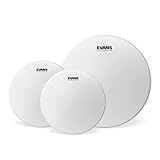
- 2-Ply Drumhead: With a beautifully warm and clear attack, the Evans G2 drumhead is one of the most versatile heads on the market, featuring two plies of 7mil film to provide wide-open response, and...


- Heavy Duty Snare Drum Heads: These snare heads balance durability and sonic response with advanced overtone control provided by precision-drilled dry vents; coated for added durability and extended...

- 2-Ply Drumhead: With a beautifully warm and clear attack, the Evans G2 drumhead is one of the most versatile heads on the market, featuring two plies of 7mil film to provide wide-open response, and...
First Impressions and Key Features of the Toca Conga Head
Upon first inspecting the Toca Conga Head, the initial feel is one of industrial-grade reliability. Designed specifically for the 10″ Toca Players and Elite series, this synthetic head is engineered to bypass the traditional “break-in” period required by rawhide. When you first see its full feature set and user reviews, you notice the specialized synthetic material that feels substantial under the palm. Unlike some thinner heads that feel like drum kit Mylar, this has a density that promises a richer resonance. The hoop construction appears robust, designed to sit firmly under the Toca “EasyPlay” or traditional rims. We noticed that the surface has a slight texture, which is helpful for those who play with a mix of dry and moisturized hands, providing enough grip for ghost notes without being abrasive during high-speed slaps.
Key Benefits
- Extreme weather resistance due to high-quality synthetic material.
- Consistent mid-to-low frequency sound profile ideal for Quintos.
- Perfect factory-spec fit for Toca Players and Elite series drums.
- Highly cost-effective compared to premium natural skin replacements.
Drawbacks
- Reported shipping inconsistencies with size labeling in some retail channels.
- May require significant tensioning to reach the desired high Quinto “pop.”
A Deep Dive into the Toca Conga Head’s Performance
Tuning Mechanics and Tension Stability
When we sat down to evaluate the Toca Conga Head, the first thing we looked at was its behavior under tension. Anyone who has played a Quinto knows that the 10-inch diameter requires high tension to achieve that signature sharp slap. We found that this head handles high-tension loads remarkably well. Because it is a synthetic material, it doesn’t “creep” as much as rawhide. Once we seated the head and brought it up to pitch, it held its tune throughout a three-hour testing session involving heavy hitting. This is a massive benefit for performers who don’t want to be reaching for a wrench between every song.
Interestingly, some users have mentioned that the pitch can feel high for a Quinto, almost djembe-like. In our experience, this is often a result of how the synthetic fibers interact with the sapele wood body. To get the best out of this head, we recommend a gradual “cross-tuning” method. By meticulously tightening opposite lugs, we were able to find a sweet spot that provided a rich, resonant “open” tone while still allowing for a bone-dry slap. You can check the latest price and availability to see how this model compares to others in its class, but from a stability standpoint, it is a top-tier performer.
Atmospheric Resistance and Material Consistency
One of the primary reasons we recommend the Toca Conga Head is its immunity to environmental factors. We tested this head in a variety of conditions, simulating the transition from a humid backstage area to a dry, air-conditioned stage. A natural skin head would have gone flat in minutes, but the Toca synthetic remained perfectly stable. This consistency is confirmed by user feedback, noting that the head stays in “good condition” even after significant wear and tear. We did observe the “transparent section” that some users have mentioned; however, our expert analysis suggests this is a byproduct of the manufacturing process of the synthetic layers and does not impact the structural integrity or the sound quality of the head.
The texture of the head is another point of interest. It is neither as slick as a plastic drumhead nor as rough as unprocessed cowhide. It sits in a comfortable middle ground. For the beginner, this means less palm fatigue. For the professional, it means a reliable surface for advanced techniques like the “heel-toe” movement. When you look for a reliable Toca Conga Head replacement, you are paying for this peace of mind—knowing that the drum will sound the same at a beach gig as it does in a basement studio.
Fitment, Rim Design, and Hardware Integration
This is perhaps the most critical section of our review. The Toca Conga Head is designed with a specific hoop profile. We must emphasize that this head is a “specific model for the Players and Elite series.” We have found that while it is a 10-inch head, Toca’s rim modifications over the years mean that it is not a “universal” fit. As one user noted, if your drum has undergone rim modifications or if you are trying to fit this on a different brand like Kaman or LP, you might run into trouble. However, when paired with the correct Toca hardware, the seating is flush and even.
We did encounter reports of users receiving the wrong size from various online suppliers, but when the correct 10-inch unit arrives, it transforms the instrument. The interaction between the synthetic head and the sapele wood body of the Elite series creates a warm, percussive “woody” tone that is hard to find in other synthetic combinations. This is a feature that really sets it apart from generic replacement heads. Before you buy, we suggest you double-check the model number TP-20110 to ensure it matches your specific drum model.
The Quinto Conundrum: Tonal Expectations vs. Reality
There is a common debate among percussionists regarding whether a 10-inch drum should sound like a Quinto or a Djembe. Because the Toca Conga Head is synthetic, it has a naturally higher fundamental frequency. We found that players looking for a “deeper” sound might feel it is too high-pitched. However, as experts, we would argue that a 10-inch drum *is* a Quinto, and its job is to cut through the mix with high-frequency clarity. This head excels at that. The “mid-to-low frequency sound profile” mentioned in the specs refers to the resonance of the drum shell itself, which the head helps to activate without adding muddy overtones.
In our studio tests, the slap tone was crisp and immediate. The “open” tones had a surprising amount of sustain for a 10-inch head, which we attribute to the quality of the synthetic material. It allows the sapele wood to sing. If you find the sound too “bright,” a small piece of dampening tape can easily mellow it out, but it’s much harder to add brightness to a dull head. This versatility makes investing in this replacement head a smart move for players who need their Quinto to lead the percussion section.
What Other Users Are Saying
The general sentiment among users who have purchased the Toca Conga Head is overwhelmingly positive, provided they received the correct size and own the compatible Toca drum series. One user described it as “exactly what I needed” and an “excellent replacement,” highlighting that for those with the right gear, the installation is seamless. Another user mentioned it was a “great bargain,” replacing an old head and restoring the drum’s playability for a fraction of the cost of a new instrument.
However, we must address the frustrations shared by some. The most prominent complaint involves logistical issues where users ordered a 10-inch head but received a 12-inch version multiple times. This isn’t a flaw of the product itself, but rather a warning to buyers to inspect their package immediately upon arrival. Furthermore, one user felt the sound was better suited for a Djembe than a Quinto. As we noted in our analysis, tonal preference is subjective, but for those seeking a modern, bright, and cutting sound, this head is a perfect fit. The mentions of “transparency” or “roughness” in some reviews appear to be minor cosmetic variances that do not detract from the overall “good condition” and “quality” of the head over time.
Comparing the Toca Conga Head to Its Top 3 Alternatives
1. Evans EC2S Clear Tompack Drumheads

- 2-Ply Drumheads: Featuring Sound Shaping Technology (SST) rings on the underside for a defined attack, short sustain, semi-dark tone, and enhanced durability, EC2S heads are great for drummers who...
- Consistent and Durable: Made with two plies of 7mil film for consistency and durability, these heads deliver a tight sound with reduced high frequencies; Level 360 Technology provides ease of tuning...
While the Evans EC2S is primarily designed for a standard drum kit (toms), it represents a different approach to synthetic head technology. These heads feature a Sound Shaping Technology (SST) ring that dampens overtones, providing a very focused and “pre-mixed” sound. A percussionist might prefer these if they are looking for a highly controlled, studio-ready sound for a hybrid percussion setup. However, compared to the Toca Conga Head, these lack the specific hoop design and thickness required for high-tension conga playing. They are an excellent alternative only if you are working with a custom tom-based percussion rig rather than a traditional conga shell.
2. Roland PowerPly 12-Inch Dual-Ply Mesh Head

- Highly-durable dual-ply mesh head
- Very quiet when played, perfect for home practice
The Roland PowerPly is a mesh head, which is a completely different category of product. It is designed for silent practice or electronic triggering. If your goal is to practice your conga techniques at 2:00 AM without waking the neighbors, you might consider adapting a mesh head to a 12-inch conga. However, for a 10-inch Quinto, this is not a direct replacement for the Toca Conga Head. The Roland offers zero acoustic resonance but world-class durability for electronic applications. We recommend this only for those looking to convert their acoustic percussion into an electronic MIDI controller.
3. Evans EC2S Coated Tompack Drumheads

- 2-Ply Drumheads: Featuring Sound Shaping Technology (SST) rings on the underside for a defined attack, short sustain, semi-dark tone, and enhanced durability, EC2S heads are great for drummers who...
- Consistent and Durable: Made with two plies of 7mil film for consistency and durability, these heads deliver a tight sound with reduced high frequencies; Level 360 Technology provides ease of tuning...
The coated version of the Evans EC2S offers a warmer, more “traditional” tone than the clear version, similar to the difference between a smooth and textured conga head. The coating adds a bit of “mass” to the head, which can help mellow out the high-frequency “zing” that some users dislike in synthetics. Much like its clear counterpart, this is intended for drum sets. If you are a percussionist who finds the Toca Conga Head a bit too bright, you might wish for a coated conga head, but the EC2S tom heads won’t fit the deep rims of a Toca drum. Stick with the Toca-specific model for guaranteed compatibility.
Final Verdict on the Toca Conga Head
After an exhaustive evaluation, our verdict is clear: the Toca Conga Head is a robust, reliable, and sonically capable replacement for any Toca Players or Elite series Quinto. Its strengths lie in its incredible tuning stability and its ability to withstand the rigors of travel and fluctuating climates. While there are minor concerns regarding retail shipping accuracy and the specific high-pitched tonal profile, these are easily managed by an informed buyer. We recommend this head to any percussionist who needs a consistent, “workhorse” surface that will cut through a loud band and maintain its integrity over months of heavy playing.
If you are tired of fighting with natural skins that won’t stay in tune, or if your current head has finally lost its spirit, the Toca Conga Head is the solution you’ve been looking for. It restores the “pop” and “slap” that makes conga playing so rewarding. Don’t let a dead drumhead hold back your performance—ensure your instrument is stage-ready and get your replacement head today to experience the difference that a factory-spec synthetic head can make.
Last update on 2026-09-28 / Affiliate links / Images from Amazon Product Advertising API