
Synthrotek 4093 Chaos DIY Handheld Synth Kit Review: A Masterclass in Lo-Fi Sonic Chaos
In an era dominated by pixel-perfect digital workstations and polished software plugins, many of us find ourselves yearning for something tactile, unpredictable, and raw. I have spent countless hours clicking through presets, only to feel a profound lack of “soul” in the output. The problem isn’t the technology; it’s the perfection. We search for tools that bite back, that offer happy accidents, and that require us to get our hands a little dirty. This is exactly where the Synthrotek 4093 Chaos DIY Handheld Synth Kit enters the frame. If you’ve ever felt the itch to understand the “ghost in the machine” or simply wanted to build your own noise-making companion from scratch, ignoring this kit means missing out on one of the most rewarding entry points into the world of DIY synthesis. Without a piece of gear like this in your arsenal, your setup remains tethered to the predictable, lacking that chaotic, lo-fi edge that can transform a stale track into a haunting soundscape.
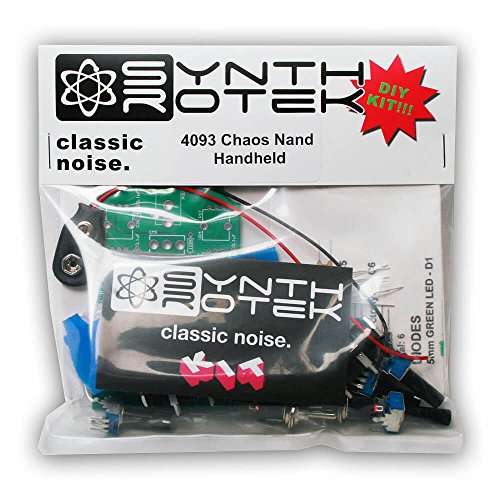
- 3 NAND oscillators and a volume control
- On/off power switch for dive bomb/laser effect
Choosing the Right Tabletop Synthesizer: A Comprehensive Buyer’s Guide
A Tabletop Synthesizer is more than just an item; it’s a key solution for producers, sound designers, and hobbyists looking to break away from the computer screen and engage with sound in a physical, immediate way. These devices bridge the gap between abstract music theory and tactile experimentation. Whether you are looking to add a unique texture to a film score or just want a portable device to jam with on the couch, the right tabletop unit provides an inspiration that software simply cannot replicate. The physical act of turning a knob or flicking a switch creates a neurological connection to the sound that is essential for creative flow.
The ideal customer for this type of product is someone facing creative burnout or a beginner looking to understand the fundamentals of circuitry and sound synthesis. It is perfect for the “super nerdy” looking for a fun project or the musician who loves the grit of analog noise. However, it might not be suitable for those who require polyphonic melodies, precise tuning, or a device that works right out of the box without any assembly. If you aren’t comfortable wielding a soldering iron, you might consider pre-built alternatives, though you’d be missing out on the immense satisfaction of hearing a circuit you built yourself come to life.
Before investing, consider these crucial points in detail:
- Dimensions & Space: Consider where this device will live. In a crowded studio, a compact footprint like the 83mm x 53mm size of the Synthrotek 4093 Chaos DIY Handheld Synth Kit is a godsend. You want something that fits into your workflow without requiring a desk overhaul, yet remains large enough for comfortable manual control.
- Capacity & Performance: Look for what the synth actually *does*. Does it offer multiple oscillators? Does it allow for external control? A great tabletop synth should offer enough internal complexity to keep you busy for hours while providing enough “wildcard” features—like the 4093’s CV SAG input—to grow with your setup.
- Materials & Durability: Since these are often handheld or portable, the quality of the PCB and components is paramount. High-quality fiberglass PCBs are much more resilient to the heat of a soldering iron than cheap alternatives, making the assembly process safer for beginners and the final product more durable for years of use.
- Ease of Use & Maintenance: Especially with DIY kits, the quality of instructions is the difference between a successful build and a paperweight. Check if the manufacturer provides digital guides or video tutorials. Maintenance usually involves keeping the pots clean, so ensure the design allows for easy access to the components if you ever need to troubleshoot.
While the Synthrotek 4093 Chaos DIY Handheld Synth Kit is an excellent choice for those who love the “hands-on” approach, it’s always wise to see how it stacks up against the competition. For a broader look at all the top models, we highly recommend checking out our complete, in-depth guide:

- 【Create Anywhere】This synthesizer is fully portable with battery operation and a built-in speaker, It's very compact and portable. 27 full-range silicone keys with soft, comfortable touch...
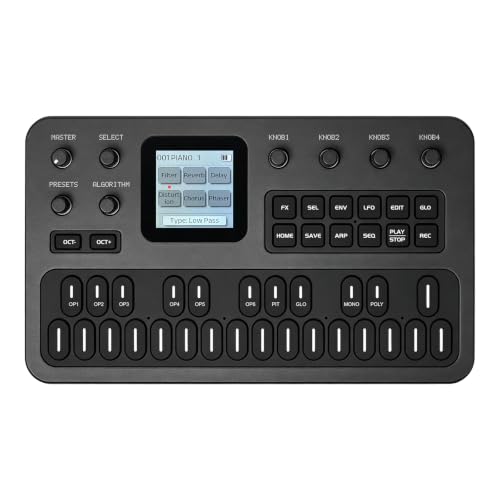
- 🎸6‑OPERATOR FM SYNTHESIS🎸: Harness the iconic 6‑operator FM engine with 32 algorithms—craft authentic DX‑style leads, lush pads, punchy basses, and hyper‑realistic brass/strings that...

- 【Create Anywhere】This synthesizer is fully portable with battery operation and a built-in speaker, It's very compact and portable. 27 full-range silicone keys with soft, comfortable touch...
First Impressions: Unboxing the Chaos
When I first received the Synthrotek 4093 Chaos DIY Handheld Synth Kit, I was immediately struck by the professional packaging. Unlike some DIY kits that arrive in a haphazard bag of loose resistors, Synthrotek has clearly put effort into their presentation. All components were cleanly packaged and labeled. The PCB itself is a sleek black, measuring a compact 83mm x 53mm, which feels substantial and well-manufactured. It’s a modern-looking board that promises a lot of power in a small footprint. To get a better sense of the aesthetic and what’s included, you can see its full feature set and user reviews online.
Setting up your workspace is the first real step of the “unboxing” experience. You’ll need a soldering iron, some solder, and wire cutters. Comparing this to market leaders like the Korg Volca series, the 4093 offers a completely different vibe. Where the Volca is a finished, polished consumer product, this kit feels like a science project in the best way possible. It invites you to understand its inner workings. The handheld design is intended for portability, powered by a 9V battery, making it something you can easily throw in a bag and take to a friend’s house for a noise jam session.
Key Benefits
- Incredible price-to-fun ratio for DIY enthusiasts.
- CV SAG input allows for integration with professional modular gear.
- Compact, handheld design is perfect for on-the-go noise making.
- Beginner-friendly circuit with a low parts count.
Drawbacks
- Requires soldering skills and tools (not for the “plug and play” crowd).
- The naked PCB design requires an enclosure if you want to protect the circuitry long-term.
A Deep Dive into the Performance of the Synthrotek 4093 Chaos DIY Handheld Synth Kit
The Build Experience: From Solder to Sound
We found that the assembly process of the Synthrotek 4093 Chaos DIY Handheld Synth Kit is where half the value lies. As an expert who has built dozens of modules, I can say that this is one of the most satisfying entry-level projects available. The PCB layout is intuitive, with clear silkscreening that tells you exactly where each resistor, capacitor, and IC goes. We were particularly impressed by the quality of the instructions found on the Synthrotek website. They don’t just tell you “put part A in slot B”; they guide you through the flow of the build.
During our test build, we noted that the low parts count makes it a perfect “date night” activity, as one user suggested. It took us roughly 45 minutes to an hour to complete the soldering at a relaxed pace. For a beginner, this might take two hours, but the sense of accomplishment when you first plug in that 9V battery and hear the oscillators scream is unparalleled. If you’re looking to start your DIY journey, you should definitely check the latest price and availability of this kit, as it’s often the most affordable way to get into the hobby.
One minor hiccup we observed in some user feedback was the lack of physical printed instructions in the box. While we prefer digital instructions to save paper and ensure we have the latest version, some builders found this frustrating. However, the online resources are so robust—including photos of every step—that we found the digital-only approach to be more of a benefit than a hindrance. The kit even includes parts for a CV mod right out of the box, showing that Synthrotek really understands their audience’s desire for expandability.
Sonic Capabilities: The Beauty of the NAND Gate
The heart of the Synthrotek 4093 Chaos DIY Handheld Synth Kit is the 4093 Quad NAND gate IC. This isn’t a traditional oscillator circuit; it’s a “chaos” engine. By wiring these gates into each other with various resistors and capacitors, Synthrotek has created a drone synth that is capable of everything from steady, rhythmic pulses to screaming, high-pitched “laser” effects. We spent hours twisting the knobs, finding that the interaction between the three oscillators is where the magic happens. You can set two oscillators to gate each other, creating complex, evolving rhythmic patterns that sound like a malfunctioning robot in the best way possible.
The volume control is smooth, and the on/off power switch is strategically placed so you can perform “dive bomb” effects by cutting the power and letting the capacitors drain. This creates a pitch-sliding effect that is a staple of lo-fi noise music. When we ran the 4093 through a delay pedal and some heavy distortion, the sound transformed into a massive wall of industrial grit. It’s a feature that really sets it apart from more “polite” analog synths. For those interested in the technical side, you can read more about the circuit specs here.
Integration and Control: The Power of CV SAG
One of the most professional features of the Synthrotek 4093 Chaos DIY Handheld Synth Kit is the CV SAG input. “SAG” refers to the starvation of voltage to the circuit. By plugging an external Control Voltage (CV) source—like a sequencer or an LFO from a Eurorack setup—into this input, you can rhythmically “starve” the synth of power. This doesn’t just change the volume; it changes the entire behavior of the oscillators. As the voltage drops, the pitch warbles and the “chaos” increases. This makes the 4093 much more than a standalone toy; it makes it a functional component of a larger modular ecosystem.
We tested this by hooking up a simple 8-step sequencer. The results were incredible. The 4093 responded with glitchy, percussive bleeps that were perfectly in sync with our other gear. This level of connectivity is rare in a kit at this price point. It’s why we recommend this kit to anyone starting to explore modular synthesis. It teaches you the basics of CV interaction in a very visceral way. If you want to see how this fits into a larger setup, see more details on its connectivity options.
Practicality and Portability: The Handheld Advantage
At just 0.08 kg and small enough to fit in the palm of your hand, the Synthrotek 4093 Chaos DIY Handheld Synth Kit is the definition of a portable instrument. During our evaluation, we found the handheld nature of the PCB actually encouraged a different type of performance. You can hold it with one hand and manipulate the switches and knobs with the other, or lay it on a table and use both hands for more complex modulations. The use of a standard 9V battery or a 9V center-negative power supply (standard for guitar pedals) makes it incredibly easy to power.
However, we must note that since it is a “naked” PCB kit, it is vulnerable to static and physical damage if not handled with care. We highly recommend looking into the enclosures that Synthrotek sells separately. They are inexpensive and provide the protection needed for long-term use. Even without the case, the black PCB looks fantastic on a desk. It’s a conversation starter and a functional piece of art. For those who enjoy a modern, industrial style, this kit hits all the right notes. You can check out the different styling options and accessories to customize your build.
What Other Users Are Saying
The general sentiment among users is overwhelmingly positive, particularly regarding the fun factor and the educational value. One user described it as a “great date night for the super nerdy,” highlighting how easy it is to assemble even if you’re relatively new to DIY. Another user mentioned that the instructions were “clear and written legibly,” which helped the project go smoothly. The sonic variety is also a hit, with one reviewer stating they love how it’s “simple and full of amazing sounds to keep ya busy for hours,” especially when paired with delay pedals.
On the flip side, there were a few users who faced challenges. One person noted that their unit “did not work right” after soldering, which is a common risk with DIY electronics if a joint is cold or a component is placed incorrectly. Another user felt the lack of physical instructions in the box was a drawback for a kit marketed toward beginners. These critiques are relevant because they remind potential buyers that while the kit is “easy,” it still requires a steady hand and the ability to follow digital diagrams closely. However, for most, the “clean audio” and the thrill of the build far outweighed these minor hurdles.
Comparing the Synthrotek 4093 Chaos DIY Handheld Synth Kit to Top Alternatives
1. Novation Circuit Tracks Groovebox Sequencer
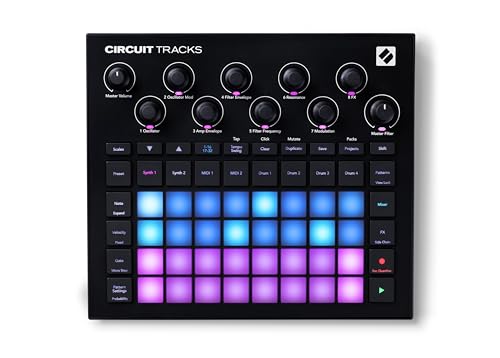
- Unleash your creativity and make limitless music with two synth tracks, two MIDI tracks and four drum tracks. Perform expressively with velocity-sensitive pads and tactile control with customizable...
- Create 32-step patterns, chainable for up to 256 steps sequences per track. Go off-grid with microtiming. Keep your music evolving with probability and pattern mutate

The Novation Circuit Tracks is a far more advanced and expensive beast compared to the 4093. While the Synthrotek kit is a focused lo-fi drone machine, the Circuit Tracks is a complete production hub with two synth engines, four drum tracks, and deep sequencing capabilities. It is designed for someone who wants to write entire songs in one box. If you are looking for a professional “brain” for your studio and have the budget, the Circuit Tracks is superior. However, it lacks the raw, unpredictable analog “chaos” and the DIY satisfaction that the 4093 provides. It’s for the producer, whereas the 4093 is for the experimentalist.
2. KORG Volca Bass Analog Synthesizer

- Powerful analog bass sound creation with three oscillators for a variety of bass sounds
- Electribe-inspired sequencer for generating ultimate bass lines and grooves
The KORG Volca Bass is perhaps the closest competitor in terms of “tabletop fun.” It features three analog oscillators and a classic Korg filter, allowing for much more melodic and traditional bass lines. Unlike the 4093, it comes fully assembled and features a built-in 16-step sequencer. If you want a device that can play in tune and integrate immediately into a MIDI setup, the Volca Bass is the better choice. But, if you want to learn how a circuit works and enjoy the gritty, unrefined sound of power-starved NAND gates, the Synthrotek 4093 Chaos DIY Handheld Synth Kit offers a unique experience that the Volca simply cannot replicate.
3. Otamatone Neo 10th Anniversary Electronic Musical Instrument Synthesizer
![Otamatone 'Neo 10th Anniversary Special Edition [Japanese Version] White - Japanese Electronic...](https://m.media-amazon.com/images/I/21YTfcxjhuL.jpg)
- : W 2.6 x H 11.2 x D 5.4 inches (6.7 x 28.5 x 13.7 cm)
- : 3 ()
The Otamatone Neo is a novelty instrument that, like the 4093, is handheld and battery-powered. However, that’s where the similarities end. The Otamatone is more of a toy (albeit a very musical one) controlled by a touch-sensitive ribbon and a “mouth” that acts as a filter. It’s fantastic for quirky melodies and a bit of a laugh. While both products are affordable and fun, the 4093 is a “real” synthesizer kit that provides a foundation for learning electronics and modular synthesis. Choose the Otamatone for a gift or a gag; choose the 4093 if you want to actually build a piece of gear you’ll use in your music production.
Final Verdict: Is the Synthrotek 4093 Chaos DIY Handheld Synth Kit Worth It?
After a deep dive into its circuitry and hours of sonic experimentation, our conclusion is that the Synthrotek 4093 Chaos DIY Handheld Synth Kit is an absolute gem for the right person. Its main strengths lie in its accessibility for DIY beginners, its surprisingly deep sonic character, and its thoughtful inclusion of CV SAG for modular integration. While it requires a bit of effort to build and some careful handling, the reward is a unique, handheld “chaos” machine that sounds like nothing else in your studio. It turns the act of noise-making into a tactile, physical performance.
We highly recommend this kit to anyone looking for a fun weekend project, a unique lo-fi sound source, or a low-cost entry into the world of CV control. It’s a fantastic educational tool and a genuine blast to play. If you’re ready to add some raw, analog grit to your life, don’t hesitate. You can order your Synthrotek 4093 Chaos DIY Handheld Synth Kit here and start your journey into the beautiful world of DIY synthesis today!
Last update on 2026-09-20 / Affiliate links / Images from Amazon Product Advertising API