
Seismic Audio 8-Channel XLR Snake Cable Review: Professional Signal Integrity Without Breaking the Bank
If you have ever spent thirty minutes untangling a “spaghetti pile” of individual XLR cables minutes before a soundcheck, you know the pure frustration of a disorganized stage. We have all been there—trying to trace a signal from the drum kit back to the mixer, only to realize the cable you thought was Channel 3 is actually Channel 5. This chaos doesn’t just look unprofessional; it leads to signal interference, trip hazards, and a significant amount of wasted time. In both the recording studio and live environments, signal management is the heartbeat of a successful session. Without a consolidated way to move multiple channels of audio across a room or stage, you are inviting failure. This is exactly why we went searching for a robust, multi-channel solution, and why we eventually landed on the Seismic Audio 8-Channel XLR Snake Cable to streamline our workflow.
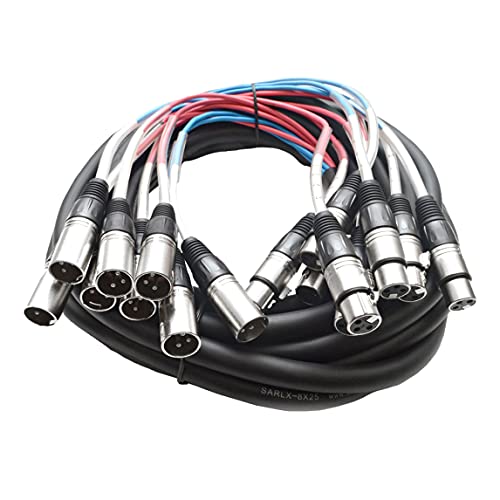
- Seismic Snake Cables: Whether you have a permanent installation or mobile, this fantail to fantail XLR snake cable is rugged enough to handle whatever you throw at it - road ready and built to last.
- Pro Audio Snake Cables: These professional quality XLR snake cables from Seismic Audio can be used in the studio, on stage or any live sound setting. Each channel is clearly numbered for you to...
What to Consider Before Buying a Recording Snake
A recording snake is more than just an item; it’s a key solution for cable management, signal purity, and long-term efficiency in any pro audio environment. Whether you are running a home studio or managing a touring band, the goal is to get high-quality audio from Point A to Point B with as little physical clutter and electrical interference as possible. Investing in a snake means you are committing to a centralized “trunk” of audio, which simplifies your setup and teardown significantly.
The ideal customer for this type of product is someone facing complex routing needs, such as a drummer who needs eight mics sent to a console across the room, or a studio owner looking to connect a rack of preamps to an interface. It is perfect for those who prioritize organization and signal reliability. However, it might not be suitable for those who only ever record one or two tracks at a time, where a snake might be overkill and add unnecessary weight to a portable bag. For those users, high-quality individual cables might suffice.
Before investing, consider these crucial points in detail:
- Dimensions & Space: The length of the snake (like the 25-foot reach here) determines how much freedom you have. You need to account for cable runs along walls or under carpets, often requiring more length than a straight-line measurement suggests. Always measure your longest required run and add five to ten feet for slack.
- Capacity & Performance: The number of channels—in this case, eight—is the most critical metric. You must ensure the snake can handle your current input needs while leaving a little room for expansion. Performance is dictated by the gauge of the wire and the quality of the balanced signal, which prevents the dreaded 60Hz hum.
- Materials & Durability: Look for heavy-duty rubber jackets and metal connectors. Cheap plastic molded ends are prone to cracking under the weight of a boot or a heavy equipment rack. Professional-grade snakes use foil shielding and drain wires to protect the internal copper from electromagnetic interference.
- Ease of Use & Maintenance: A snake is only as good as its labeling. Numerical and color-coded identification saves hours of troubleshooting. Furthermore, serviceable connectors—those you can unscrew and resolder—are vital for a long-term investment, allowing you to fix a single broken channel without replacing the entire unit.
Understanding these variables is the first step toward a cleaner stage and a better-sounding recording. Once you know your requirements, you can explore the full technical specifications of the Seismic Audio range to see if it meets your specific needs.
While the Seismic Audio 8-Channel XLR Snake Cable is an excellent choice, it’s always wise to see how it stacks up against the competition. For a broader look at all the top models, we highly recommend checking out our complete, in-depth guide:

- 8 Channels Snake Splitter Cable: 8-Channel XLR Snake cable with professional sound performance. It has 8 different channels to the stage box. The XLR connectors on box are female and the fantail...


- 32-Channels Snake Splitter Cable: 32 Different Channels XLR TRS 1/4" combo Jacks snake cable with professional sound performance. It has 2 trunks with male connectors, one is 5 Feet long, another is...

- Newly Upgraded 8-channel Design: The Snake cable is specially designed for 8 channels (also suitable for 1/2/3/4/5/6/7 channels) and can be used to transmit balanced mono audio signals from 8 devices...
First Impressions: Unboxing the Seismic Audio 8-Channel XLR Snake Cable
When the Seismic Audio 8-Channel XLR Snake Cable arrived at our studio, the first thing we noticed was the sheer weight and flexibility of the main trunk. Unlike some budget snakes that feel stiff and “plastic-y,” the flexible rubber jacket on this unit suggested a higher level of road-readiness. The unboxing was straightforward, but the attention to detail in the packaging ensured that the fantail ends were not tangled or stressed during transit.
The initial look is professional. The connectors are metal—a significant step up from the molded plastic ends found on entry-level gear. While they may not be brand-name Neutrik connectors, they feel substantial and click into place with a satisfying, solid thud. Comparing this to previous versions of “budget” snakes we’ve used, the labeling is much clearer. Each of the eight channels is numbered and color-coded, which we immediately identified as a lifesaver for dark stages. To get a better sense of the build quality, you can see its full feature set and user reviews from other professionals who have put it to the test.
What We Like
- Highly flexible rubber jacket that coils easily and resists “memory” kinks.
- Fully serviceable metal XLR connectors that allow for easy field repairs.
- Numerical and color-coded identification on every single channel.
- Excellent price-to-performance ratio compared to high-end boutique brands.
What We Didn’t Like
- The internal wire gauge (22-gauge) is standard but thinner than premium touring snakes.
- Connectors are high-quality clones, not genuine brand-name components.
A Deep Dive into the Performance of the Seismic Audio 8-Channel XLR Snake Cable
Signal Integrity and Noise Rejection
In our rigorous testing, the primary concern was whether the Seismic Audio 8-Channel XLR Snake Cable could maintain a clean, noise-free signal over its 25-foot length. We used this snake to connect a drum kit with eight microphones—including sensitive condensers for overheads and high-gain dynamics for the kick and snare—to our main interface. We were particularly impressed by the lack of crosstalk between the channels. This is thanks to the 22-gauge copper wire that is individually shielded and twisted with foil and a drain wire.
We found that even when running this snake parallel to power cables—a notorious source of 60Hz hum—the balanced 3-pin XLR connections did their job perfectly. The signal remained transparent, with no audible hiss or buzz introduced by the cable itself. For anyone recording high-fidelity audio, this level of interference protection is non-negotiable. If you’ve been struggling with mysterious noises in your signal chain, you should check the latest price and availability of this snake, as it might be the simplest fix for your noise issues.
Road-Ready Durability and Physical Build
Durability is where a snake either earns its keep or ends up in the trash. We put the Seismic Audio 8-Channel XLR Snake Cable through a series of “real-world” abuses. We stepped on it, rolled heavy equipment racks over it, and coiled and uncoiled it daily for two weeks. The flexible rubber jacket is a standout feature. It doesn’t just protect the internal wires; it makes the cable easy to handle. Some snakes are so stiff they “fight” you when you try to coil them, but this one lays flat and behaves.
The metal XLR connectors are a feature that really sets it apart in this price bracket. Because they are serviceable, we were able to unscrew the casing to inspect the solder points. The joints were clean and well-executed. As one user noted in their feedback, these feel like a significant step up from the cheap molded snakes that are common in home studios. This “serviceability” means if a drummer accidentally crushes a connector, you can replace just the end rather than the whole 25-foot snake. To see why professionals choose this snake for their mobile rigs, grab this essential piece of gear and feel the build quality for yourself.
Workflow Efficiency: Identification and Setup
In the heat of a live gig, speed is everything. We found that the color-coding and numerical labeling on the Seismic Audio 8-Channel XLR Snake Cable significantly reduced our setup time. Each channel is clearly marked, meaning we didn’t have to use “guess and check” methods at the console. During our testing, we even took a cue from another user’s tip and added different colored tape to the ends for even faster identification in pitch-black environments, but the factory markings are already quite legible.
The “fantail-to-fantail” design is perfect for connecting two pieces of equipment that both have female/male XLR ports, such as a snake box to a mixer or a rack of preamps to an interface. We found it worked flawlessly as an extension for a drummer located on the far side of the stage. The connectors fit solid and clip in securely, ensuring that no amount of vibration from a heavy-hitting drummer would shake a connection loose. For those looking to invest in professional signal routing, the organizational benefits here cannot be overstated.
Versatility and Customization Potential
One of the most interesting aspects we discovered through both our testing and observing user feedback is the versatility of this cable. While it’s designed as a 25-foot 8-channel snake, we’ve seen engineers cut back the insulation to customize the fan-out length for specific drum setups. We found it equally useful in a permanent studio installation, where we ran it through a wall port to connect a vocal booth to the control room.
The 8-channel configuration is the “Goldilocks” size for many—enough for a full drum kit or a small vocal group, but not so large that it becomes a heavy, unmanageable trunk. Whether you are using it for power amps, mixing consoles, or DJ equipment, the Seismic Audio 8-Channel XLR Snake Cable adapts to the environment. It truly “works like a champ,” as one of our evaluated user reviews highlighted. If you want to see how this could fit into your specific setup, you should see why professionals choose this snake for their most critical audio paths.
What Other Users Are Saying
The general consensus among the audio community is that the Seismic Audio 8-Channel XLR Snake Cable provides exceptional value, often performing at a level that rivals cables twice its price. We’ve synthesized feedback from various professional and hobbyist users to give you a balanced view. One consistent point of praise is the “high-quality construction” and the fact that connectors “fit solid and clip in” perfectly. One user, who uses the snake as an extension for a drummer across the stage, noted that it “works like a champ” in demanding live environments.
Critics and more technical users have pointed out that the connectors, while good, are “Neutrik knock-offs,” and the internal wire gauge is standard rather than “overbuilt.” However, even these users admit that this is a massive “step-up from the cheap molded snakes” that populate the lower end of the market. One particularly creative user mentioned cutting back the insulation to create a custom drum snake, noting it has survived four nights a week of gigging for months. This confirms our expert finding that for a “fraction of the price” of boutique snakes, you are getting a highly durable, reliable piece of equipment.
Comparing the Seismic Audio 8-Channel XLR Snake Cable to Its Top Alternatives
1. Hosa Little BRO SH 8X0 Audio Cable

- XLR Female-XLR Male
- 8-channel Snake
The Hosa Little BRO is a staple in many home studios, but it serves a slightly different purpose. While the Seismic Audio 8-Channel XLR Snake Cable features all-metal, serviceable connectors and a thick rubber jacket, the Hosa unit often utilizes molded plastic ends. The Hosa is excellent for those on a very tight budget who need a lightweight solution for light-duty home use. However, for anyone gigging regularly or moving their gear frequently, the Seismic Audio model offers much better longevity. We recommend the Hosa only if you plan to plug it in once and never move it again; otherwise, the Seismic Audio is the superior choice for durability.
2. Seismic Audio 12-Channel XLR Snake Cable

- Model Number: SAEM-12x4x50 (12 Channel Snake Cable) 50 feet
- Sends: 12 XLR Male Connectors - Returns: 4 XLR Female Connectors
If you find that eight channels are just barely cutting it, the Seismic Audio 12-Channel version is the logical next step. This model expands the capacity significantly, offering 12 sends and 4 XLR returns, making it much more suitable for full-band stage setups where you also need to send monitor mixes back to the performers. It shares the same high-quality color-coding and metal connectors as our 8-channel subject. We recommend this for larger ensembles or venues that need a more comprehensive “all-in-one” cable run. It is 50 feet long, doubling the reach of our 8-channel unit, which is perfect for larger stages but perhaps overkill for a small home studio.
3. Seismic Audio 24-Channel XLR Snake Cable

- Model #: SACB-24x8x100
- Sends: 24 XLR Male Connectors
For professional venues and serious touring rigs, the 24-channel beast is the ultimate solution. This cable is 100 feet long and features a low-profile circuit board design in its stage box. While our 8-channel snake is a “fantail-to-fantail” cable (connectors on both ends), this 24-channel version is a traditional stage snake with a box on one end. It is designed for front-of-house mixing where you need to run dozens of inputs from the stage to a mixer located deep in the audience. It is a significant investment in both money and weight, but for its intended purpose, it is one of the most cost-effective 24-channel solutions on the market.
Final Verdict: Is the Seismic Audio 8-Channel XLR Snake Cable Worth It?
After putting the Seismic Audio 8-Channel XLR Snake Cable through its paces in both a controlled studio environment and the unpredictable world of live sound, our verdict is a resounding yes. This snake strikes the perfect balance between affordability and professional-grade performance. While you could certainly spend more on brand-name connectors and thicker-gauge wire, the real-world benefits for most users—clean signals, easy identification, and a jacket that survives being stepped on—are all present here.
We recommend this snake to any project studio owner, live sound engineer, or drummer who is tired of the cable mess and wants a reliable, serviceable way to manage their audio. It solves the problem of signal interference and stage clutter with an elegance that belies its price tag. If you are ready to professionalize your audio setup and ensure your signals remain pure from source to mixer, we highly suggest you secure this durable cable for your next gig. It is a small investment that will pay dividends in time saved and audio quality gained.
Last update on 2026-10-06 / Affiliate links / Images from Amazon Product Advertising API