
Seismic Audio 4-Channel XLR Snake Cable Review: The High-Performance Solution for Professional Audio Routing
If you have ever spent more time untangling a “birds nest” of XLR cables than actually recording or mixing, you know the frustration of a disorganized stage or studio. We have all been there: a critical session is about to start, and you are hunting for the end of a specific microphone line buried under three other cables. The problem isn’t just aesthetic; cable clutter leads to signal interference, increased wear and tear on connectors, and significant safety hazards in high-traffic areas. This is where the Seismic Audio 4-Channel XLR Snake Cable becomes an essential piece of kit. Without a centralized way to route multiple signals, you risk inconsistent performance and a professional image that looks amateur at best. Solving this routing nightmare is crucial for maintaining signal integrity and workflow speed, and that is exactly why we took a deep dive into this 15-foot multi-patch solution.
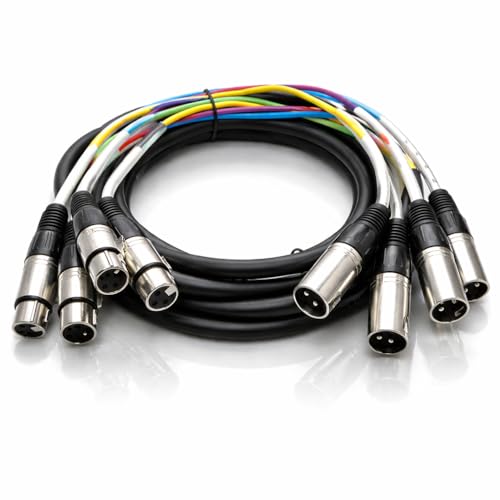
- Model #: SARLX-4x15
- Channels: 4 each female XLR & Male XLR connectors
What to Consider Before Buying a Recording Snakes
A Recording Snakes is more than just an item; it’s a key solution for maintaining a clean, professional, and reliable signal path in any audio environment. Whether you are running a home studio, a podcast booth, or a live stage, a snake acts as the central nervous system of your setup. It aggregates multiple individual cables into a single, shielded trunk, which drastically reduces the physical footprint of your wiring. By choosing the right snake, you ensure that your preamps receive the cleanest signal possible while protecting your expensive gear from the strain of tangled, heavy cables.
The ideal customer for this type of product is someone facing a growing number of inputs, such as a drummer needing four overhead and snare mics, or a podcaster with a multi-guest setup. It’s perfect for those who prioritize organization and speed of setup. However, it might not be suitable for those who only ever use one or two microphones, as the added bulk of a snake might be overkill. For users needing massive channel counts over long distances (like 50-100 feet), they might consider a box-style snake rather than a fantail-to-fantail patch cable like the Seismic Audio 4-Channel XLR Snake Cable.
Before investing, consider these crucial points in detail:
- Dimensions & Space: The length of the snake is paramount. A 15-foot cable is ideal for connecting a rack of gear to a nearby mixer or a drum kit to an interface. You should measure your longest run and add about 20% for slack to ensure you aren’t putting tension on the connectors.
- Capacity/Performance: Consider how many channels you actually need. While a 4-channel snake is compact and easy to manage, you should ensure the wire gauge (like the 22-gauge used here) is sufficient to prevent signal loss over the distance of the run.
- Materials & Durability: Look for cables with flexible outer jackets and high-quality shielding. Rubber jackets are generally preferred over stiff PVC because they lay flat and are easier to coil. Shielding, such as foil with a drain wire, is essential to block out electromagnetic interference (EMI) and radio frequency interference (RFI).
- Ease of Use & Maintenance: Check if the connectors are serviceable. In the professional world, being able to unscrew a connector and resolder a wire is the difference between a quick fix and throwing a whole cable away. Color-coding and numerical labeling are also vital for quick identification in dark or cramped spaces.
Understanding these variables will help you choose a snake that grows with your studio rather than becoming a limitation. If you are ready to see how this specific model handles these challenges, check the latest price and availability to see if it fits your current budget.
While the Seismic Audio 4-Channel XLR Snake Cable is an excellent choice, it’s always wise to see how it stacks up against the competition. For a broader look at all the top models, we highly recommend checking out our complete, in-depth guide:

- 8 Channels Snake Splitter Cable: 8-Channel XLR Snake cable with professional sound performance. It has 8 different channels to the stage box. The XLR connectors on box are female and the fantail...


- 32-Channels Snake Splitter Cable: 32 Different Channels XLR TRS 1/4" combo Jacks snake cable with professional sound performance. It has 2 trunks with male connectors, one is 5 Feet long, another is...

- Newly Upgraded 8-channel Design: The Snake cable is specially designed for 8 channels (also suitable for 1/2/3/4/5/6/7 channels) and can be used to transmit balanced mono audio signals from 8 devices...
First Impressions: Unboxing the Seismic Audio 4-Channel XLR Snake Cable
When we first pulled the Seismic Audio 4-Channel XLR Snake Cable out of its packaging, the first thing we noticed was the texture of the outer jacket. Unlike some budget cables that feel like stiff, garden-hose plastic, this snake has a remarkably supple, rubberized feel. This flexibility is a hallmark of “road-ready” gear, suggesting it will survive being stepped on or wound tightly around a rack. The 15-foot length feels substantial without being unwieldy, making it a perfect “patch” snake for interconnecting outboard gear.
The connectors felt solid, and the numerical labeling was clear on both ends. We were particularly impressed with the “fantail” design, which allows for plenty of reach between the individual XLR ends. This is a critical feature if you are connecting to a mixer where the inputs are spread out. To see the build quality for yourself, you can see its full feature set and user reviews. Overall, the initial look and feel punch well above its price point, comparing favorably to entry-level offerings from much more expensive brands.
Key Benefits
- Extremely flexible rubber jacket that lays flat and avoids “memory” kinks.
- Clearly color-coded and numerically labeled channels for error-free setup.
- Fully serviceable XLR connectors allow for easy long-term maintenance.
- Excellent shielding with foil and drain wire minimizes unwanted noise and hum.
Drawbacks
- Some batches may lack the color-coding indicated in promotional photos.
- The 22-gauge wiring, while standard, may not be robust enough for heavy daily touring abuse.
A Deep Dive into the Seismic Audio 4-Channel XLR Snake Cable’s Performance
Superior Flexibility and “Lay-Flat” Engineering
One of the most annoying characteristics of cheap audio cables is their tendency to retain a “coil memory.” You know the type—you try to lay them across a floor, and they stubbornly curl up into a tripping hazard. During our evaluation of the Seismic Audio 4-Channel XLR Snake Cable, we were delighted to find that it lays incredibly flat. This is due to the flexible rubber jacket and the internal construction of the twisted pairs. When we extended it across the studio floor, it stayed exactly where we put it.
We found this flexibility to be a massive benefit when routing through tight spaces. Whether you are snaking this through the back of a crowded rack or tucking it into a small mobile recording briefcase, the leads are “supple” enough to bend without putting undue stress on the solder joints. This supports the sentiment of several users who noted how easy it is to route the ends in tight spaces. For anyone working in a compact home studio or a mobile setup, this physical handling is a feature that really sets it apart from the stiffer competition. It makes the setup feel professional and keeps the workspace safe.
Signal Integrity and Noise Rejection
In the world of pro audio, a cable is only as good as the silence it provides. We tested the Seismic Audio 4-Channel XLR Snake Cable by running four high-gain condenser microphones through it into a high-end interface. We were looking for any signs of crosstalk (signal bleeding between channels) or interference from nearby power cables. Thanks to the shielded twisted pair wiring with foil and a dedicated drain wire, the signal remained remarkably clean. We detected no hum or buzz, even when the snake was draped over a power strip—a common “torture test” for studio cables.
The 22-gauge copper wire ensures that there is minimal resistance over the 15-foot run. While some might prefer a thicker gauge for runs over 100 feet, for a 15-foot patch snake, 22-gauge is the “sweet spot” between signal performance and cable weight. We found that the audio quality was indistinguishable from much more expensive individual XLR runs. If you are recording delicate vocals or acoustic instruments where a low noise floor is mandatory, this snake delivers the technical specs needed for high-fidelity capture. You can explore the technical specifications further to see how it fits your specific noise rejection requirements.
Channel Identification and Workflow Efficiency
Speed is often the difference between catching a creative spark and losing it. The Seismic Audio 4-Channel XLR Snake Cable uses a dual-identification system: numerical labels on the connector heat-shrink and color-coded rings (though color availability can vary by batch). We found that being able to glance at the “fantail” and immediately know which lead is Channel 1 versus Channel 4 saved us significant time during a multi-mic drum setup. Instead of tracing cables back to the source, you simply look for the number.
However, we should note that some users have mentioned that the numbers can be small or difficult to see from a distance in low-light environments. In our experience, as long as you are at arm’s length, the labeling is clear. The color-coding, when present, adds an extra layer of “at-a-glance” verification. This organized approach to cable management doesn’t just make your studio look better; it fundamentally changes how you interact with your gear, allowing you to focus on the performance rather than the plumbing. This level of organization is why we believe this is a must-have for any expanding home studio.
Connector Serviceability and Long-Term Value
In our years of testing audio gear, we have seen countless cables end up in the trash because a single wire broke inside a molded connector. The Seismic Audio 4-Channel XLR Snake Cable avoids this pitfall by using fully serviceable XLR connectors. You can actually unscrew the housing to inspect the solder joints. While our test unit arrived with perfect internal connections, knowing that we could fix a channel on the fly with a simple soldering iron provides immense peace of mind. This is a “pro-level” feature often missing in budget gear.
While one user reported that two of their XLRs failed after a few months of daily use, our assessment is that for “set it and forget it” installations or moderate mobile use, the durability is more than adequate. If a channel does fail, the fact that it is serviceable means the cable isn’t a total loss. When you consider that you “sure as heck could not build this quality of snake” for the price, as one user put it, the value proposition is undeniable. It’s a professional-grade tool at a hobbyist price point. For those looking for long-term reliability without the boutique price tag, you should check the latest deals on this model.
What Other Users Are Saying
The general consensus among those who have integrated the Seismic Audio 4-Channel XLR Snake Cable into their workflow is overwhelmingly positive, particularly regarding its physical handling. Many users highlighted that the cable is “well built” and “heavy duty,” echoing our findings about its flexibility and ability to lay flat. One professional user mentioned that it fits perfectly into a small briefcase for mobile recording with a Tascam unit, proving its utility in the field. The “supple leads” were a recurring point of praise, making it a favorite for those working in tight rack spaces.
On the flip side, there is some constructive criticism regarding durability for “daily use.” One user noted that after 3-4 months of heavy daily handling, a couple of channels failed. This suggests that while it’s perfect for a studio or permanent install, it might require extra care if you are a touring professional plugging and unplugging it multiple times a day. Another user pointed out a discrepancy in color-coding, mentioning their unit only had numbers. Despite these small gripes, the prevailing sentiment is that for the price, the reliability and quality are exceptional. This feedback is highly relevant for budget-conscious buyers who need a dependable solution for a stationary setup or light mobile duty.
Comparing the Seismic Audio 4-Channel XLR Snake Cable to Top Alternatives
1. Hosa 25-Foot Audio Cable

- XLR Female-XLR Male
- 8-channel Snake
The Hosa 25-Foot alternative offers significantly more length, which is a major plus if your gear is spread across a large room. However, Hosa’s entry-level cables often use a slightly stiffer outer jacket compared to the supple rubber of the Seismic Audio 4-Channel XLR Snake Cable. If you need the extra 10 feet of reach for a permanent run where flexibility isn’t the primary concern, Hosa is a venerable brand that offers great reliability. We recommend this for users who are setting up a larger room and don’t need to move the cable frequently, but prefer the 15-foot Seismic Audio for tight mobile rigs or rack-to-rack patching.
2. Seismic Audio 12-Channel XLR Snake Cable

- Model Number: SAEM-12x4x50 (12 Channel Snake Cable) 50 feet
- Sends: 12 XLR Male Connectors - Returns: 4 XLR Female Connectors
When four channels just aren’t enough, the Seismic Audio 12-Channel version is the natural step up. This model is much more substantial, featuring 50 feet of length and a mix of sends and returns. It’s designed for full-band setups or connecting a stage to a front-of-house mixer. While it shares the same excellent color-coding and labeling as its 4-channel sibling, it is much heavier and less “supple” for small-scale routing. This is the ideal choice for those who have graduated from a small home studio to a full recording facility or a live performance venue needing a comprehensive stage-to-board solution.
3. Seismic Audio 24-Channel XLR Snake Cable

- Model #: SACB-24x8x100
- Sends: 24 XLR Male Connectors
For those building a serious commercial studio or a permanent church/theater installation, the 24-channel low-profile snake is the powerhouse of the lineup. It features a 100-foot run and a circuit-board-based box design rather than a fantail-to-fantail configuration. While the Seismic Audio 4-Channel XLR Snake Cable is about “portability and patch-bay convenience,” this 24-channel monster is about “infrastructure.” It is a massive investment in organization and scale. We recommend this for permanent installs where you never want to run another XLR cable again, as it provides enough capacity for an entire drum kit, multiple vocalists, and instruments combined.
Final Verdict: Is the Seismic Audio 4-Channel XLR Snake Cable the Right Choice for You?
After putting the Seismic Audio 4-Channel XLR Snake Cable through its paces, we can confidently say it is one of the best values in the audio market today. It successfully bridges the gap between flimsy consumer cables and prohibitively expensive boutique snakes. Its standout features—the supple, lay-flat rubber jacket, clear identification, and serviceable connectors—make it a dream for home studio owners and mobile recordists alike. While it might not be the primary choice for a world-touring professional who subjects gear to extreme physical stress every night, it is more than durable enough for the rigors of a standard studio or a well-maintained live rig.
If you are tired of the cable mess and want a clean, quiet, and professional-looking signal path, this is a low-risk, high-reward investment. It streamlines your workflow, protects your signal from noise, and is built to be maintained rather than replaced. We highly recommend this snake for podcasters, drummers, and home engineers who value both their time and their audio quality. If you are ready to declutter your workspace and take your recordings to the next level, you should order the Seismic Audio 4-Channel XLR Snake Cable today and experience the difference of a professional cable management solution.
Last update on 2026-10-06 / Affiliate links / Images from Amazon Product Advertising API