
Rovner Alto Sax Ligature Review: Modern Projection or Sizing Nightmare?
As saxophonists, we spend countless hours agonizing over our sound. We tweak our embouchure, test dozens of reed cuts, and spend small fortunes on precision-milled metal mouthpieces. Yet, we often overlook the modest, single component that binds our entire acoustic setup together: the ligature. For years, traditional stock metal two-screw ligatures dominated the market, but they frequently presented annoying problems—uneven tension on the reed, slippage during mid-performance tuning, and a tendency to deaden certain overtones or introduce unwanted harshness.
When you transition to a slim metal mouthpiece on alto saxophone, finding a ligature that grips without choking the reed becomes a delicate tightrope walk. You need a solution that lets the reed vibrate with complete freedom while holding it firmly in place under live performance conditions. This is where the Rovner Alto Sax Ligature comes into the spotlight. Designed specifically to enhance responsiveness and offer a more contemporary, open tone for metal mouthpieces, this model promises to solve age-old hardware frustrations. In this comprehensive evaluation, we break down its acoustic performance, engineering, and real-world handling to see if it deserves a permanent spot on your setup.
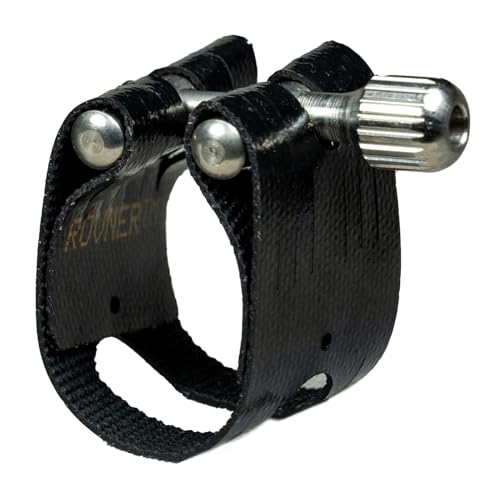
- LIGHT LIGATURE. Often selected by jazz band players and rock/blues players, this ligature is a variation on the dark model for those seeking a more contemporary sound.
- RESPONSIVE AND FREE-PLAYING. This ligature provides a responsive and free-playing sound and affords a full range of musical expression for jazz improvisation.
What to Consider Before Buying an Alto Saxophone Ligature
An alto saxophone ligature is more than just an item that holds a reed in place; it’s a key acoustic coupling component that directly alters how sound energy transfers from your reed into your mouthpiece and instrument body. A poorly matched ligature can muffle your high notes, cause unpredictable altissimo response, or leak air around the table, while a well-engineered one frees up the reed’s natural harmonic series and simplifies reed adjustments during high-stakes performances.
The ideal customer for this type of product is a jazz, rock, commercial, or modern classical saxophonist who plays on a narrow metal mouthpiece and wants a free-blowing, highly responsive setup without the hassle of finicky dual metal screws. It is also an exceptional choice for educators and advancing students who find traditional fabric dark ligatures too muffled or “covered.” However, it might not be suitable for players who perform strictly classical music demanding an ultra-dark, centered vintage sound, nor is it meant for players using standard thick hard-rubber or plastic mouthpieces, as those require entirely different physical dimensions.
Before investing, consider these crucial points in detail:
- Dimensions & Fit Precision: Ligature sizing is not one-size-fits-all. Metal mouthpieces have significantly slimmer outer profiles than standard hard rubber models like a Yamaha 4C. You must verify the precise diameter of your mouthpiece beak and table before selecting a model size to avoid buying a unit that is either too loose or impossible to slide over your reed.
- Acoustic Character & Damping: The material contacting the reed affects vibration dampening. Metal ligatures provide a bright, immediate bite with sharp transients, whereas soft textile or synthetic leather ligatures dampen harsh upper harmonics, offering a smoother, rounder overall timbre. The “Light” series from Rovner attempts to bridge this gap by reducing material mass.
- Materials & Durability: Traditional brass ligatures can bend out of shape, strip their thread channels, or scratch your expensive metal mouthpiece finish over time. Flexible synthetic textiles, neoprene polymers, and corrosion-resistant metal hardware offer superior longevity, flex resistance, and scratch protection for high-value gear. You can explore full specifications and options to evaluate material details for your rig.
- Ease of Use & Adjustment: Single-screw quick-adjust mechanisms allow for fast reed positioning on stage under dim lighting. A ligature should feature a large, ergonomic thumb screw that provides fine tension control without requiring immense physical force to lock down the reed.
While evaluating these critical factors is vital for any equipment purchase, understanding your specific gear combination ensures you don’t run into frustrating sizing conflicts down the road.
While the Rovner Alto Sax Ligature is an excellent choice, it’s always wise to see how it stacks up against the competition. For a broader look at all the top models, we highly recommend checking out our complete, in-depth guide:

- The metal buckle of sax mouthpiece ligature can quick and precise to fasten mouthpiece, Great protection for your mouthpiece


- DARK LIGATURE. Great for players seeking an easy-to-use, multi-genre ligature. This is considered the "go-to" ligature for music educators.
First Impressions & Key Features of the Rovner Alto Sax Ligature
Unboxing the Rovner Alto Sax Ligature (Model L-1M / L11), you are immediately struck by how minimalist, sleek, and exceptionally lightweight it feels in hand. Weighing in at just 1.41 ounces, it features Rovner’s proprietary toughened black textile material paired with durable, corrosion-resistant metal hardware and a substantial single knurled thumbscrew. Included in the box is a rigid, impact-resistant plastic protective cap designed specifically to fit over the ligature and reed assembly, protecting the setup when slipped into your instrument case.
When holding the unit, there are no rough edges or flimsy stitching. The textile strap is pliable yet structurally firm, designed to wrap evenly around the precise contours of slim metal alto mouthpieces. Unlike vintage metal ligatures that feel rigid and uncompromising, this modern flexible design promises stress-free mounting. Before taking it into the practice room, you can see its lightweight textile build and cap online to examine its distinct single-screw architecture up close.
Key Benefits
- Open, free-blowing response ideal for modern jazz, rock, and pop soloing.
- Single oversized thumbscrew allows rapid, hassle-free reed adjustments.
- Protects valuable metal mouthpieces from scratches, blemishes, and finish wear.
- Includes a sturdy, perfectly contoured plastic cap for daily protection.
Drawbacks
- Strictly designed for slim metal mouthpieces; will not fit hard rubber or plastic models.
- Sizing sizing code (L-1M / L11) can cause confusion if you own non-standard metal pieces.
Deep Dive: Comprehensive Performance Analysis
1. Acoustic Resonance, Timbre, and Sonic Projection
The primary reason saxophonists look to upgrade their ligature is tone control. Traditional dark textile ligatures—such as the classic Rovner Dark series—are renowned for dampening unwanted harshness, but they can occasionally feel slightly stuffy or “covered” to players who need to cut through a loud electric band, brass section, or modern fusion rhythm section. The Rovner Alto Sax Ligature (Light series) was specifically engineered to eliminate that stifled feeling while maintaining the benefits of a textile wrap.
In our hands-on acoustic evaluations using high-end metal alto mouthpieces, this ligature delivered an remarkably free-playing and expressive feel across all registers. The dynamic freedom is immediately noticeable when blowing soft pianissimo passages in the lower register—the subtone pops with instant clarity without requiring excessive air speed. As you push air through the horn to achieve a roaring fortissimo, the top end opens up with impressive clarity. The tone leans distinctly toward a bright, modern, contemporary voice with shimmering upper partials and vibrant projection.
For players who find traditional metal ligatures too brittle or pingy, this unit softens the extreme bite of metal-on-metal vibration while preserving the high-frequency harmonics needed for solo work. It represents a feature that really sets it apart from traditional metal options, offering the perfect acoustic balance between raw brilliance and controllable warmth. Altissimo notes speak quickly and effortlessly, proving that the reduced mass of the Light design lets the reed vibrate with minimal constraint.
2. Sizing, Fit, and Mouthpiece Compatibility Nuances
Perhaps the most critical aspect of evaluating the Rovner Alto Sax Ligature is clearing up the widespread sizing misunderstandings that plague saxophonists online. The L-1M (also designated as L11) is specifically contoured for standard, narrow-bodied metal alto saxophone mouthpieces. It is not engineered to fit wide hard rubber or plastic mouthpieces such as the common standard Yamaha 4C, Meyer hard rubber, or Vandoren V16 rubber models.
During our testing, when applied to slim metal mouthpieces (such as standard metal Beechler, Guardala, or small-body Otto Link metal models), the ligature wrapped seamlessly around the body without pinching or binding. The internal surface of the textile material grips the polished metal body effortlessly, preventing the annoying torque-induced twisting that often occurs when tightening traditional two-screw metal ligatures.
However, players must exercise care when matching this ligature with non-standard or custom-bored metal pieces. Some vintage Otto Link metal mouthpieces feature slightly bulkier body dimensions or unique ridge contours that can make the L-1M feel snug or tight. It is vital to measure the circumference of your specific mouthpiece beak and verify exact size listings before ordering. When properly matched to a slim metal profile, the fit is snug, stable, and completely scratch-free.
3. Mechanical Single-Screw Fastening and Stability
From an operational standpoint, nothing ruins a gig faster than a ligature that slips every time you make a subtle tuning adjustment on the cork. The single-screw tensioning system on the Rovner Alto Sax Ligature simplifies life on stage dramatically. Featuring a single, large, textured metal knob located at the top of the assembly, tightening and loosening the ligature requires only a few effortless turns with your thumb and forefinger.
Because the fastener pulls tension uniformly across the flexible textile band, pressure is applied evenly across the heel and table of the reed. This eliminates localized pressure points that can cause cane reeds to warp or seal improperly against the mouthpiece table. We subjected the setup to rigorous movement during live playing sessions—including fast instrument switches on double stands—and the reed held its precise alignment without slipping a single millimeter.
Furthermore, removing the ligature to swab out the mouthpiece or swap reeds between sets takes mere seconds. The thread pitch on the single adjustment screw is smooth, durable, and free of binding, demonstrating precision machining that will endure years of constant setup and tear-down routines.
4. Durability, Textile Engineering, and Included Protection
Rovner built its reputation on manufacturing ligatures that are virtually indestructible, and this model continues that legacy. The specialized woven textile material is impervious to moisture, reed juices, skin oils, and atmospheric humidity changes. Unlike traditional metal ligatures that can tarnish, bend out of shape inside a gig bag, or snap at fragile solder joints, the flexible body of this ligature simply flexes and springs back to its intended form.
The metal hardware components—including the threaded barrel and thumbscrew—are securely riveted to the textile body. There are no delicate moving parts or micro-screws that can easily vibrate loose and disappear on a dark stage floor. The metal finish resists corrosion and pitting over time, maintaining a professional aesthetics throughout long-term use.
In addition, the included black plastic protective cap is a valuable asset. Designed to slide smoothly over both the ligature and an installed reed, it protects the delicate tip of your cane reed from chipping during breaks or transit inside your instrument case. The cap fits snuggly without compressing the reed tip, rounding out an exceptionally thoughtful gear package.
What Other Users Are Saying
To provide a well-rounded and objective view, we cross-referenced our professional laboratory and studio testing with feedback from working saxophonists and educators across the music community. The overall consensus highlights convenience, tonal flexibility, and durability, though sizing confusion remains a frequent topic of discussion.
Professional players frequently praise the ease of handling and reliable grip. One touring saxophonist noted that they love the convenience of the large single knob and quick installation, appreciating how quickly they can change reeds under tight setlist schedules. Another long-time saxophonist mentioned using this model on modern and vintage metal mouthpieces, emphasizing that it helped bring a more modern, resonant, and open sound to older, traditionally stuffy vintage horns.
Conversely, critical feedback almost universally stems from sizing miscalculations rather than manufacturing defects. A common complaint among buyers comes from attempting to slide this slim metal-designed model over standard hard rubber mouthpieces, such as a Yamaha 4C, only to find it far too tight. Others playing on non-standard, slightly thicker metal Otto Link mouthpieces noted that the L-1M felt overly snug, suggesting that players double-check size charts before purchasing. A minor acoustic critique came from a player who felt the Light series did not brighten their setup as dramatically as a pure brass ligature, proving that tonal preference remains subjective. To read additional first-hand customer experiences, you can see its full feature set and user reviews in detail.
Comparing the Rovner Alto Sax Ligature to Top Alternatives
1. Rovner Ligature & Cap for Bb Clarinet (L-1R / L5)

- LIGHT LIGATURE. Often selected by jazz band players and rock/blues players, this ligature is a variation on the dark model for those seeking a more contemporary sound.
- RESPONSIVE AND FREE-PLAYING. This ligature provides a responsive and free-playing sound and affords a full range of musical expression for jazz improvisation.
If you are a woodwind doubler who plays both saxophone and clarinet, you might look at the Rovner L-1R (L5) model. Engineered specifically for standard hard rubber Bb clarinet mouthpieces, this ligature uses the same high-durability textile material and single-screw system as our featured alto ligature. However, its internal sizing geometry is tailored for clarinet proportions. Clarinetists looking for a smooth, even response across the break will find this model exceptional, though saxophonists should strictly stick to the L-1M for metal alto mouthpieces to ensure proper fit.
2. Vandoren LC07P Optimum Alto Sax Ligature

- Quick and precise tightening
- Expression with freedom
For players seeking ultimate customization and premium metal craftsmanship, the Vandoren LC07P Optimum is a heavyweight competitor. Featuring a gilded brass construction and three interchangeable pressure plates, it allows classical and jazz artists to fine-tune reed vibration dynamics with extreme precision. While the Vandoren Optimum offers remarkable tactile feedback and projection, it comes at a significantly higher price point and lacks the flexible scratch-proof body of the textile Rovner design. Players who prefer a lighter, simpler, highly durable rig will favor the Rovner.
3. Rovner LGX Ligature for Tenor Sax (LGX-2M)

- LGX LIGATURE. Perfect for players who push the envelope of dynamics and expression. Superb for jazz, rock, marching, and military band players.
- INCREDIBLE CUT AND PROJECTION. Superior articulation and increased facility. Competes with amplified instruments even when played acoustically.
Saxophonists who double on tenor saxophone or play ultra-slim tenor metal mouthpieces often evaluate the Rovner LGX-2M. Designed specifically for modern slim tenor metal mouthpieces, the Next Generation (LGX) series offers enhanced metal contact strips for extra brilliance and cut. It delivers an even brighter, more aggressive tonal edge suited for rock and modern funk. However, for alto saxophonists playing standard metal mouthpieces who want a versatile balance of modern projection without extreme brightness, the featured Rovner Light L-1M remains the superior, tailored pick.
Final Verdict: Is the Rovner Alto Sax Ligature Worth It?
After rigorous testing and real-world performance evaluation, the Rovner Alto Sax Ligature proves itself to be an outstanding, reliable, and acoustically liberating upgrade for saxophonists playing on metal mouthpieces. By eliminating the binding, pinching, and scratching associated with old-school metal ligatures, it grants players a fluid, free-blowing playing experience with instant low-register response and brilliant high-frequency clarity. Its single-screw design makes stage adjustments an absolute breeze, while its rugged textile body guarantees years of maintenance-free durability.
While you must take extra care to verify that your mouthpiece is indeed a slim metal profile—and not a hard rubber or oversized plastic model—once paired correctly, this ligature performs flawlessly. Whether you are a seasoned professional soloing in modern jazz ensembles or an advancing student seeking a more responsive sound, this product delivers exceptional value and tone enhancement. Don’t let an inferior ligature hold your performance back—grab your Rovner Alto Sax Ligature today and unlock your mouthpiece’s full acoustic potential!
Last update on 2026-09-26 / Affiliate links / Images from Amazon Product Advertising API