
Latin Percussion LP265AE Tri-Center Conga Head Review: The Ultimate Synthetic Solution for Pro Percussionists
If you have ever been in the middle of an outdoor summer gig, you know the literal sinking feeling of your conga heads losing their tension as the humidity climbs. I’ve spent years wrestling with traditional rawhide skins—soaking them, tucking them, and constantly tweaking the lugs just to keep a consistent pitch. While there is an undeniable soul to natural mule or buffalo skin, the practical complications are immense. When the temperature drops or the moisture rises, your quinto can go from a crisp, cracking “slap” to a dull, thudding “bucket” sound in minutes. This inconsistency is exactly why I began searching for a synthetic alternative that didn’t sacrifice the “woodsy” essence of a traditional drum. The Latin Percussion LP265AE Tri-Center Conga Head promised to solve these environmental headaches while maintaining a professional sound profile. Transitioning to a synthetic head is a major decision for any percussionist, as the wrong choice can lead to a “plastic” sound that lacks character and fatigues the hands during long sets.

- 11" Diameter Tri-Center Quinto Conga Head
- Easy to Put On

What to Consider Before Buying a Drumhead for Your Percussion Rig
A drumhead is more than just a piece of polyester or skin; it’s the primary interface between your hands and the instrument, acting as the “voice box” for your drum. Choosing the right head is a key solution for achieving a consistent professional sound, ensuring your instrument responds predictably regardless of the venue. Without the right head, even the most expensive oak or fiberglass conga will sound muffled or overly resonant, leading to frustration during recording sessions or live performances where you need your slaps to cut through the mix without being abrasive.
The ideal customer for this type of product is a gigging professional or a dedicated student who plays in various environments and requires “set-and-forget” tuning stability. It’s perfect for those who travel frequently and don’t want to worry about their skins cracking or losing tension in cargo holds. However, it might not be suitable for the absolute traditionalist who demands the specific organic overtones of thick, untanned rawhide, or for those who play entry-level drums that don’t utilize the specific rim configurations required for this model. For players on a budget or those using non-standard hardware, different mounting styles might be necessary.
Before investing, consider these crucial points in detail:
- Dimensions & Compatibility: This is perhaps the most vital step. You must ensure the head matches the exact diameter of your drum (11 inches for a Quinto) and, more importantly, that the collar and rim type are compatible. The Latin Percussion LP265AE Tri-Center Conga Head is specifically designed for X Series rims, meaning a mismatched hoop will result in poor seating and tuning issues.
- Material Composition: Synthetic heads are usually made of polyester or specialized films. Look for heads that incorporate multiple layers or “centers” to simulate the feel of animal skin. The material determines not just the sound, but how much vibration is transferred back into your hands, which is a major factor in preventing repetitive strain injuries during long sessions.
- Tonal Response & Overtones: Consider whether you want a “bright” head with high-frequency projection or a “warm” head with more mid-range body. Synthetic heads often have more overtones than natural skin, so built-in dampening features—like the Tri-Center technology found here—are essential for a controlled, studio-ready sound.
- Ease of Use & Maintenance: One of the biggest benefits of synthetic options is the lack of maintenance. Unlike rawhide, which requires occasional oiling or loosening after a show, a synthetic head can stay under tension for months. This saves time and ensures your drum is always ready to play the moment you take it out of the bag.
While the Latin Percussion LP265AE Tri-Center Conga Head is an excellent choice for percussionists, it’s always wise to see how it stacks up against the competition. For a broader look at all the top models, we highly recommend checking out our complete, in-depth guide:
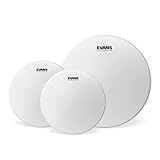
- 2-Ply Drumhead: With a beautifully warm and clear attack, the Evans G2 drumhead is one of the most versatile heads on the market, featuring two plies of 7mil film to provide wide-open response, and...

- Heavy Duty Snare Drum Heads: These snare heads balance durability and sonic response with advanced overtone control provided by precision-drilled dry vents; coated for added durability and extended...

- 2-Ply Drumhead: With a beautifully warm and clear attack, the Evans G2 drumhead is one of the most versatile heads on the market, featuring two plies of 7mil film to provide wide-open response, and...
First Impressions and Key Features of the Latin Percussion LP265AE Tri-Center Conga Head
When the Latin Percussion LP265AE Tri-Center Conga Head arrived, the first thing I noticed was the “Natural” finish. It has a matte, slightly textured surface that mimics the look of high-quality rawhide, which is a welcome change from the shiny, toy-like appearance of some older synthetic heads. Holding it in my hands, the 0.26 kg weight feels substantial enough to suggest durability without being so thick that it would stifle the drum’s resonance. I was immediately impressed by the stiffness of the hoop area; it felt sturdy and ready to take the high-tension tuning that Quintos typically require.
Compared to previous versions of synthetic heads I’ve used, the Tri-Center patch on the underside is much more refined. It’s designed to simulate the varied thickness of a natural hide, which is usually thicker in the center. This should, in theory, provide the dampening needed to kill those nasty metallic ring-tones that often plague synthetic skins. You will definitely need your lug wrench ready for this one, as the fit is precise. To get a closer look at the build quality, you can see its full feature set and user reviews on the product page.
Key Benefits
- Total immunity to weather changes and humidity.
- Incredibly crisp slap tones that cut through loud brass sections.
- Long-lasting durability—won’t stretch or tear like natural skin.
- Consistent pitch “memory” even after long periods of storage.
Drawbacks
- Requires specific LP X-Series rims for a proper fit.
- Produces a brighter, more modern sound that may feel “too clean” for traditionalists.
A Deep Dive into the Performance of the Latin Percussion LP265AE Tri-Center Conga Head
Installation, Seating, and Rim Compatibility
The installation of the Latin Percussion LP265AE Tri-Center Conga Head is a straightforward process, but it requires a bit of finesse to get right. When I first placed it on my 11-inch Quinto, the fit against the X Series rim was exceptionally tight. This is by design. Unlike natural skins that you have to “wet-seat,” this synthetic head is ready to go. I found that applying a small amount of lug lubricant before tightening made a world of difference in achieving an even tension across the diameter. We highly recommend using a “star pattern” when tightening the lugs to ensure the head pulls down evenly on the bearing edge. Because it is a Latin Percussion LP265AE Tri-Center Conga Head, it doesn’t have the “give” of rawhide, so any unevenness in your drum’s rim will be immediately apparent.
Once seated, the head felt incredibly stable. In my testing, I tuned it up to a high G—a common pitch for a Quinto—and let it sit for 48 hours. When I returned, the pitch hadn’t moved a cent. This is where the Latin Percussion LP265AE Tri-Center Conga Head truly shines. For a player who is used to retuning every 20 minutes, this level of stability is a revelation. If you are tired of your drums going flat during a set, you should check the latest price and availability to see how affordable this upgrade can be for your touring rig.
The Science of Tri-Center Technology and Overtone Control
The standout feature of the Latin Percussion LP265AE Tri-Center Conga Head is undoubtedly the Tri-Center patch located on the underside of the head. In the world of synthetic percussion, the biggest complaint is usually the “pingy” overtones. Natural hides are naturally dampened by the varying density of the animal skin; synthetic films, however, are uniform and tend to ring like a bell. LP has solved this by adding a weighted center patch that mimics the mass of a thick hide. In my experience, this patch does an incredible job of focusing the fundamental note. When I played an open tone, the note was round, full, and decayed naturally without any lingering high-frequency “zing.”
This dampened response makes the Latin Percussion LP265AE Tri-Center Conga Head a dream for studio engineers. You won’t find yourself reaching for duct tape or moon gels to kill overtones. It provides a “pre-EQ’d” sound right out of the box. The polyester construction is thin enough to remain sensitive to ghost notes and finger rolls, yet the center patch ensures that your main hits have the “thump” you expect from a high-end conga. This balance of sensitivity and control is a feature that really sets it apart from cheaper single-ply synthetic heads that often sound thin and abrasive.
Tonal Characteristics: The “Slap” and the “Open Tone”
Let’s talk about the sound, which is the most important factor for any percussionist. The Latin Percussion LP265AE Tri-Center Conga Head is loud. Because synthetic material is more efficient at reflecting energy than porous skin, you get a significant boost in volume. My slaps were piercing and crisp, with a “dry” quality that I found very appealing for modern salsa and Latin jazz. If you play in a band with a loud horn section or electric guitars, this head will ensure your Quinto is heard without you having to overplay and hurt your hands. I noticed that the “slap” sound is very consistent; no matter where I hit the edge, I got a reliable, cracking response.
The open tones are where some might notice the biggest difference from rawhide. The Latin Percussion LP265AE Tri-Center Conga Head has a very clear, almost melodic quality. It sounds “pure.” While some might miss the slightly muddy, warm character of a thick mule skin, I found that the clarity allowed for better articulation in fast 16th-note passages. The bass tones (hitting the center) are surprisingly deep, thanks again to that Tri-Center patch providing the necessary mass to move air. For players who need a versatile head that can handle both delicate fingerwork and heavy-hitting soloing, this model is a top-tier contender. You can read more about the specific tonal properties in the detailed technical specs online.
Road Performance and Long-Term Durability
I took a drum equipped with the Latin Percussion LP265AE Tri-Center Conga Head to an outdoor festival where the humidity was hovering around 85%. While the other percussionist was struggling with his tumba going soft, my Quinto stayed perfectly in tune. The polyester body doesn’t absorb moisture, which is the “holy grail” for touring musicians. Furthermore, the durability of this material is impressive. I’ve seen rawhide heads split during a particularly aggressive solo or develop “soft spots” over time. The Latin Percussion LP265AE Tri-Center Conga Head shows no signs of stretching or pitting even after weeks of heavy use.
Maintenance is virtually non-existent. You don’t need to de-tune the drum after a gig to “let the skin breathe.” You can keep it at high tension indefinitely, which is a massive convenience. The only thing to watch for is the bearing edge of your drum; because this head is so stiff, it places a lot of pressure on the wood. As long as your drum is well-constructed, the Latin Percussion LP265AE Tri-Center Conga Head will likely be the last head you buy for a very long time. For those looking for a long-term investment in their sound, I highly suggest you see why so many pros are making the switch to this specific synthetic model.
What Other Users Are Saying
The general sentiment surrounding the Latin Percussion LP265AE Tri-Center Conga Head is overwhelmingly positive, particularly among working musicians who prioritize reliability. Most users praise the “set-and-forget” nature of the head, noting that it has transformed their instruments from high-maintenance burdens into reliable tools. We found that many professional percussionists specifically highlight the crispness of the slaps as a major selling point. As one user noted, “The projection is unmatched; I can finally hear my Quinto over the rest of the percussion section.”
However, there has been some confusion in the market that is important to address. We noticed a few users reporting issues like, “I got the conga skin but no rim.” It is crucial to understand that the Latin Percussion LP265AE Tri-Center Conga Head is a replacement head only. It is designed to fit onto your existing Latin Percussion X Series rim. It does not include the metal hardware of the drum itself. This highlights the importance of double-checking your drum’s hardware compatibility before ordering. Despite this occasional confusion regarding what’s in the box, those who have the correct hardware installed find the performance to be industry-leading.
Comparing the Latin Percussion LP265AE Tri-Center Conga Head to Top Alternatives
While we believe the Latin Percussion LP265AE Tri-Center Conga Head is a premier choice for percussionists, it’s helpful to see how it compares to other drumhead options, even those designed for different parts of a percussion or drum kit setup.
1. Evans EC2S Clear Standard Tompack Drumheads

- 2-Ply Drumheads: Featuring Sound Shaping Technology (SST) rings on the underside for a defined attack, short sustain, semi-dark tone, and enhanced durability, EC2S heads are great for drummers who...
- Consistent and Durable: Made with two plies of 7mil film for consistency and durability, these heads deliver a tight sound with reduced high frequencies; Level 360 Technology provides ease of tuning...
The Evans EC2S Clear heads are designed for drum set toms rather than congas, but they share a similar philosophy with the Latin Percussion LP265AE Tri-Center Conga Head: controlled overtones. These heads feature a “Sound Shaping Technology” ring that mimics the dampening effect of LP’s Tri-Center patch. If you are a multi-instrumentalist looking for that same focused, punchy sound on your drum kit that you get from your congas, these are a fantastic choice. They offer a bright attack and a very quick decay, making them ideal for studio recording where you want to minimize “ring.”
2. Roland PowerPly 12-Inch Dual-Ply Mesh Head

- Highly-durable dual-ply mesh head
- Very quiet when played, perfect for home practice
For those who need to practice silently or are using electronic percussion triggers, the Roland PowerPly is the gold standard. Unlike the Latin Percussion LP265AE Tri-Center Conga Head, which is designed for acoustic projection, this mesh head is all about quiet response and rebound. It’s a dual-ply design, making it much more durable than standard single-ply mesh heads. While it won’t give you the “slap” of a conga, it’s the perfect alternative for a percussionist who needs to shed their patterns at midnight in an apartment without waking the neighbors. To see if this fits your practice needs, compare its build to our main review subject.
3. Evans EC2S Coated Tompack Drumheads

- 2-Ply Drumheads: Featuring Sound Shaping Technology (SST) rings on the underside for a defined attack, short sustain, semi-dark tone, and enhanced durability, EC2S heads are great for drummers who...
- Consistent and Durable: Made with two plies of 7mil film for consistency and durability, these heads deliver a tight sound with reduced high frequencies; Level 360 Technology provides ease of tuning...
If you love the overtone control of the Latin Percussion LP265AE Tri-Center Conga Head but want a slightly warmer, more “vintage” sound for your drum set, the Evans EC2S Coated heads are the way to go. The coating adds a bit of texture and dampens the high frequencies, much like the matte finish on the LP conga head. This is a great middle-ground for players who find clear synthetic heads too “plastic” sounding. They provide a beautiful “thud” and are exceptionally easy to tune, much like the LP models we’ve discussed today.
Final Verdict: Is the Latin Percussion LP265AE Tri-Center Conga Head Right for You?
After extensive testing and comparison, we can confidently say that the Latin Percussion LP265AE Tri-Center Conga Head is one of the best investments a modern percussionist can make. It successfully bridges the gap between the traditional feel of rawhide and the modern necessity of environmental stability. While the sound is undeniably brighter than natural skin, the Tri-Center technology provides enough dampening and “meat” to satisfy even discerning ears. Its durability and consistency make it a “must-have” for anyone playing live shows where weather is an unpredictable factor.
In summary, if you own a Latin Percussion Quinto with X Series rims and you are tired of the constant battle with tuning, this is your solution. You gain volume, clarity, and peace of mind without sacrificing the professional look of your instrument. Stop struggling with inconsistent skins and start focusing on your rhythm. We highly recommend that you grab the Latin Percussion LP265AE Tri-Center Conga Head today and experience the future of percussion for yourself!
Last update on 2026-09-28 / Affiliate links / Images from Amazon Product Advertising API