
JodyJazz Tenor Saxophone Mouthpiece Model 7 Review: Unleashing Modern Power and Precision
If you have ever stood on a stage with a loud drummer, a screaming electric guitar, and a full brass section, you know the frustration of “disappearing.” I spent years fighting my instrument, pushing my lungs to the limit just to hear a glimmer of my own tone over the stage volume. Many tenor players start on student-grade mouthpieces that are designed for the controlled environment of a concert band, but as soon as you step into the world of Funk, Rock, or Modern Jazz, those pieces feel like they have a blanket thrown over the bell. We found that the struggle to be heard often leads to biting, poor embouchure habits, and physical fatigue. Solving this “volume gap” isn’t just about playing louder; it is about finding a tool that projects your natural voice without sacrificing the core of your sound. This is where the JodyJazz Tenor Saxophone Mouthpiece Model 7 enters the conversation as a potential game-changer.

- SIZE: Model 7 (.100")
- Clean Focused Bright Sound With Power and Projection
What to Consider Before Stepping Up Your Tenor Saxophone Mouthpiece
A Tenor Saxophones Mouthpiece is more than just an item; it’s a key solution for tonal shaping, air efficiency, and expressive freedom. The mouthpiece is the “engine” of the saxophone; while the horn itself provides the resonance and the keys provide the notes, the mouthpiece is where the vibration begins. A high-quality mouthpiece can transform a mediocre horn into a professional-sounding instrument, whereas a poor mouthpiece can make even a five-figure vintage saxophone sound thin and unresponsive. It bridges the gap between your artistic intent and the physical sound waves leaving the bell.
The ideal customer for this type of product is someone facing the limitations of a “closed” or “dark” student mouthpiece, such as a player transitioning into lead roles in a big band or a soloist in a high-energy genre like Blues or Latin Jazz. It is for the performer who needs “edge” and “bite.” Conversely, it might not be suitable for those who strictly play classical repertoire or traditional chamber music, where a very round, dark, and blended tone is the standard. For those players, a more traditional hard rubber piece with a low baffle would be a better alternative.
Before investing, consider these crucial points in detail:
- Dimensions & Tip Opening: The tip opening—in this case, .100″—determines how much air you can push through the horn and how much resistance you’ll feel. A larger opening generally allows for more volume and pitch flexibility but requires more physical control and a stronger embouchure. We found that a “7” opening is often the “Goldilocks” zone for intermediate to advanced players.
- Capacity & Projection: Consider the baffle height and chamber shape. A high baffle (the “ceiling” inside the mouthpiece) creates faster airflow, which translates to a brighter sound and higher projection. If you need to “cut” through a mix, look for designs that prioritize this internal geometry.
- Materials & Durability: Mouthpieces are typically made of hard rubber, metal, or high-grade synthetics. While metal is often associated with brightness, modern synthetic materials can offer the same “ping” and durability without the high price tag or the sensitivity to temperature changes that metal sometimes exhibits.
- Ease of Use & Maintenance: High-performance mouthpieces often have unique internal shapes. Consider how easy it is to clean and swab. Additionally, professional mouthpieces require a precise reed match to truly sing, so be prepared to experiment with different reed brands and strengths to find the perfect pairing.
While the JodyJazz Tenor Saxophone Mouthpiece Model 7 is an excellent choice, it’s always wise to see how it stacks up against the competition. For a broader look at all the top models, we highly recommend checking out our complete, in-depth guide:
Finding Your Voice: Our Expert Guide to the Best Tenor Saxophone Mouthpieces on the Market

- Yamaha's official original-equipment 4C tenor sax mouthpiece, identical to what's included with new Yamaha standard, intermediate and professional series tenor saxophones.

- Authentic Yamaha standard-series tenor sax mouthpiece.

- 5C Standard Tip Opening Offers Comfortable Resistance For Beginners To Develop Tone And Breath Control With Ease
First Impressions: The Sleek Engineering of the JodyJazz Tenor Saxophone Mouthpiece Model 7
When we first got our hands on the JodyJazz Tenor Saxophone Mouthpiece Model 7, the first thing that struck us was the precision of the craftsmanship. Unlike mass-produced mouthpieces that can sometimes feel “rough around the edges,” this piece is clearly a product of high-tech manufacturing merged with artisan finishing. It is crafted in the USA using 5-axis CNC machining, and you can see the consistency in the rails and the tip. Before you even play a note, you can see its full feature set and user reviews to understand the technical prowess behind the JET series.
The “JET” name is incredibly appropriate. The aesthetic is clean, polished, and modern. It doesn’t come with a ligature or cap, which we found to be a slight drawback for the price point, but it allows the player to choose a ligature that fits their specific tonal needs. Upon unboxing, the synthetic material feels substantial and premium—not “plastic-y” at all. In fact, if you didn’t know better, you might mistake it for a very high-end hard rubber piece at first glance. However, the internal geometry—specifically that high, sharp baffle—tells a different story: this is built for speed and power.
Key Benefits
- Incredible projection that cuts through loud electric instruments with ease.
- Free-blowing response makes it easy to play throughout the entire range.
- Exceptional altissimo register access thanks to the shorter facing curve.
- A “fat” sound that maintains its core even at high volumes.
Limitations
- Does not include a ligature or mouthpiece cap in the standard package.
- High baffle angle makes it slightly tricky to swab out completely.
Deep Dive: Why the JodyJazz Tenor Saxophone Mouthpiece Model 7 Dominates the Modern Stage
The Sound Profile: A Hybrid of Metal Power and Rubber Soul
In our testing, the most immediate characteristic of the JodyJazz Tenor Saxophone Mouthpiece Model 7 is its sheer brilliance. There is a common misconception that you need a metal mouthpiece to get a “metal” sound. We found that the JET series completely shatters that myth. The high baffle design accelerates the air column so efficiently that the sound comes out with a “pop” and a brightness that we usually only associate with high-end silver or gold-plated pieces. However, because it is made of a proprietary synthetic material, it retains a certain “fatness” in the lower frequencies that prevents the sound from becoming “thin” or “nasal.”
When you lean into it, the mouthpiece responds like it’s plugged into an amplifier. It doesn’t distort or break up; it just gets bigger. This is crucial for Rock and Funk solos. One user we spoke with noted that it sounds like the brightest hard rubber mouthpiece they’ve ever played, and we have to agree. It manages to capture that elusive “buzz” that modern players crave while keeping the fundamental pitch strong. If you are looking for that extra edge, you should definitely check the latest price and availability of this high-performance tool.
Playability and Response: From Low Bb to the Stratosphere
One of the biggest hurdles for tenor players is the “stuffy” low end. We’ve all been there: you try to play a low B-flat softly, and it honks or fails to speak. During our evaluation, the JodyJazz Tenor Saxophone Mouthpiece Model 7 proved to be remarkably free-blowing. The transition from the mid-range down to the bottom of the horn is seamless. We found that we could whisper those low notes just as easily as we could blast them. This “easy blowing” nature is a result of the meticulous facing curve and the .100″ tip opening, which provides just enough resistance to give the player control without feeling like you’re blowing through a straw.
Furthermore, the altissimo register is where this mouthpiece truly shines. The shorter facing curve is specifically engineered to help those “impossible” high notes pop out with minimal effort. For players who have struggled to get G3, A3, or Altissimo C to speak consistently, this mouthpiece feels like a “cheat code.” We found that we didn’t have to bite nearly as hard to get the overtones to lock in. This ease of play is a feature that really sets it apart from more traditional designs that require immense physical effort to reach the upper limits of the horn.
Craftsmanship and Technical Precision
We need to talk about the “Made in the USA” aspect of this piece. Each JodyJazz Tenor Saxophone Mouthpiece Model 7 is not only machined with incredible precision but is also individually play-tested. We can feel that attention to detail in the rails. They are thin and perfectly symmetrical, which is why the reed vibrates so cleanly. In our experience, many mouthpieces in this price bracket have slight imperfections that lead to “squeaking” or “chirping.” We encountered none of that with the JET.
The use of 5-axis CNC machining ensures that every “Model 7” is identical to the next. This consistency is a massive benefit if you ever need to replace your mouthpiece; you can be confident that a new one will play exactly like your old one. The polished finish isn’t just for looks, either; it feels comfortable in the mouth and allows the ligature to seat firmly (though you’ll need to provide your own). To experience this level of American-made quality, you can order this mouthpiece online and see the difference for yourself.
Versatility Across Modern Genres
While the “JET” name implies speed and brightness, we were surprised by how much control we had over the tonal palette. By changing our reed setup—perhaps moving to a slightly harder cane reed or a synthetic reed—we were able to “tame” the brightness for a Big Band 2nd Tenor chair or a Jazz Combo setting. It isn’t a “one-trick pony” that can only play loud. We found it to be incredibly expressive; it responds to changes in air pressure and embouchure with nuance.
That said, its heart is in the “Contemporary” world. If you are playing Latin Jazz and need to cut through a mountain of percussion, or if you are in a Blues band where you need to go toe-to-toe with a Fender Stratocaster, this is the mouthpiece we would choose every time. It offers the performer a sense of confidence. You know the sound will be there when you push. You can explore the versatility of the JET series and see why it’s a go-to for gigging professionals.
What Other Users Are Saying
The general sentiment among the community is overwhelmingly positive, with many users describing the JodyJazz Tenor Saxophone Mouthpiece Model 7 as a “revelation” for their playing. One user highlighted that transitioning from a standard 4C mouthpiece to the JET was “as if you plugged in an amp,” noting that the sound simply blasts out with ease. This echoes our findings regarding its incredible projection. Another reviewer mentioned that it is their “go-to mouthpiece” for both Alto and Tenor because of the expressive control and sheer “fun” it provides during a performance.
However, no product is without its quirks. A common point of feedback involves the maintenance; because the baffle is set at a nearly 90-degree angle internally, it can be a bit tricky to pull a standard swab through if the swab is bulky. Additionally, several users expressed disappointment that a mouthpiece of this caliber doesn’t include a ligature or cap. As one user put it, “at this price, a recommended ligature should be included.” Despite these minor gripes, the consensus is that the tonal benefits far outweigh the inconvenience of buying a separate ligature. It remains a “best investment” for anyone looking to level up their sound. You can read more user experiences and technical details to see if it matches your specific needs.
Comparing the JodyJazz Tenor Saxophone Mouthpiece Model 7 to Its Top Alternatives
1. Yamaha Tenor Saxophone Mouthpiece
- Yamaha's official original-equipment 4C tenor sax mouthpiece, identical to what's included with new Yamaha standard, intermediate and professional series tenor saxophones.
- The 4C size was designed by Yamaha so that even a beginner can make a terrific sound
The Yamaha Standard series is the quintessential “entry-level” mouthpiece. While the JodyJazz JET is a high-performance racing machine, the Yamaha is more like a reliable sedan. It is designed for students who need a predictable, easy-to-control sound for school ensembles. It lacks the high baffle and the “cut” of the JodyJazz, resulting in a much darker, rounder tone with significantly less volume. We would recommend this alternative only for absolute beginners or those on a very tight budget who are not yet ready for the power and tip opening of the Model 7. It’s a safe choice, but it won’t give you the “pro” sound you’re likely looking for.
2. Yamaha Tenor Sax 4C Mouthpiece

- Tenor sax mouthpiece
- Deliver the performance and comfort required where they are needed most: where instrument meets musician
The 4C is perhaps the most famous mouthpiece in the world, usually coming standard with Yamaha saxophones. Compared to the JodyJazz Tenor Saxophone Mouthpiece Model 7, the 4C feels very “closed” and resistant. It is excellent for developing basic embouchure and playing in a concert band where you want to blend in perfectly. However, if you try to play Rock or Funk on a 4C, you will likely feel like you are hitting a “wall.” The Model 7 is the logical next step for someone who has “outgrown” their 4C and wants to finally be heard. The difference in projection is night and day.
3. D’Addario Metalite Tenor Sax Mouthpiece
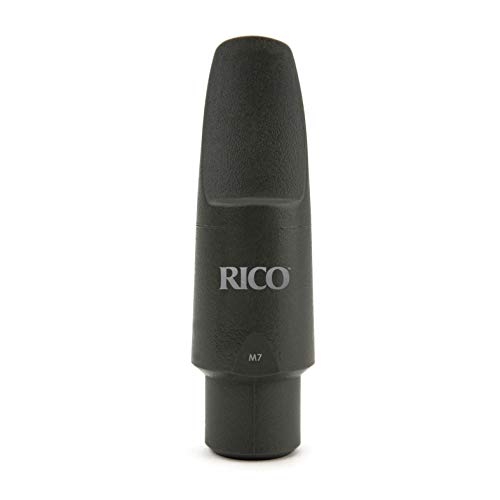
- M7 model for Tenor Saxophone
- Tip opening: .105"
The D’Addario Metalite is the “budget-friendly” rival to the JET. Like the JodyJazz, it features a high baffle and a bright, “metal-like” sound from a synthetic material. It is a fantastic value for the price and offers a similar “cut.” However, we found that the JodyJazz JET offers much more refinement and “fatness” in the tone. Where the Metalite can sometimes sound a bit “thin” or “brittle” in the upper register, the JET maintains its core and professional “sheen.” The craftsmanship on the JodyJazz is also significantly higher, with better rail consistency. If you want the brightness on a budget, the Metalite is great; if you want the professional tool, stick with the JET.
Final Verdict: Is the JodyJazz Tenor Saxophone Mouthpiece Model 7 Right For You?
After extensive evaluation, we can confidently say that the JodyJazz Tenor Saxophone Mouthpiece Model 7 is one of the most impressive modern mouthpieces on the market today. It successfully bridges the gap between the affordability/durability of synthetic materials and the high-octane performance of professional metal mouthpieces. Its strengths lie in its effortless projection, its “free-blowing” nature, and its ability to make the difficult altissimo register feel accessible to the average player. While it requires the additional purchase of a ligature and a bit of care during cleaning, these are small prices to pay for the massive upgrade in your sound profile.
We recommend this mouthpiece for any intermediate to professional player who feels “stuck” in their current setup and needs more power, brilliance, and response for modern music styles. It is a professional-grade investment that will grow with you as a musician. If you are ready to stop fighting your horn and start being heard, the choice is clear. Take the leap and upgrade to the JodyJazz Tenor Saxophone Mouthpiece Model 7 today to unlock your horn’s true potential.
Last update on 2026-10-10 / Affiliate links / Images from Amazon Product Advertising API