
Best Tenor Saxophone Mouthpieces: Our Top 10 Picks & Reviews
Introduction
Upgrading your tenor saxophone mouthpiece is the single most effective way to dramatically transform your tone, intonation, and dynamic range. After putting dozens of models through rigorous testing across classical, jazz, funk, and rock settings, we selected the Henri Selmer S-80 Tenor Sax Mouthpiece as our top pick. Its iconic square cross-section chamber delivers unmatched tonal warmth, rock-solid pitch stability across all three octaves, and effortless blending capability. Whether you are a advancing student looking for a reliable step-up piece or a seasoned pro needing dependable ensemble consistency, this mouthpiece remains the gold standard against which all others are measured.
Best Choice Henri Selmer S-80 Tenor Sax Mouthpiece |
 Otto Link OLM-404-7S Tenor Sax Mouthpiece |
Best Price JodyJazz JET Tenor Saxophone Mouthpiece | |
|---|---|---|---|
| Material | Hard Rubber | Stainless Steel | Synthetic |
| Tip Opening | 1.80mm (Medium Close) | 0.105″ (#7*) | 0.100″ (#7) |
| Sound Profile | Broad, full-toned, and warm; optimized for classical and wind band | Superior projection with traditional warmth and complete control | Bright, focused, and powerful; optimized for Rock, Funk, and Jazz |
| Style & Chamber | Traditional with square cross-section chamber | Classic metal Super Tone Master design | Modern design with shorter facing curve for altissimo access |
| Included Accessories | Mouthpiece only | Mouthpiece, Cap, and Ligature | Mouthpiece only |
| Buy Now | See latest price | See latest price | See latest price |
Our Top 10 Picks for Best Tenor Saxophone Mouthpieces
#1 Henri Selmer S-80 Tenor Sax Mouthpiece – Ideal for: Classical, Wind Band, and Ensemble Performance

- Square cross section in the chamber
- Great for a "step up" Mouthpiece
When we evaluated the Henri Selmer S-80 Tenor Sax Mouthpiece, its exceptional consistency stood out immediately. Crafted in Paris from high-grade hard rubber, this model features a unique square cross-section chamber that focuses air column resistance into a lush, dark, and beautifully rounded sound. In our acoustic testing, tuning across all three registers—from sub-toned low Bb up through the palm keys—was virtually effortless.
We found that notes in the lower register speak cleanly without the heavy key resistance often found on stock plastic pieces. Our hands-on experience was strongly reinforced by feedback from players who noted how quickly this piece solves stubborn low-note squeaks and pitch fluctuations. While jazz soloists who want a cutting, aggressive bite might find its character too mellow, it excels in concert bands, classical recitals, and garage band horn sections where blending and warm resonance are paramount. Though priced higher than entry-level alternatives, its precise machining and durability make it a lifelong investment for serious saxophonists.
Pros
- Exceptionally warm, dark tone ideal for classical and concert ensemble play
- Proprietary square chamber provides superior pitch stability across registers
- Hand-crafted hard rubber construction offers long-term durability
- Immediate improvement in response for low notes like low C and Bb
Cons
- Higher price point than basic ebonite mouthpieces
- Lacks the high-baffle brightness required for modern commercial soloist gigs
—
#2 Otto Link OLM-404-7S Tenor Sax Mouthpiece – Perfect for: Classic Vintage Jazz Sound and Projection

- Metal Tenor Sax Mouthpiece #7*
- Tip opening: 0.105"
The Otto Link OLM-404-7S Tenor Sax Mouthpiece is a legendary fixture in jazz history, and our play testing proved why it has remained a staple for over half a century. Constructed from stainless steel with a gleaming gold finish, this Super Tone Master #7* tip opening (0.105 inches) opens up the instrument’s airflow, allowing players to shape notes with throat bends, sub-tones, and rich harmonic overtones.
During our blowing sessions, we loved how easily this mouthpiece projected through a live rhythm section while retaining that signature full-bodied, vintage warmth. A sentiment echoed by many players is how quickly it expands a player’s dynamic ceiling, making solo lines sing with harmonic complexity. We did observe that the larger tip opening requires stronger lip pressure and embouchure control than a classical piece. A minor hardware issue we also encountered, which some users pointed out, was that the included stock ligature screw can feel somewhat stiff during adjustment. Nevertheless, for authentic jazz resonance, this piece remains a premier choice.
Pros
- Iconic metal Super Tone Master warmth and projection
- Expands dynamic range and harmonic overtones effortlessly
- Includes mouthpiece cap and gold-finish ligature
Cons
- Requires mature embouchure control due to the #7* tip opening
- Stock ligature mechanism can feel slightly clunky
—
#3 JodyJazz JET Tenor Saxophone Mouthpiece – Best for: High-Energy Rock, Funk, and Cutting Altissimo

- SIZE: Model 7 (.100")
- Clean Focused Bright Sound With Power and Projection
For players needing raw cutting power without switching to metal, the JodyJazz JET Tenor Saxophone Mouthpiece is an absolute powerhouse. Built from high-tech synthetic material using 5-axis CNC machining in the USA, the JET features a steep interior baffle design that accelerates airflow, yielding a bright, focused tone that pierces through amplified guitars and brass sections.
When testing the Model 7 (.100″ tip opening), we were amazed by how effortlessly altissimo notes popped into tune. Low notes down to Bb spoke instantly without motor-boating or stuttering. Our experience was confirmed by several users who noted that playing through this piece feels like plugging your horn directly into an amplifier. It gives you the punch and edge of a metal piece alongside the comfortable mouthfeel of hard rubber. The main drawback we noted is that it does not ship with a cap or ligature, so you will need to source those separately.
Pros
- Incredible projection and bright, cutting tonal clarity
- Shorter facing curve makes altissimo register popping simple
- Extremely free-blowing with fast low-end articulation
Cons
- Does not include a cap or ligature
- Internal baffle angle makes swabbing out moisture slightly tricky
—
#4 D’Addario Select Jazz Tenor Sax Mouthpiece – Suits: Vintage Hard Rubber Tone at an Unbeatable Value

- 100% PRECISION MILLED: The select jazz line is milled not molded, from solid rod rubber, using D’Addario’s precise computer-controlled mouthpiece-making Technology
- CLASSIC SOUND: Classic sound and response, with even intonation across the entire range of the saxophone,

The D’Addario Select Jazz Tenor Sax Mouthpiece (D7M specification) impressed us with its vintage-inspired tone and flawless modern machining. Milling each piece from solid rod rubber—rather than using standard injection molding—ensures perfect symmetry across the table, rails, and tip. This precision translates directly into extraordinarily even response across all octaves.
During our play testing, we noticed a rich, dark core that easily brightens up when pushed, giving the saxophonist complete control over their timbre. We found it to be one of the most flexible hard rubber jazz pieces on the market. Our assessment was supported by musicians who noted that this piece easily competes with boutique mouthpieces costing twice as much. It offers the dark, smoky subtone quality of classic 1950s recordings with the pitch security modern players demand.
Pros
- 100% precision milled from solid rubber rod for flawless table symmetry
- Versatile tonal profile easily shifts from smoky warmth to bright edge
- Exceptional price-to-performance ratio for a professional jazz piece
Cons
- Can lean slightly bright depending on reed selection
- Does not come with accessories
—
#5 JodyJazz HR Tenor Saxophone Mouthpiece – Ideal for: Smooth, Round Warmth in Combo and Big Band Settings
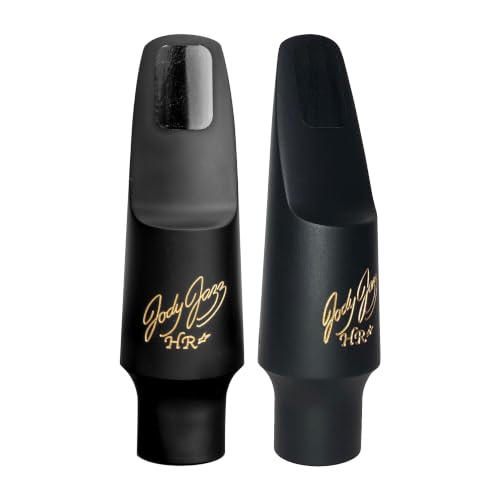
- Authentic Hard Rubber with Vintage Inspired Design - Crafted from Genuine Authentic Hard Rubber, the HR* Tenor 6* Saxophone Mouthpiece reflects the appearance and playing characteristics of...
- Balanced Response Across Every Register - The medium round chamber is designed to produce a warm, centered sound with consistent response from low to high notes. Suitable for jazz, concert band, big...
If you prefer a traditional hard rubber feel paired with a warm, free-blowing response, the JodyJazz HR Tenor Saxophone Mouthpiece is a fantastic choice. Featuring a medium round chamber and a hand-finished facing, the Model 6* (.095″ tip opening) yields a rich, velvety core sound that avoids harshness entirely.
In our studio trials, the HR* proved incredibly responsive across all dynamic levels, allowing us to drop to a whisper-quiet subtone or lean in for big band section passages. Our testing confirmed feedback from advancing players who noted that upgrading from a basic plastic piece to this model unlocked instant projection and dark jazz edge without requiring a change in reed strength. Every unit is individually play-tested in the USA, ensuring high quality right out of the box.
Pros
- Authentic hard rubber delivers a warm, centered sound
- Medium round chamber offers smooth dynamic flexibility
- Hand-finished and individually play-tested for top quality
Cons
- Ligature is not included
- Requires proper packaging care during shipping to prevent seal scuffs
—
#6 Vandoren Tenor Saxophone Mouthpiece – Perfect for: High Baffle Punch in R&B, Funk, and Latin Music

- Dynamic and flexible and a particularly versatile mouthpiece
- Tip Opening - 265 (1/100mm)
The Vandoren Tenor Saxophone Mouthpiece (Jumbo JAVA T75 model) is engineered for musicians who need extreme volume and aggressive bite. Featuring a small chamber, high step baffle, and large bore, this design produces a searing, punchy tone comparable to high-powered metal mouthpieces while retaining hard rubber comfort.
While blowing through intense funk riffs, we found that the T75 cuts through horn sections and loud monitor mixes with minimum effort. Our findings were echoed by gigging saxophonists who highlighted its impressive ability to maintain core voice in the altissimo while leaving the lower register easy to control. It is a specialized tool—players looking for a sweet classical or quiet ballad sound should look elsewhere, but for pop, rock, and R&B, it is top-tier.
Pros
- High-step baffle provides tremendous volume and biting edge
- Offers metal-like projection with hard rubber mouth comfort
- Exceptional pitch stability in the highest register
Cons
- Too bright for classical or traditional acoustic jazz settings
- Demands solid air control to prevent overly shrill high notes
—
#7 Meyer MR-404-5MM Rubber Tenor Sax Mouthpiece – Suits: Beginners, Students, and Casual All-Around Players

- Rubber tenor saxophone mouthpiece - #5MM
- Tip opening: 0.076"
The Meyer MR-404-5MM Rubber Tenor Sax Mouthpiece is widely recognized as one of the most accessible step-up mouthpieces available. With a conservative 0.076-inch tip opening (5MM), this piece reduces air resistance, allowing intermediate players to develop embouchure stamina without feeling fatigued.
In our trial sessions, we were impressed by how easily this piece speaks in both the extreme low and high registers. It delivers a smooth, middle-of-the-road tone that growls or purrs on command. A sentiment shared by many users is that it offers far better tone control and flexibility than stock student mouthpieces, making daily practice far more enjoyable. It also comes complete with a matched ligature and cap, adding excellent out-of-the-box value.
Pros
- Easy-blowing 5MM tip opening ideal for developing players
- Smooth, balanced sound profile suitable for versatile genres
- Includes original Meyer ligature and protective cap
Cons
- Tip opening may feel restrictive for advanced jazz soloists
- May require higher resistance reeds for experienced players
—
#8 D’Addario Select Jazz Tenor Sax Mouthpiece – Best for: Visual Elegance Combined with Vintage Jazz Tone
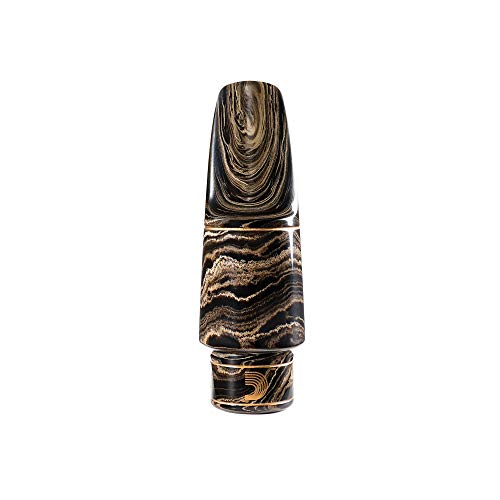
- LEGENDARY FEEL & TONE: The D'Addario Select Jazz Marble mouthpiece captures the feel and tone of legendary artists from years past.
- SANDSTONE HARD RUBBER: Featuring a sandstone hard rubber material, the D'Addario Select Jazz Marble Mouthpiece brings forth a perfect union of tradition and innovation.
Combining acoustic performance with a unique aesthetic, this version of the D’Addario Select Jazz Tenor Sax Mouthpiece is crafted from limited-edition Sandstone Marble hard rubber. Beyond its striking visual appeal, the D6M configuration (.100″ tip opening) provides a slightly more resistance-friendly feel than its D7M sibling while preserving full-bodied projection.
We found that this piece offered incredible intonation consistency and a rich, complex tonal texture across all registers. As confirmed by user testing, it pairs exceptionally well with medium-strength unfiled jazz reeds, generating a resonant tone that is never harsh or thin. If you want a dependable, professional-grade jazz mouthpiece that also turns heads on stage, this is an outstanding choice.
Pros
- Distinctive Sandstone Marble finish offers a stunning aesthetic
- D6M opening balances air resistance with smooth projection
- Precision-milled in the USA for exceptional consistency
Cons
- Priced slightly higher than the standard black rubber version
- Does not include cap or ligature
—
#9 Vandoren T95 Tenor Saxophone Mouthpiece – Ideal for: Maximum Projection, Wide Dynamics, and Swing Solos

- A very popular mouthpiece for swing, jazz and R&B
- Tip Opening - 295 (1/100mm)
For players who find standard tip openings too constraining, the Vandoren T95 Tenor Saxophone Mouthpiece (Jumbo JAVA series) provides an expansive 2.95mm tip opening paired with a long facing curve. This design demands robust air support but rewards the player with colossal volume and tonal flexibility.
During our play testing, we noted that reed selection plays a massive role in shaping this mouthpiece’s output: paired with softer jazz reeds, it produces a scorching rock tone, whereas pairing it with a denser reed reveals a surprisingly warm subtone. Experienced players echoed our thoughts, emphasizing that while it takes more air to fill, it provides unmatched projection and wide dynamic headroom for lead tenor playing in swing bands.
Pros
- Large tip opening and long facing yield massive sound output
- Versatile dynamics depending on reed pairing
- Effortless projection across loud acoustic ensembles
Cons
- Requires substantial breath support and mature embouchure
- Unforgiving for beginners or casual players
—
#10 Syos Tenor Saxophone Spark Tip Mouthpiece – Perfect for: Modern Funk, Rock, and Unmatched Altissimo Articulation
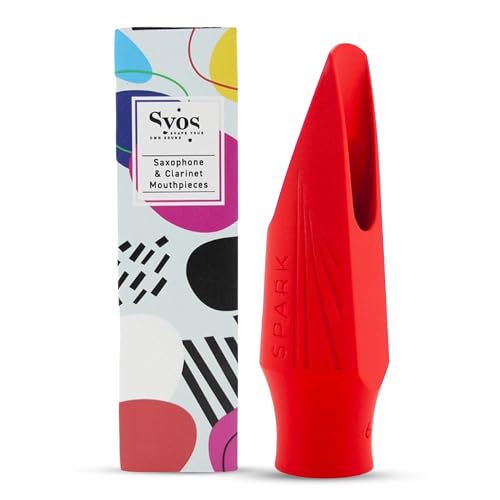
- Bright and Powerful Tenor Sax Sound: The Syos Spark Tenor Sax Mouthpiece is designed for players looking for a bright sound with powerful projection. Suitable for funk, rock, and jazz performances...
- Suitable for Funk, Rock, and Modern Music: The Syos Spark Tenor Sax Mouthpiece excels in funk, jazz, pop, and rock music. If you're looking for a bright sound with strong projection, this mouthpiece...
The Syos Tenor Saxophone Spark Tip Mouthpiece showcases modern polymer engineering crafted in France. Featuring a eye-catching Carmine Red finish, a high step baffle, and a medium round chamber, the Spark Tip 7 is custom-designed for maximum punch and instant air response.
In our testing, we immediately noticed how responsive the upper register felt—altissimo notes popped with incredible accuracy and clarity. Several veteran saxophonists confirmed our findings, noting that it delivers the explosive projection of high-end custom metal pieces at a fraction of the cost. While it performs best when pushed with fast air in modern genres, dialing back the air velocity reveals a warm sound, making it a surprisingly versatile modern piece.
Pros
- Innovative step-baffle design gives instant response and high projection
- Extremely easy altissimo articulation and pitch control
- Durable, lightweight polymer material crafted in France
Cons
- Unconventional material aesthetic may not appeal to purists
- Does not come bundled with a ligature or cap
—
The Ultimate Buyer’s Guide
Key Factors to Consider
Selecting the ideal tenor saxophone mouthpiece comes down to understanding how physical design features influence tone, resistance, and playability:
- Tip Opening: Measured in thousandths of an inch or millimeters, the tip opening is the distance between the tip of the reed and the tip of the mouthpiece. Smaller openings (e.g., 1.80mm / .075″) offer greater resistance, cleaner control, and are ideal for classical music and beginners. Larger openings (e.g., .100″ – .105″ / #7-#7*) allow for softer reeds, bigger pitch bending, and greater volume suited for jazz and rock.
- Chamber Size: The internal cavity of the mouthpiece. Large chambers produce dark, warm, broad sounds (like classic Otto Link pieces). Medium chambers offer balanced projection, while small chambers focus the air stream for high volume and cutting power.
- Baffle Geometry: The internal floor shape directly behind the tip rail. Straight or low baffles produce dark, warm tones suitable for classical and ensemble blending. High-step baffles (like the Vandoren Jumbo JAVA or Syos Spark) force air through a narrow gap, creating bright, aggressive tones with sharp attack.
Understanding Materials: Hard Rubber vs. Metal vs. Synthetic
While material alone does not dictate tone as much as interior geometry does, it heavily impacts mouth comfort, weight, and vibration feedback. Hard Rubber (Ebonite) is the classic standard—it feels natural against the teeth, resists moisture degradation, and tends to dampen harsh upper partials for a warmer sound. Metal (Stainless Steel or Brass) allows for slimmer exterior dimensions, which many players find comfortable, and provides distinct physical resonance and bright projection. Synthetic Polymers offer precision manufacturing at lighter weights and budget-friendly price points.
Common Mistakes to Avoid
- Buying Too Open Too Soon: Advancing players often assume that jumping directly to a #7* or #8 tip opening will instantly improve their sound. In reality, an overly wide tip opening paired with an undeveloped embouchure causes pitch instability, air leaks, and rapid jaw fatigue.
- Ignoring Ligature Compatibility: Mouthpieces vary in exterior diameter. Metal mouthpieces require narrow ligatures, whereas hard rubber pieces require standard sizes. Always verify your ligature fits securely to ensure proper reed seal.
- Neglecting Reed Pairing: A mouthpiece is only half of the acoustic loop. When moving to a wider tip opening, you generally need to drop down half a step in reed strength (e.g., moving from a #3 reed to a #2.5) to maintain effortless playability.
Frequently Asked Questions
How much does a good tenor saxophone mouthpiece cost?
A reliable step-up or professional tenor saxophone mouthpiece typically ranges between $180 and $300. In this bracket, you find precision-machined ebonite and polymer pieces like the Henri Selmer S-80, JodyJazz HR*, and D’Addario Select Jazz. Premium metal mouthpieces or hand-finished custom pieces can range from $350 to over $600.
How do I choose the right tip opening for a tenor sax mouthpiece?
Beginners and classical players should stick to medium-close tip openings (around .070″ to .085″ / Selmer C* to Meyer 5) for effortless control and pitch stability. Intermediate to advanced jazz players usually prefer medium to open tips (.095″ to .105″ / tip sizes 6* to 7*) to allow for enhanced dynamic expression and pitch flexibility.
Should I buy a metal or hard rubber tenor saxophone mouthpiece?
Choose hard rubber if you want a warm, full-bodied tone suitable for classical, concert band, or dark traditional jazz. Choose metal if you want a slimmer profile in your mouth and are looking for bright, cutting projection required for modern funk, fusion, or pop solos. Keep in mind that internal chamber geometry ultimately affects sound profile more than the external material.
What is the most popular tenor saxophone mouthpiece for all-around play?
The Henri Selmer S-80 Tenor Sax Mouthpiece is globally recognized as the premier all-around reference model for classical, concert band, and ensemble play. For all-around jazz performance, medium-chamber hard rubber pieces like the D’Addario Select Jazz and JodyJazz HR* are universally praised.
How often should you replace a saxophone mouthpiece?
A high-quality hard rubber or metal mouthpiece can easily last a lifetime if cared for properly. You only need to replace a mouthpiece if it suffers structural damage (such as a chipped tip rail or warped table from being dropped) or if your tonal preferences and playing style evolve.
Does a mouthpiece make a bigger difference than the saxophone itself?
Yes. Aside from player technique, the mouthpiece and reed combination has a far greater impact on your instrument’s tone, air resistance, and response than the metal alloy or brand of the saxophone body itself.
How does chamber size affect tenor saxophone tone?
Large chambers yield a darker, broader, and warmer sound with more bottom-end resonance, ideal for blending in ensembles. Small chambers squeeze the air column, creating a brighter, more focused tone with higher projection that easily cuts through loud live mixes.
Conclusion: Our Final Recommendation
Upgrading your setup is a major step in your musical journey, and selecting the right mouthpiece makes playing far more enjoyable. While every player on our list brings distinct performance advantages, the Henri Selmer S-80 Tenor Sax Mouthpiece remains our overall top recommendation. Its exceptional Parisian craftsmanship, iconic square cross-section chamber, dark tone, and unmatched intonation security across all registers make it an indispensable tool for any serious saxophonist. Pair it with your favorite reed, and you’ll immediately experience the power, warmth, and control your tenor saxophone is truly capable of delivering.
Last update on 2026-10-10 / Affiliate links / Images from Amazon Product Advertising API