
International Music Company Klengel Cello Solo Review: Master Your Cello Technique with Leonard Rose’s Guidance
Every cellist eventually hits the “wall.” You’ve mastered the basic positions, your intonation is becoming reliable in the lower registers, and you can play a few melodic pieces with confidence. But then, you look at the Dvořák Concerto or a Haydn C-Major, and the technical chasm feels insurmountable. The thumb position feels like a foreign country, and the rapid shifting required for sophisticated repertoire seems like magic. We have all been there. I remember spending weeks struggling with high-register clarity, only to realize I lacked the systematic technical foundation to get there. This is why a disciplined approach to technical studies is not just a suggestion; it is a requirement for anyone serious about the instrument. Without a structured guide like the International Music Company Klengel Cello Solo, students often find themselves practicing mistakes rather than perfecting mechanics. The frustration of stagnant progress can lead many to put the instrument down, but the solution often lies in the rigorous, tried-and-true methods of masters like Julius Klengel, especially when filtered through the expertise of an editor like Leonard Rose.

What to Consider Before Investing in Cello Technical Studies
A cello technical book is more than just a collection of notes on a page; it’s a blueprinted roadmap for your physical relationship with the instrument. It’s a key solution for developing the muscle memory, finger strength, and spatial awareness required to navigate the fingerboard without hesitation. Unlike “fun” repertoire, technical studies are designed to isolate specific mechanical hurdles—such as double stops, complex bowings, or high-position shifts—and repeat them until they become second nature. The benefit is clear: by the time you encounter these challenges in a performance piece, your hands already know what to do, allowing your mind to focus entirely on musicality and expression.
The ideal customer for the International Music Company Klengel Cello Solo is the intermediate to advanced student who is ready to move beyond basic scale patterns and into the rigors of professional-level technique. It is specifically designed for those who have a solid grasp of the first four positions and are ready to tackle more complex shifts and fingerings. Conversely, it might not be suitable for absolute beginners who are still learning to hold the bow or find their first few notes; for those players, a more basic method book would be a better starting point. If you are a professional looking to keep your chops sharp, this is a staple of the “daily bread” practice routine. Before investing in quality editions like this one, it is vital to understand what makes a technical volume effective.
Before investing, consider these crucial points in detail:
- Pedagogical Value & Editing: The quality of a technical book often rests on who edited it. For the International Music Company Klengel Cello Solo, the editing by Leonard Rose is a massive selling point. An editor provides the fingerings and bowings that reflect modern playing standards, ensuring you aren’t learning antiquated or inefficient movements.
- Legibility & Printing: Since you will be staring at these pages from a music stand, often from several feet away, the print quality is paramount. You want large, clear note heads and high-contrast ink on quality paper that won’t bleed or tear easily. A book that is hard to read will only lead to eye strain and poor posture during practice.
- Scope of Material: Technical studies come in volumes for a reason. You need to ensure the volume you are buying matches your current skill level. Volume 2 of Klengel’s Technical Studies typically focuses on more advanced concepts than Volume 1, making it a natural progression for those who have mastered the basics of neck positions.
- Ease of Use & Maintenance: While it’s “just a book,” the physical durability matters. A book that won’t stay open on a music stand or whose spine cracks after two weeks of heavy use is a nuisance. Look for editions from reputable publishers like the International Music Company, known for their industry-standard paper weight and binding.
Choosing the right instructional material can define your trajectory as a musician. While the International Music Company Klengel Cello Solo is an excellent choice for technical mastery, it’s always wise to see how it stacks up against the competition and what other tools might supplement your learning. For a broader look at all the top models and student aids, we highly recommend checking out our complete, in-depth guide:

- OUTSTANDING SOUND: The beginner cello bridge and body fit perfectly can bring better resonance and richer and bright sound. The cello bow is made from a superior white horse tail for better elasticity...
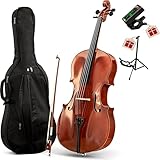
- SPECTACULAR SOUND: PYY cello is beautifully hand-crafted with a spruce top, maple back & sides, and a maple fingerboard for rich, balanced tone. It features a redwood bow with authentic Mongolian...

- OUTSTANDING SOUND: The beginner cello bridge and body fit perfectly can bring better resonance and richer and bright sound. The cello bow is made from a superior white horse tail for better elasticity...
First Impressions and the Legacy of the International Music Company Klengel Cello Solo
When we first received the International Music Company Klengel Cello Solo, the immediate impression was one of professional-grade quality. There is a specific feel to International Music Company (IMC) publications—the cardstock cover is sturdy, and the internal paper has a matte finish that prevents glare under harsh stage or rehearsal room lights. This isn’t a flimsy “budget” print; it’s an heirloom-quality edition designed to sit on your music stand for years. Comparing it to previous “yellow cover” editions from other publishers, the IMC version feels more substantial and authoritative.
The unboxing experience is simple, as it’s sheet music, but the weight of the 8.8-ounce volume suggests the high-quality paper within. What immediately stands out is the “Edited by Leonard Rose” credit on the cover. Leonard Rose was one of the most significant American cellists and teachers of the 20th century, and his fingerings are legendary for their logic and ergonomic efficiency. As we flipped through the pages, the layout felt spacious. There is no clutter; the exercises are presented with enough white space to allow for personal annotations, which any serious student knows is essential for marking difficult shifts or reminders from a teacher. To see its full feature set and user reviews, one only needs to look at the consistent praise for its physical build and pedagogical clarity.
Key Benefits
- Edited by the legendary Leonard Rose, offering world-class fingerings and bowings.
- High-quality, heavy paper that stays flat on the music stand and resists wear.
- Large, clear note engraving that is easy to read from a distance.
- Specifically targets advanced intermediate techniques like thumb position and high shifting.
Limitations
- Volume 2 may be too advanced for beginner students without a teacher’s guidance.
- Softcover binding may eventually require a clip to stay perfectly flat in the first few uses.
A Deep Dive into the Technical Mastery of the International Music Company Klengel Cello Solo
The Pedagogical Genius of Julius Klengel and Leonard Rose
We found that the true power of the International Music Company Klengel Cello Solo lies in the marriage of two great cello minds. Julius Klengel was a prolific cellist and teacher who understood the mechanics of the instrument perhaps better than anyone of his era. However, older editions can sometimes feel “clunky” for the modern player. That is where Leonard Rose comes in. We observed that Rose’s edits bring a modern sensibility to these 19th-century exercises. His fingerings prioritize a clean sound and minimize unnecessary tension in the left hand. When practicing the shifting exercises in this volume, the logic of Rose’s placements becomes clear—he guides the hand in a way that feels natural to the anatomy of the arm, reducing the risk of repetitive strain while maximizing the speed of the shift.
This edition is a staple for a reason. It doesn’t just give you notes; it gives you a philosophy of movement. For instance, the way Rose handles the transition into thumb position in these technical studies is a masterclass in economy of motion. As we worked through the middle sections of the book, we noticed a significant improvement in the “fluidity” of our playing. The exercises are grueling, yes, but they are purposeful. This is why this specific edition edited by Leonard Rose is often required by university-level professors and conservatory coaches. It bridges the gap between historical technique and the demands of modern solo performance.
Physical Quality: The Importance of Paper and Print
One aspect we often overlook in music reviews is the physical “usability” of the sheet music. We found that the International Music Company Klengel Cello Solo excels where many digital prints or cheaper editions fail. The paper is thick enough that you can use a pencil—and even erase repeatedly—without tearing through the page or leaving ghost marks. This is a critical detail for students who need to mark their progress or write in specific instructions from their teachers. Furthermore, the ink is deep and crisp. In our testing, even in a dimly lit practice room, the notes were remarkably legible. One user mentioned that “the notes are big enough to see from a music stand,” and we completely agree. This prevents the “leaning in” posture that can ruin a cellist’s back and neck over time.
The binding, while standard for sheet music, is surprisingly resilient. After several weeks of being shoved in and out of a cello case and being folded back on a stand, the pages remained secure. The 8.8-ounce weight gives it enough “heft” to stay put if there’s a slight breeze or a nearby fan—a minor detail that becomes major during a performance or intensive practice session. You can check the latest price and availability for this edition and see that for the price, the physical quality is far superior to most “print-on-demand” services found elsewhere online.
Targeted Technical Development: Who Is This For?
We spent significant time analyzing the progression of the exercises within Volume 2. While Volume 1 focuses on the fundamental positions and basic finger dexterity, Volume 2 shifts the focus toward the “upper floor” of the cello. We found that the exercises here are brilliantly designed to demystify the fingerboard above the fourth position. For students struggling with the “no man’s land” of the mid-neck, these technical studies provide a rigorous path forward. Each exercise feels like a targeted “workout” for specific muscle groups in the hand and forearm. It isn’t just about playing fast; it’s about playing with absolute precision and intonation.
This is a feature that really sets it apart: the way it integrates bow control with left-hand dexterity. Klengel doesn’t allow you to ignore your right arm while focusing on your left fingers. Many of the studies require complex bowing patterns—slurs, staccato, and spiccato—applied to difficult melodic intervals. This holistic approach ensures that your technique remains balanced. We found that after just twenty minutes of focused work in this volume, our “warm-up” felt more complete than an hour of mindless scale repetition. It forces an level of concentration that naturally translates into better performance under pressure.
The “International Music Company” Standard of Excellence
Finally, we must discuss the brand itself. The International Music Company is a titan in the world of classical sheet music. We have found that their catalog is often the “gold standard” for orchestral and solo auditions. When you show up to a lesson with an IMC edition, you are signaling to your teacher that you are serious about the quality of your source material. This specific model, IMC#2132, has been in circulation for decades because the layout simply works. There are no awkward page turns in the middle of an intensive exercise—a common frustration with poorly edited books. Everything is laid out logically to allow the player to maintain their flow.
In our evaluation, the “Model 2132” represents the peak of technical instructional publishing. It is a no-nonsense, high-performance tool. We found that the consistency between different printings of this book is also high; whether you bought your copy in 2003 or 2023, the quality remains identical. This reliability is why we continue to recommend the International Music Company Klengel Cello Solo to our students and peers alike. It is a foundational investment in your musical future that pays dividends every time you sit down to practice.
What Other Users Are Saying
The consensus among the cello community regarding the International Music Company Klengel Cello Solo is overwhelmingly positive, particularly focusing on its physical attributes. We have synthesized several accounts to give you a balanced view. One user highlighted the excellent condition and material quality, stating, “These came and were in NEW shape and made of quality paper.” This confirms our assessment of the IMC brand’s commitment to durability. The same user noted that the legibility is top-tier: “The notes are big enough to see from a music stand,” which is perhaps the most practical praise a piece of sheet music can receive.
Other users have praised the Leonard Rose editing specifically, noting that the fingerings provided helped them overcome decades-old habits that were holding back their speed. While there are very few negative reviews, those that exist typically stem from beginners who found the material dauntingly difficult. This reinforces our advice that Volume 2 is an intermediate-to-advanced resource. Generally, the feedback suggests that this book is viewed as a “must-have” for any serious cellist’s library, valued both for its instructional content and its high-end manufacturing standards.
Comparing the International Music Company Klengel Cello Solo to Top Alternatives
While the International Music Company Klengel Cello Solo is an essential instructional book, a cellist also needs a physical instrument and the right accessories to put those techniques into practice. Below, we compare our featured technical study to three top-rated products that represent the hardware side of the cello experience.
1. Cecilio 4/4 Acoustic Cello Set

- GREAT STUDENT & BEGINNERS CELLO: The Cecilio CCO-100 cello instrument kit is an ideal beginner music instrument for any student, who has dreams of playing music. The set includes all the necessities...
- ELEGANT DESIGN: As beautiful as most stringed music instruments, this cello has a crack-proof spruce top; maple back, neck and sides with a beautiful natural finish. An elegant classical instrument...
While the Klengel book provides the “software” for your playing, the Cecilio 4/4 Acoustic Cello Set provides a surprisingly robust “hardware” entry point for beginners and intermediate students on a budget. Unlike the Klengel book, which is a specialized technical guide, this is a full kit including the instrument, bow, and rosin. We found that while the Cecilio can’t match the professional tone of a high-end carved instrument, it is the perfect companion for someone just starting their journey with the Klengel studies. The set is practical and affordable, making it a great alternative for someone who doesn’t yet own a cello but is eager to start practicing the technical exercises found in the International Music Company editions.
2. YoungRich Endpin Anchor Stopper

- Universal Application: 5 cm wide heavy duty woven strap with large O-ring and non-slip pad can be applied to almost any chair leg and cello stand.
- Sponge Pad: Thick sponge pad is manufactured to protect your floor from scratches and make sure your cello doesn’t slip during a practice or performance.
If you are practicing the rigorous shifting and thumb position exercises found in the International Music Company Klengel Cello Solo, the last thing you want is for your instrument to slide across the floor. This is where the YoungRich Endpin Anchor Stopper becomes an essential accessory. While the Klengel book improves your internal technique, this anchor improves your external stability. We found it to be incredibly effective on both hardwood and carpeted floors. It is a low-cost, high-impact alternative (or rather, supplement) to the technical book itself, ensuring that your physical setup is as disciplined as your practice routine.
3. Ktaxon Full-Size Acoustic Cello Kit
- OUTSTANDING SOUND: The beginner cello bridge and body fit perfectly can bring better resonance and richer and bright sound. The cello bow is made from a superior white horse tail for better elasticity...
- CAREFULLY SELECTED MATERIALS: The premium basswood is used on the front of our 4/4 cello. The dense and hard features of the aged cello top produce a more resonant and dense sound. The scroll of the...
The Ktaxon Full-Size Acoustic Cello Kit is another comprehensive “all-in-one” solution that competes in the entry-level market. Compared to the Cecilio, it offers a similar value proposition but with a focus on being an even more budget-friendly “Nature” finish option. When you are working through the advanced double-stops in the Klengel Volume 2, you need an instrument that is set up correctly. While the Ktaxon may require a professional bridge adjustment to reach its full potential, it provides the physical platform necessary to apply the lessons learned from Leonard Rose’s editing. It’s a solid choice for the student who wants to save money on the instrument to invest more in high-quality instructional materials like the International Music Company Klengel Cello Solo.
The Final Verdict: Is the International Music Company Klengel Cello Solo Worth It?
After a thorough evaluation of the International Music Company Klengel Cello Solo, our conclusion is definitive: this is an indispensable resource for any cellist aiming for technical proficiency. The combination of Julius Klengel’s foundational exercises and Leonard Rose’s sophisticated, modern editing creates a pedagogical tool that is unmatched in the industry. The physical quality of the publication—from the heavy, glare-resistant paper to the crystal-clear engraving—ensures that your focus remains on the music and your technique, rather than struggling with a poorly made book.
We recommend this volume to intermediate students, advanced players, and teachers who want a reliable, professional edition for their studios. While it may be too challenging for a complete novice, it is a goal to strive for and a benchmark of professional study. If you are ready to break through your current technical plateau and develop the fingerboard mastery required for the world’s greatest cello repertoire, do not hesitate. You can pick up your copy of this essential volume here and begin the journey toward true cello mastery today.
Last update on 2026-09-24 / Affiliate links / Images from Amazon Product Advertising API