
DIYTECH 16 Port Balanced Audio Patchbay Review: The Heavy-Duty Hero Your Studio Rack Deserves
If you have ever spent more time on your hands and knees with a flashlight between your teeth than actually recording music, you know the specific brand of torture I am talking about. For years, my studio felt like a game of high-stakes “Twister.” Every time I wanted to swap a preamp or move a microphone line from the vocal booth to the drum room, I was crawling behind the rack, fighting through a jungle of dusty cables, and inevitably unplugging the wrong thing. It is a workflow killer, a backbreaker, and frankly, it makes the “creative process” feel a lot like IT troubleshooting.
Solving this cable chaos is not just about aesthetics; it is about protecting your gear and your sanity. Constantly reaching behind heavy rack units strains connectors and invites signal noise. I realized I needed a centralized mission control for my I/O. This led me to the DIYTECH 16 Port Balanced Audio Patchbay. I needed something that could handle constant plugging and unplugging without flinching, and after putting this unit through its paces in a live-tracking environment, I have some thoughts to share. Whether you are a bedroom producer or managing a broadcast rig, finding the right patchbay is the difference between a fluid session and a technical meltdown.
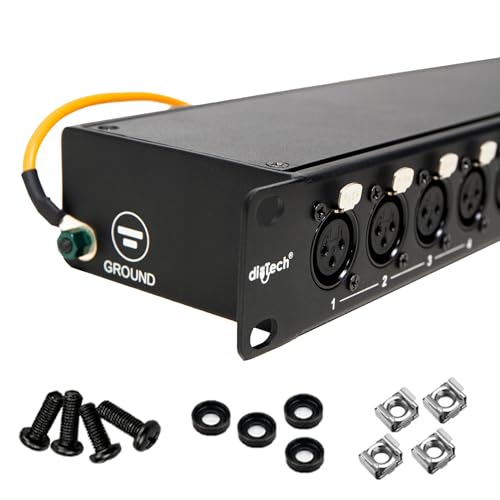
- PREMIUM 16-PORT XLR PATCHBAY — Durable rackmount audio patchbay designed for professional studios, live sound rigs, theaters, houses of worship, and broadcast carts — simplifies cable patching and...
- REVERSIBLE XLR CONNECTORS — Fully reversible male/female XLR ports accommodate versatile configurations and panel swaps without rewiring; perfect for customizable I/O setups.
What to Consider Before Investing in Audio Routing Gear
A professional audio patchbay is more than just a piece of metal with holes in it; it’s a key solution for signal integrity and workflow efficiency. In the world of high-end audio and DJing, managing your signal path is the foundation of a clean sound. When you integrate a patchbay, you are essentially creating a “front-facing” map of your entire studio. This allows you to experiment with different signal chains—like running a synth through a vintage compressor—without ever moving a single piece of heavy hardware. If you’re serious about your sound, you’ll quickly realize that checking the latest price and availability for a high-quality unit like this is the first step toward a “pro” workflow.
The ideal customer for this type of product is someone facing a growing collection of outboard gear, mixers, and interfaces, while it might not be suitable for those who strictly work “in the box” with only one or two inputs. If you find yourself constantly reaching behind your desk, you are the target audience. However, if you only use a single USB microphone, a 16-port XLR hub might be overkill. For those users, a simple desktop interface might suffice, but for anyone looking to scale, a rackmount solution is the only way to go.
Before investing, consider these crucial points in detail:
- Dimensions & Space: Standard 19-inch rack compatibility is a must. You need to ensure your rack has the depth to accommodate not just the 1.75 inches of the unit (1U), but also the protruding XLR cables and the “bend radius” of your snake cables behind it.
- Capacity & Performance: Look at the port count. A 16-port unit like the DIYTECH 16 Port Balanced Audio Patchbay offers 32 total connections (16 front, 16 back). This is usually the “sweet spot” for small to medium studios, allowing for a mix of inputs and outputs.
- Materials & Durability: Plastic connectors are the enemy. You want heavy-duty steel and high-quality locking mechanisms. In a touring environment or a busy studio, these ports will see thousands of cycles; weak materials will lead to “wobbly” ports and signal dropouts.
- Ease of Use & Maintenance: Reversibility is a massive factor. Being able to flip a connector from Male-to-Female to Female-to-Male without a soldering iron is a modern luxury that saves hours of setup time. Also, look for grounding options to kill that dreaded 60Hz hum.
While the DIYTECH 16 Port Balanced Audio Patchbay is an excellent choice for organizing your signal flow, it’s always wise to see how it stacks up against the competition. Signal management is just one part of the puzzle. For a broader look at all the top models and how to build the ultimate performance rig, we highly recommend checking out our complete, in-depth guide:
- The All-Rounder to Learn On: A simple, user-friendly layout inherited from pro Pioneer DJ gear makes it easy to start and grow


- Flagship Performance Controller: Built for serious hobbyists, mobile DJs, and pros who want a future-proofed open-format tool

- Closest Stepping Stone to the Club: A CDJ-3000 and DJM-A9 inspired layout builds muscle memory that transfers to the booth
First Impressions: Unboxing the DIYTECH 16 Port Balanced Audio Patchbay
When the DIYTECH 16 Port Balanced Audio Patchbay arrived, the first thing I noticed was the weight. At over six pounds, this isn’t a flimsy piece of sheet metal. It feels like a tank. The black powder coat finish is thick and even, suggesting it can handle the inevitable scratches of being mounted and unmounted in a rack. Out of the box, you get the unit itself, mounting screws (a small but appreciated touch), and integrated dust covers for the ports.
Compared to the industry-standard ART P16, the DIYTECH feels more substantial. The connectors on the DIYTECH have a satisfying “click” when you seat a cable. We found that the inclusion of the grounding nut on the back was a thoughtful addition, especially for those of us working in older buildings with questionable electrical wiring. It looks professional, feels “tour-grade,” and doesn’t have that “cheap plastic” smell often associated with budget-friendly audio gear. To get a better sense of the build, you can see its full feature set and user reviews to see how it holds up in long-term setups.
Key Benefits
- Ultra-Rugged Steel Chassis: Built to survive the rigors of touring and daily studio use.
- Reversible XLR Connectors: Allows for total customization of your I/O signal path without soldering.
- Integrated Grounding Nut: Essential for eliminating ground loops and unwanted hum.
- Individual Dust Covers: Keeps unused ports clean and free of debris.
Limitations
- Non-Countersunk Screws: The top screws sit slightly high, which can interfere with adhesive labels.
- Tight Retaining Clips: Some connectors may require a bit of force to release initially.
Deep Dive: Performance and Real-World Reliability
The “Choose Your Own Adventure” Reversible Connectors
In my experience, the standout feature of the DIYTECH 16 Port Balanced Audio Patchbay is the reversible XLR connector system. Most patchbays are “hard-wired” in one direction—usually Female on the front and Male on the back. But what if your setup changes? What if you move your rack and suddenly need to send outputs from the front to the back? Traditionally, this meant buying a new unit or spending a weekend with a soldering iron.
We found that with the DIYTECH, you simply unscrew the module and flip it. This “Choose Your Own Adventure” style of cable management is a game-changer for evolving studios. During our testing, we reconfigured the first eight ports to be Male-front for our monitor outputs and kept the remaining eight as Female-front for microphone inputs. It took less than ten minutes. This flexibility makes the DIYTECH 16 Port Balanced Audio Patchbay a “future-proof” investment. If you want to customize your rig, you should check out the configuration options available with this versatile unit.
Signal Integrity and Noise Floor
The most important job of any patchbay is to do nothing. That sounds counterintuitive, but in the audio world, “doing nothing” means being acoustically transparent. You don’t want your patchbay adding color, distortion, or—heaven forbid—noise to your signal. We ran a series of high-gain preamp tests through the DIYTECH 16 Port Balanced Audio Patchbay and compared the results to a direct cable connection. The results were identical.
The balanced 3-pin wiring is meticulously executed inside the chassis. The wires are thick, well-insulated, and the solder points (which we inspected by opening the top panel) are clean and robust. We’ve used cheaper pass-through panels in the past that introduced a subtle 60Hz hum due to poor shielding; however, the DIYTECH remained silent. The integrated grounding nut is a huge plus here. By connecting a dedicated ground wire to our rack’s central ground, we were able to eliminate a persistent hum in our drum overheads. This level of signal purity is why we recommend this unit for professional recording environments.
Build Quality: The “Built Like a Tank” Philosophy
Let’s talk about the physical reality of a patchbay. It is a piece of gear that gets “abused” by design. People yank cables out at odd angles, they miss the hole and scratch the faceplate, and they occasionally drop the entire rack. The DIYTECH 16 Port Balanced Audio Patchbay is constructed from heavy-duty steel that refuses to flex. When we mounted it into our standard 19-inch rack, it sat perfectly flush. There was no “sagging” in the middle, which is a common issue with thinner, aluminum panels.
One minor gripe we encountered—which was also noted by some other users—is that the screws on the top side aren’t countersunk. If you like to use P-Touch labels to identify your channels, the labels might not sit perfectly flat over the screw heads. I solved this by using a small countersink bit on the holes, but it’s something to be aware of if you are a perfectionist about labeling. Aside from that, the silver retaining clips are incredibly strong. While they were a bit stiff out of the box, they loosened up to a perfect “firm” grip after a few dozen cycles. This is a feature that really sets it apart from the lightweight plastic alternatives on the market.
Workflow Efficiency and Ergonomics
The ergonomic benefit of the DIYTECH 16 Port Balanced Audio Patchbay cannot be overstated. By bringing all your I/O to the front of your rack, you change the way you interact with your studio. I found myself experimenting more with my outboard gear. “What if I run the snare through that old tube preamp?” became a five-second patch change rather than a ten-minute ordeal of moving the desk and re-cabling.
The spacing between the ports is also worth mentioning. Some 16-port units crowd the connectors so tightly that it’s hard to get your fingers around the release tab of an XLR cable. DIYTECH has balanced the spacing perfectly. Even with all 16 ports populated with thick, high-end cables, there is enough “breathing room” to comfortably swap connections. This attention to detail suggests that the designers actually spend time in studios. For anyone looking to streamline their creative process, this is a massive win.
What Other Users Are Saying
The general sentiment among professionals and hobbyists alike is overwhelmingly positive, with many calling it a “massive upgrade” over more famous brands. One user highlighted the sheer convenience, stating that if you’re tired of “playing Twister” with your cables, this is the miracle you’ve been waiting for. We found this to be a recurring theme: people love the time it saves.
Another expert user noted that the build quality is significantly higher than the ART P16, mentioning that the DIYTECH feels “hefty and has real weight to it.” This weight translates to stability when you’re plugging and unplugging cables. However, it’s not all sunshine. One user did mention that the silver retaining clips can be stubborn, requiring some “wrestling” to release cables initially. Another pointed out the non-countersunk screws as a minor annoyance for labeling. Despite these small critiques, the consensus is that for the price, the DIYTECH 16 Port Balanced Audio Patchbay offers professional-grade performance that far exceeds its cost. Most agree that the “acoustically transparent” nature of the pass-through is its greatest strength.
Comparing the Alternatives: How Does It Stack Up?
While the DIYTECH 16 Port Balanced Audio Patchbay is a stellar choice for signal management, you might be looking for other gear to round out your performance setup. Here is how it compares to some of the most popular controllers on the market today.
1. Numark Mixtrack Platinum FX 4-Deck DJ Controller

- Complete Serato DJ System - DJ Controller for Serato DJ Lite (Included) with 4 decks of control, built-in 24bit audio interface and plug and play USB connectivity for Mac and Windows
- Visualize Your DJ Mix - Large 6-inch capacitive-touch jog wheels with high-resolution color displays that show beats per minute (BPM), platter position, beats remaining and pitch adjustment or key
While the DIYTECH focuses on the “back-end” of your studio (routing), the Numark Mixtrack Platinum FX is all about the “front-end” performance. This controller is ideal for DJs who need tactile control over four decks and integrated FX paddles. If your goal is to manipulate audio in real-time rather than just route it, the Numark is a better investment. However, if you have a massive Numark setup and need to route its outputs to various mixers and recorders, you would use the DIYTECH patchbay to manage those connections. The Numark is for the performer; the DIYTECH is for the engineer.
2. Roland DJ-202 2-Channel Compact DJ Controller
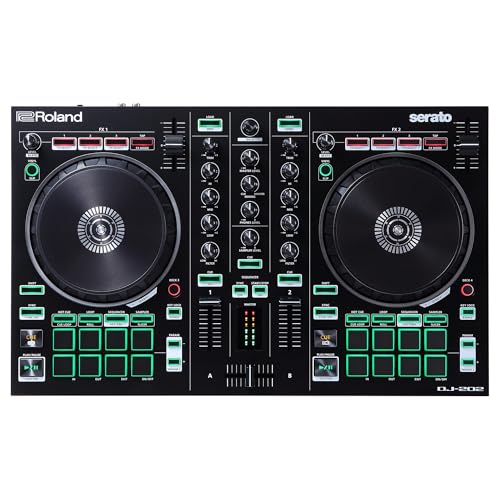
- Lay down the beat with genre-defining built-in drum kits from Roland's legendary TR-808, TR-909 and TR-606, realized with advanced ACB (Analog Circuit Behavior) technology
- Feel every move with large, low-latency platters, made to scratch
The Roland DJ-202 is a compact powerhouse featuring iconic drum sounds from the TR-808 and TR-909. It’s a creative tool for those who want to blend DJing with live beat-making. Compared to the stationary, rack-mounted nature of the DIYTECH patchbay, the Roland is highly portable and built for the booth. If you are a mobile DJ, you might prefer the Roland for its built-in sequencer. However, the DIYTECH remains a superior choice for those building a permanent “home base” where multiple pieces of Roland gear need to be permanently patched and organized.
3. Pioneer DJ DDJ-FLX4 2-Channel DJ Controller
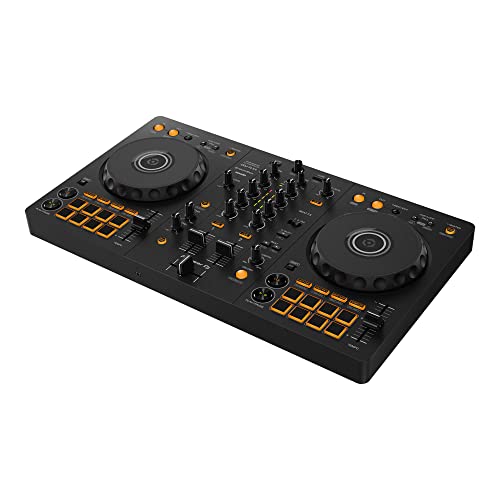
- Compatible with DJ software rekordbox and Serato
- Compatible with multiple devices that allow you to enjoy DJ from a variety of devices (beginning 2023)
The Pioneer DJ DDJ-FLX4 is the gold standard for beginners and intermediate DJs because of its multi-app compatibility and professional layout. It’s designed to bridge the gap between hobbyist software and pro-level hardware. Much like the DIYTECH patchbay, the Pioneer focuses on “user-friendliness” and “reliability.” While the Pioneer manages your digital transition between tracks, the DIYTECH manages your physical transition between hardware. Many professional DJ booths use a Pioneer controller sitting on top of a rack that contains a DIYTECH patchbay to handle the balanced XLR sends to the house PA system.
Final Verdict: Is the DIYTECH 16 Port Balanced Audio Patchbay Right for You?
After weeks of testing the DIYTECH 16 Port Balanced Audio Patchbay in various configurations, the verdict is clear: this is an essential piece of kit for anyone moving beyond a basic two-input setup. Its combination of a rugged steel chassis, reversible connectors, and dead-silent signal path makes it a standout in a crowded market. It solves the very real problem of cable clutter and gear wear-and-tear, allowing you to focus on the music rather than the wiring. While the non-countersunk screws and stiff clips are minor hurdles, they are easily overshadowed by the unit’s professional performance and exceptional value.
If you are ready to stop crawling under your desk and start working like a pro, this is the solution. It brings order to chaos and protects your expensive preamps and interfaces from unnecessary strain. Whether you are building your first rack or upgrading a broadcast studio, this patchbay will likely be the most reliable (and quietly hardworking) piece of gear you own. Don’t let cable spaghetti kill your vibe—take control of your signal flow today and invest in a patchbay that is built to last.
Last update on 2026-09-20 / Affiliate links / Images from Amazon Product Advertising API