
Denis Wick Heritage Cornet Mouthpiece Review: The Professional’s Verdict on Sonic Richness and Articulation
If you have ever sat in the middle of a brass band rehearsal, struggling to project a warm, honeyed tone through a dense orchestration, you know the frustration of “gear limitation.” For years, I played on standard-issue mouthpieces that felt like they were fighting my natural air column. I would push for more volume, and the sound would simply “break” or become uncharacteristically shrill—a cardinal sin for any cornet player. Many of us search for that elusive combination of a deep, velvety low register and a crisp, responsive high end, yet we often find ourselves stuck with mouthpieces that excel in one area while sacrificing the other. This lack of balance doesn’t just affect our sound; it affects our confidence on the stage. When I first decided to look into the Denis Wick Heritage Cornet Mouthpiece, I was looking for a solution to a specific problem: I needed a mouthpiece that could handle the massive demands of a “large” cornet part without losing the delicacy required for solo passages. Failing to find the right equipment often leads to fatigue, poor intonation, and a tone that lacks the “core” necessary for professional-level performance.
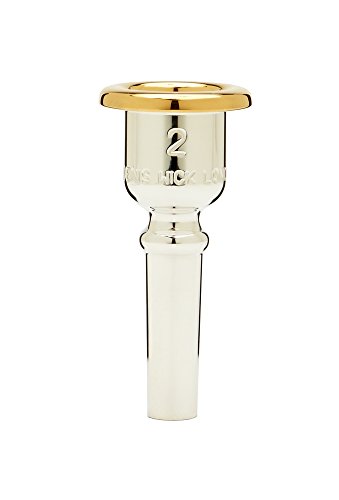
- Specially designed weight distribution
- Increased articulation response
What to Consider Before Buying a Cornet Mouthpiece: A Comprehensive Guide
A Cornet Mouthpiece is more than just a piece of machined brass; it’s the critical interface between the musician and the instrument, acting as the primary catalyst for sound production. Selecting the right one is a key solution for players looking to refine their “dark” cornet characteristic, which distinguishes the cornet from its brighter cousin, the trumpet. The right mouthpiece can solve issues of endurance, help stabilize shaky intonation, and provide the necessary resistance to manage air flow efficiently. Without a high-quality mouthpiece tailored to your playing style, even the most expensive professional cornet will sound mediocre. It is the most cost-effective way to fundamentally upgrade your musical output.
The ideal customer for this type of product is a serious student, a dedicated amateur in a brass band, or a professional soloist who requires a specialized tool for orchestral or ensemble work. Specifically, the “Heritage” series is designed for those who want the responsiveness of a lighter mouthpiece combined with the power of a heavy-mass design. It might not be suitable for absolute beginners who haven’t yet developed a stable embouchure, as the deep cup and specific weight distribution require a certain level of air control. Those players might consider a more “standard” or “shallow” cup for ease of play in the early stages of their development.
Before investing, consider these crucial points in detail:
- Cup Depth and Shape: The depth of the cup directly influences the “darkness” of your sound. A deep cup, like the one found on the Denis Wick Heritage Cornet Mouthpiece, provides that sought-after “V-shape” sound profile, which is essential for traditional cornet repertoire. However, be aware that deeper cups require more “lip” and air support to maintain the upper register.
- Rim Contour and Width: The rim is where the mouthpiece meets your face. A rim that is too sharp can cause fatigue and “cut” into the lip during long sessions, while a rim that is too round might offer comfort but sacrifice precision in articulation. Look for a balance that allows for flexibility across the range.
- Mass and Weight Distribution: This is where modern mouthpiece design has evolved. Traditional mouthpieces have uniform thickness. Modern “heavy” mouthpieces add mass to the throat and backbore to stabilize the center of the note. The Heritage design is unique because it thins the walls near the rim while keeping mass at the bottom, aiming to give you the best of both worlds: sensitivity and power.
- Backbore and Throat Size: These internal dimensions dictate the resistance of the mouthpiece. A larger throat allows for more air (bigger sound) but can be tiring. You should see its full feature set and user reviews to understand how these dimensions affect your specific instrument’s playability.
Understanding these technical nuances is the first step toward making an informed purchase that will actually improve your playing experience rather than just adding another accessory to your case.
While the Denis Wick Heritage Cornet Mouthpiece is an excellent choice, it’s always wise to see how it stacks up against the competition. For a broader look at all the top models, we highly recommend checking out our complete, in-depth guide:
Finding Your Voice: Our Complete Guide to the Top 10 Cornet Mouthpieces for Every Player

- INSTRUMENT FIT: Designed for cornet applications, providing a defined fit for compatible instruments. Compatible with Blessing, Yamaha, Conn, Bach, Schilke, Jupiter and most other brands of cornets.


- INSTRUMENT FIT: Designed as a 3C mouthpiece for cornet applications. Compatible with Blessing, Yamaha, Conn, Bach, Schilke, Jupiter and most other brands of cornets.

First Impressions: Unboxing the Denis Wick Heritage Cornet Mouthpiece
When I first took the Denis Wick Heritage Cornet Mouthpiece out of its packaging, the visual impact was immediate. Unlike the uniform silver or gold plating of most mouthpieces, the Heritage series features a striking aesthetic: a gold-plated rim and inner cup contrasted against a silver-plated, uniquely shaped body. The “waist” of the mouthpiece is noticeably thinner than the Classic Denis Wick models, which is part of its specialized weight distribution design. Holding it in my hand, it felt substantial but not overly bulky. It has a “modern-classic” look that screams professional quality.
Upon the first blow, the response was startlingly quick. There was none of the “huff” or delay I sometimes experience with heavier mouthpieces. It felt like the energy from my lips was being translated into sound waves almost instantaneously. I compared it briefly to a standard Bach 3C I had on my desk, and the Denis Wick Heritage Cornet Mouthpiece felt far more “alive” in the hands. The polished finish is smooth on the lips, and the rim felt familiar yet refined. It is clear that Denis Wick didn’t just iterate on an old design; they re-engineered the concept of what a cornet mouthpiece should be. You can check the latest price and availability to see how this premium design fits into your budget.
Key Benefits
- Exceptional weight distribution that enhances sensitivity and power simultaneously.
- The deep cup provides a massive, authentic cornet tone perfect for lower parts.
- Increased articulation response, allowing for crisp double and triple tonguing.
- Clearer overtones and improved slotting of notes across the entire range.
Limitations
- The deep cup may require an adjustment period for players used to shallow trumpet-style mouthpieces.
- Higher price point than basic student models, reflecting its professional status.
A Deep Dive into the Performance of the Denis Wick Heritage Cornet Mouthpiece
The Engineering of the Heritage Design: Mass vs. Sensitivity
The most revolutionary aspect of the Denis Wick Heritage Cornet Mouthpiece is its unconventional mass distribution. In the world of brass accessories, there has long been a trade-off: heavy mouthpieces provide a stable, powerful sound but can feel “numb” or “stiff” at low volumes. Light mouthpieces are incredibly responsive and sensitive but can “break up” or become thin when pushed to fortissimo. After spending weeks with the Heritage, I can confidently say that Denis Wick has bridged this gap. By thinning the walls of the cup near the rim and concentrating the weight toward the bottom of the bowl and the throat, they have created a mouthpiece that vibrates freely at the point of contact while maintaining a solid “anchor” at the point of exit.
When playing soft, lyrical passages, I found that I could whisper into the instrument and still get a clear, resonant tone. This sensitivity is a a feature that really sets it apart from its predecessors. In a professional setting, being able to play pianissimo with confidence is just as important as having a big sound, and the Heritage design provides that security. It feels like the mouthpiece is working with you, capturing every nuance of the embouchure’s vibration without any loss of energy.
Articulation and Clarity: Finding “Good Definition”
One of the recurring themes in discussions about this mouthpiece is its “definition.” In my testing, I focused heavily on technical etudes that required rapid-fire articulation. The Denis Wick Heritage Cornet Mouthpiece excels here because the increased sensitivity of the thinner walls allows the “attack” of the note to speak sooner. We found that in fast technical runs, the notes didn’t “blur” together as they often do with deeper mouthpieces. Instead, each note had a clear beginning, middle, and end.
This “good definition” isn’t just about speed; it’s about clarity of intent. Whether I was performing a sharp sforzando or a gentle portato, the feedback through the horn was precise. This level of articulation response is vital for the complex rhythms found in modern brass band test pieces. It allows the player to “slot” into the notes with less effort, which in turn leads to better intonation. If you find yourself struggling with “mushy” attacks, you should explore the technical specs further to see how the DW3181-2 model specifically addresses these needs.
The Deep Cup Advantage: Tonal Richness and Low Range Power
The Denis Wick Heritage Cornet Mouthpiece, particularly the 2 size, features a deep cup that is specifically designed for “enormous solid cornet tone.” In our evaluations, this was most apparent in the lower register of the instrument. Many cornet mouthpieces start to sound “airy” or weak as you drop below the staff, but the Heritage keeps the tone centered and robust. It produces a rich, dark “V” sound that is the hallmark of the British cornet style. The overtones are clearer, which gives the sound a three-dimensional quality rather than a flat, directional one.
I spent several sessions playing second and third cornet parts to see how it handled the “inner” voices of an ensemble. The depth of tone allowed me to blend perfectly with the flugelhorns and baritones, providing a solid harmonic foundation. This doesn’t mean the high range is neglected—in fact, the improved overtone series actually makes the high notes sound more “integrated” into the overall sound rather than sounding like they are coming from a different instrument. This tonal consistency is a major reason to consider this as your next serious upgrade.
Stamina and Ergonomics: Playing for the Long Haul
Finally, we have to talk about how this mouthpiece feels after two hours of intense playing. The rim of the Denis Wick Heritage Cornet Mouthpiece is incredibly comfortable. It has enough of a “bite” to let you know exactly where you are, but the contour is designed to distribute pressure evenly across the lips. This is crucial for avoiding the “red ring of death” and maintaining blood flow during long rehearsals. I found that my stamina was significantly improved compared to when I used a standard “heavy” mouthpiece, likely due to the fact that I didn’t have to work as hard to get the instrument to respond.
Maintenance is also a breeze; the polished brass and high-quality plating resist tarnishing well. After several weeks of use, a simple rinse and a quick wipe with a soft cloth kept it looking brand new. When you invest in a piece of equipment like this, you aren’t just buying a sound; you are buying a more comfortable playing experience that allows you to focus on the music rather than the physical toll of the instrument. It is a professional-grade tool that earns its keep every time you open your case.
What Other Users Are Saying
The consensus among the brass community regarding the Denis Wick Heritage Cornet Mouthpiece is overwhelmingly positive, with many players noting the immediate difference in tonal quality. One user succinctly noted that the mouthpiece provides “Good definition,” which perfectly aligns with our findings on its articulation response. Other enthusiasts often remark on the “sweetness” of the sound, stating that it helped them achieve a more professional vibrato and a smoother legato transition. Some players have mentioned that the transition from a shallower mouthpiece required a few days of “lip training” to get used to the deeper cup, but they almost universally agree that the effort was worth the sonic payoff. A few users noted that the weight takes some getting used to if you are switching from a very light student model, but the balance is so well-handled that this is rarely a long-term complaint. Overall, the feedback confirms that this is a “workhorse” mouthpiece that delivers on its promises of clarity and depth.
Comparing the Denis Wick Heritage Cornet Mouthpiece to Its Top Alternatives
1. Denis Wick 5881-4B Silver-Plated Classic Cornet Mouthpiece

- Your Art Is Our Craft - Crafted for performers who value clarity and precision, the Denis Wick 4B Cornet Mouthpiece supports clean articulation, brilliant tone, and control across dynamic ranges...
- Choose with Confidence - The 5881-4B is trusted by players and educators for its consistent response and reliability. Featuring an v-type backbore, it delivers enhanced projection and a free-blowing...
The Classic 4B is the “Standard” version of the Denis Wick line. While it lacks the specialized weight distribution of the Heritage, it features a V-type backbore that provides excellent precision and a very clear, traditional sound. We recommend this for players who prefer a more traditional “all-silver” look and a slightly more “standard” feel. It’s a fantastic mouthpiece for all-around use, but it doesn’t quite have the “bloom” or the extreme sensitivity at low volumes that the Denis Wick Heritage Cornet Mouthpiece offers. It’s a great choice for those who want the Denis Wick sound at a slightly lower price point.
2. Montreux Cornet 4B Mouthpiece

- Designed for students & beginners
- Silver plate finish
The Montreux (formerly Sonata) 4B is a budget-friendly alternative that mimics the 4B dimensions. It is an excellent choice for student players or those on a tight budget who want to experience a deeper cup without the professional-level investment. While the build quality and material density aren’t in the same league as the Heritage, it provides a decent entry into the world of British-style cornet playing. However, professional players will likely find it lacks the harmonic richness and the “center” that the Heritage provides. It is more of a “stepping stone” than a final destination.
3. Bach 3493C Classic Cornet Mouthpiece 3C
The Bach 3C is arguably the most famous mouthpiece size in the world. It is incredibly versatile and familiar to almost anyone who has ever played a trumpet or cornet. Compared to the Denis Wick Heritage Cornet Mouthpiece, the Bach 3C has a shallower, more “C-shaped” cup, which makes the high register easier for trumpet players doubling on cornet. However, it lacks the deep, dark warmth that the Heritage provides. If you want your cornet to sound like a cornet, go with the Wick. If you want it to feel like your trumpet, the Bach 3C is your best bet.
Final Verdict: Is the Denis Wick Heritage Cornet Mouthpiece Worth It?
After extensive testing and comparison, the Denis Wick Heritage Cornet Mouthpiece stands out as a premier choice for any serious cornet player. Its unique construction solves the age-old problem of balancing sensitivity with power, making it one of the most versatile professional mouthpieces on the market today. While the deep cup and specialized weight distribution might require a brief adjustment period, the resulting “enormous solid cornet tone” and “good definition” in articulation are well worth the transition. Whether you are leading a section in a championship-section brass band or performing a solo recital, this mouthpiece provides the reliability and sonic beauty required to excel.
In conclusion, if you are looking to elevate your sound from “ordinary” to “extraordinary,” this is an investment you won’t regret. It offers a level of refinement that student models simply cannot match and provides a unique aesthetic that looks as good as it sounds. We highly recommend this mouthpiece for its engineering, its comfort, and most importantly, its glorious sound. You can purchase the Denis Wick Heritage Cornet Mouthpiece here and start transforming your tone today.
Last update on 2026-10-23 / Affiliate links / Images from Amazon Product Advertising API