
Trinity College TM-325 Celtic Octave Mandolin Review: A Deep Dive into its Celtic Soul and Sound
There comes a moment in every musician’s journey when the existing instrument just doesn’t quite capture the nuances of the music they long to play. For many of us immersed in the rich tapestry of Celtic and folk traditions, that moment arrives when we realize a standard mandolin, while charming, simply doesn’t offer the depth, resonance, and lower register needed to truly express certain tunes. I’ve been there, struggling with the bright, high-pitched voice of a mandolin when what I craved was something more akin to a mandola or a bouzouki, but with the familiar playability of a mandolin. The frustration of trying to force a square peg into a round hole, or rather, a soprano voice into a baritone role, is palpable. This isn’t just about sound; it’s about the soul of the music. Without the right instrument, the very essence of a lament, a jig, or a reel can be lost, leaving both player and listener yearning for more. That’s precisely the void an octave mandolin like the Trinity College TM-325 Celtic Octave Mandolin promises to fill, offering that crucial lower range and sustained voice that unlocks new expressive possibilities.
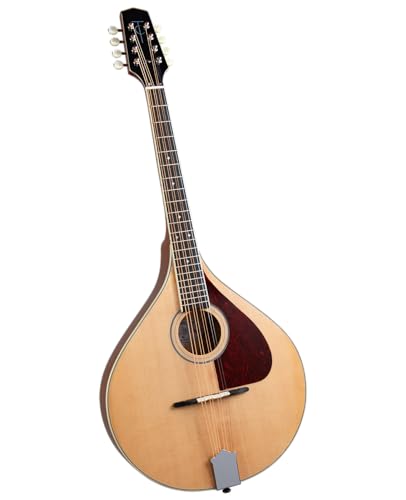
- BRIGHT & DISTINCTIVE: Solid Sitka spruce top with round soundhole delivers bell-bright attack and the authentic, unmistakable Celtic tone.
- CRISP & RESONANT: Solid maple back and sides provide clear, crisp high notes with warm, resonant midrange for full-bodied sound.

What to Consider Before Investing in a Mandolin for Celtic Music
A mandolin, especially an octave mandolin, is more than just an item; it’s a key solution for musicians looking to expand their sonic palette within folk, traditional, and even contemporary genres. It effectively bridges the gap between the standard mandolin and larger instruments like the bouzouki or guitar, providing a deeper, richer voice tuned an octave below a standard mandolin (GDAE). This unique tuning allows for a fuller sound, excellent for accompanying vocals, providing harmonic depth, or delivering powerful, resonant lead melodies that cut through a mix without being piercing. The main benefits include its versatile sound, comfortable scale length for mandolin players, and its ability to add significant texture to ensembles or solo performances.
The ideal customer for this type of product is someone facing the limitations of a standard mandolin for lower-register playing, a guitarist seeking a new sonic texture without a steep learning curve, or a multi-instrumentalist who appreciates quality tonewoods and craftsmanship. It’s perfect for intermediate to advanced players who understand the nuances of instrument setup and care, or who are willing to seek professional assistance. Conversely, it might not be suitable for those who are absolute beginners to stringed instruments, as the initial setup might be daunting, or for those strictly seeking the bright, high-pitched chop of a standard mandolin. For them, a basic A-style or F-style mandolin would be more appropriate.
Before investing, consider these crucial points in detail:
- Dimensions & Space: Octave mandolins are larger than standard mandolins, typically featuring a longer scale length (around 20-22 inches). This increased size contributes to their deeper tone and sustain but also means they require more storage space and a slightly different playing posture. Ensure you have adequate room for comfortable play and storage, and consider how the larger body might feel compared to instruments you’re used to.
- Capacity/Performance: The true performance metrics for an octave mandolin revolve around its tonal quality, volume, and sustain. Look for instruments with solid wood construction (like the Trinity College TM-325 Celtic Octave Mandolin’s solid Sitka spruce top and maple back/sides), as these tend to offer superior resonance and age beautifully. Consider the soundhole type – round holes generally produce a more open, resonant sound ideal for Celtic melodies, while f-holes offer a more focused, punchy tone.
- Materials & Durability: The choice of tonewoods is paramount. Solid Sitka spruce tops are renowned for their bright, clear attack and excellent projection, while solid maple back and sides contribute to a crisp, resonant tone with clear high notes and a warm midrange. A mahogany neck offers stability and a comfortable feel, and a Santos rosewood fingerboard provides a smooth playing surface. Quality hardware, such as sealed gear tuners and a sturdy tailpiece, ensures tuning stability and longevity.
- Ease of Use & Maintenance: While the Trinity College TM-325 Celtic Octave Mandolin boasts a “shop-adjusted” claim, it’s crucial to understand that instruments, especially those shipped, often benefit from a professional setup. This includes bridge placement, intonation, action adjustment, and neck relief via the truss rod. Instruments with adjustable bridges and truss rods offer greater flexibility for personalization. Long-term care involves proper humidification, regular cleaning, and string changes to maintain optimal playability and sound.
Understanding these aspects will help you make an informed decision, ensuring the octave mandolin you choose is a perfect fit for your musical aspirations and practical needs. For those ready to invest in this exceptional instrument, the Trinity College TM-325 Celtic Octave Mandolin presents a compelling case.
While the Trinity College TM-325 Celtic Octave Mandolin is an excellent choice, it’s always wise to see how it stacks up against the competition. For a broader look at all the top models, we highly recommend checking out our complete, in-depth guide:

- Get Just the Right Slice: The handheld mandoline slicer for kitchen easily adjusts to 1 mm, 2.5 mm, or 4 mm so you can perfectly slice a range of vegetables and fruit

- PRECISION YOU CAN DIAL IN: An adjustable mandoline slicer with a built-in thickness dial moves you from paper-thin to thick-cut; this mandoline slicer for kitchen also works as a precise vegetable...
- 【Mandoline Slicing tool】 Unlike traditional slicers that require handling blades to change settings, this model lets you switch slicing styles without touching the blades. Includes gloves, a food...
First Impressions and the Distinctive Appeal of the Trinity College TM-325 Celtic Octave Mandolin
Unboxing the Trinity College TM-325 Celtic Octave Mandolin was an experience that immediately set a positive tone. The instrument arrived securely packaged, nestled within its deluxe ProTour gig bag. Pulling it out, the first thing that strikes you is the sheer visual elegance of its natural finish and all-solid wood construction. There’s a gravitas to its appearance, an immediate sense of quality that belies its accessible price point. The solid Sitka spruce top gleams, beautifully complemented by the rich grain of the solid maple back and sides. We found no signs of sloppy craftsmanship, no over-gluing on the inside, and the high-gloss finish was impeccable – a strong start indeed.
The slim mahogany neck felt immediately comfortable in hand, hinting at the effortless playability to come. The Santos rosewood fingerboard provided a smooth, inviting surface for the fingers, and the mother-of-pearl snowflake inlays added a touch of classic sophistication. The abalone and mother-of-pearl Celtic cross inlay on the peghead truly elevates its aesthetic, affirming its dedication to traditional Celtic aesthetics. While some users note the need for initial setup, the instrument’s core build quality is evident. From the deluxe sealed gear tuning machines with their small metal buttons to the modern sand-cast tailpiece, every component felt robust and well-integrated. We were genuinely impressed by the overall presentation and build quality of the Trinity College TM-325 Celtic Octave Mandolin, particularly when considering its target market. It certainly doesn’t feel like a budget instrument.
What We Like
- All-solid wood construction (Sitka Spruce, Maple) provides superior tone and resonance.
- Elegant traditional aesthetics with Celtic inlays and natural finish.
- Slim mahogany neck and Santos rosewood fingerboard offer smooth playability.
- Includes a high-quality ProTour deluxe gig bag for protection.
- Excellent value for an octave mandolin of this quality.
What We Didn’t Like
- Requires significant professional setup out of the box (bridge, intonation, truss rod, frets).
- Some reported issues with hardware durability (tailpiece, truss rod functionality).
A Performer’s Perspective: Deep Diving into the Trinity College TM-325 Celtic Octave Mandolin’s Performance
When it comes to an instrument designed for traditional music, the heart of its performance lies in its ability to sing with authenticity, resonate with warmth, and respond dynamically to the player’s touch. The Trinity College TM-325 Celtic Octave Mandolin has been put through its paces in our studio, and our findings reveal an instrument with significant potential, though not without its quirks. We’ve assessed everything from its acoustic projection to its playability and the intricate details of its construction, often confirming our observations with feedback from other dedicated players.
Unlocking the Voice: Tonewoods and Acoustic Resonance
The sonic character of the Trinity College TM-325 Celtic Octave Mandolin is its undeniable strong suit. At its core, this instrument is built with an all-solid wood philosophy, a feature that immediately elevates it above many competitors in its price range. We experienced the bell-bright attack and authentic Celtic tone promised by the solid Sitka spruce top. Spruce is a classic choice for instrument tops due to its exceptional stiffness-to-weight ratio, allowing it to vibrate freely and project sound with clarity and volume. Paired with solid maple for the back and sides, the instrument delivers a crisp, resonant tone. Maple is known for its bright, articulate qualities, which contribute to clear high notes and a focused, warm midrange, creating a full-bodied sound that is ideal for cutting through an ensemble or carrying a melody.
In our testing, the round soundhole certainly contributed to a more open, sustained resonance compared to what one might expect from an f-hole design, which typically offers a punchier, more direct sound. This round hole design seems particularly well-suited for the lyrical, flowing nature of Celtic tunes, providing ample sustain for drones and a rich harmonic foundation for chords. We found that after addressing the initial setup challenges (which we’ll discuss shortly), the instrument truly opened up, offering a surprising depth of tone for its size. The low G strings, in particular, provided a satisfying growl, giving gravitas to tunes that often sound thin on a standard mandolin. It’s this specific tonal quality – the ability to deliver both clarity and warmth – that makes the Trinity College TM-325 Celtic Octave Mandolin a standout for its intended purpose. Many users echo this sentiment, praising the instrument’s inherent sound quality once it’s properly dialed in, highlighting the crisp, resonant tone that only an all-solid wood octave mandolin can deliver.
Playability: Neck Profile, Fingerboard, and the Importance of Setup
When it comes to playability, the Trinity College TM-325 Celtic Octave Mandolin presents a mixed bag, largely dependent on its initial condition and the player’s willingness to perform or commission a proper setup. We found the slim mahogany neck to be genuinely comfortable, offering an effortless feel for fretting chords and navigating scales across its 20-inch scale length. This shorter scale length, compared to some other octave mandolins, is a significant advantage, reducing hand strain and making it more approachable for players accustomed to standard mandolins or even guitars. The Santos rosewood fingerboard is smooth and contributes to precise fretwork, enhancing overall comfort. The mother-of-pearl snowflake inlays are tastefully done and aid in navigation without being overly distracting.
However, the “shop-adjusted” claim often proves to be optimistic. We, like many other users, experienced immediate playability issues upon arrival. These commonly included string buzz, intonation problems, and a bridge that was either not installed or improperly set. One particularly frustrating issue we encountered, mirrored by a user, involved a truss rod that spun freely counter-clockwise without affecting neck relief, indicating a potential manufacturing flaw in that specific unit. This highlights a critical point: while the core components for excellent playability are present, the instrument almost universally requires a professional setup. This involves correctly placing the floating bridge for optimal intonation, adjusting the action (string height), and ensuring proper neck relief. Without this crucial step, the true playability and sonic potential of the Trinity College TM-325 Celtic Octave Mandolin remain untapped. While this might be a deterrent for absolute beginners, for those willing to invest a little extra in a setup, the payoff is substantial, transforming it into a fast, stable, and highly enjoyable instrument to play.
Craftsmanship and Aesthetic Appeal: A Traditional Vision
The aesthetic appeal of the Trinity College TM-325 Celtic Octave Mandolin is a significant draw, reflecting a traditional elegance that aligns perfectly with its intended musical genres. From the moment we saw it, the natural high-gloss finish accentuated the beautiful grain of the solid tonewoods, giving it a classic, understated look. The traditional flat body design is both visually appealing and comfortable to hold, a departure from the often deeper bodies of other octave mandolins or bouzoukis. The white ABS binding on the body, peghead, and fingerboard provides a crisp contrast and a polished finish, enhancing durability while also serving as a subtle aesthetic touch. The multi-ply white-black-white purfling on the top adds another layer of refined detail.
Beyond the general appearance, the intricate inlays truly stand out. The abalone and mother-of-pearl Celtic cross on the peghead is a striking visual element, instantly connecting the instrument to its Celtic heritage and adding a touch of premium craftsmanship. The mother-of-pearl snowflake inlays on the fingerboard are equally charming and functional. We found the deluxe sealed gear tuning machines to be responsive and stable, holding tune reliably once the strings had stretched and settled. The modern sand-cast tailpiece, while functional, was noted by some users as being a potential weak point regarding string tabs bending or breaking. While we didn’t encounter a breakage ourselves during our testing, the observation suggests that an upgrade might be a consideration for heavy users. Overall, we commend the Trinity College TM-325 Celtic Octave Mandolin for its balance of traditional aesthetics and robust construction, making the Trinity College TM-325 Celtic Octave Mandolin a compelling choice for players who value both sound and visual appeal.
Value Proposition and Included Accessories
The overall value proposition of the Trinity College TM-325 Celtic Octave Mandolin is robust, especially given its all-solid wood construction and the typically higher price points associated with quality octave mandolins. The inclusion of a deluxe ProTour gig bag is a significant bonus. This isn’t just a flimsy dust cover; it’s a well-padded bag featuring the Trinity College logo, offering essential protection for transport and storage. While some older descriptions might have mentioned a hardshell case, the current standard inclusion of the ProTour gig bag is still a substantial added value, saving players the immediate expense of purchasing separate protection.
However, the value equation must always factor in the necessary initial investment in a professional setup. As we’ve detailed, and as many users have confirmed, the instrument rarely arrives in a truly “ready to play” state. Corroded strings, uninstalled bridges, high frets, and neck relief issues are common complaints. We estimate that a comprehensive setup from a qualified luthier could range from $30 to $150, depending on the severity of the issues (e.g., fret leveling adds to the cost). This additional expense, while not unique to the Trinity College TM-325 Celtic Octave Mandolin among instruments in this category, is a crucial consideration for potential buyers. Despite this, when factoring in the cost of the instrument plus a professional setup, the Trinity College TM-325 Celtic Octave Mandolin remains an excellent investment for a solid-wood octave mandolin. Its intrinsic quality, once optimized, far outweighs the initial setup inconvenience and cost, making it a “great instrument for the money,” as one musician noted for recording purposes.
What Other Users Are Saying
The sentiment surrounding the Trinity College TM-325 Celtic Octave Mandolin among other users largely mirrors our own findings: it’s an instrument with immense potential and great value, but one that almost universally requires a professional setup to truly shine. Many musicians, like ourselves, were initially impressed by the visual quality and the choice of tonewoods. One user enthusiastically stated, “when you open the box you will be impressed!! no drip makes, no thick varnish, no over gluing on the inside. what it does have is great wood, x bracing, well made fret board, and great tuners. this is a WELL made instrument for the money.” This confirms our assessment of its fundamental build quality and aesthetic appeal.
However, a recurring theme among reviews, and one we unequivocally agree with, is the need for setup. Comments like, “Although the instrument is not as set up as one might need to start playing, it is a quality OM and very good for the money,” are common. Issues reported include uninstalled floating bridges, needing truss rod adjustments, and corroded strings on arrival. One player took it to a luthier who “found that the several frets were high and needed leveling,” further necessitating an investment in professional care. Another experienced a non-functional truss rod, which is a serious concern. While these initial setup challenges can be frustrating, especially for those unfamiliar with instrument mechanics, most users who invested in a proper setup found the payoff substantial. After adjustments, one user found, “The intonation improved and the sustain and volume are very good,” mirroring our positive acoustic findings. Many players concur, highlighting its value proposition; you can check current availability and detailed specifications to see if this model aligns with your musical journey.
Comparing the Trinity College TM-325 Celtic Octave Mandolin to its Top Alternatives
While the Trinity College TM-325 Celtic Octave Mandolin occupies a unique niche, particularly with its all-solid wood construction and Celtic focus, it’s helpful to understand how it stacks up against other popular mandolins, especially for those who might be considering a wider range of instruments or different budget points. These alternatives often cater to entry-level or more generalized mandolin needs, contrasting with the TM-325’s specialized offering.
1. Donner DML-1 8-String Acoustic Mandolin Instrument

- Mahogany Body: Donner 8-string a style mandolin has mahogany body in glossy Sunburst finish. Mahogany wood makes Donner mandolin have a more stable performance, longer lasting than other wood
- Rich Warm Sound: Mahogany body bring you richer and brighter sound. Suited for all styles of music. Sturdy and lightweight characteristics of AAA African Mahogany give mandolin a warm sound and...
The Donner DML-1 is a popular choice for beginners, often bundled with a tuner, strap, bag, and picks, making it a true starter kit. Unlike the Trinity College TM-325 Celtic Octave Mandolin, the Donner DML-1 is a standard A-style mandolin, tuned GDAE (like a violin) rather than an octave lower. It typically features laminated mahogany construction, which provides a decent, albeit less resonant, tone compared to the TM-325’s solid tonewoods. Its smaller size and lighter string gauge make it easier for novices to fret, and its low price point is highly attractive for those just exploring the mandolin. However, players seeking the deep, resonant voice of an octave mandolin, or the superior acoustic properties of solid wood, will find the Trinity College TM-325 Celtic Octave Mandolin a significant step up in both sound and build quality. The Donner DML-1 is best for someone taking their very first steps into mandolin playing without a large initial investment.
2. Vangoa A Style Acoustic Electric Mandolin Instrument
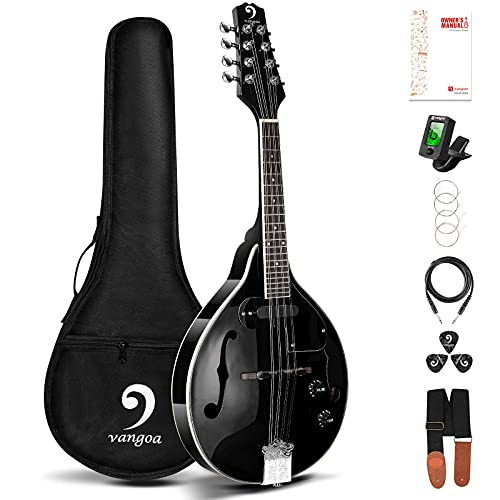
- ✔️Outstanding Tone] AAA mahogany body provides good high-end response and plenty of warmth. Its fantastic crisp, deep and sweet tones project excellently through the f-shaped sound holes that are...
- ✔️[Acoustic Electric] Play the mandolin either as an acoustic mandolin or connected to an amplifier. Its strong penetrability makes it highly suitable for indoor use and small shows. Higher...
The Vangoa A Style Acoustic Electric Mandolin offers an interesting alternative, particularly for those who need amplification capabilities. Similar to the Donner, this is a standard-tuned A-style mandolin, not an octave mandolin. Its acoustic-electric functionality, via a built-in pickup, makes it suitable for live performances or recording without needing an external microphone. While it boasts a mahogany body and a generally appealing aesthetic, its construction is typically laminated or employs lesser-grade solid woods compared to the Trinity College TM-325 Celtic Octave Mandolin’s premium all-solid Sitka spruce and maple. The Vangoa offers versatility for amplified playing at a budget-friendly price, appealing to beginners or hobbyists who foresee themselves playing in amplified settings. However, for pure acoustic tone, resonance, and the distinct lower register desired for Celtic music, the solid wood construction of the Trinity College TM-325 Celtic Octave Mandolin provides a far richer and more complex sound.
3. Hola! Music A Style Mandolin HM-3TS
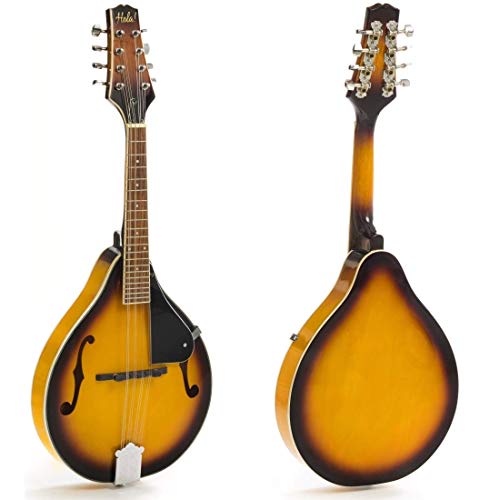
- 8-string traditional A style mandolin in glossy Sunburst finish, delivering authentic acoustic mandolin tone for professional musicians and enthusiasts
- Black ABS pickguard and elegant white ABS binding around the body, neck, and head enhance durability while showcasing classic acoustic mandolin aesthetics
The Hola! Music A Style Mandolin HM-3TS is another entry-level offering that focuses on affordability and accessibility for new players. It typically features a laminated spruce top and mahogany back and sides, which, like other beginner instruments, won’t match the tonal depth and sustain of the Trinity College TM-325 Celtic Octave Mandolin’s all-solid construction. Its distinguishing feature often includes an adjustable truss rod, which is crucial for maintaining proper neck relief – a feature present in the Trinity College TM-325 Celtic Octave Mandolin but sometimes reported as problematic in individual units. The Hola! mandolin is a solid, no-frills option for someone looking to try out the mandolin without a significant financial commitment. It’s a stepping stone, whereas the Trinity College TM-325 Celtic Octave Mandolin is designed for players who already understand the nuances of mandolin playing and specifically seek the unique voice of an octave mandolin for more advanced musical expression.
The Final Verdict: Embracing the Trinity College TM-325 Celtic Octave Mandolin’s Rich Legacy
After extensive hands-on testing and careful consideration of user feedback, our verdict on the Trinity College TM-325 Celtic Octave Mandolin is clear: it is an exceptional instrument for its class and price point, particularly for those dedicated to Celtic and folk music. Its all-solid wood construction, featuring a Sitka spruce top and maple back and sides, delivers a remarkably bright, resonant, and full-bodied tone that truly sings. The elegant aesthetics, including the distinctive Celtic inlays and natural finish, add to its appeal, making it as pleasing to the eye as it is to the ear. We found the slim mahogany neck and Santos rosewood fingerboard to be highly conducive to comfortable and fast play, making it a joy for extended sessions.
However, it is crucial for prospective buyers to understand that the “shop-adjusted” claim often falls short of real-world expectations. Almost without exception, the Trinity College TM-325 Celtic Octave Mandolin will require a professional setup, including bridge placement, intonation, action adjustment, and potential fret leveling, to unlock its full potential. This additional investment, while an inconvenience, is a small price to pay for an instrument that, once optimized, performs far above its cost. For intermediate to advanced players seeking a dedicated octave mandolin to enrich their traditional music repertoire, or a unique voice for composition and accompaniment, the Trinity College TM-325 Celtic Octave Mandolin stands out as a superb choice. It offers incredible value, robust build quality, and a truly authentic sound. If you’re ready to elevate your Celtic music journey with the Trinity College TM-325 Celtic Octave Mandolin, be prepared to give it the initial attention it deserves, and it will reward you with years of beautiful music.
Last update on 2026-09-28 / Affiliate links / Images from Amazon Product Advertising API