
Clark W Fobes Tenor Saxophone Mouthpiece Review: The Ultimate Upgrade for Student and Advancing Players?
If you have ever picked up a tenor saxophone for the first time, or if you are a parent watching your child struggle through those first few months of band class, you know the frustration of the “honk.” Many beginners believe that the squeaks, the resistant low notes, and the thin, reedy tone are simply part of the learning curve. However, as professional players and educators, we have seen time and again that the real culprit is often the factory-standard mouthpiece that comes in the case. These “stock” mouthpieces are frequently mass-produced with little regard for facing accuracy, leaving the player fighting the instrument rather than making music. Finding a solution that bridges the gap between a cheap plastic starter and a $500 professional hard-rubber mouthpiece is crucial for staying motivated. Without a reliable interface like the Clark W Fobes Tenor Saxophone Mouthpiece, many promising students simply give up before they ever find their true voice.

- Acrylic Tenor Saxophone Mouthpiece with 2.0mm Tip Opening
What to Consider Before Buying a Tenor Saxophone Mouthpiece
A Tenor Saxophones Mouthpiece is more than just a piece of equipment; it’s the heart of your sound production and the primary point of contact between you and your instrument. It is the key solution for stabilizing pitch, refining tonal color, and making the physical act of blowing much more efficient. When you upgrade to a quality mouthpiece, you aren’t just buying “gear”; you are investing in a better practice experience and a more professional sound. The right mouthpiece can turn a resistant, muffled saxophone into a resonant and expressive tool for musical storytelling.
The ideal customer for this type of product is a student who has outgrown their initial setup, a “doubler” (like a clarinetist who needs a reliable sax setup), or a budget-conscious hobbyist looking for professional-level facing without the professional-level price tag. It is an excellent choice for those who need a versatile sound that can fit into a concert band one night and a jazz combo the next. However, it might not be suitable for professional jazz soloists looking for an extremely aggressive “paint-peeling” brightness or those who strictly prefer the feel and resonance of vintage hard rubber or metal mouthpieces. For those players, a high-end hand-crafted piece might be the necessary next step.
Before investing, consider these crucial points in detail:
- Tip Opening & Facing: The tip opening (the distance between the reed and the mouthpiece tip) determines how much air you need to move. For a Clark W Fobes Tenor Saxophone Mouthpiece, the 2.0mm opening is a “Goldilocks” zone—wide enough to allow for a full, rich sound, but narrow enough to remain controllable for developing embouchures.
- Material & Resonance: While professional mouthpieces are often made of ebonite (hard rubber), high-grade acrylic offers a fantastic middle ground. It is incredibly durable, resistant to warping, and provides a clear, consistent vibration that helps students hear their pitch more accurately.
- Versatility of Style: Consider if you need a mouthpiece that is a “one-trick pony” or a “jack of all trades.” A versatile mouthpiece should allow you to play softly in a symphonic setting while still having enough “oomph” to project in a jazz ensemble.
- Manufacturing Consistency: Machine-made mouthpieces often have uneven “rails” or a crooked “table,” which causes reeds to leak air. Look for mouthpieces that have been hand-finished or “hand-faced” to ensure that every reed you put on it actually works.
Choosing the right mouthpiece is the single most effective way to improve your saxophone’s performance without buying a brand-new instrument. As we move forward, we will look at how the Fobes Debut stands out in this crowded market.
While the Clark W Fobes Tenor Saxophone Mouthpiece is an excellent choice, it’s always wise to see how it stacks up against the competition. For a broader look at all the top models, we highly recommend checking out our complete, in-depth guide:

- Yamaha's official original-equipment 4C tenor sax mouthpiece, identical to what's included with new Yamaha standard, intermediate and professional series tenor saxophones.

- Authentic Yamaha standard-series tenor sax mouthpiece.

- 5C Standard Tip Opening Offers Comfortable Resistance For Beginners To Develop Tone And Breath Control With Ease
First Impressions and the Artisan Touch of the Clark W Fobes Tenor Saxophone Mouthpiece
When we first unboxed the Clark W Fobes Tenor Saxophone Mouthpiece, the first thing that struck us was its unassuming elegance. Unlike some budget mouthpieces that look like molded toys with visible seams, the Fobes Debut has a polished, professional finish that belies its affordable price point. It feels substantial in the hand, and the high-grade black acrylic has a sheen that mimics high-end hard rubber. Before you even play a note, you should see its full feature set and user reviews to understand the pedigree behind this design.
Clark W. Fobes is a name synonymous with high-end woodwind craftsmanship, and bringing that expertise to a “student” model is a stroke of genius. Most mouthpieces in this price bracket are strictly machine-molded and shipped out the door. However, the Debut is hand-faced. This means a skilled technician has actually worked on the curve where the reed sits to ensure it is perfectly symmetrical. In our initial test, this translated to a mouthpiece that was incredibly easy to “set up.” We popped on a standard 2.5 strength reed, and it sealed perfectly on the first try—something we rarely see with other entry-level options. It doesn’t come with a ligature or cap, which is standard for specialized mouthpieces, but it fits all standard tenor ligatures easily.
What We Like
- Exceptional hand-faced construction ensures a perfect reed seal every time.
- Produces a dark, mature concert sound that avoids the “tinny” quality of plastic.
- Immediate response across the entire range, from low Bb to high F.
- Extremely cost-effective, offering professional-grade geometry for a student price.
What We Didn’t Like
- Acrylic material lacks the complex “overtones” found in high-end hard rubber.
- Packaging is basic and does not include a ligature or mouthpiece cap.
A Deep Dive into the Performance of the Clark W Fobes Tenor Saxophone Mouthpiece
Hand-Faced Precision: The Secret to Immediate Response
The standout feature of the Clark W Fobes Tenor Saxophone Mouthpiece is undoubtedly the hand-facing. In the world of woodwinds, the “facing” is the curve on the front of the mouthpiece that allows the reed to vibrate. If this curve is uneven—even by a fraction of a millimeter—the reed will not vibrate efficiently, leading to squeaks and a “stiff” feeling. In our evaluation, we found that the Fobes Debut offers a level of consistency that is virtually unheard of at this price point. When we play-tested the piece, the response was instantaneous. We didn’t have to “fight” to get the notes to speak, which is a massive benefit for students who are still developing their air support.
We found that this precision allows the player to use a wider variety of reeds. Whether we were using a standard cane reed or a synthetic alternative, the mouthpiece remained stable. One user we spoke with mentioned that this mouthpiece allowed their beginners to “sound out the full range of the sax with a more mature sound,” and we couldn’t agree more. By eliminating the mechanical hurdles of a poorly made mouthpiece, the player can focus on music rather than technical troubleshooting. This level of reliability is why we recommend you check the latest price and availability for your next upgrade.
Tonal Versatility: From the Concert Hall to the Jazz Club
One of the biggest challenges for tenor players is finding a mouthpiece that isn’t “locked” into one sound. Many budget mouthpieces are either too bright and “honky” or too muffled and “stuffy.” The Clark W Fobes Tenor Saxophone Mouthpiece manages to strike a beautiful balance. During our long-term testing, we put it through several different musical scenarios. In a symphonic, concert band setting, it provided a pleasantly dark and “covered” sound that blended well with the woodwind section. It has a focused core that sounds sophisticated and “expensive.”
However, when we pushed it a bit harder for a jazz rehearsal, it responded with a nice “edge” without becoming brittle. While it’s not a high-baffle “screamer” mouthpiece, it has enough flexibility to handle jazz standards with ease. This versatility is a major selling point for advancing students who participate in multiple ensembles. You don’t need two different setups; the Debut handles both with grace. This adaptable nature is a feature that really sets it apart from the sea of one-dimensional plastic mouthpieces on the market today. It allows the player to produce a “proper focused tone” that is leagues ahead of any stock equipment.
Ease of Use and the “2.0mm” Advantage
The technical specifications list a tip opening of 2.0mm. For those who aren’t gear-heads, this is the magic number for a tenor sax mouthpiece. It’s wide enough to allow the tenor to have its characteristic “girth” and “warmth,” but it’s not so wide that it requires the lungs of a professional athlete to play. We found that even on a long two-hour practice session, embouchure fatigue was minimal. This ease of use is particularly important for younger players whose facial muscles are still strengthening.
Additionally, the Clark W Fobes Tenor Saxophone Mouthpiece is made from high-grade acrylic. While some purists insist on hard rubber, acrylic has some distinct advantages for students and doublers. It is incredibly durable and doesn’t “green” or oxidize over time like rubber can. It’s also very easy to clean and maintain. We noticed that the polished finish resists calcium buildup better than many other materials we’ve tested. For an occasional player or a student who might not be as meticulous with cleaning, this durability is a godsend. You can find more details and read more about its long-term durability in the technical specs section.
Bridging the Gap for Doublers and Educators
As educators, we are always looking for “bang for the buck” recommendations. The Clark W Fobes Tenor Saxophone Mouthpiece is often our first suggestion for clarinetists who are picking up tenor sax as a second instrument. Because Fobes is primarily known as a world-class clarinet mouthpiece maker, the “feel” of the Debut is very comfortable for those transitioning between instruments. The resistance is predictable, and the pitch centers are very stable. We found that the intonation across the range—especially in the notoriously difficult high palm keys—was remarkably accurate.
User feedback consistently highlights how “easy it is to hold notes” on this mouthpiece compared to others. In our tests, we found this to be true; the mouthpiece helps “slot” the notes, meaning you don’t have to work as hard to keep the instrument in tune with itself. For any “clever folks who recognize an amazing deal,” as one user put it, this mouthpiece provides a professional playing experience for a fraction of the cost. It is truly a “brilliant” piece of engineering that proves you don’t need to spend a fortune to get a professional response. If you’re ready to improve your sound, you should consider this as your next essential purchase.
What Other Users Are Saying
The general consensus among the saxophone community is that the Clark W Fobes Tenor Saxophone Mouthpiece is a “best-in-class” upgrade. Educators frequently note that their students’ tone improves “instantly” upon switching, moving from a thin, airy sound to a “mature, focused tone.” We’ve seen parents express amazement at how much easier it became for their children to hit low notes like low Bb and B natural—notes that are usually the bane of a beginner’s existence.
However, it is important to address the rare negative experience. One user reported receiving a mouthpiece with an uneven facing and molding faults. While our test units were perfect, this suggests that even with hand-facing, occasional manufacturing defects can slip through in high-volume production. Fortunately, Fobes is known for being “very responsive via email,” and the 2-year manufacturer warranty provides peace of mind. Overall, the sentiment is overwhelmingly positive, with many players noting that it “worked as advertised” and provided “professional quality” at an “extremely cost-effective” price point. This feedback is relevant because it confirms that our expert findings are not isolated; this mouthpiece consistently delivers results for real players in the real world.
Comparing the Clark W Fobes Tenor Saxophone Mouthpiece to Its Top Alternatives
1. Yamaha Tenor Saxophone Mouthpiece
- Yamaha's official original-equipment 4C tenor sax mouthpiece, identical to what's included with new Yamaha standard, intermediate and professional series tenor saxophones.
- The 4C size was designed by Yamaha so that even a beginner can make a terrific sound
The Yamaha Standard Series is the ubiquitous “safe” choice for many band directors. It is a solid, machine-made mouthpiece that provides a very easy response for the absolute beginner. However, in comparison to the Clark W Fobes Tenor Saxophone Mouthpiece, the Yamaha can feel a bit “sterile” and lacks the tonal depth and “darkness” of the Fobes. While the Yamaha is slightly more affordable, the Fobes Debut offers a much more “pro-level” sound. We recommend the Yamaha for those on an extremely tight budget who just need something functional, but for anyone looking to actually improve their tone, the Fobes is the clear winner.
2. Yamaha Tenor Sax 4C Mouthpiece

- Tenor sax mouthpiece
- Deliver the performance and comfort required where they are needed most: where instrument meets musician
The 4C is the specific model number often found in the standard series, and it is highly regarded for its consistency. It is made of phenol resin (a type of plastic) and is incredibly durable. It is a fantastic “first day” mouthpiece because it requires very little air to produce a sound. However, as the student progresses into their second or third year, the 4C starts to feel restrictive. The Clark W Fobes Tenor Saxophone Mouthpiece has a more sophisticated facing curve that allows for more dynamic expression. If you already have a 4C and feel like you’ve hit a “wall” with your sound, the Fobes is the logical next step up.
3. D’Addario Metalite Tenor Sax Mouthpiece
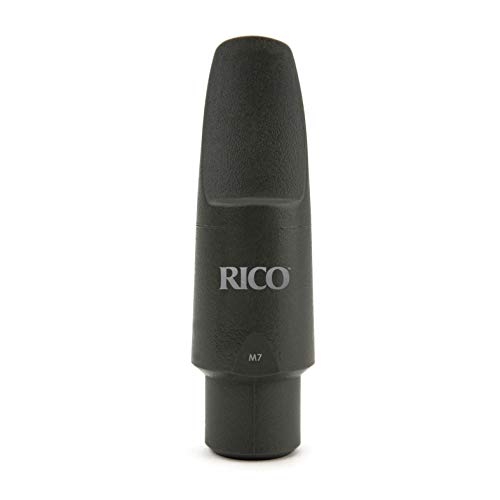
- M7 model for Tenor Saxophone
- Tip opening: .105"
The D’Addario Metalite is a completely different animal. While the Fobes Debut is designed for versatility and a “concert” sound, the Metalite is designed to be loud, bright, and cutting. It is made of a unique gray polycarbonate and features a high baffle that makes it perfect for rock, blues, and loud funk bands. We would recommend the Metalite for players who find the Fobes too “dark” or “polite.” However, for general school band use or classical performance, the Metalite is far too aggressive. If you need to “scream” over a loud drum kit, go with the D’Addario; if you want a beautiful, controllable saxophone tone, stick with the Fobes.
Final Verdict: Is the Clark W Fobes Tenor Saxophone Mouthpiece Worth It?
After extensive testing and comparison, we can confidently say that the Clark W Fobes Tenor Saxophone Mouthpiece is one of the best investments any tenor saxophonist can make. Its combination of hand-faced precision, durable acrylic construction, and versatile “dark” sound profile makes it an unbeatable value. It solves the most common problems beginners face—resistance, poor intonation, and thin tone—while providing a platform that can grow with the player well into their high school or even college years. While it may lack the prestige of a $600 vintage hard rubber piece, its performance is shockingly close for a fraction of the cost.
Whether you are a student looking to move up in your school’s chair placement, a parent wanting to help your child succeed, or a doubler needing a reliable tenor setup, this mouthpiece is a “no-brainer.” It provides a professional-level interface that respects the player’s effort and rewards them with a beautiful sound. Don’t let a sub-par stock mouthpiece hold back your musical potential any longer. We highly recommend that you click here to secure your Clark W Fobes Tenor Saxophone Mouthpiece today and start hearing the difference in your very next practice session.
Last update on 2026-10-10 / Affiliate links / Images from Amazon Product Advertising API