
Bugera 333XL 3-Channel Tube Amplifier Head Review: The Ultimate High-Gain Bargain for Modern Guitarists
For years, the dream of owning a high-wattage, three-channel tube head was exactly that—a dream—for many of us. We grew up watching our idols stand in front of massive walls of sound, usually powered by heads that cost more than our first cars. Whether you were chasing the searing lead tones of a Peavey JSX, the raw aggression of a 5150, or the refined British bark of a hot-rodded JCM800, the entry fee was always steep. I remember the frustration of trying to squeeze “face-melting” gain out of budget solid-state combos, only to end up with a fizzy, thin mess that disappeared the moment a drummer hit a snare. Solving this problem isn’t just about volume; it’s about the feel, the compression, and the harmonic richness that only glowing vacuum tubes can provide. Without that foundational tone, your inspiration often dies on the vine. This is why we were so eager to put the Bugera 333XL 3-Channel Tube Amplifier Head through its paces—to see if it truly offers a bridge between professional performance and accessible pricing. You can see its full feature set and user reviews to understand why it has become such a polarizing yet popular choice in the community.
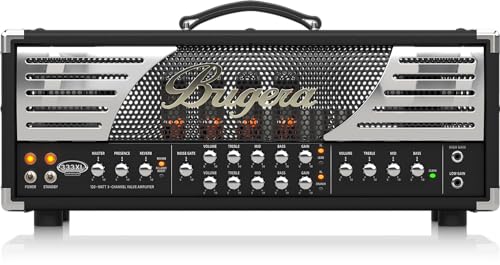
- Hand-built and hand-wired 120-Watt Class A/B amplifier driven by 4 x EL34 tubes (now fully compatible with 6L6 and 5881, etc.)
- Modern 3-channel preamp design (Clean, Crunch, Lead) featuring 4 x 12AX7 tubes for boutique clean and face-melting hi-gain tone
What to Consider Before Buying an Electric Guitar Amplifier Head
An Electric Guitar Amplifier Head is more than just an item; it’s the central nervous system of your guitar rig. Unlike a combo amp, a head requires a separate speaker cabinet, giving you the flexibility to mix and match different speaker configurations (like a 2×12 or a 4×12) to suit the venue or the studio. The primary benefit of a high-wattage tube head like this is “headroom”—the ability to stay clean and clear at high volumes, and the “thump” you feel in your chest when you chug on the low strings. It solves the issue of being drowned out by a loud band while providing the organic, responsive distortion that digital modelers often struggle to replicate perfectly.
The ideal customer for this type of product is a gigging guitarist or a serious hobbyist who plays rock, metal, or fusion and needs distinct tones for clean, rhythm, and lead parts at the tap of a footswitch. It’s for the player who wants “the big sound” without the boutique price tag. However, it might not be suitable for those who live in small apartments with thin walls and no way to attenuate the volume, as 120 watts of tube power is staggeringly loud. If you are looking for something strictly for low-volume bedroom practice, you might find a high-powered head like the Bugera 333XL 3-Channel Tube Amplifier Head to be overkill, though its master volume is surprisingly effective.
Before investing, consider these crucial points in detail:
- Dimensions & Space: A full-sized tube head is a significant physical commitment. You need to ensure you have a sturdy cabinet to sit it on and enough room in your vehicle for transport. At nearly 50 pounds, it’s a heavy piece of gear that requires a dedicated footprint in your practice space or on stage.
- Capacity & Performance: Look at the wattage and the number of channels. A 120-watt head offers massive volume and clean headroom, which is essential for loud stages. Having three independent channels (Clean, Crunch, Lead) allows for total tonal versatility without having to rely entirely on external pedals.
- Materials & Durability: While the internal circuitry and tubes are the heart of the amp, the external build matters. Stainless steel enclosures are standard for shielding, but pay attention to the quality of the knobs and jacks. Professional-grade gear usually uses metal components, whereas budget-friendly options might use plastic to keep costs down.
- Ease of Use & Maintenance: Tube amps require upkeep. Traditionally, you’d need a technician to “bias” the amp every time you change power tubes. Modern features like “Infinium” technology can automate this process, saving you hundreds of dollars in maintenance fees over the life of the amplifier.
Understanding these factors will help you decide if a powerhouse like the Bugera 333XL 3-Channel Tube Amplifier Head fits your workflow. While it’s an excellent choice for those needing raw power and versatility, it’s always wise to see how it stacks up against the competition. For a broader look at all the top models, we highly recommend checking out our complete, in-depth guide:
our expertly curated list of the best mini guitar amp heads for home practice and studio use
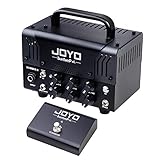
- Channel Switching & Independent Control: The BanTamp XL series features a dedicated footswitch for channel switching and six knobs. This allows you to independently control both the CLEAN and...

First Impressions: Unboxing the Bugera 333XL 3-Channel Tube Amplifier Head
When we first pulled the Bugera 333XL 3-Channel Tube Amplifier Head out of the box, the first thing we noticed was the weight. At 48.1 pounds, it feels substantial and “expensive.” The aesthetic is classic and aggressive, with a chrome-heavy front panel and a rugged enclosure that looks ready for a dark stage. Setting it up was straightforward: plug in the power cord, connect a high-quality speaker cable to a 4×12 cab, and let the tubes warm up. Visually, it stands toe-to-toe with market leaders from the UK and USA, though a closer inspection reveals where the savings come from—the knobs are plastic, and the jacks, while functional, don’t feel as “overbuilt” as a boutique amp. However, for the price, the initial feel is incredibly impressive. You can check the latest price and availability to see just how much value is packed into this stainless steel shell.
Key Benefits
- Incredible value-to-tone ratio that rivals amps three times the price.
- Three fully independent channels offering total tonal flexibility.
- Infinium Tube Life Multiplier technology makes tube maintenance a breeze.
- XL switches provide essential low-end control for modern high-gain styles.
Limitations
- Plastic knobs and composite jacks feel less durable than professional boutique gear.
- At 120 watts, it is extremely heavy and physically large to transport.
A Deep Dive into the Bugera 333XL 3-Channel Tube Amplifier Head’s Performance
The Bugera 333XL 3-Channel Tube Amplifier Head is often described as a “Swiss Army Knife” for the modern guitarist, and after spending dozens of hours with it, we can confirm that description is accurate. This isn’t a one-trick pony; it is a meticulously designed machine intended to cover everything from crystal-clear jazz tones to the most saturated, harmonically rich metal leads. We tested this head using a variety of guitars, including a Gibson Les Paul for classic rock vibes and an Ibanez RG for high-speed shredding, and the results were consistently impressive across the board.
The Tonal Architecture: Clean, Crunch, and Lead Channels
We found that the true soul of the Bugera 333XL 3-Channel Tube Amplifier Head lies in its three-channel preamp design. Many high-gain amps treat the “Clean” channel as an afterthought, but that isn’t the case here. Using the 12AX7 tubes, the clean channel is surprisingly glassy and open, providing a great platform for pedals. It has a “boutique” quality that doesn’t break up too early, which is essential if you’re looking for that “clean-but-warm” tube sound. Moving to the Crunch channel, we were immediately transported to the 1980s. This channel is heavily British-voiced, reminiscent of a hot-rodded Marshall. It has a raw low-midrange quality that allows chords to ring out with clarity while providing enough sustain for “singing” blues-rock leads. We found it to be the “sweet spot” for most rock applications.
The Lead channel is where the “face-melting” happens. The gain on tap is immense—honestly, more than most players will ever need. What impressed us most was the “string clarity.” Even with the gain turned up to 8 or 9, we could still hear individual notes within complex chords. This is a hallmark of a well-designed tube circuit. As one user noted, this amp sounds like “what a Marshall should sound like,” offering a mix of JCM800 tightness and 5150 aggression. For anyone chasing that modern metal “wall of sound,” this channel is a dream come true. You should view this amp in detail to see the control layout that makes this versatility possible.
Revolutionary INFINIUM Tube Life Multiplier Technology
Perhaps the most significant feature for the working musician is the INFINIUM technology. Historically, the Bugera 333XL 3-Channel Tube Amplifier Head and its siblings faced criticism for reliability. Bugera responded by developing the Infinium system, which acts as a “digital brain” for the analog tubes. We evaluated this system’s impact and found it to be a game-changer. It constantly monitors each power tube’s performance and dynamically drives it to the optimal operating point. This means your tubes age more evenly and last up to 20 times longer.
Furthermore, when a tube finally does reach the end of its life, an LED on the back of the amp tells you exactly which one to replace. You don’t have to replace the whole matched set, and you don’t have to take the amp to a technician for biasing. We even experimented with mixing different tube types—running a pair of EL34s alongside a pair of 6L6s—and the Infinium tech handled the adjustment perfectly, allowing us to “flavor” our tone in ways that traditional amps won’t allow without expensive modifications. This makes it a feature that really sets it apart from almost everything else in its price bracket.
Sculpting the Low End: The XL Switches and Reverb
In modern high-gain playing, the “low end” is where the battle is won or lost. Too much bass and the sound becomes “woofy” or muddy; too little and it sounds thin. The Bugera 333XL 3-Channel Tube Amplifier Head includes “XL” switches on both the Crunch and Lead channels. We found these to be indispensable. Engaging the XL switch adds a focused “thump” to the bottom end, which is perfect for down-tuned guitars or 7-string players. It tightens the response of the cabinet, ensuring that fast, palm-muted “chugs” remain percussive and clear rather than turning into a sonic blur.
Accompanying the tonal sculpting is a high-class integrated reverb. Unlike the spring reverbs found in older amps, this is a studio-grade digital reverb that is assignable per channel. We found this incredibly useful for adding a lush, spacious feel to the Clean channel while keeping the Lead channel relatively dry for maximum punch. The reverb control is smooth and doesn’t introduce unwanted noise into the signal chain, which is a common complaint with cheaper amp heads. This attention to detail in the “utility” features shows that Bugera was really listening to the needs of gigging guitarists when they updated this model. For more on the technical specifications, you can check the latest price and availability online.
Real-World Versatility: From Bedroom to Stadium
One of the biggest surprises during our testing was how well the Bugera 333XL 3-Channel Tube Amplifier Head handled different volume levels. A 120-watt tube head is traditionally a “stadium” amp, but the master volume on this unit is exceptionally well-tapered. We were able to get “tasty tones” even at bedroom volumes, where the amp “purrs” without sounding choked. This makes it a viable option for home studio owners who want the real tube experience without blowing the windows out.
On the flip side, when we cranked it through a 4×12 stack, the sheer air movement was exhilarating. The amp didn’t lose its composure or become overly fizzy at high volumes; instead, it blossomed. It felt “raw” and “midrangy” in all the right ways, providing that singing sustain that defines great rock guitar. We also tested the effects loop and the line output, finding them both to be transparent and reliable. Whether you’re running it in a small club with a 2×12 or a large venue with a full stack, the 333XL holds its own against much more “spendy” heads. You can read more owner experiences to see how other guitarists are using this beast in their own rigs.
What Other Users Are Saying
The general sentiment among users for the Bugera 333XL 3-Channel Tube Amplifier Head is overwhelmingly positive, particularly regarding its “bang-for-the-buck” factor. Many long-term owners describe it as a “monster” that destroys heads costing three times as much. One user, who has owned the amp since 2015 and played through it for over 1000 hours, noted that they even use it in the studio at bedroom levels where it “purrs” beautifully. Another guitarist highlighted its similarity to the Peavey JSX, stating it sounds “damn near identical” and holds its own in every “high-gain heaven regard.”
However, the feedback isn’t without its warnings. A few users mentioned that while the sound is professional, the build quality shows some compromises, such as “plastic knobs” and “composite 1/4 inch jacks” which might not be robust enough for heavy, unprotected road use. There were also isolated reports of shipping damage and out-of-the-box issues with the reverb, suggesting that while the design is improved, quality control can occasionally be inconsistent. Despite these minor gripes, most users agree that if you get a “good one,” it is an unbeatable value that delivers world-class tone.
How the Bugera 333XL 3-Channel Tube Amplifier Head Compares to the Competition
While the 333XL is a full-sized 120-watt powerhouse, many modern guitarists are looking at smaller, more portable options. Here is how it stacks up against some popular alternatives.
1. Orange Micro Dark Terror Mini Amp Head

- Power: 20Watt (hybrid)
- Tube: one 12AX7 (preamp)
The Orange Micro Dark Terror is a different beast entirely. It is a 20-watt hybrid head, meaning it uses a tube preamp and a solid-state power amp. While it captures that legendary Orange “dark” high-gain character in a tiny package, it lacks the three-channel versatility of the Bugera 333XL 3-Channel Tube Amplifier Head. The Micro Dark is perfect for players who want a “lunchbox” amp for home practice or small jams and love a singular, aggressive tone. However, it cannot compete with the Bugera in terms of clean headroom or the sheer “thump” of a 120-watt all-tube power section. If you need a secondary “portable” rig, this is great, but for a primary, do-it-all stage amp, the Bugera wins on features.
2. JOYO Zombie-II Mini Tube Guitar Amp Head
- Channel Switching & Independent Control: The BanTamp XL series features a dedicated footswitch for channel switching and six knobs. This allows you to independently control both the CLEAN and...
- Versatile High-Gain Platform & Clean Pedal Foundation: The ZOMBIE-II excels at lower gain settings and responds brilliantly to your favorite overdrive pedals, letting you push into higher gain with...
The JOYO Zombie-II is part of the popular BanTamp series and is specifically designed to mimic the “Mesa Boogie” sound. It’s a 20-watt hybrid with two channels and even includes Bluetooth connectivity for jamming along to tracks. We found the Zombie-II to be an incredible value for bedroom players, but it feels more like a “tool” than a “beast.” Compared to the Bugera 333XL 3-Channel Tube Amplifier Head, the JOYO feels limited. The Bugera’s dedicated Crunch channel and Infinium technology provide a level of professional utility that the JOYO simply can’t match. The JOYO is for the budget-conscious home player; the Bugera is for the player who wants to command a stage.
3. Orange Micro Terror Guitar Amp Head

- Power: 20 watt (hybrid)
- Tube: 1 12AX7 tube preamp with solid state power amp
The original Orange Micro Terror is a classic “minimalist” amp. With just Volume, Tone, and Gain, it’s about as simple as it gets. It produces a fantastic, crunchy British tone that is surprisingly loud for 20 watts. However, comparing it to the Bugera 333XL 3-Channel Tube Amplifier Head highlights the difference between a “flavored” practice amp and a professional workhorse. The Micro Terror lacks a clean channel, an FX loop (available on the Dark version but not the original), and the deep tonal shaping of the Bugera’s XL switches. While the Micro Terror is an iconic piece of gear for “plug-and-play” enthusiasts, it doesn’t offer the multi-channel flexibility required for a diverse setlist.
The Final Verdict: Is the Bugera 333XL 3-Channel Tube Amplifier Head Worth It?
After a thorough evaluation, it’s clear that the Bugera 333XL 3-Channel Tube Amplifier Head is one of the best values in the guitar world today. It successfully bridges the gap between affordable entry-level gear and high-end professional stacks. Its strengths lie in its incredible tonal range—from “glassy” cleans to “British” crunch and “face-melting” high gain—all backed by the maintenance-saving Infinium technology. While you should be mindful of the plastic components if you plan on touring extensively without a road case, the sound quality itself is indistinguishable from amps costing far more. We highly recommend it for any guitarist who needs a versatile, powerful tube head that doesn’t require a second mortgage.
If you’re ready to stop dreaming about “the big sound” and start playing it, the 333XL is your ticket. It offers the headroom, the features, and the raw tube power necessary to elevate your playing to the next level, whether you’re in the studio or on the stage. Don’t let the price tag fool you; this is a serious piece of musical equipment that delivers on its promises. Click the link below to pick up this high-gain monster for yourself and experience the 120-watt difference.
Last update on 2026-09-17 / Affiliate links / Images from Amazon Product Advertising API