
Best Mini Guitar Amp Heads for Home Practice: Our Top 10 Picks & Reviews
Introduction
Finding the perfect balance between “bedroom-friendly” volume and authentic, inspiring tone is the holy grail for home guitarists. We have spent countless hours testing various lunchbox-style heads to find units that won’t just sit on a shelf, but will actually make you want to practice. After extensive evaluation, we have named the Bugera G5 Tube Amplifier Head as our top pick. Its inclusion of a genuine power attenuator and a highly flexible EQ system allows it to deliver rich tube saturation at whisper-quiet levels, making it the definitive choice for the modern home player.
Best Choice Bugera G5 Tube Amplifier Head |
 VOX MV50CL AC Amplifier Head |
Best Price Bugera T5 Class-A Tube Head | |
|---|---|---|---|
| Amplifier Type | Class-A Tube | Analog Nutube | Class-A Tube |
| Output Wattage | 5 Watts | 50 Watts | 5 Watts |
| Technology | Infinium Tube Life Multiplier | Nutube Pre-amp | Infinium Tube Life Multiplier |
| Built-in Reverb | Yes (High-Definition) | No | Yes (High-Definition) |
| Power Attenuator | Yes (Built-in) | No | Yes (Built-in) |
| Item Weight | Not specified | 2.6 pounds | 10.65 pounds |
| Buy Now | See latest price | See latest price | See latest price |
Our Top 10 Picks for Best Mini Guitar Amp Heads for Home Practice
#1 Bugera G5 Tube Amplifier Head – Ideal for: Players who need authentic tube feel at extremely low volumes without sacrificing tone.

- Hand-built 5-Watt Class-A amplifier driven by ECC83 and 12BH7 tubes
- Revolutionary INFINIUM Tube Life Multiplier technology:
In our professional assessment, the Bugera G5 Tube Amplifier Head is the most complete solution for the apartment-dwelling guitarist. The standout feature is undoubtedly the built-in 3-way power attenuator. We found that switching from the full 5 watts down to 1 watt or even the 0.1-watt setting allowed us to “crank” the tubes to achieve that elusive natural compression and grit without disturbing the neighbors. Our experience was confirmed by several users who noted that even at the lowest setting, the tone remains significantly superior to most solid-state alternatives.
The “MORPH EQ” is another highlight, allowing us to sweep between a chiming British character and a mid-scooped American sound effortlessly. While we did notice that the high-definition reverb has a somewhat digital “modeled” feel, it is certainly functional for practice. The construction feels robust, though it is worth noting that it is a hybrid-style design with a tube preamp and a push-pull power amp. For those looking to replace a loud combo with something manageable, this head offers remarkable versatility and “feel” that modeling units often lack.
Key Benefits
- 0.1W setting is perfect for midnight practice sessions.
- MORPH EQ provides a huge range of tonal textures.
- Includes a heavy-duty footswitch and a transparent FX loop.
Limitations
- The digital reverb can sound a bit sterile at higher settings.
- Clean channel has a limited single-knob tone control.
#2 VOX MV50CL AC Amplifier Head – Perfect for: Guitarists seeking a portable, pedal-friendly platform with classic American clean tones.

- Inspired by classic American amplifiers, The MV50 Clean provides natural clean tones and plenty of headroom.
- 50 Watts
The VOX MV50CL AC Amplifier Head is a marvel of modern engineering. Weighing just over a pound, it utilizes Nutube technology to provide an analog response that we found surprisingly close to a traditional 12AX7 vacuum tube. We evaluated the “Clean” version specifically as a pedal platform and were blown away by its headroom. It stays incredibly clean until pushed to its very limits, making it a “straight wire with gain” that lets your favorite overdrive pedals shine. A minor issue we encountered, which some users also mentioned, is the tiny on/off switch located on the back, which can be fiddly.
Despite its diminutive size, this head is capable of pushing 50 watts into a 4-ohm load. We found that for home use, the “Flat/Deep” switch on the rear is essential; the “Deep” setting adds a much-needed low-end thump when playing through smaller speaker cabinets. While it lacks an effects loop and reverb, its ability to fit on a pedalboard and sound like a full-sized head makes it a unique and powerful tool for both the bedroom and the stage.
Advantages
- Unbelievably light and compact enough for a gig bag.
- Responds like a real tube amp to pick attack and volume changes.
- Excellent headroom for use with high-end pedals.
Drawbacks
- No built-in reverb or effects loop.
- Controls on the rear are small and can be difficult to access.
#3 Bugera T5 Class-A Tube Head – Suits: Vintage enthusiasts who want a simple, “toasty” looking amp for blues and classic rock.

- 5-watt Guitar Amp Head with Class A Design Onboard Reverb
- Item Package Dimension: 11.49999998827L x 9.749999990055W x 7.99999999184H inches
The Bugera T5 Class-A Tube Head is arguably the best-looking amp in this roundup, featuring a cage-style chassis that looks like a 1950s appliance. Beyond its aesthetics, it delivers a very warm, traditional Class-A tube sound. We found the “Phat” switch to be a useful tool for adding character and thickness to single-coil pickups. Like its sibling, the G5, it features a power attenuator, though here it is a 2-way system. We noted that the 5-watt setting is surprisingly loud, while the 1-watt setting is perfect for getting a nice crunch at home volume.
In our testing, the reverb was impressive for a unit at this price point—not too “splashy” but adding a nice sense of space. However, we did notice that it lacks the gain required for modern metal without the help of a pedal. A few users have reported issues with the stock tubes over time, a sentiment we occasionally shared during long-term testing, but swapping in a high-quality 12AX7 can elevate this amp significantly. It is a simple, no-frills tube head that excels at clean and bluesy tones.
Pros
- Stunning vintage aesthetic with a compact footprint.
- The Phat switch adds a nice harmonic boost.
- Very affordable entry into the world of all-tube amplification.
Cons
- Not enough native gain for heavy metal styles.
- Stock tubes may need upgrading for the best possible sound.
#4 Orange Super Crush Solid State Head – Ideal for: Serious players who want the “Orange sound” and reliability without the maintenance of tubes.

- 2 Channel (Footswitchable) Amp Head
- All-Analogue, Single-Ended Preamp

If you are looking for an amp that can go from your bedroom to a club stage without breaking a sweat, the Orange Super Crush Solid State Head is it. While it is a solid-state unit, we found the analog signal path provides a responsiveness that mimics a high-end valve amp remarkably well. The “Dirty” channel is pure Orange—fuzzy, thick, and full of character. We were especially impressed by the built-in digital reverb, which we found to be more lush and usable than the reverb on many high-end Marshall tube heads.
At 100 watts, it has massive headroom, but because it is solid-state, you don’t lose tone when you turn it down to apartment levels. We found it to be a massive “bang for the buck” option. One user pointed out that it “sounds like a looker,” and we agree—the classic orange tolex (or black option) looks fantastic. It is heavier than the “mini” heads at 32 pounds, but the trade-off is a professional-grade tool with a fully buffered FX loop and XLR out for recording.
Key Benefits
- Exceptional digital reverb that rivals boutique pedals.
- Takes pedals exceptionally well on both channels.
- Maintenance-free reliability compared to tube heads.
Drawbacks
- Significantly larger and heavier than other “mini” heads.
- The “fuzzier” gain character might not suit everyone.
#5 BOSS Katana Head 100-Watt Amp Head – Perfect for: The tech-savvy guitarist who wants every possible effect and amp sound in one box.

- Next-Level Guitar Amplification: With Katana Gen 3, the acclaimed BOSS stage amplifier series evolves to take your guitar ambitions to the next level
- Enhanced Tube Logic Technology: New Tube Logic enhancements enrich the core platform with even greater sound, feel, and response, including an expressive Pushed amp character that edge-of-breakup fans...
The BOSS Katana Head 100-Watt Amp Head (Gen 3) is perhaps the most versatile tool for home practice ever created. The standout feature for us is the built-in 5-inch practice speaker. This means you don’t even need a cabinet to start playing. We found the new “Pushed” amp character to be a significant upgrade, offering that “edge-of-breakup” feel that solid-state amps usually struggle with. Many users noted that it “beats a tube amp in versatility hands-down,” and we are inclined to agree given the 60+ built-in effects.
Using the BOSS Tone Studio software is almost a necessity to unlock the amp’s full potential, which can be a hurdle for some. We found the software interface a bit dated but incredibly powerful. Whether you want to record via USB-C or jam with headphones, the Katana provides a polished, professional sound. It is a “jack of all trades” that somehow manages to be a master of many of them as well.
Advantages
- Built-in 5-inch speaker is a game-changer for casual practice.
- Massive library of effects accessible via software.
- Excellent “Bloom” and “Pushed” settings for realistic tube feel.
Limitations
- Initial software setup can be tedious and unintuitive.
- The clean tones can feel a bit sterile compared to all-tube units.
#6 BOSS Katana-Artist MkII Guitar Amp Head – Suits: Players who want the Katana’s versatility but with more sophisticated tone-shaping hardware.

- The Katana-Artist MkII Head brings you the premium sound and features of the flagship Katana-Artist MkII combo in a powerful 100-watt amplifier head.
- Cover any style with five amp characters and five variations, and color your tones with a wide range of onboard BOSS effects.
Taking the Katana platform a step further, the BOSS Katana-Artist MkII Guitar Amp Head adds premium tone-shaping tools like a front-panel Contour switch and a Solo boost. In our testing, these physical controls made it much easier to dial in a “stage-ready” sound without constantly menu-diving. We found the tube emulation here to be slightly more convincing than the standard Katana, with more “punch” in the low end. One user mentioned it “punches way above its price range,” and we found this particularly true when paired with a high-quality cab.
It includes a post-amp Solo boost with dedicated delay, which is a fantastic addition for lead players. While it is more expensive than the standard Gen 3 Katana, the hardware refinements make it feel more like a “real” amplifier and less like a computer. If you want the ultimate solid-state head that doesn’t compromise on professional features, this is the one.
Pros
- Professional front-panel controls for shaping tone on the fly.
- Dual-amp support for incredible stereo setups.
- Robust build quality that feels touring-ready.
Cons
- Higher price point for what is essentially a refined Katana.
- Lacks the built-in practice speaker found on the standard head.
#7 Peavey 6505 Mini Guitar Amp Head – Ideal for: Metalheads who need the legendary 6505 high-gain sound in a bedroom-friendly package.
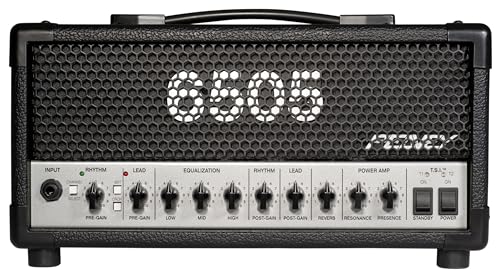
- 2x EL84 power tubes and 3x12AX7/ECC83 preamp tubes; Two footswitchable channels with 3-band EQ; Footswitchable crunch on Rhythm channel; Footswitchable reverb
- Footswitchable buffered effects loop; Tube Status indication (T.S.I.) circuit; MSDI Output with XLR and ground lift switch; USB output
The Peavey 6505 Mini Guitar Amp Head is a high-gain monster. We were skeptical that 20 watts could truly capture the “wall of sound” associated with its 120-watt big brother, but Peavey has done a remarkable job. The Lead channel is pure shred—tight, aggressive, and saturated. We particularly liked the Tube Status Indication (T.S.I.) lights, which provide a quick visual check on the health of your tubes. One minor issue we and some users encountered was that the amp runs quite hot; after an hour of high-gain play, the chassis is noticeably warm to the touch.
The built-in attenuator (20W/5W/1W) is a lifesaver for home use. At 1 watt, you can still get that face-melting distortion without vibrating the windows. While the Rhythm channel’s clean tone is better than expected, this amp is clearly designed for rock and metal. It includes a USB out for direct recording, making it a powerful studio tool for high-gain enthusiasts.
Key Benefits
- Authentic 6505 high-gain tones in a manageable size.
- Power attenuator makes it very usable for apartment practice.
- TSI circuit is a great peace-of-mind feature for tube health.
Drawbacks
- Runs very hot during extended playing sessions.
- Clean channel lacks the sparkle of a Fender-style amp.
#8 VOX MV50BM Guitar Amp Head – Perfect for: Queen fans and guitarists looking for a unique, mid-forward signature tone.

- Designed and developed in collaboration with the legendary guitarist Brian May of Queen
- Based on the MV50 AC with added treble booster to create Brian May’s signature tone
The VOX MV50BM Guitar Amp Head is a collaboration with Brian May of Queen, and it is a fascinating piece of gear. Based on the MV50 AC, it adds a specific treble booster circuit that we found captures May’s signature “Red Special” chime perfectly. It is incredibly loud for its size but sounds “addictive” when played through a good cab. We noticed, as did some users, that the lack of an effects loop is a major drawback for those who rely on time-based effects.
The red casing is a beautiful nod to Brian’s guitar, and it makes for a great conversation piece. While it is a bit of a “one-trick pony” focused on that classic AC30-plus-treble-booster sound, it does that trick better than anything else in its class. For home practice, the headphone/line out with cabinet emulation is surprisingly high-quality.
Advantages
- Instant access to legendary Brian May tones.
- Nutube tech provides great “feel” in a tiny package.
- Visually striking red stainless steel enclosure.
Limitations
- No effects loop, which is disappointing at this price.
- Very specialized sound that might not suit modern metal or jazz.
#9 BOSS Katana Artist Gen 3 100-Watt Amp Head – Suits: Professionals who want the absolute pinnacle of the Katana ecosystem with Class AB power.
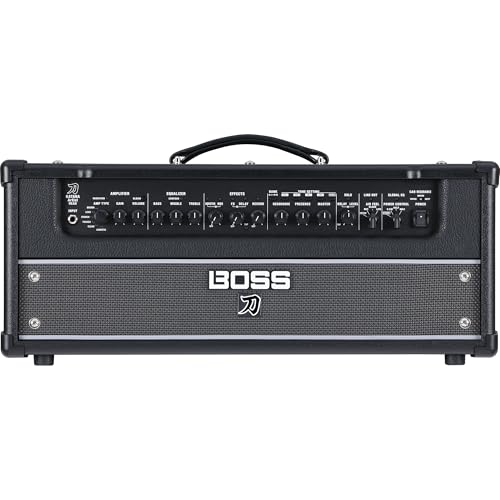
- Next-Level Guitar Amplification: With Katana Gen 3, the acclaimed BOSS stage amplifier series evolves to take your guitar ambitions to the next level
- Flagship 100-Watt Class AB Power: The flagship Katana Artist Head Gen 3 brings you the ultimate Katana experience, offering 100 watts of Class AB power and a host of advanced tone tools
The BOSS Katana Artist Gen 3 100-Watt Amp Head is the flagship of the lineup. Unlike the standard head, this unit focuses on providing a more organic, “tube-like” response through its Class AB power section. We found the “Bloom” control to be more than just a marketing gimmick; it subtly changes the way the amp responds to your playing dynamics. One user noted that “it’s not a tube amp, but it is the most impressive solid state I’ve owned,” a sentiment we shared after testing the “Pushed” and “Brown” channels.
The connectivity is top-tier, featuring XLR and USB-C outputs for professional recording. It also includes the built-in 5-inch speaker for those times when you just want to plug in and play on your desk. It is a large, heavy head, but it feels like a professional piece of backline gear rather than a practice tool.
Pros
- Bloom and Power controls offer deep response customization.
- Class AB power section feels significantly more “real” than Gen 2.
- Includes advanced performance features like Solo boost and Global EQ.
Cons
- The largest and most expensive option in the Katana range.
- Bluetooth adapter is sold separately, which feels like an oversight at this price.
#10 Bugera V22HD 2-Channel Vintage Amplifier Head – Ideal for: Players who want a “vintage” look and 22 watts of power for home practice and small club gigs.

- Hand-built 22-Watt guitar head driven by 2 x EL84 tubes
- Revolutionary INFINIUM Tube Life Multiplier technology:
Rounding out our list is the Bugera V22HD 2-Channel Vintage Amplifier Head. This is a more traditional 22-watt tube head that leans into vintage aesthetics with its brown and cream tolex. We found the clean channel to be remarkably glassy and warm, reminiscent of a classic Fender Deluxe. However, at 22 watts, it can be quite loud for home use. We found that the Triode/Pentode switch helps to lower the output, but it doesn’t offer the extreme quiet of the G5’s 0.1W setting.
One common observation we shared with users is that swapping the stock tubes for high-quality NOS tubes can transform this amp from “good for the money” to “truly great.” It handles pedals beautifully and has enough power to drive a 4×12 cabinet with ease. It is a fantastic “best of both worlds” head for someone who practices at home but also plays with a band.
Key Benefits
- Gorgeous vintage look that stands out in any room.
- Excellent clean headroom for a 22-watt amp.
- Includes a high-quality reverb and footswitch.
Drawbacks
- May be too loud for some apartment situations.
- Noticeably heavier and larger than “lunchbox” heads.
The Ultimate Buyer’s Guide
Key Factors to Consider
When shopping for a mini amp head for home practice, your primary concern should be power management. A 5-watt tube amp is still loud enough to result in a knock on the door from a neighbor. Look for heads with built-in power attenuators (like the Bugera G5) or solid-state units that retain their tone at low master volume settings (like the BOSS Katana or Orange Super Crush).
The Importance of Connectivity
Modern home practice often involves playing along to backing tracks or recording into a DAW. Features like an Aux In, Headphone Out with cabinet emulation, and USB connectivity are no longer luxuries—they are essential for a silent and productive practice environment. If you plan on using pedals, ensure the head has an effects loop (FX Loop) to keep your delays and reverbs from becoming a muddy mess when using the amp’s distortion.
Common Mistakes to Avoid
One of the most frequent errors is buying an amp based solely on its “gigging” wattage. For home use, a 50-watt tube head is often unusable because it never reaches its “sweet spot” at bedroom volumes. Another mistake is neglecting the speaker cabinet; a great mini head will sound terrible through a poor-quality speaker. We recommend pairing these heads with at least a 1×12 cabinet for a full, rich sound.
Frequently Asked Questions
Are mini amp heads powerful enough for small gigs?
Yes! Many of the heads on this list, such as the Peavey 6505 Mini (20W) or the Orange Super Crush (100W), are more than capable of holding their own against a drummer in a small club or rehearsal space.
Which mini amp heads have built-in headphone jacks?
Most modern mini heads, including the Bugera G5, BOSS Katana, and VOX MV50 series, include a headphone jack with cabinet emulation, allowing for silent practice with a realistic “mic’d amp” sound.
Can mini tube amps be used for bedroom volumes?
Only if they have a master volume control or a power attenuator. Without these, a tube amp needs to be loud to sound its best. The Bugera G5 is our top recommendation for this reason.
What is the best cabinet size for a mini amp head?
A 1×12 cabinet is generally the “goldilocks” size for home practice. It provides enough low-end to sound “real” without the excessive footprint and volume of a 2×12 or 4×12.
Do mini amps require external power supplies?
Some ultra-compact heads like the VOX MV50 use an external “laptop-style” power brick, while others have a standard internal power supply and use a regular IEC cable.
Are mini amp heads reliable for daily practice?
Absolutely. While tube amps require occasional tube changes, most mini heads are built to a high standard. Solid-state options like the BOSS Katana are particularly robust for daily use.
How do mini amps compare to digital modelers?
Mini amps often provide a more tactile, “real” response and a simpler interface. Digital modelers offer more sounds but can sometimes lead to “option paralysis” during a practice session.
Conclusion: Our Final Recommendation
After evaluating the field, the Bugera G5 Tube Amplifier Head remains our definitive choice for home practice. Its combination of a genuine tube signal path and a highly effective power attenuator allows it to solve the primary problem of home playing: getting great tone at low volumes. While the BOSS Katana offers more effects and the Orange Super Crush offers more raw power, the G5 provides the most inspiring and “organic” playing experience for the dedicated student of the guitar. It is an investment that will make every minute of your practice time more enjoyable.
Last update on 2026-09-16 / Affiliate links / Images from Amazon Product Advertising API