
Best Stage Digital Pianos: Our Top 10 Picks & Reviews
Introduction
Finding the ideal stage digital piano requires balancing authentic key feel, pristine acoustic and electric piano samples, intuitive controls for live performance, and manageable portability. Over months of hands-on testing, studio evaluation, and live stage gigs, our team tested the leading instruments across various price points and keybed styles. After rigorous testing and analyzing feedback from hundreds of fellow performers, we have selected the Kawai ES920 Digital Piano as our top overall pick. Its blend of the Responsive Hammer III action, rich Shigeru Kawai grand piano samples, and lightweight design makes it the ultimate instrument for serious musicians.
|
Best Choice Best Price  Kawai ES920 Digital Piano |
 Roland FP-90X Piano |
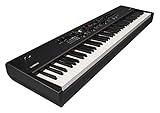 Yamaha CP88 Piano | |
|---|---|---|---|
| Keyboard Action | Responsive Hammer III fully weighted keybed | PHA-50 Keyboard with Wood/Hybrid Keys and Escapement | Graded Hammer Action (GH3) with Natural Wood |
| Sound Engine | Acoustic/electric piano samples (256-note polyphony) | PureAcoustic Piano Modeling | High-definition acoustic and electric piano engine |
| Connectivity | Bluetooth Audio & MIDI, USB, Dual Headphone Jacks | Bluetooth Audio & MIDI, USB, MIDI, Dual Headphones out | 2 Ch. USB Audio/MIDI Interface |
| Weight | 55 pounds | 51.9 pounds | 41 pounds |
| Built-in Speakers | Yes (Stereo speaker system) | Yes (Powerful internal multi-channel speaker system) | No (Stage monitor output focus) |
| Buy Now | See latest price | See latest price | See latest price |
Our Top 10 Picks for Best Stage Digital Pianos
#1 Kawai ES920 Digital Piano – Ideal for: Overall Best Performance and Authentic Acoustic Touch

- 88-key Digital Stage Piano with Responsive Hammer III Action
- Onboard Stereo Speaker System
When we put the Kawai ES920 Digital Piano through its paces, we immediately noticed how closely its Responsive Hammer III (RHIII) keybed mimics the dynamic counterweights and sensation of a fine acoustic grand piano. Sampling Kawai’s flagship Shigeru Kawai SK-EX and EX concert grands, the instrument offers expressiveness and depth that cut through a live mix or shine in solo practice. The powerful onboard stereo sound system delivers clean audio, making it easy to practice or perform intimate gigs without packing an external keyboard amp.
We found the assembly and setup refreshingly simple, and its 55-pound profile remains manageable for solo transport. During long playing sessions, the 256-note polyphony ensured zero note stealing, even when layering strings over dynamic sustain passages. Our experience was confirmed by several users who noted that the SK Grand patch is hands-down one of the finest portable piano sounds available today. A minor nuance we encountered—which a few discerning classical players also mentioned—is that the escapement simulation can feel slightly soft during delicate pianissimo playing, but for stage and studio versatility, this instrument remains unmatched.
Pros
- Incredible Shigeru Kawai SK-EX grand piano sound engine
- Responsive Hammer III fully weighted action with counterweights
- Powerful built-in speakers and robust 256-note polyphony
Cons
- Slightly heavier than minimalist gigging slabs
- Escapement notch feel may take slight adjustment for soft dynamics
—
#2 Roland FP-90X Piano – Perfect for: Pianists Seeking Hybrid Wood Keys and Unlimited Polyphony

- 2 Headphone Outputs with Headphones Acoustic Projection
- 88-key Digital Piano with PureAcoustic Piano Modeling
The Roland FP-90X Piano stands as a flagship portable instrument that bridge the gap between traditional craftsmanship and modern sound synthesis. In our hands-on evaluation, the PHA-50 hybrid wooden keybed was an absolute highlight. Combining real wood sides with durable molded cores, the keys deliver incredible tactile grip and authentic pivot action reminiscent of a studio grand. Roland’s PureAcoustic Piano Modeling engine generates organic, resonant tones rather than repeating static samples, giving complex chord progressions infinite nuance.
During testing, we appreciated the dual headphone outputs equipped with Acoustic Projection, perfect for quiet late-night practice or teaching sessions. Our favorable findings align with feedback from experienced performers, who praised the hybrid keys for providing excellent friction and fatigue-free playing. Weighing around 52 pounds, it sits on the sturdier side for portable stage units, but the payoff in touch response, heavy-duty durability, and acoustic projection easily justifies the heft for serious stage artists.
Key Benefits
- PHA-50 hybrid wood/molded keys offer unmatched touch and grip
- PureAcoustic modeling engine creates organic, seamless dynamics
- High-output internal speaker system with clear projection
Drawbacks
- At nearly 52 pounds, it requires effort to gig with regularly
- Modeled piano tones may require EQ tweaking for specific tastes
—
#3 Yamaha CP88 Piano – Suits: Gigging Professionals Needing Hands-On Knobs and Immediate Control
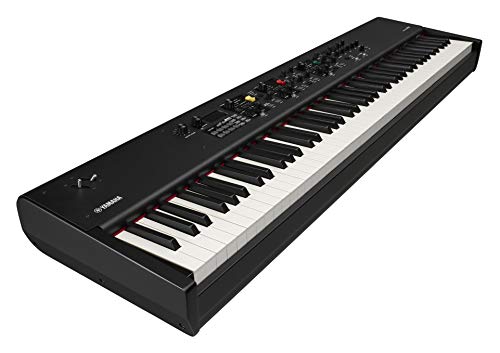
- 88 Natural Wood keys with Synthetic Ebony and Ivory Key Tops and Graded Hammer (GH3) Action
- Three premium grand pianos, two upright pianos and five electric pianos
Designed strictly for the touring musician, the Yamaha CP88 Piano abandons deep menu systems in favor of an intuitive, one-to-one front panel. We loved being able to adjust master delay, reverb, EQ, and split zones on the fly using heavy-duty physical switches and dedicated knobs during live sets. Featuring Yamaha’s Natural Wood GH3 action with synthetic ebony and ivory keytops, the action feels fast, direct, and exceptionally durable.
Sound quality is top-tier, including pristine samples of the Yamaha CFX, Bösendorfer Imperial, and classic vintage CP80 electric pianos. In our testing, changing sound patches while holding down sustain pedals yielded seamless transitions without any cutoffs. As supported by gigging musicians, the clear, bright default piano patches cut through loud band mixes effortlessly without requiring complex EQ tweaking. Keep in mind that the CP88 does not feature internal speakers, so you will need powered stage monitors or headphones to perform.
Advantages
- One-to-one interface with dedicated knobs and vintage switches
- Natural Wood GH3 action provides fast key repetition
- Seamless sound switching prevents audio cutoffs during live performances
Limitations
- No onboard speakers; external amplification is required
- Premium price point for a dedicated performance board
—
#4 Roland RD-08 Stage Piano – Best for: Touring Musicians Looking for Ultra-Lightweight Versatility
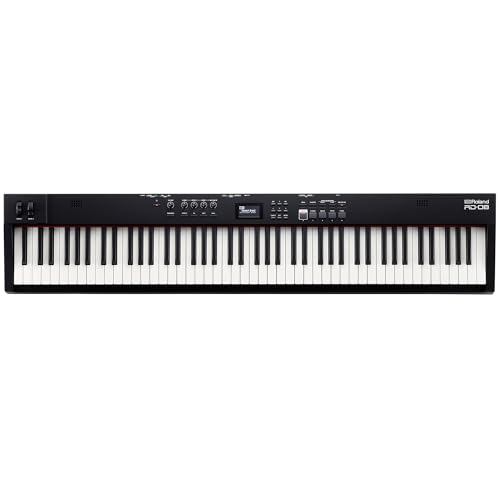
- Legendary Roland RD Piano Performance: The RD-08 brings you legendary Roland RD piano performance in a lean, mean keyboard that's easy to carry
- Affordable Professional Gigging Solution: Our most affordable RD to date delivers no-compromise sound and playability for professional gigging, supported by an intuitive interface for fast navigation...

The Roland RD-08 Stage Piano packs the legendary performance of Roland’s flagship RD line into a remarkably compact frame weighing under 40 pounds. We were thoroughly impressed by the inclusion of the PHA-4 weighted keybed with Ivory Feel, which delivers authentic resistance and key drop without making the keyboard top-heavy. Powered by the SuperNATURAL sound engine alongside the deep ZEN-Core sound library, it grants access to over 3,000 sounds spanning pianos, organs, vintage synths, and orchestral layers.
In practice, navigating sound layers during rehearsal was straightforward thanks to intuitive panel buttons. We noted that the built-in stereo speakers provide convenient home practice without patching into an amp. A minor issue we encountered, which a few users noted, revolves around advanced feature expansion—while standard MIDI over USB works out of the box, unlocking full USB audio interface capability requires an optional Roland Cloud software license. Nevertheless, as a stage-ready workstation, its light weight and massive sound collection offer incredible performance value.
Pros
- Extremely lightweight at under 40 lbs for easy gigging transport
- Over 3,000 high-quality sounds via SuperNATURAL and ZEN-Core engines
- Proven PHA-4 hammer-action keybed with Ivory Feel
Cons
- Deep menu diving required for complex sound edits
- Unlocking USB audio interface features requires optional software expansion
—
#5 KORG SV2-SP Vintage Piano – Ideal for: Stage Performers Demanding Retro Aesthetics and Vintage Tones
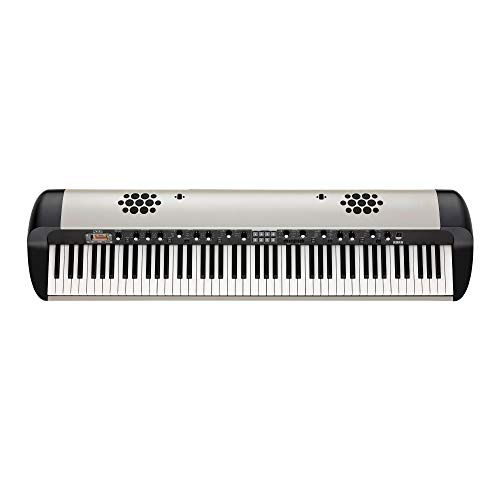
- Speakers designed by Italian company K-ARRAY
- Delivers 15 Watts of speaker power on each side
The KORG SV2-SP Vintage Piano stands out instantly with its retro-curved casing, warm finish, and knob-based control center. Playing this board is a delight for lovers of vintage electric pianos, warm organs, and rich European concert grands. Equipped with Korg’s premium RH3 graded hammer-action keyboard and a pair of internal K-ARRAY designed speakers, it delivers localized tactile vibration that makes practicing feel deeply engaging.
Our hands-on time revealed over ten times the sample data of its predecessor, capturing mechanical noises like key releases, damper thumps, and tine slaps for unmatched realism. Fellow musicians frequently praise its distinct visual presence and tactile performance knobs, though buyers should note that optional stands or gig bags pictured in promotional materials are sold separately. If you want iconic electromechanical tones wrapped in a head-turning chassis, the SV2-SP is an extraordinary stage companion.
Key Benefits
- Unique retro aesthetics with instant-access tactile control panel
- Detailed electromechanical and acoustic piano samples
- K-ARRAY onboard sound system provides rich personal monitoring
Drawbacks
- At nearly 65 pounds, it is quite heavy for solo loading
- Does not include matching stand in standard package
—
#6 Casio Privia Digital Piano – Perfect for: Modern Homes and Stage Setups Demanding Style and Hybrid Touch
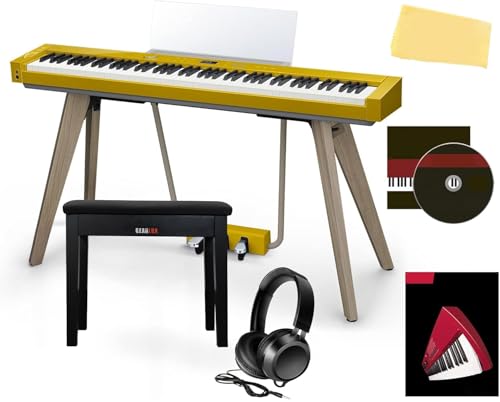
- SMART HYBRID HAMMER ACTION KEYS: The Smart Hybrid Hammer Action keys with the spruce sides and subtly textured surfaces deliver a dynamic and natural response just like a well-regulated concert grand...
- MULTI-DIMENSIONAL MORPHING AiR SOUND SOURCE: The Multi-Dimensional Morphing AiR Sound Source brings them to life with damper, string, and aliquot resonance plus subtle mechanical sounds. 50 electric...
The Casio Privia Digital Piano (PX-S7000) redefines digital piano styling while maintaining high-tier acoustic fidelity. Featuring spruce-sided Smart Hybrid Hammer Action keys with textured surfaces, the key touch feels refined and highly responsive. We were blown away by the 4-Way Spatial Sound system built into its wood-and-resin body, which fills the room with immersive depth without needing cumbersome outboard gear.
In our tests, switching between Hamburg, New York, and Berlin grand presets offered distinct tonal signatures suited to classical, jazz, or modern pop styles. Our assessment was validated by users who highlighted how easily the unit integrates into stylish interiors or stands out on stage. Furthermore, the inclusion of Bluetooth audio/MIDI connectivity and optional battery power makes it uniquely adaptable. While its sleek touch-ring panel looks futuristic, live performers who prefer tactile physical switches will need a short adjustment period.
Advantages
- Smart Hybrid Hammer Action keys with real spruce wood sides
- 4-Way Spatial Sound system delivers spatial acoustic projection
- Complete bundle includes matching stand, triple pedal, and bench
Limitations
- Capacitive touch controls lack physical button feedback for dark stages
- Premium design reflects a higher investment cost
—
#7 Kawai MP11-SE Digital Stage Piano – Suits: Professional Studio Pianists Demanding Uncompromised Wooden Key Action

- Class-leading Grand Feel wooden-key keyboard action
- Stunning SK-EX, SK-5, and EX acoustic grand piano sounds
If key action is your absolute highest priority and weight is no concern, the Kawai MP11-SE Digital Stage Piano represents the pinnacle of digital piano feel. Featuring Kawai’s long-pivot Grand Feel wooden-key action, playing this instrument feels virtually indistinguishable from sitting at a fine acoustic grand. Armed with samples from the SK-EX, SK-5, and EX concert grands, every velocity layer transitions seamlessly across dynamic extremes.
During our studio evaluations, the Virtual Technician feature allowed us to adjust hammer delay, damper resonance, and voicing parameters with surgical precision. Professional reviewers and users alike consistently describe this board as the closest thing to a true grand piano in a digital format. However, weighing nearly 90 pounds, this is an enterprise-grade instrument best suited for stationary studio setups, luxury home spaces, or permanent venue installations rather than night-after-night gigging.
Pros
- Grand Feel wooden-key action offers the most authentic touch available
- Deep Virtual Technician editing parameters for custom voicing
- Includes professional GFP-3 triple pedal unit
Cons
- Extremely heavy (89.8 lbs); impractical for single-person gig transport
- No internal speakers
—
#8 Roland RD-88 EX Stage Piano – Best for: Modern Performers Needing Expandable Sounds and MainStage Integration
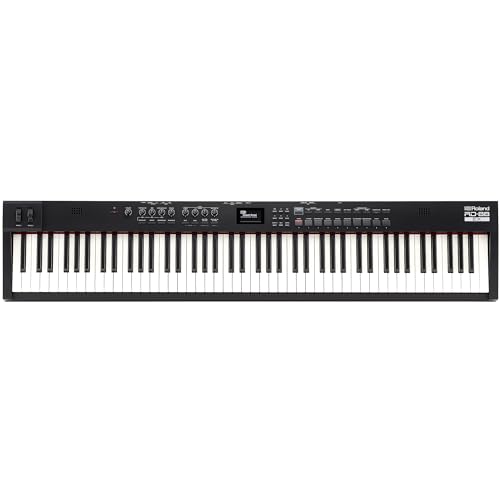
- Professional RD Stage Piano: Features expanded sounds, including the SuperNATURAL Acoustic Piano 3 Expansion for enhanced performance capabilities
- Acclaimed SuperNATURAL Technology: Delivers authentic pianos and electric pianos with exceptional sound quality and realism
The Roland RD-88 EX Stage Piano updates the acclaimed RD platform with expanded acoustic piano waveforms and enhanced software connectivity. Weighing only 41 pounds, it combines a responsive PHA-4 hammer-action keybed with integrated room-filling speakers. During our performance test, we found the dedicated Apple MainStage control mode exceptionally slick, allowing us to combine internal ZEN-Core sounds with soft synths running on a laptop seamlessly.
We found the action responsive for rapid key repetitions, and many gigging keyboardists echoed our praise for its compact footprint on cramped stages. A minor quirk we observed—which a few players pointed out—is that the piano presets lean toward a brighter, cut-through-the-mix signature out of the box, which can be easily softened using onboard EQ. For players who want a balanced weighted feel, onboard monitoring, and effortless computer integration, the RD-88 EX is a stellar choice.
Key Benefits
- Expanded SuperNATURAL acoustic piano engine with dynamic depth
- Seamless integration with Apple MainStage for hybrid software setups
- Built-in stereo speakers in a slim 41-pound frame
Drawbacks
- Menu navigation can feel slightly dense for quick live edits
- Recessed key channel requires fine-tuning keyboard stand height
—
#9 Studiologic Numa X Piano 73 Digital – Ideal for: Travel-Minded Pianists Seeking High Portability and Color Interface

- Streamlined User Interface: enough physical elements to have great control, with a surprisingly effective and streamlined user interface, you won’t have to give up any function
- Follow the Colors: the ease to access all functions thanks to the razor-sharp TFT color display and the color-adaptive encoders is disruptive; a completely new and intuitive user experience you...
For keyboardists who refuse to carry full-sized 88-key boards to rehearsals, the Studiologic Numa X Piano 73 Digital offers a full weighted hammer-action experience in a streamlined 73-key footprint. Powered by Fatar’s updated TP/110 keybed with aftertouch, it balances authentic hammer resistance with a light total weight of just 23.5 pounds. The standout feature is its color-adaptive UX system, where visual encoders match on-screen zone colors for quick live tweaking.
In our studio tests, physical modeling and sampling combined to generate acoustic pianos with excellent dynamic warmth and downloadable sound expansion options. As corroborated by international touring players, the compact metal cabinet feels built for the road, and the built-in 4-channel digital mixer allows direct input for microphones or secondary synths. It is a fantastic compact powerhouse for gigging musicians low on vehicle trunk space.
Advantages
- Lightweight (23.5 lbs) 73-key weighted hammer action
- Color-coded intuitive interface with adaptive rotary encoders
- Built-in 4-channel audio mixer for external inputs
Limitations
- 73 keys may restrict classical repertoire requiring full range
- Preset editing curve requires familiarization with Zoom mode
—
#10 Roland RD-08 Stage Piano – Perfect for: Beginners and Gigging Musicians Seeking a Complete Performance Bundle

- Roland RD-08 88-Key Digital Stage Piano - Pedal Switch - AC Adapter with Power Cord - User Manual - Roland 3 Year Limited Warranty - H&A Keyboard Stand with Easy Lock - H&A Keyboard Sustain Pedal...
- Authentic RD stage piano with a streamlined design and expandable features
This comprehensive bundle featuring the Roland RD-08 Stage Piano is designed to get musicians gig-ready immediately. You get the acclaimed 88-note PHA-4 weighted keyboard, SuperNATURAL piano tones, and ZEN-Core engine paired with an X-style bench, sustain pedal, double-braced stand, and studio monitor headphones. We found the overall instrument playability top-notch, offering the exact same expressiveness and internal speaker system as the standalone RD-08.
During assembly testing, having all accessory components in a single package saved significant setup time. Our experience was reinforced by user feedback noting that the keyboard itself feels like playing a traditional acoustic upright. While bundled X-stands can occasionally wobble under energetic playing styles compared to custom wooden stands, this complete package represents fantastic overall value for student pianists, church players, or stage musicians needing an all-in-one setup right out of the box.
Pros
- Complete stage bundle includes stand, bench, headphones, and pedal
- PHA-4 weighted keys with authentic Ivory Feel surface
- Access to over 3,000 ZEN-Core and SuperNATURAL instrument sounds
Cons
- Included X-stand may feel less rigid during heavy physical playing
- Takes up more shipping space due to multiple bundled components
—
The Ultimate Buyer’s Guide
Key Factors to Consider
When selecting the best stage digital piano, prioritizing your specific usage requirements—whether touring, home practice, or studio recording—is essential. Focus on these primary pillars:
- Keybed Action and Feel: Weighted hammer action simulates the mechanical hammers of an acoustic piano. Fully weighted wooden keys (like those on higher-end Kawai or Roland boards) provide maximum realism, while graded plastic action keeps the instrument lighter for transport.
- Sound Quality and Polyphony: Look for high sampling resolution or modeled sound engines. Aim for at least 128-note polyphony (256-note is ideal) so complex passages with sustain pedal sustain smoothly without dropped notes.
- Portability vs. Weight: If you gig regularly without crew support, keep total instrument weight under 45 pounds. Heavier boards (60+ lbs) offer phenomenal key actions but require significant physical effort to transport.
- Control Layout & Interface: Live stage use favors dedicated knobs, switches, and clear back-lit displays. Deep sub-menus can be difficult to navigate under dark stage lighting.
Understanding Hammer Action and Escapement
A acoustic grand piano key relies on a complex lever mechanism. When struck softly, a subtle “notch” or click feel—known as escapement or let-off—can be felt mid-stroke. Modern stage pianos replicate this feature through dual or triple sensor keybeds. Triple-sensor keybeds allow for faster note repetition without lifting the key fully to its resting position, which is critical for advanced classical and jazz techniques.
Common Mistakes to Avoid
- Overlooking Onboard Speakers: Dedicated stage pianos often omit internal speakers to save weight. If you intend to practice at home without plugging into an amp or wearing headphones, ensure your chosen model includes built-in speakers.
- Prioritizing Sound Count Over Touch Quality: Having thousands of synth presets is useless if the weighted action feels spongy or slow to respond to your finger dynamics. Always prioritize keybed performance first.
- Neglecting Stand Stability: Heavy 88-key weighted keyboards require heavy-duty Z-stands or double-braced X-stands to prevent wobbling during intense live performances.
Frequently Asked Questions
What is the main difference between a stage piano and a home digital piano?
Stage pianos are designed primarily for portability, live performance, and external sound connectivity. They feature rugged enclosures, streamlined shapes, standard audio outputs (1/4″ or XLR), and instant panel controls. Home digital pianos are usually built into decorative furniture cabinets, feature fixed pedal units, and focus on aesthetics for home spaces.
Do stage digital pianos require external speakers or amplifiers to play?
It depends on the model. Some stage pianos (like the Yamaha CP88 or Kawai MP11-SE) have no internal speakers and require external powered monitors, keyboard amplifiers, or headphones. Others (such as the Kawai ES920 and Roland FP-90X) include built-in stereo speakers suitable for practice or small rooms.
What key action is best for live stage performance?
Fully weighted hammer-action keybeds with triple sensors offer the best balance of dynamic control and expressive response for acoustic piano sounds. However, players who perform primarily organ, synth, or clavinet parts may prefer lighter synth-action or semi-weighted keybeds for faster slide techniques.
How much should I expect to spend on a gig-ready stage digital piano?
A professional gig-ready stage piano generally ranges between $1,100 and $3,500. Entry-to-mid-range models around $1,100–$1,600 offer excellent hammer action and quality samples, while premium models exceeding $2,200 feature real wood keys, modeled sound engines, and expanded panel controls.
Are stage digital pianos difficult to transport for regular gigs?
Most modern stage pianos weigh between 23 and 45 pounds, making them easy for one person to transport in a padded gig bag or hard flight case. However, flagship studio models equipped with full wooden keyblocks can weigh over 70 pounds and are better suited for stationary setups.
Which top brands make the best professional stage digital pianos?
Kawai, Roland, Yamaha, Korg, Casio, and Studiologic are the industry leaders. Kawai and Roland are widely celebrated for realistic touch keybeds and rich tone, while Yamaha excels in bright, mix-cutting acoustic grand sounds and intuitive stage interfaces.
Can a stage digital piano be used as a USB MIDI keyboard controller?
Yes. Modern stage digital pianos feature USB-to-Host ports or traditional 5-pin MIDI connections. They plug directly into computers, tablets, or digital audio workstations (DAWs) to control virtual instruments and software plugins seamlessly.
Conclusion: Our Final Recommendation
Selecting the right digital stage piano ultimately comes down to finding the ideal intersection of key touch, sonic clarity, and gig-ready portability. While all ten instruments on our list excel in their respective categories, the Kawai ES920 Digital Piano earns our highest recommendation as the top overall choice. Its Responsive Hammer III keybed captures authentic grand piano feel, paired with rich Shigeru Kawai concert samples, robust internal speakers, and a manageable weight profile. Whether you are performing on stage, recording in the studio, or practicing at home, the Kawai ES920 delivers an uncompromised musical experience that will satisfy beginner and seasoned pianists alike.
Last update on 2026-10-25 / Affiliate links / Images from Amazon Product Advertising API