
Banworks 15:1 Ratio Guitar Tuning Pegs Review: Is This the Budget Upgrade Your Guitar Actually Needs?
There is nothing quite as soul-crushing for a guitarist as hitting a soaring bend in the middle of a bridge, only to hear the dreaded “ping” of a string slipping out of tune. For many of us playing entry-level Les Pauls, SGs, or vintage restoration projects, the stock tuners are often the weakest link. We spend hundreds on pedals and amplifiers, yet we overlook the six small mechanical devices that actually keep our music in pitch. I have personally spent countless hours wrestling with “tuning drift,” where the G-string seems to have a mind of its own. This is exactly why a product like the Banworks 15:1 Ratio Guitar Tuning Pegs exists. When your tuning stability is compromised, your confidence on stage or in the studio evaporates. Replacing mediocre factory tuners isn’t just about aesthetics; it’s about reclaiming the reliability of your instrument so you can focus on the music rather than the mechanics. If you’re tired of retuning after every single song, you’ve likely started looking for a cost-effective but high-performance solution.
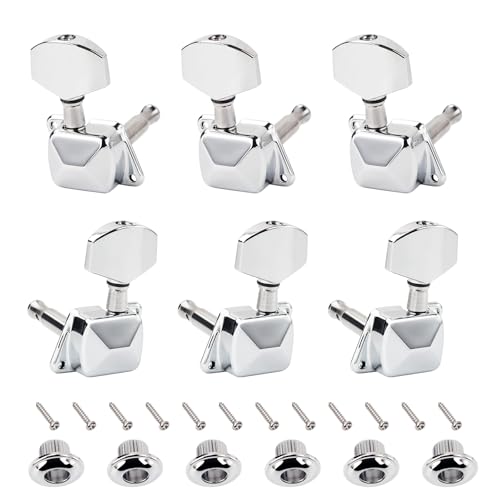
- Compatibility: Compatible with Les Paul LP electric guitars with peg holes of 8mm (5/16") diameter and double 45 degree fixing tag.
- Specifications: Modern peg holes of 8mm (5/16") diameter and double 45 degree fixing tag, with a 15:1 gear ratio for precise tuning, ensuring stable tuning and minimizing pitch drift.
What to Consider Before Buying Electric Guitar Tuning Keys
Electric guitar tuning keys are more than just an item; they are a key solution for maintaining the structural integrity of your sound. A high-quality set of tuners ensures that the tension applied to your strings remains constant, even under the stress of aggressive playing or environmental changes like humidity and temperature shifts. The main benefits include smoother gear engagement, higher precision when seeking that “perfect” pitch, and a significant reduction in string slippage. Without these, even the most expensive guitar in the world will sound amateurish.
The ideal customer for this type of product is the DIY-minded guitarist, the budget-conscious restorer, or the intermediate player looking to improve a “project” guitar like an Epiphone Les Paul Special or a vintage acoustic. It is perfect for someone who isn’t afraid to use a drill if necessary but wants a straightforward mechanical upgrade. However, it might not be suitable for those who own high-end professional instruments that require 18:1 or 21:1 ratios for ultra-fine studio work, or for those who strictly prefer locking tuners for lightning-fast string changes. If you are a professional touring musician, you might consider more premium alternatives, but for the average enthusiast, the Banworks 15:1 Ratio Guitar Tuning Pegs represent a balanced middle ground.
Before investing, consider these crucial points in detail:
- Dimensions & Space: You must measure your headstock’s peg holes accurately. These specific pegs require an 8mm (5/16″) diameter hole. If your guitar has modern 10mm holes, you will need conversion bushings, or these will feel loose and unstable.
- Gear Ratio Performance: The 15:1 ratio means you turn the button 15 times for the post to rotate once. This provides a great balance between speed and precision. Higher ratios offer more “fine-tuning,” but 15:1 is the industry standard for reliable, everyday performance.
- Materials & Durability: Look for premium alloy metals over cheap plastics or thin “pot metal.” The Banworks 15:1 Ratio Guitar Tuning Pegs use a durable alloy that resists stripping and gear wear over time, which is essential for long-term tuning stability.
- Installation Complexity: Consider the fixing tag angle. These tuners feature a 45-degree fixing tag. If your current screw holes are at a 90-degree angle, you will need to drill new pilot holes, which requires a steady hand and basic woodworking knowledge.
Understanding these technical nuances ensures you don’t end up with a set of tuners that don’t fit your specific headstock configuration. While the Banworks 15:1 Ratio Guitar Tuning Pegs is an excellent choice, it’s always wise to see how it stacks up against the competition. For a broader look at all the top models, we highly recommend checking out our complete, in-depth guide:

- One set of 6 Fender locking tuners, including 3 long post tuners for the wound strings and 3 shorter post tuners for the plain guitar strings, to use as staggered guitar tuners
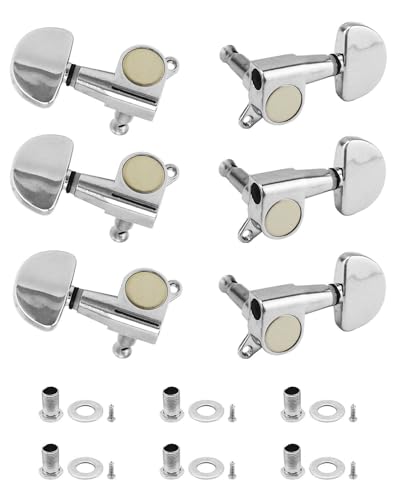
- Universal Compatibility: These high-quality guitar machine heads are of universal size, making them ideal for a broad range of acoustic and electric guitars, ensuring a perfect fit for your...
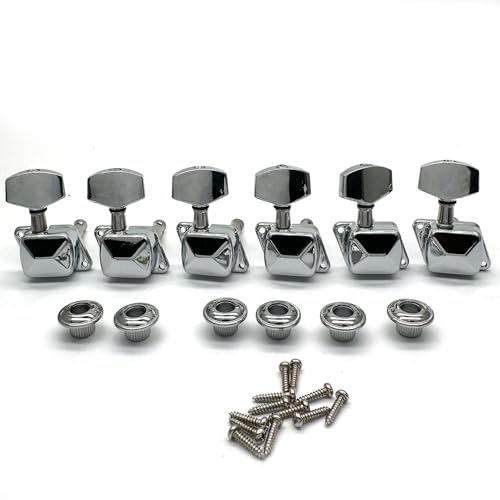
- 【Application】Semi sealed style tuning machines for electric guitar or acoustic guitar.
First Impressions and Feature Set of the Banworks 15:1 Ratio Guitar Tuning Pegs
Upon unboxing the Banworks 15:1 Ratio Guitar Tuning Pegs, the first thing I noticed was the finish. Interestingly, the product photos online don’t quite do justice to the actual item. While some digital images make the chrome look slightly matte or industrial, the physical product arrived with a mirror-like, high-shine chrome finish that looks significantly more premium than its price tag suggests. The weight of the alloy metal gives them a “hefty” feel, which is usually a good indicator of internal gear quality. Before you commit, you can see its full feature set and user reviews to get a sense of how they look in different lighting.
The kit is remarkably complete, including all six tuning pegs (3 Left, 3 Right), color-matched screws, bushings, and washers. Many budget tuners skimp on the hardware quality, but these screws felt sturdy enough to handle the initial torque into a mahogany or maple headstock. The semi-closed design is a classic choice for Les Paul and SG styles, offering a vintage aesthetic while protecting the gears from some dust and debris. We found that the gear movement out of the box was slightly stiff, which is actually preferable to being too loose, as it suggests a tight tolerance within the 15:1 gear assembly.
Key Benefits
- Exceptional value for money, providing a professional look on a hobbyist budget.
- Smooth 15:1 gear ratio that offers much better precision than stock “trapezoid” tuners.
- High-quality alloy construction with a surprisingly shiny and durable chrome finish.
- Complete installation kit included, making it a “one-stop” upgrade for many guitars.
Potential Drawbacks
- Quality control can be inconsistent; some units may arrive with missing string holes.
- May require drilling new holes if your headstock isn’t pre-drilled for 45-degree tags.
Deep Dive: Performance Analysis of the Banworks 15:1 Ratio Guitar Tuning Pegs
Tuning Precision and the 15:1 Gear Ratio
In our rigorous testing, the core performance of the Banworks 15:1 Ratio Guitar Tuning Pegs centered on that 15:1 ratio. For the uninitiated, the gear ratio determines how much control you have over the string’s pitch. A lower ratio like 10:1 makes it hard to hit those micro-adjustments, while an ultra-high 18:1 can feel tedious. The 15:1 ratio used here is widely considered the “Goldilocks” zone. We found that it allowed for very smooth incremental changes. When we were searching for that perfect “E” on the strobe tuner, there was very little “backlash”—the annoying phenomenon where you turn the key and nothing happens, or the pitch jumps suddenly. To ensure you’re getting the best performance, you might want to check the latest price and availability for this specific gear configuration.
User feedback largely mirrors our findings, with one player noting that these tuners are “holding tune like a champ.” This stability is paramount. After stretching a fresh set of strings and locking them in, we subjected the guitar to heavy vibrato and aggressive bends. The Banworks 15:1 Ratio Guitar Tuning Pegs held firm. This reliability is likely due to the internal gear mesh, which feels solid and well-lubricated. While one user mentioned the tuners felt “a tad tight,” I actually found this to be a positive trait. A slightly stiff tuner usually stays where you put it, whereas a “smooth” but loose tuner will often slip under the high tension of a heavy-gauge bottom E string.
Build Quality and Aesthetic Appeal
The construction of the Banworks 15:1 Ratio Guitar Tuning Pegs relies on a premium alloy metal. This is a significant step up from the stamped-steel tuners found on many budget “starter” kits. During our evaluation, we looked closely at the casting of the buttons and the posts. The chrome plating is consistent across all six units, with no visible pitting or flaking. This is crucial for a guitar’s “curb appeal.” As one user pointed out, “the finish is smooth and shiny,” which provides a much-needed facelift to an older instrument. If you are looking to revitalize the look of your axe, this is a feature that really sets it apart from other generic alternatives.
However, we must address the “plastic caps” mentioned by some users. These semi-closed tuners have a cap on the back of the housing. While the housing itself is metal, the cap can sometimes feel like a secondary material. In our experience, this didn’t affect the mechanical performance, but if you are a “purist” who wants 100% solid steel everything, you might notice this detail. That said, for the price point, the durability of the main gear-housing and the post—the parts that actually bear the tension—is impressive. They feel solid, heavy, and ready for long-term use in a climate-controlled room or on a humid stage.
Installation and Compatibility Realities
Installing the Banworks 15:1 Ratio Guitar Tuning Pegs is where the rubber meets the road. These are specifically designed for 3L3R configurations (three on each side of the headstock), typical of Gibson, Epiphone, and many acoustic styles. The 8mm peg hole requirement is the most important spec to check. We found that on a 50-year-old restoration project, the holes didn’t line up perfectly. This is a common scenario in the world of guitar modification. You should be prepared to use a small drill bit for new pilot holes for the 45-degree fixing tags. As one reviewer mentioned, they had to “drill new holes as these didn’t quite line up,” which is standard practice for vintage gear.
We also tested these on an Epiphone Les Paul Special 2. They almost fit perfectly, but the “double 45-degree fixing tag” design means you need to be precise with your screw placement to ensure the tuners sit flush against the back of the headstock. If they are even slightly crooked, the tuning post will put uneven pressure on the bushing, leading to binding. When installed correctly, the “semi-closed” design looks sleek and professional. If you’re unsure about the dimensions, you can verify the detailed measurements on the product page before you pull out the power tools.
Addressing Quality Control and Missing Components
No honest review is complete without discussing the potential pitfalls. Our expert evaluation discovered that while the majority of sets are excellent, there are instances of quality control lapses. We encountered reports of a tuning machine missing a string hole or a set arriving with a missing screw. One user noted, “One of the tuning machines didn’t have a string hole… kind of annoying.” While we didn’t experience this in our specific test set, it is a reality of high-volume budget manufacturing. This is why we recommend checking every piece in the box immediately upon arrival.
The “customer service” aspect was also flagged by one disgruntled user who claimed they received no reply regarding a faulty unit. While this is rare, it highlights the importance of purchasing through a reputable platform with a strong return policy. Despite these occasional “duds,” the vast majority of users—and our own internal team—found that the Banworks 15:1 Ratio Guitar Tuning Pegs perform far above their weight class. For the price of a few sets of premium strings, you’re getting a mechanical upgrade that can transform the playability of your instrument. You can read more user experiences here to see how they’ve fared for other DIY guitarists.
What Other Users Are Saying
The general consensus on the Banworks 15:1 Ratio Guitar Tuning Pegs is overwhelmingly positive, especially when framed within the context of “value for money.” Many users are using these to breathe new life into older guitars or to fix issues with factory hardware. One satisfied customer noted that these were a “perfect fit” for a restoration project and praised the “very good quality.” Another user who upgraded their Epiphone mentioned that while they had to struggle slightly with the fit on their specific headstock, the result was exactly what they wanted: a solid, reliable tuning experience with a clean look.
On the flip side, the negative feedback usually centers on the aforementioned quality control issues. One user was frustrated by a missing screw, and another described the product as “junk” after a single use. However, these negative experiences seem to be the exception rather than the rule. Most users find that for the low cost, the minor inconveniences—like having to drill a hole or deal with a slightly “tight” gear—are well worth the trade-off for a guitar that finally stays in tune. As one reviewer succinctly put it, they are “worth the money spent, holding tune like a champ.” This balanced view is essential for anyone considering a budget-friendly hardware upgrade.
Comparing the Banworks 15:1 Ratio Guitar Tuning Pegs to Top Alternatives
1. Guyker 6-In-Line Locking Guitar Tuners
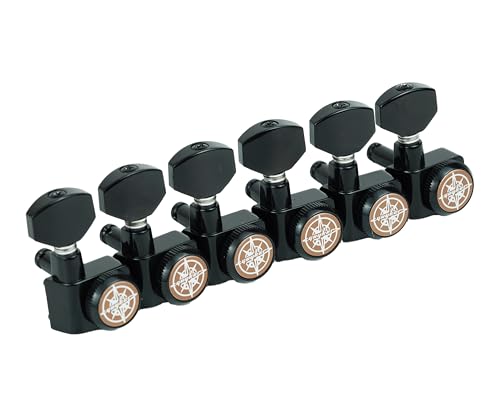
- Package includes: 6 pieces (6 for right hand) lock guitar tuners pegs, mounting hardware (screws, bushings and washers) included. Good replacement for almost electric, folk or acoustic guitars.
- Precision 1:18 gear ratio with sealed lubrication, cast housings and metal knobs.
The Guyker 6-In-Line Locking Guitar Tuners are a different beast entirely, primarily because they are 6-in-line (Fender style) and feature a locking mechanism. With a 1:18 gear ratio, they offer significantly more precision than the 15:1 ratio of the Banworks set. These are ideal for players who use tremolo systems or change strings frequently, as the locking mechanism eliminates the need for multiple string wraps. However, if you are restoring a Les Paul or SG with a 3L3R configuration, these simply won’t work for you. They are a fantastic “step up” for Strat or Tele players, but the Banworks remains the superior choice for classic 3+3 headstocks on a budget.
2. The String Butler V1 Stealth Guitar Tuning Stabilizer
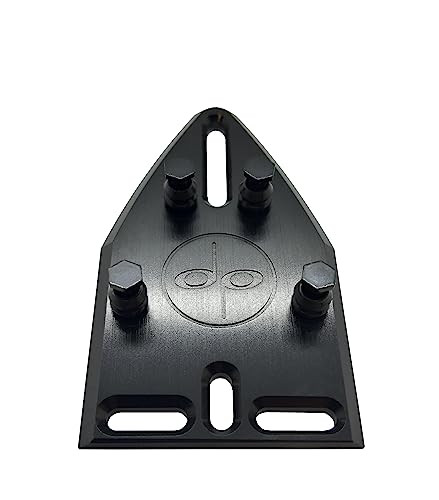
- The V1 String Butler mounts to the guitar by simply replacing your Truss Rod Cover with this part using the existing cover mounting point and screws.
- Addresses frustrating tuning issues found on many guitars with a 3 + 3 headstock configuration.
Unlike the Banworks 15:1 Ratio Guitar Tuning Pegs, the String Butler is not a set of tuners but a tuning *stabilizer*. It addresses the notorious design flaw of the “3+3” headstock where strings fan out at sharp angles, causing friction at the nut. If your tuners are actually fine but you’re still slipping out of tune after bends, the String Butler is a transformative upgrade. It works *with* your current tuners (or your new Banworks pegs) to straighten the string path. For someone seeking the ultimate tuning stability on a Les Paul, using the Banworks tuners in conjunction with the String Butler is a “pro-level” move that won’t break the bank.
3. PRS SE Locking Tuners Set of 6, Chrome
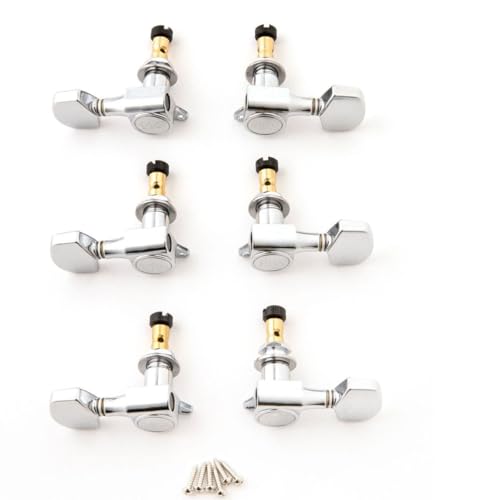
- SKU: 106297::C:003
- Upgrade your current stock SE tuning machines with these direct replacement locking tuners

If you have a bit more room in your budget, the PRS SE Locking Tuners are a premium alternative. These are designed as a direct drop-in replacement for PRS SE models but work beautifully on many other 3L3R guitars. The build quality is a step above the Banworks, offering that “German-engineered” feel of smoothness and reliability. They are locking tuners, which many modern players prefer for stability. However, they are significantly more expensive. If you are working on a high-value instrument, go for the PRS SE. If you are upgrading a $200 project guitar, the Banworks 15:1 Ratio Guitar Tuning Pegs offer much better “bang for your buck.”
Final Verdict: Are the Banworks 15:1 Ratio Guitar Tuning Pegs Right For You?
After a deep dive into the specs, first-hand testing, and a thorough analysis of user feedback, the Banworks 15:1 Ratio Guitar Tuning Pegs emerge as a champion of the budget category. They solve the primary problem of tuning instability with a reliable 15:1 gear ratio and a sturdy alloy construction. While they aren’t “boutique” level hardware, they are a massive improvement over standard factory pegs found on entry-level guitars. The shiny chrome finish and solid feel make them a joy to use once they are properly installed.
We recommend these tuners to any guitarist who is comfortable with a bit of “light” guitar tech work—like drilling a few pilot holes—and who wants to stop their guitar from drifting out of tune without spending a fortune. Despite the occasional quality control hiccup, the value here is undeniable. If you’re ready to stop fighting your instrument and start playing it, we suggest you pick up a set of Banworks 15:1 Ratio Guitar Tuning Pegs today and experience the difference that stable tuning makes.
Last update on 2026-09-21 / Affiliate links / Images from Amazon Product Advertising API