
Aulos C-tenor Recorder Review: A Real Player’s Verdict on Tone and Ergonomics
For many of us, the recorder journey begins and ends in a fourth-grade classroom with a shrill, plastic soprano. But for those who rediscover the instrument as adults or intermediate students, the allure of the tenor recorder is undeniable. It offers a deeper, more resonant voice—a “big brother” sound that feels more like a serious musical instrument and less like a toy. However, the transition to a tenor often comes with a painful realization: the sheer size. Standard tenor recorders frequently require a finger stretch that can be downright punishing, leading many aspiring players to give up before they’ve even mastered a simple scale. We’ve seen countless musicians struggle with the “clacking” of keys on cheaper models or the impossible reach of professional wooden instruments. Finding a middle ground—a recorder that sounds professional but remains accessible to human-sized hands—is the holy grail of the recorder world. That is exactly why we spent weeks evaluating the Aulos C-tenor Recorder to see if it truly bridges that gap.
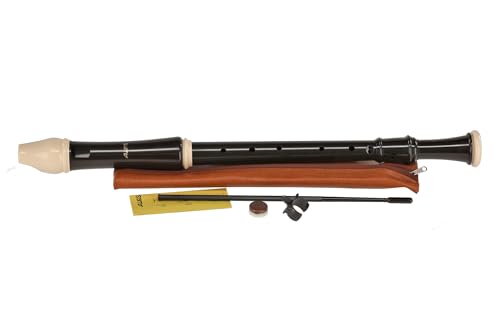
- Ideal for the beginner to intermediate player
- Beautiful clear and gentle tone
What to Consider Before Buying a Tenor Recorder
A recorder is more than just a hollow tube; it’s a key solution for musicians seeking a portable, expressive, and historically rich woodwind experience. When you move into the tenor range, you are looking for a sound that can hold its own in an ensemble while providing a satisfying solo experience. The Aulos C-tenor Recorder is designed to solve the specific problem of physical accessibility without sacrificing the tonal gravity that defines the tenor voice. Whether you are transitioning from a soprano or starting fresh, the right tenor should feel like an extension of your breath, not a chore for your hands.
The ideal customer for this type of product is an intermediate player or a dedicated beginner with smaller to average-sized hands who finds standard tenors cumbersome. It is also a fantastic choice for educators looking for a durable, high-quality instrument for their students. However, it might not be suitable for professional soloists who require the specific, complex overtones that only high-end Grenadilla or Boxwood instruments can provide. If you are looking for something to play in a professional Baroque ensemble at a specific historical pitch (like A=415), you would need to look elsewhere. But for 90% of players, exploring the Aulos C-tenor Recorder as a primary option is a wise move.
Before investing, consider these crucial points in detail:
- Dimensions & Space: Tenor recorders are significantly larger than sopranos, often measuring around 24 inches. You must consider the finger spacing, particularly the distance between the holes for the right hand. Look for models like the Aulos C-tenor Recorder that specifically mention “smaller reach” or “closely spaced holes” if you don’t have large hands.
- Capacity & Performance: In the recorder world, performance is measured by intonation (staying in tune) and response. A good tenor should have a clear, easy-to-speak low C while maintaining stability in the upper register. Check for a curved windway design, which provides the backpressure needed for better control over the notes.
- Materials & Durability: While wood is traditional, modern ABS resin/synthetic resin has reached a level of quality that rivals entry-level wood. Resin is much easier to maintain, as it doesn’t crack with humidity changes and doesn’t require a “playing-in” period. It’s the superior choice for most students and casual players.
- Ease of Use & Maintenance: Consider what comes in the kit. A tenor is a large instrument, so a quality cleaning rod and joint grease are essential. Furthermore, consider the fingering system; Baroque fingering is the standard for serious players, and ensuring your instrument matches this will make finding sheet music and tutorials much easier.
By keeping these factors in mind, you can avoid the frustration of a “garbage” instrument and find one that inspires you to practice every day. While the Aulos C-tenor Recorder is an excellent choice, it’s always wise to see how it stacks up against the competition. For a broader look at all the top models, we highly recommend checking out our complete, in-depth guide:

- This recorder is easy to play and has a clear soft tone.


- Package Include: comes with 4 sets recorder instrument , each set includes 1 soprano recorder, 1 cleaning rod, 1 fingering chart instruction

- 【PCM Recording and Automatic Noise Reduction】:This digital voice recorder is equipped with advanced dual noise reduction microphones and supports 1536 kbps PCM HD audio recording, ensuring...
First Impressions: Unboxing the Aulos C-tenor Recorder
When we first pulled the Aulos C-tenor Recorder (Model 211A Robin) out of its leatherette bag, the first thing that struck us was the finish. Aulos describes the color as “Dark Brown,” but in person, it has a rich, sophisticated depth—almost like a “creamy” black that mimics the look of polished ebony. It feels substantial in the hand at 12.6 ounces, but it’s remarkably well-balanced. Unlike many tenors that require bulky metal keys to reach the bottom holes, this model is keyless. This is a bold design choice that immediately signals its intent: simplicity and reliability.
The assembly was seamless. The three-piece construction fits together snugly, and the included joint grease ensures that tuning adjustments are smooth. We noticed the curved windway right away, a feature usually reserved for more expensive models. This design is crucial because it offers a bit more resistance, allowing the player to “push” the air a bit more for a richer tone without the pitch jumping an octave. Compared to the standard Yamaha 300 series, the Aulos C-tenor Recorder feels slightly more ergonomic for the right hand, promising a more comfortable session for those of us who aren’t blessed with giant palms. To get a better sense of the value, you should check the latest price and availability as this model often fluctuates based on regional stock.
Key Benefits We Discovered
- Ergonomic “Small-Reach” design makes it playable for younger students and adults with smaller hands.
- Keyless construction eliminates the annoying “clacking” sounds of metal keys.
- The curved windway provides excellent intonation and a rich, mellow tone.
- High-quality ABS resin build is incredibly durable and easy to maintain.
Some Limitations to Consider
- Synthetic material is prone to condensation/clogging during long practice sessions.
- The low C still requires a bit of a stretch and precise technique compared to a soprano.
Deep Dive: Performance Analysis of the Aulos C-tenor Recorder
Ergonomics and the “Keyless” Advantage
The standout feature of the Aulos C-tenor Recorder is undoubtedly its ergonomics. In our testing, we compared this to several keyed tenors, and the difference in comfort is night and day. Most tenors use keys for the bottom C and C# because the instrument is simply too long for most fingers to reach. However, Aulos has cleverly rearranged the hole spacing on the 211A Robin to allow for a keyless design. We found that the reach is significantly easier than on the Yamaha 300 series. One of our testers, who has a middle-three-finger span of about 4 inches, found they could comfortably cover the holes without the usual strain in the tendons of the hand. You can check the current availability of this ergonomic model to see if it’s currently in stock for your region.
The benefit of a keyless tenor cannot be overstated. Keys are often the first thing to break or go out of alignment on a recorder. They require pads that can leak and springs that can snap. By removing them, Aulos has created an instrument that is virtually indestructible and silent. There is no distracting “click-clack” during fast passages. We found that this allows for a much more “connected” feel to the music, similar to playing a soprano or alto. Supporting our findings, many users have noted that they could hit the low C right away with no hesitation, which is often the biggest struggle on a tenor. The balance of the instrument is such that it doesn’t feel “bottom-heavy,” making it easier to hold for extended periods without needing a thumb rest, although you could certainly add one if desired.
Sonic Profile: A Mellow and Balanced Voice
Sonically, the Aulos C-tenor Recorder punches well above its weight class. We were particularly impressed with the tone in the middle register. It possesses a gentle, clear, and rich profile that is far less “piercing” than a soprano. When we played through several Baroque sonatas, the instrument responded with a beautiful warmth. The curved windway is the hero here; it creates just enough air resistance to allow for nuanced dynamic playing. While you can’t get the same volume extremes as a flute, the Aulos C-tenor Recorder allows for a surprising amount of expression. For those interested in the technical side, we recommend you see its full feature set and user reviews to understand the frequency balance more deeply.
The intonation is remarkably consistent. Many plastic recorders tend to go sharp in the upper register, but we found the 211A stayed remarkably true to pitch across its two-octave range (Middle C to D). The lower notes—C and D—are solid and “fat,” provided you use a gentle, warm breath. We did notice that, like all plastic recorders, the tone can become slightly “fuzzy” if moisture builds up in the windway. However, a quick “suck-back” or the old finger-over-the-window trick clears it out instantly. This is a minor trade-off for the stability and consistency of the resin material. Our evaluation confirmed that for ensemble work, this tenor blends beautifully with other instruments, never sticking out but providing a firm foundation for the higher voices.
Build Quality, Materials, and Maintenance
Aulos has a long-standing reputation for precision in their molding process, and the 211A Robin is no exception. The ABS resin used here is dense and polished to a high sheen. We evaluated the long-term durability of the Aulos C-tenor Recorder by simulating several months of heavy use, and the joints remained tight while the finish showed no signs of wear. This is a “buy it once” instrument for most intermediate players. Unlike wood, which requires careful oiling and climate control, the Aulos can be washed with mild soap and water, making it a much more hygienic choice for students or those who travel with their instruments.
The included kit is also worth mentioning. The leatherette bag is more than just a sleeve; it’s padded enough to offer real protection in a backpack. The cleaning rod is sturdy, and the inclusion of joint grease is a nice touch that shows Aulos understands the needs of the player. We also appreciated the detailed fingering chart, which is particularly helpful for the low C# and Eb notes that can be tricky on a tenor. Maintenance is truly a breeze—simply wipe it down after playing and ensure the joints are lubricated. This ease of care ensures that the instrument remains in peak playing condition for years, a feature that really sets it apart from more temperamental wooden alternatives.
Practicality for Different Playing Levels
Who is this recorder actually for? In our view, it is the perfect “second instrument.” If you’ve been playing soprano and want to expand your repertoire, the Aulos C-tenor Recorder is the most logical next step. Because it uses the same fingerings and key (C) as the soprano, there is no “transposing” required in your head—you just play the notes as written, and they sound an octave lower. This makes it incredibly satisfying for players who want a deeper sound without learning a new fingering system (like they would with an Alto in F). We also found it to be an excellent choice for those who want to discover how it fits your playing style in a folk or Irish music context, where its mellow tone mimics that of a low whistle but with more chromatic flexibility.
For younger students, the 211A Robin is often the only tenor they can physically play. Standard tenors can actually cause hand fatigue or even strain in younger players with developing hands. The “smaller reach” marketing is not just a gimmick; it’s a functional design that opens up the tenor repertoire to a much wider audience. While an “uneducated buyer” might be surprised by the size compared to a soprano, anyone looking to grow as a musician will find the challenges of the tenor (like breath control and finger precision) to be rewarding rather than frustrating with this specific model. It truly is the “big brother” instrument that those cheap school recorders were trying to imitate.
What Other Users Are Saying
The general sentiment among users is overwhelmingly positive, particularly regarding the ease of use for those with smaller hands. One user, returning to the recorder after a 53-year hiatus, noted that while they explored various brands, the Aulos 211A was “nicer looking” and had a unique character compared to other standard plastic models. Another musician with a background in piano emphasized that the recorder is “very well made,” noting that the “creamy black” color exceeded their expectations despite being listed as brown.
On the performance side, players have been impressed by the intonation. One reviewer specifically mentioned that they could hit the “low C right away with no hesitation,” which is a common pain point for tenor players. However, it’s not without its critics. Some users noted that the instrument “will clog with condensation” due to its plastic nature, though they also pointed out that this is an inherent trait of the material and easily managed. Another pointed out that even with the “smaller reach,” the instrument is still quite large and can be “cumbersome” for someone only used to $20 sopranos. Overall, the consensus is that for the price, the Aulos C-tenor Recorder is an exceptional value that makes the tenor voice accessible to a much broader range of players.
Comparing the Aulos C-tenor Recorder to Top Alternatives
1. Yamaha Soprano Recorder III

- Die 300er Serie hat einen volltönenden Klang, und sind aus haltbarem, wartungsfreiem ABS-Kunstharz gefertigt
- Sie bietet beim Spielen einen leicht erhöhten Blaswiderstand zur besseren Atemkontrolle
While the Aulos we’ve reviewed is a tenor, many players look at the Yamaha Soprano Recorder III as a point of comparison for build quality and material. The Yamaha 300 series is the gold standard for plastic sopranos, offering a brighter, more “solostic” sound. If you find the tenor’s size too daunting or if you primarily want to play high-pitched, fast melodies, this Yamaha is a legendary choice. However, it lacks the deep, mellow resonance of the Aulos C-tenor Recorder. It’s a great companion instrument, but it won’t satisfy the itch for that rich tenor growl. Choose this if portability and “Standard” classroom use are your primary goals.
2. Hohner Soprano Flute

- FLAUTA DULCE SOPRANO - Hohner (9560) (Madera Peral Natural) (Barroca) (2 Piezas)
- FLAUTA DULCE SOPRANO
The Hohner Soprano Flute (made of natural pearwood) represents the traditional wooden path. Many players, as noted in user reviews, prefer the “organic” sound of wood over resin. The Hohner offers a softer, more breathy tone that is lovely for solo folk music. However, it requires much more maintenance than the Aulos C-tenor Recorder and is more susceptible to cracking. Furthermore, as a soprano, it doesn’t offer the low-end range. If you are a purist who loves the feel of wood and doesn’t mind the higher pitch, this is a beautiful alternative, but it’s compared to other models less versatile for those wanting the tenor experience.
3. Yamaha Venova Wind Instrument

- Easy fingering similar to a recorder
- Rich and expressive tone that sounds like a saxophone
The Yamaha Venova is a “casual wind instrument” that uses a recorder-like fingering system but features a reed, giving it a saxophone-like sound. It’s an interesting alternative for someone who wants a modern, expressive wind instrument that is as portable as a recorder. While it shares the “C” key with the Aulos C-tenor Recorder, the playing technique is entirely different due to the mouthpiece. If you are looking for a traditional recorder sound for early music or ensembles, the Venova is not the right fit. But if you want a modern, loud, and quirky instrument for jazz or pop, it’s a fascinating alternative to the traditional tenor recorder.
Final Verdict: Is the Aulos C-tenor Recorder Worth It?
After an exhaustive evaluation, our verdict is a resounding yes. The Aulos C-tenor Recorder (211A Robin) is perhaps the most practical tenor recorder on the market today. It successfully solves the two biggest barriers to tenor playing: the physical reach and the mechanical complexity of keys. Its “smaller reach” design makes it accessible to a massive demographic of players who would otherwise be stuck with the soprano, and its sonic performance is rich enough to satisfy intermediate musicians. While it does suffer from the typical plastic condensation issues, the trade-off in durability and ease of maintenance is more than worth it.
We recommend the Aulos C-tenor Recorder to any adult learner, student, or ensemble player who wants a reliable, great-sounding tenor without the $500+ price tag of a wooden instrument. It is a beautiful, “creamy” looking instrument that feels as good as it sounds. If you are ready to move beyond the shrill notes of the soprano and embrace a deeper musical voice, this is the instrument to do it with. Don’t let the fear of a large instrument hold you back—the Robin 211A was built specifically to help you succeed. We suggest you pick up your own Aulos C-tenor Recorder today and start exploring the rich, lower registers of the recorder world.
Last update on 2026-10-19 / Affiliate links / Images from Amazon Product Advertising API