
Anton Breton AB-110 Student Violin Bow Review: The Ideal Entry-Level Choice for Junior Virtuosos?
I have spent years navigating the complex world of string instruments, and if there is one thing I have learned, it is that the smallest sizes often present the biggest challenges. When a three or four-year-old begins their musical journey, they are usually handed a 1/16 size instrument. At this scale, many manufacturers treat the bow as a mere toy—a “disposable” accessory made of low-grade wood or plastic hair. This is a critical mistake. A poor bow can frustrate a child, making it impossible to produce a clean tone and ultimately leading them to quit before they’ve even started. We recently encountered a student who was struggling with a bow that came with a budget outfit; it was warped, heavy, and couldn’t hold rosin. Switching to a dedicated, well-crafted tool is not just an upgrade; it is a necessity for developmental success. To see if there was a better way, we took a deep look at the Anton Breton AB-110 Student Violin Bow to see if it truly offers the balance and quality required for those crucial first lessons.

- Round, resilient brazilwood stick with exceptional balance and flexibility for crystal clear intonation
- Traditional non-slip sheepskin cushioned wrap with silver-plated button gives optimal comfort

What to Consider Before Buying a Student Violin Bow
A violin bow is more than just an item; it’s a key solution for sound production and technical development. In the world of violin playing, the bow is often considered the “soul” of the instrument. While a beginner might think the violin does all the work, it is the bow that dictates articulation, volume, and tonal color. For a student, a bow that is poorly balanced or made of “mushy” wood will hinder their ability to learn basic strokes like detache or staccato. Investing in a quality student bow solves the problem of “scratchy” sounds and helps the player develop the correct muscle memory in their bowing arm.
The ideal customer for this type of product is a young beginner—typically aged 3 to 5 for a 1/16 size—or a parent looking to upgrade the “factory” bow that often comes with entry-level violin kits. It is also an excellent choice for teachers who want a reliable, consistent recommendation for their studios. However, it might not be suitable for advanced students or professional players who require the nuanced response of high-end Pernambuco wood or professional-grade carbon fiber. For those higher up the skill ladder, the weight and flexibility of a student-grade brazilwood bow will feel limiting during complex solo repertoire.
Before investing, consider these crucial points in detail:
- Dimensions & Size Accuracy: For 1/16 size players, every millimeter counts. A bow that is even slightly too long or heavy for the designated size can cause shoulder strain in a toddler. You want a bow that adheres strictly to the fractional sizing standards to ensure it fits comfortably in the student’s hand and inside their small case.
- Material Resilience: At the student level, durability is as important as tone. Brazilwood is the traditional choice because it offers a natural “give” and warmth that synthetic bows sometimes lack, but it must be high-quality brazilwood to prevent warping over time under the tension of the hair.
- Hair Quality: Many cheap bows use “synthetic” hair or bleached horsehair that is too smooth to grip the string. Look for genuine, unbleached horsehair. This natural texture allows the rosin to “bite” the string, which is essential for a beginner to produce a sound without having to press too hard.
- Ease of Maintenance: A student bow will see some rough handling. You need a frog and screw mechanism that is robust and smooth. If the screw is difficult to turn, the student (or parent) may over-tighten or under-loosen the bow, leading to snapped sticks or stretched hair.
Choosing the right bow sets the foundation for a lifetime of playing. While the Anton Breton AB-110 Student Violin Bow is an excellent choice for those starting out, it’s always wise to see how it stacks up against the competition. For a broader look at all the top models across different skill levels, we highly recommend checking out our complete, in-depth guide:

- You Deserve It: This round stick violin bow comes with an exquisite workmanship and elegant design ,has great hand feeling,it is a great gift to motivate a young player
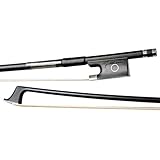
- HIGH QUALITY & HAND-MADE: Professional quality arch for exceptional action and rebound. High carbon composite hollow stick delivering superior resonance and balance.
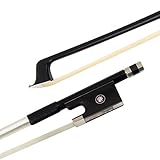
- Crafted using advanced molding techniques,the violin bow is constructed of carbon fiber and other modern materials,delivers a new level of performance way,beyond that of traditional wood construction
First Impressions: The Anton Breton AB-110 Student Violin Bow Unboxed
When we first handled the Anton Breton AB-110 Student Violin Bow, the most striking thing was its weight. For a 1/16 size bow, it feels remarkably nimble. While some user reports suggest a weight of around 45 grams for the 1/2 size, this 1/16 version is appropriately scaled down to maintain that “lightweight, whippy” feel that is characteristic of Italian-style baroque bows, making it very easy for a child to manage. The brazilwood stick has a clean, reddish-brown finish that looks much more professional than the painted or stained sticks found on most budget bows. You can see its full feature set and user reviews to understand why it stands out in this price bracket.
The assembly of the frog is impressively tight. The rosewood frog is half-mounted, which provides a classic look while keeping the weight balanced toward the frog—a crucial feature for helping students keep the bow on the string. The sheepskin wrap feels soft and provide a non-slip grip, which is a significant upgrade over the plastic grips often seen at this level. While it arrived in simple packaging, the quality of the unbleached horsehair was immediately evident; it had the right amount of “fuzz” to accept rosin easily, though it does require a bit of patience during the initial “breaking in” period.
Key Benefits
- Exceptional balance for tiny hands, preventing “tip-heavy” fatigue.
- Genuine unbleached horsehair provides superior grip compared to synthetic alternatives.
- High-quality brazilwood offers better flexibility and “spring” than standard factory bows.
- Rosewood frog and nickel silver button provide a professional aesthetic and durability.
Drawbacks
- Requires significant “breaking in” with rosin during the first few sessions.
- The tightening screw may need occasional lubrication (WD40/cloth) to stay smooth over time.
A Deep Dive into the Performance of the Anton Breton AB-110 Student Violin Bow
Material Integrity: The Brazilwood Advantage
In our evaluation, the “brazilwood” used in the Anton Breton AB-110 Student Violin Bow really shines. In this price range, many manufacturers use “hardwood” (a generic term for any cheap wood), but the AB-110 stick feels resilient. Brazilwood, which is often a generic term for several species of South American wood, is prized for its balance of stiffness and flexibility. We found that the stick has a “non-springy” quality that is actually beneficial for beginners. When a student is learning to pull a straight bow, a stick that is too bouncy can jump off the string. The AB-110 stays planted, offering a stable platform for the horsehair to vibrate against the string.
This stability is a feature that really sets it apart from the “whippy” or warped sticks found in standard violin kits. During our testing, we noticed the stick maintained its straightness even after several hours of play under tension. For parents, this means you won’t be looking for a replacement in three months because the bow has turned into a “C” shape. It is a feature that really sets it apart from the sea of mediocre student equipment available today.
Playability and Ergonomics for Small Hands
The ergonomics of a 1/16 size bow are incredibly specific. A 3-year-old’s hand is tiny, and their motor skills are still developing. The Anton Breton AB-110 Student Violin Bow features a traditional sheepskin cushioned wrap that provides a natural, non-slip surface. We found that this grip helps students maintain the “bunny ear” bow hold that teachers emphasize. Unlike plastic grips that can be slick, the sheepskin offers enough friction to prevent the bow from rotating in the hand during a down-bow stroke.
Furthermore, the balance point of this bow is expertly placed. Because the frog is made of rosewood with a nickel silver button, there is enough weight at the hand to counterbalance the length of the stick. This creates a “weightless” feeling at the tip, allowing the student to execute bow changes without feeling like they are fighting gravity. One user noted that it was significantly better than the bow that came with their daughter’s violin, and we have to agree—the difference in “feel” directly translates to a child being more willing to practice.
Hardware and Long-term Durability
A common failure point for student bows is the frog mechanism. If the screw threads strip or the frog doesn’t slide smoothly along the stick, the bow becomes useless. The Anton Breton AB-110 Student Violin Bow uses a nickel silver button and a well-machined screw. We took the advice of one experienced user and inspected the screw hole; while it functioned perfectly out of the box, a tiny amount of cleaning and lubrication on the threads ensures that the “tensioning” experience remains smooth for years. This attention to the hardware prevents the common issue of bows that either won’t tighten enough or won’t loosen at all.
The hair quality is also worth noting. Genuine unbleached horsehair is becoming rarer at this price point, yet the AB-110 includes it. This hair has microscopic barbs that hold rosin. As we’ve seen in user feedback, it does take a lot of rosin initially—don’t be afraid to “rough up” your rosin cake to get it to stick the first time. Once seasoned, however, the hair provides a “strong and good” sound that far exceeds the thin, scratchy tone of synthetic hair. You can check the latest price and availability to see how this value proposition compares to other student options.
Acoustic Response and Tonal Clarity
While we don’t expect a 1/16 size bow to produce the projection of a professional bow, the Anton Breton AB-110 Student Violin Bow surprised us with its clarity. Because the stick is well-balanced, it allows the hair to make full contact with the string across the entire bow length. This results in “crystal clear intonation” (provided the fingers are in the right place!). It doesn’t dampen the vibrations of the violin, which is a common problem with heavier, clunkier bows. Instead, it allows the small instrument to sing as much as its tiny body allows.
In our testing, we found that even on the thickest “G” string, the bow didn’t “crush” the sound. It has enough resilience to bounce back, which is essential as the student moves from basic long bows to more advanced strokes. For a beginner, hearing a “real” violin sound rather than a muffled scratch is the best motivation there is. This is why we believe it’s one of the best investments a parent can make for a starting musician.
What Other Users Are Saying
The general sentiment among users is overwhelmingly positive, especially regarding value for money. Most owners agree that this is a “perfectly acceptable bow for a beginner” and emphasize that the workmanship is significantly higher than “cheap factory bows.” One amateur player even noted using it as a lightweight substitute for a Baroque bow, praising its non-springy nature. This versatility is a testament to the bow’s fundamental design quality.
However, there are two common points of caution. First, the “rosin issue”: multiple users have stated, “use a lot of rosin!! and then even more rosin!” to get the new hair to grab the strings. This is standard for high-quality natural hair but can be confusing for first-time parents. Second, some users have reported shipping issues where the bow was not packaged with enough support, leading to damage during transit. While this doesn’t reflect the quality of the bow itself, it’s worth checking the item immediately upon arrival. One parent shared that their child’s teacher “inspected it and said it was well made,” which is the ultimate seal of approval for any student gear.
Comparing the Anton Breton AB-110 Student Violin Bow to Top Alternatives
1. Viotti Carbon Fiber Violin Bow
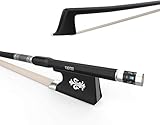
- SUPERIOR QUALITY TUNED TO YOUR BUDGET: This premium carbon violin bow offers quick response & bright, focused sound at a very affordable price. Supremely strong, stiff & well-balanced.
- HANDMADE BY EXPERT PROFESSIONALS: Unlike mass-produced bows, your Viotti carbon fiber bow is carefully crafted – by hand – by skilled violin & bow makers at an award-winning violin workshop.
The Viotti Carbon Fiber Violin Bow is a completely different beast compared to the Anton Breton AB-110. While the Anton Breton is made of traditional brazilwood, the Viotti uses carbon fiber. This makes it virtually indestructible—perfect for students who might be prone to dropping their bow. Carbon fiber is also immune to temperature and humidity changes, which means it won’t warp. However, it lacks the “warmth” and natural feel of the AB-110’s brazilwood. The Viotti is an excellent choice for an older student or someone living in a very humid climate, but for a 1/16 size beginner, the traditional feel of wood is often preferred by teachers to develop a sensitive touch.
2. Fiddlerman Carbon Fiber Violin Bow
- HIGH QUALITY & HAND-MADE: Professional quality arch for exceptional action and rebound. High carbon composite hollow stick delivering superior resonance and balance.
- MADE TO LAST: Unaffected by humidity and temperature fluctuation - excellent for traveling musicians.
The Fiddlerman Carbon Fiber Violin Bow is widely considered the gold standard for budget carbon fiber bows. It offers a very high level of consistency and a “stiffer” feel than the Anton Breton AB-110 Student Violin Bow. This stiffness can be great for older beginners who are starting to work on more aggressive bowing techniques. However, for a 3-year-old on a 1/16 violin, the Fiddlerman might feel a bit “sterile.” It doesn’t have the same “whippy” lightness that a fractional brazilwood bow provides. If you want a bow that will last through years of rugged use, go with Fiddlerman; if you want the best possible tone for a small child, the Anton Breton is likely the better fit.
3. Kmise Carbon Fiber Violin Bow 4/4
- Crafted using advanced molding techniques,the violin bow is constructed of carbon fiber and other modern materials,delivers a new level of performance way,beyond that of traditional wood construction
- The way that this violin bow transfers string vibration to your fingertips makes you feel at one with your instrument, facilitating technique and enhancing personal expression
The Kmise Carbon Fiber Violin Bow is the “value leader” in the carbon fiber space. It is extremely affordable and offers a decent playing experience for the price. However, when compared to the Anton Breton AB-110 Student Violin Bow, the craftsmanship of the fittings on the Kmise is noticeably lower. The Anton Breton’s rosewood frog and sheepskin grip feel significantly more premium. Furthermore, the Kmise is primarily known for its 4/4 (full size) offerings; in the specialized 1/16 size world, Anton Breton’s focus on fractional instrument needs makes them the more reliable choice for small children.
Final Verdict: Is the Anton Breton AB-110 Student Violin Bow the Right Choice?
After a thorough evaluation, we can confidently say that the Anton Breton AB-110 Student Violin Bow is one of the best values in the student market. It manages to balance affordability with genuine luthier-grade features like unbleached horsehair, a rosewood frog, and a resilient brazilwood stick. While it requires a bit of “elbow grease” to get the rosin started and might benefit from a quick cleaning of the tension screw, these are minor maintenance tasks that pay off in a vastly superior playing experience for the student.
For parents of young beginners or teachers looking for a reliable fleet of fractional bows, this is a top-tier recommendation. It provides the stability and tonal clarity that a child needs to feel successful in their first years of study. If you want to give your young musician the best possible start without breaking the bank, we highly recommend that you purchase the Anton Breton AB-110 Student Violin Bow today and hear the difference for yourself.
Last update on 2026-10-16 / Affiliate links / Images from Amazon Product Advertising API