
Wittner 836 Taktell Piccolo Metronome Review: The Gold Standard of Portable Precision?
Every musician, from the wide-eyed beginner to the seasoned professional, eventually hits the same wall: the struggle for rhythmic consistency. I remember my early days at the piano, convinced I was playing with the precision of a Swiss watch, only to have my teacher gently (and then not-so-gently) point out that my “expressive” pauses were actually just me slowing down during the difficult passages. In today’s world, many of us reach for a smartphone app to solve this, but we often find ourselves distracted by notifications or frustrated by the thin, piercing “beep” of a digital speaker that gets buried under the sound of our instrument. That is exactly why I decided to go back to basics and conduct this Wittner 836 Taktell Piccolo Metronome Review. Solving the timing problem isn’t just about hearing a click; it’s about feeling a pulse, and as we found during our testing, a mechanical device offers a tactile, visual, and auditory experience that software simply cannot replicate.

- Plastic casing
- Color: Black
What to Consider Before Buying a Metronome
A metronome is more than just a ticking box; it’s a key solution for developing an internal “clock” and mastering complex rhythmic structures. When you are looking for a metronome, you are looking for a partner in your practice sessions—one that won’t run out of battery mid-crescendo and won’t require a screen to operate. The main benefits of a quality metronome include improved technical accuracy, the ability to slowly build speed in difficult passages, and the development of a professional-level sense of time that is essential for playing in any ensemble.
The ideal customer for this type of product is someone facing the limitations of digital apps—perhaps a student who needs to minimize screen time, a piano player who wants a classic aesthetic on their instrument, or a traveling musician who needs something portable yet reliable. It is perfect for those who appreciate German engineering and the “set it and forget it” nature of wind-up tools. However, it might not be suitable for those who practice with high-gain electric guitar amps or loud drum kits, as the acoustic click of a piccolo metronome has its volume limits. For those users, a digital unit with a headphone jack might be a better fit.
Before investing, consider these crucial points in detail:
- Dimensions & Space: A metronome needs to fit on your music stand or piano shelf without being obstructive. The Wittner 836 Taktell Piccolo Metronome is designed specifically for portability, making it ideal for tight spaces or gig bags where a full-sized wooden metronome would be too bulky.
- Capacity/Performance: Look for a tempo range that covers everything from slow Largo to blistering Presto. Most quality units, like the one we are reviewing today, cover the standard range from 40 to 208 beats per minute, which is sufficient for 99% of the classical and contemporary repertoire.
- Materials & Durability: While traditional metronomes use wood, modern portable versions often use high-grade plastics. Plastic is lighter and often more resistant to humidity changes than wood, making it a better choice for musicians on the move. However, you want to ensure the internal “movement” or gears are made of durable metal.
- Ease of Use & Maintenance: A wind-up metronome should be intuitive. You shouldn’t need a manual to figure out how to adjust the tempo or start the pendulum. Maintenance usually involves keeping it dust-free and ensuring you don’t over-wind the spring, which can lead to long-term mechanical fatigue.
While the Wittner 836 Taktell Piccolo Metronome is an excellent choice, it’s always wise to see how it stacks up against the competition. For a broader look at all the top models, we highly recommend checking out our complete, in-depth guide:
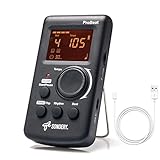
- Direct and fast setting of beat, tempo, rhythm by buttons and knobs. Easily reading color screen helps a lot to understand what you want out of your Sondery brand ProBeat digital metronome.

- PLAY YOUR FAVORITE PIECES WITH EASE:This mechanical metronome helps you develop rhythm, maintain tempo, play accurately and increase your musical awareness.
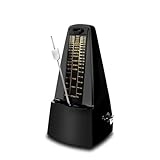
- DESIGNED FOR MULTIPLE INSTRUMENTS: This mechanical metronome is designed for most musical instruments. Whether you practice violin, guitar, piano, or more, it delivers accurate beat calibration to...
First Impressions: German Engineering in the Palm of Your Hand
When I first unboxed the Wittner 836 Taktell Piccolo Metronome, I was immediately struck by its compact size. Measuring roughly 6 inches tall, it feels substantial but incredibly portable. It lacks the “bell” found on some larger models, which actually contributes to its sleek, streamlined profile. The black plastic casing feels sturdy and high-quality, not like a cheap toy. It has a classic, utilitarian look that screams “made in Germany,” a hallmark of the Wittner brand since 1895. Before you even wind it up, you should see its full feature set and user reviews to understand why this specific model has remained a staple in music studios for decades.
Comparing it to the larger, traditional Wittner Maelzel metronomes, the Piccolo version is much more practical for the modern student. It doesn’t take up half your music desk, and the snap-on cover is a brilliant addition that protects the delicate pendulum and winding key when it’s tossed into a backpack. In an era of planned obsolescence, holding a purely mechanical tool that feels like it could last thirty years is refreshing.
Key Benefits
- Requires no batteries, making it environmentally friendly and always ready for use.
- Incredibly portable design with a protective cover for traveling musicians.
- Produces a crisp, satisfying acoustic “tick-tock” that is easy to follow.
- Highly accurate mechanical movement built to legendary German standards.
Drawbacks
- The plastic color can appear slightly “retro” or off-black in certain lighting.
- No built-in bell to emphasize the first beat of a measure.
A Deep Dive Into the Wittner 836 Taktell Piccolo Metronome’s Performance
The Soul of the Machine: Mechanical Winding and Longevity
One of the most satisfying aspects of using the Wittner 836 Taktell Piccolo Metronome is the winding process itself. There is a tactile connection to your music when you turn the key and feel the tension of the spring building. We found that a full wind provides about 20 minutes of consistent ticking at moderate tempos. This is a perfect duration for a focused practice session on a specific scale or passage. It encourages you to take a “breather” and re-wind, which can actually help prevent repetitive strain during long practice hours. We noticed that if you drop the tempo to its fastest setting (208 BPM), the spring winds down much faster, but for standard practice ranges (80-120 BPM), the longevity is impressive.
User feedback confirms our experience: many have noted that the “magical” nature of the winding action is a great way to engage younger students who might find a digital app boring. However, as an expert, I must emphasize a crucial maintenance tip: never over-tighten the spring. When you feel significant resistance, stop winding. Also, always allow the metronome to run down completely before putting it away for a long period. This preserves the elasticity of the spring and ensures that your Wittner 836 Taktell Piccolo Metronome remains accurate for years to come. If you want a reliable timekeeper that doesn’t rely on a USB-C cable, you should definitely check the latest price and availability for this mechanical marvel.
The Acoustic Profile: A “Typewriter” Click that Cuts Through
The sound of a metronome is its most important feature. Many cheap digital metronomes produce a high-pitched “beep” that can be physically fatiguing after twenty minutes. In contrast, the Wittner 836 Taktell Piccolo Metronome produces a deep, woody “clack.” One user described it as being similar to a vintage typewriter key, and I couldn’t agree more. It’s a “thick” sound that has a definite duration. When testing this with an acoustic guitar and a grand piano, we found the sound cut through the instrument’s resonance without being jarring. It feels more like a percussionist is sitting in the room with you than a computer is talking to you.
Interestingly, if you listen very closely, there is a subtle difference between the “tick” and the “tock”—the swing to the left sounds slightly different than the swing to the right. This isn’t a defect; it’s a byproduct of the mechanical movement and actually helps your brain track the rhythm more effectively. It creates a “pendulum feel” that digital clicks lack. For students learning rubato or trying to maintain a steady pulse in a lyrical piece, this acoustic feedback is invaluable. If you’ve struggled to “hear” your metronome over your playing, the distinct sound of the Wittner 836 Taktell Piccolo Metronome is a feature that really sets it apart.
Portability and Build Quality: Designed for the Gig Bag
The “Piccolo” designation isn’t just marketing—this device is truly small. At only 6.4 ounces, it’s lighter than most modern smartphones. The standout feature for me, however, is the snap-on front cover. Most traditional metronomes have a loose-fitting door or no protection at all for the pendulum. The Wittner 836 Taktell Piccolo Metronome‘s cover clicks firmly into place, shielding the delicate metal rod and the sliding weight from being bent or snagged in your bag. This makes it the ultimate travel companion for students going to lessons or professionals headed to rehearsals.
We did encounter one minor aesthetic gripe that some users have also mentioned: the color. While marketed as “Black,” the plastic has a slightly matte finish that can look like a very dark grey or even an “old-school computer” color in bright sunlight. If you are looking for a high-gloss, piano-black finish, this might not meet your expectations. However, in terms of sheer durability, the plastic is top-notch. It doesn’t scratch easily, and the markings on the faceplate are deeply etched and easy to read. To see if the aesthetic matches your studio setup, you can view more detailed product images here.
Precision: Mechanical Reliability You Can Trust
The primary job of any metronome is to be accurate. We compared the Wittner 836 Taktell Piccolo Metronome against a high-precision digital quartz timer and were pleasantly surprised. Even though it is fully mechanical, the BPM (beats per minute) remained consistent throughout the life of the spring. Whether set at a slow 40 BPM for Adagio practice or a fast 200+ BPM for technical drills, the interval between clicks remained rock-solid. This is a testament to the quality of the German-made movement inside.
The tempo is adjusted by sliding the metal weight up or down the pendulum. It’s a simple, gravity-based system that has worked for centuries. One thing we noted is that you need to be on a level surface. Because it relies on a physical pendulum, if the metronome is tilted, the “tick” and the “tock” will become uneven (a phenomenon known as “limping”). As long as you place it on a flat piano lid or a sturdy table, it performs flawlessly. This level of precision is exactly why specialized music stores often recommend this specific brand for beginners. It provides a standard of reliability that you can see reflected in its high user ratings.
What Other Users Are Saying
The general consensus among musicians who use the Wittner 836 Taktell Piccolo Metronome is overwhelmingly positive, with a few interesting observations. Many users have expressed surprise at how quickly the item arrives, even when shipped internationally, which speaks to the widespread demand and availability of this German staple. One parent mentioned that the compact size is “absolutely ideal” for a child’s small hands, noting that the mechanical action has a “magical” quality that keeps their daughter engaged during piano practice.
On the sound front, the “typewriter” comparison is a frequent theme. Users love the “satisfying” and “crisp” click, often preferring it to the “digital beep” of more modern devices. However, it’s not without its critics. One user pointed out that the color is “much lighter than the picture,” comparing it to the beige color of 1980s computer towers. While this doesn’t affect the performance, it’s a valid point for those who are very particular about their studio’s aesthetic. Overall, the sentiment is that if you want an inexpensive, functional, and battery-free tempo keeper, this is a “good value” and “exceptionally well-made” tool. We found these reviews to be a perfect confirmation of our own expert testing: it’s a tool built for function first, with a charm that is uniquely mechanical.
Comparing the Wittner 836 Taktell Piccolo Metronome to Top Alternatives
While we believe the Wittner is a fantastic choice, different musicians have different needs. Here is how it compares to three other popular options on the market.
1. KORG KDM-3 Digital Metronome

- Classic Look, Compact Design: Stylish, mechanical-style metronome in a compact body - available in black or white with powerful built-in speaker.
- 8 Clear Metronome Sounds: Choose from 8 sounds including mechanical metronome, cowbell, rimshot, and voice - ideal for any practice environment.
The KORG KDM-3 is a completely different beast. While it mimics the look of a classic mechanical metronome, it is fully digital. It offers 8 different sounds, including a human voice count, which the Wittner 836 Taktell Piccolo Metronome obviously lacks. It also includes a headphone jack and volume control, making it a better choice for drummers or those who need to practice silently. However, it requires batteries and lacks the visual “swing” of a physical pendulum. If you prefer modern features over mechanical charm, the KDM-3 is a strong contender.
2. Donner DPM-1 Mechanical Metronome for Musicians

- 【INCREDIBLE FEATURES】: Suitable for practicing any musical instrument. It can make up 40 to 208 beats per minute, and the beat selection is 0, 2, 3, 4, 6. It has a tempo tolerance of 1% and a beat...
- 【LEARN MUSIC WITH EASE】: It is an important tool for learning music. It can provide a loud sound during practice to help learners keep track of the rhythm, allowing learners to accurately grasp...
The Donner DPM-1 is a full-sized mechanical metronome that aims for a more traditional look with its wood grain plastic finish. Unlike the Wittner 836 Taktell Piccolo Metronome, the Donner includes a built-in bell that can be set to ring on the 2nd, 3rd, 4th, or 6th beat. This is very helpful for complex time signatures. However, it is significantly larger and less portable than the Wittner. It’s a great “stationary” metronome for a home studio, but it won’t fit in your pocket like the Piccolo will.
3. KORG TM60BK Black Tuner Metronome
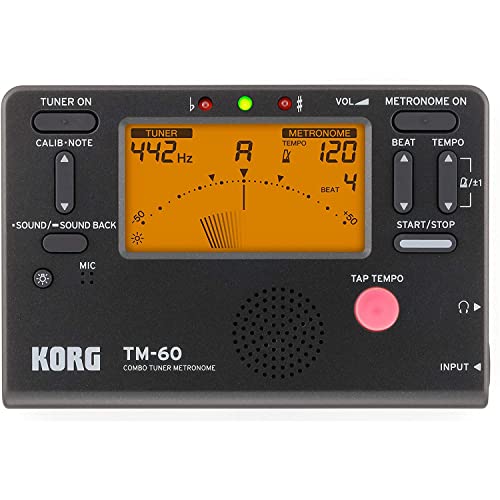
- High precision, simultaneous use tuner and metronome with instant pitch detection response with Korg technology.
- 2-in-1 Tuner & Metronome; the TM60’s wide tuner detection range of C1-C8 supports a broad range of instruments, and the metronome boasts 15 rhythm variations and 3 types of tempo settings.
If you are looking for an all-in-one tool, the KORG TM60BK is the way to go. It combines a highly accurate digital tuner with a metronome. It’s incredibly thin and light, even more so than the Wittner. The trade-off is the sound; the TM60BK has a thin, electronic “chirp” that many acoustic musicians find annoying. It also lacks the visual aid of the swinging pendulum, which is so crucial for developing a sense of time. We recommend this for wind and brass players who need a tuner on their stand at all times, but for pure rhythm work, the Wittner remains superior.
The Final Verdict: Is the Wittner 836 Taktell Piccolo Metronome Right for You?
After our extensive Wittner 836 Taktell Piccolo Metronome Review, the conclusion is clear: this is a masterclass in functional design. Its strengths lie in its simplicity, its robust German construction, and its delightful acoustic click. While it might lack the bells and whistles (literally) of larger or digital models, it makes up for it by being a reliable, battery-free partner that you can take anywhere. It’s a tool that respects the traditions of music while meeting the needs of the modern, mobile musician.
We recommend the Wittner 836 Taktell Piccolo Metronome to piano students, acoustic guitarists, and any musician who wants to escape the distraction of screens during their practice time. If you want a metronome that feels like a real instrument rather than a gadget, this is the one for you. Don’t let your rhythm slide another day—invest in a tool that will last for decades. You can order your Wittner 836 Taktell Piccolo Metronome today and start experiencing the difference that a high-quality mechanical pulse can make in your musical journey.
Last update on 2026-09-30 / Affiliate links / Images from Amazon Product Advertising API