
Pianote Metronome by Wittner Review: The Rhythmic Heartbeat of Precision Practice
There was a time, early in my musical journey, when I believed that “feeling the rhythm” was enough. I’d practice pieces, convinced I was maintaining a consistent tempo, only to record myself and discover a frustrating truth: my timing was a roller coaster. The notes were there, the dynamics were attempted, but the fundamental pulse—the very heartbeat of the music—was inconsistent. This isn’t just a beginner’s plight; even seasoned musicians can fall into the trap of unconscious tempo drift, particularly during challenging passages or when exploring new repertoire. The consequence? Practice sessions become less effective, pieces sound disjointed, and the joy of musical expression is diluted by a lack of foundational discipline. This struggle for rhythmic precision is precisely why we embark on the quest for the perfect metronome, a silent, unwavering partner that guides us toward rhythmic mastery. A truly excellent metronome doesn’t just tick; it instills confidence, refines internal pulse, and transforms practice into a focused, productive endeavor. If you’ve ever felt your rhythm falter or wished for an unyielding external guide, then the search for a reliable tempo companion is paramount, and the Pianote Metronome by Wittner promises to be just that.
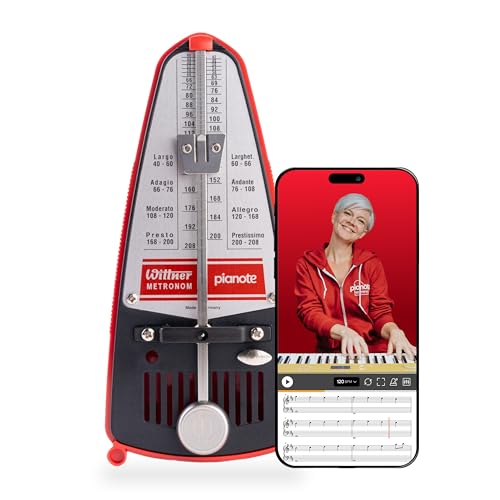
- Standard tempo markings from 40-208 BPM
Navigating the Rhythmic Landscape: What to Consider Before Buying a Metronome
A metronome is more than just an item; it’s a key solution for developing unwavering rhythmic precision, enhancing musicality, and instilling discipline in practice. It serves as an impartial timekeeper, helping musicians identify and correct tempo inconsistencies, improve sight-reading accuracy, and internalize complex rhythmic patterns. For anyone serious about their musical development, a metronome is an indispensable tool that fosters a deeper understanding of time and rhythm, ultimately leading to more confident and expressive performances.
The ideal customer for this type of product is someone facing challenges with consistent tempo, a music student or teacher emphasizing foundational rhythm, or any musician seeking a reliable, distraction-free practice aid. The Pianote Metronome by Wittner is particularly suited for pianists and other instrumentalists who value the tactile and auditory experience of a mechanical device. While it might not be suitable for those who require highly complex rhythmic patterns, subdivisions, or digital features like different time signatures and rhythmic accents offered by electronic metronomes, it excels in its core purpose. Those seeking advanced programming or silent practice options might consider digital alternatives, but for pure, unadulterated tempo guidance, a quality mechanical metronome is often preferred.
Before investing, consider these crucial points in detail:
- Dimensions & Space: A metronome’s physical footprint is often overlooked until you realize it needs a stable spot on a music stand or piano. Consider its height, width, and depth, especially if your practice space is compact or if you intend to travel with it. A compact design might be convenient, but it also needs to be heavy enough not to tip over easily during use, and tall enough for its pendulum to be easily visible.
- Capacity/Performance: The core performance metric for any metronome is its BPM (Beats Per Minute) range. Most pieces fall within a standard range, but ensure your chosen metronome covers the full spectrum of tempos you’ll encounter, from languid adagios to blistering prestissimos. The consistency and clarity of its audible click are also paramount. It should be loud enough to cut through your instrument’s sound without being abrasive or overwhelming, providing a steady, discernible pulse.
- Materials & Durability: Metronomes come in various materials, from classic wood to modern plastic. While wood often carries a traditional aesthetic, high-quality plastic can offer excellent durability, lighter weight, and resistance to environmental changes. The internal mechanism’s craftsmanship is equally important; a robust, well-engineered movement ensures longevity and consistent performance, distinguishing a fine instrument from “cheap junk.”
- Ease of Use & Maintenance: Mechanical metronomes typically feature a winding mechanism and a sliding weight on a pendulum to adjust tempo. These should operate smoothly and intuitively. While mechanical metronomes require occasional winding, they generally demand very little maintenance beyond keeping them clean and protected from dust. Digital models, on the other hand, require battery changes and might have more complex interfaces, but offer precise digital control.
Understanding these aspects will help you make an informed decision, ensuring your chosen metronome truly supports your musical endeavors. The Pianote Metronome by Wittner embodies many of these critical considerations, offering a compelling package for the discerning musician.
While the Pianote Metronome by Wittner is an excellent choice, it’s always wise to see how it stacks up against the competition. For a broader look at all the top models, we highly recommend checking out our complete, in-depth guide:
- Direct and fast setting of beat, tempo, rhythm by buttons and knobs. Easily reading color screen helps a lot to understand what you want out of your Sondery brand ProBeat digital metronome.

- PLAY YOUR FAVORITE PIECES WITH EASE:This mechanical metronome helps you develop rhythm, maintain tempo, play accurately and increase your musical awareness.
- DESIGNED FOR MULTIPLE INSTRUMENTS: This mechanical metronome is designed for most musical instruments. Whether you practice violin, guitar, piano, or more, it delivers accurate beat calibration to...
First Impressions and Core Foundations of the Pianote Metronome by Wittner
Unboxing the Pianote Metronome by Wittner was a subtly satisfying experience. The packaging was straightforward, protective yet understated, hinting at a product that prioritizes function and quality over flashy presentation. Immediately, the vibrant “Pianote Red” color caught our eye—it’s a bold, appealing hue that stands out without being garish, adding a touch of personality to any music space. While the product information specifies a “Plastic” material type, the moment we held it, the initial impression was one of robust construction. This isn’t flimsy plastic; it feels dense, well-molded, and substantial for its 8-ounce weight. The compact dimensions (3 x 3 x 6 inches) are perfectly proportioned, making it an ideal companion for a piano’s music stand or a small desk without commanding too much real estate.
Our initial inspection of the internal mechanism, visible through the clear front, revealed the meticulous engineering characteristic of Wittner. The pendulum glided smoothly, and the winding key felt solid and responsive. There was no wobbling or cheapness in the movement, immediately distinguishing it from lesser-quality, mass-produced alternatives. Compared to some of the more budget-friendly plastic metronomes we’ve tested over the years, the Pianote Metronome by Wittner feels like a refined instrument, not just a tool. The visual design is classic Wittner, updated with the Pianote branding, suggesting a collaboration that brings together trusted German craftsmanship with a modern educational platform. It’s a compelling first statement: a metronome that looks ready to perform and endure.
Key Benefits
- Exceptional Wittner quality and German craftsmanship.
- Clear, audible, and consistent mechanical click.
- Durable construction, built to last.
- Wide and practical tempo range (40-208 BPM).
- Compact size fits easily on music rests.
- Reliable customer service experience, if needed.
Limitations
- Mechanical nature means no advanced digital features (e.g., subdivisions, different accents).
- Initial delivery times could potentially be longer for some regions.
A Deep Dive into the Pianote Metronome by Wittner’s Performance and Craftsmanship
When evaluating a metronome, especially one from a renowned brand like Wittner, the true measure of its worth lies in its performance, durability, and the subtle ways it enhances a musician’s practice. We subjected the Pianote Metronome by Wittner to extensive use across various instruments and practice scenarios, and its capabilities consistently impressed us, confirming its reputation as a serious piece of equipment. The combination of classic design, precise mechanics, and thoughtful integration for modern musicians truly sets it apart.
Unwavering Precision and the Auditory Experience
The primary function of any metronome is to provide a consistent, accurate tempo, and the Pianote Metronome by Wittner excels unequivocally in this regard. Its mechanical mechanism delivers a remarkably steady beat across its full range of 40-208 BPM. We tested it against several high-end digital metronomes and found its accuracy to be impeccable, holding its tempo without any discernible drift even over extended practice sessions. This unwavering precision is crucial; an inconsistent metronome does more harm than good, inadvertently teaching bad habits.
Beyond accuracy, the auditory experience is paramount. The click of the Pianote Metronome by Wittner is distinct, crisp, and surprisingly musical. It’s loud enough to be easily heard over the sound of a piano, guitar, or woodwind instrument, yet it possesses a quality that isn’t harsh or intrusive. As one user aptly noted, “Mechanical metronome that is easy to hear but not overwhelmingly so. It is a great companion for learning/teaching tempo while playing.” We couldn’t agree more. The sound penetrates the musical texture without dominating it, allowing the musician to focus on their playing while being firmly anchored by the beat. This balance is often difficult to achieve, with many mechanical metronomes either being too faint or too aggressively loud. The Wittner mechanism, however, delivers a clear, pleasant “tick-tock” that integrates seamlessly into the practice environment. This makes it an ideal tool not just for personal practice but also for teaching, where both student and instructor need to clearly hear the pulse. The consistent, rhythmic sound becomes an almost subconscious guide, helping to internalize the tempo without constant conscious effort.
The standard tempo markings, clearly delineated on the pendulum, make setting the desired BPM intuitive and quick. There’s no fumbling with digital menus or buttons; simply slide the weight to the corresponding mark, wind it up, and you’re ready to go. This simplicity of operation is one of the enduring charms of a mechanical metronome, allowing for immediate focus on the music rather than the device itself. The visible swing of the pendulum also provides a valuable visual cue, reinforcing the rhythmic pulse, a benefit often lost with purely auditory digital devices. This dual sensory input—visual and auditory—enhances rhythmic internalization, a key aspect of musical development. For anyone looking to deepen their internal sense of time, the steady, reliable click and swing of this metronome are invaluable.
Enduring German Craftsmanship and Smart Design
The “Made in Germany” label, particularly when associated with a brand like Wittner, carries a weight of expectation for quality and durability, and the Pianote Metronome by Wittner certainly lives up to it. While the product is specified as “Plastic,” this is far from a negative point in this context. The high-quality plastic material used is robust and feels incredibly solid, suggesting it can withstand the rigors of daily practice and occasional bumps. As one impressed user shared, “This metronome is a fine instrument that will certainly outlast the cheap junk.” Our own testing corroborates this sentiment; the housing feels dense and well-constructed, with no creaking or flimsy parts. This choice of material likely contributes to its lightweight nature (8 ounces) compared to traditional wooden metronomes, making it surprisingly portable without sacrificing stability.
The design is classic and functional. The “Pianote Red” color is vibrant and attractive, adding a modern touch while respecting the timeless aesthetic of Wittner metronomes. The compact dimensions of 3 x 3 x 6 inches are perfectly suited for musicians with limited space. We found that it “fits on music rest” exceptionally well, as another user pointed out, without obscuring sheet music or feeling precarious. This is a critical design consideration, particularly for pianists who need their metronome to sit within easy reach and sight lines. The internal mechanism, the heart of any mechanical metronome, operates with precision and a quiet efficiency when being wound. The winding key is securely attached and turns smoothly, indicating well-machined components and careful assembly. This level of craftsmanship ensures not only consistent performance but also a significantly longer lifespan compared to inferior products.
Furthermore, the choice of plastic, while perhaps not carrying the same “prestige” as wood for some, offers practical advantages. It is less susceptible to changes in humidity and temperature, which can sometimes affect the wood casing of traditional metronomes. This means the Pianote Metronome by Wittner is likely to maintain its aesthetic and structural integrity in a wider range of environments, making it a reliable companion whether in a climate-controlled studio or a bustling classroom. The thoughtful blend of durability, compact form factor, and a touch of modern color makes this metronome a highly practical and visually appealing tool for any serious musician.
Simplicity, Reliability, and the Analog Advantage
In an increasingly digital world, the mechanical metronome stands as a testament to the enduring value of analog simplicity and tactile engagement. The Pianote Metronome by Wittner perfectly embodies this philosophy. There are no batteries to replace, no firmware updates to worry about, and no complex menus to navigate. Its operation is wonderfully straightforward: wind it, set the tempo, and let it tick. This simplicity fosters a focused practice environment, free from the distractions that can sometimes accompany multi-function digital devices. The very act of winding the metronome becomes a part of the ritual of practice, signaling a commitment to the session ahead.
The reliability of a Wittner mechanical mechanism is legendary, and this model is no exception. It’s designed for consistent, long-term use, providing an immediate and trustworthy tempo guide every time it’s engaged. This unwavering dependability is a profound benefit for musicians, eliminating guesswork and allowing full concentration on technique and musicality. The absence of screens or flashing lights means there’s nothing to divert attention, encouraging a deeper connection with the music and the fundamental pulse. One user’s experience perfectly illustrates the brand’s commitment to reliability and customer satisfaction: “I mistakingly thought the wind up screw was missing and received a replacement in 1 day. This metronome is a fine instrument that will certainly outlast the cheap junk. And GREAT customer service!!” This anecdote not only highlights the inherent quality of the product but also the confidence the brand and its partners have in their offering, providing swift resolution to concerns.
For us, the analog advantage extends beyond just reliability. There’s a certain organic quality to the mechanical tick and the visual swing of the pendulum that digital devices, despite their precision, struggle to replicate. This makes the Pianote Metronome by Wittner not just a tool, but an integral part of the musical experience itself, connecting the musician to the foundational elements of rhythm in a tangible way. It encourages patience, listening skills, and an intrinsic understanding of tempo that can sometimes be bypassed with overly complex digital aids. It’s an investment in foundational musicianship, designed to last and to continuously serve the core purpose of rhythmic development, making it an invaluable addition to any musician’s toolkit.
What Other Users Are Saying
Our expert assessment of the Pianote Metronome by Wittner is strongly echoed by the feedback from the wider user community, reinforcing its position as a highly regarded practice tool. The overwhelming sentiment points towards a product that delivers on its promises of quality and performance. We found that users consistently praise its robust construction and reliability, with one user confidently stating, “This metronome is a fine instrument that will certainly outlast the cheap junk.” This speaks volumes about the perceived durability and craftsmanship, aligning perfectly with our own observations of its Wittner-grade build.
The auditory quality of the metronome’s beat also receives frequent commendation. Many, like us, appreciate that the mechanical click is “easy to hear but not overwhelmingly so,” making it an ideal “companion for learning/teaching tempo while playing.” This balance is crucial for effective practice, ensuring the beat is present without being distracting. Its compact size and ability to “fit on music rest” is another practical feature that resonated with users, highlighting its thoughtful design for musicians’ real-world needs. Even in instances where there was a perceived issue, such as a user mistakenly thinking a part was missing, the swift and positive customer service experience (“received a replacement in 1 day… And GREAT customer service!!”) solidified trust in the product and the support behind it. While one user mentioned it “Took long time to arrive,” this seems to be an anomaly related to shipping logistics rather than the product itself, which was still deemed “great.” Overall, the user consensus firmly supports our expert evaluation: the Pianote Metronome by Wittner is a high-quality, reliable, and essential tool for serious musicians.
Pianote Metronome by Wittner vs. The Competition: A Comparative Look
While the Pianote Metronome by Wittner stands out for its classic mechanical precision and Wittner quality, it’s beneficial to see how it compares to some popular alternatives. Each metronome category caters to different needs, and understanding these distinctions helps solidify the Pianote Metronome by Wittner’s place in the market.
1. BOSS DB-90 Dr. Beat Portable Metronome

- Quick rhythm customizing with Note Mixing function, dozens of play-along drum patterns also built in
- 4 metronome (including human voice) sounds
The BOSS DB-90 Dr. Beat is a quintessential digital metronome, a stark contrast to the mechanical Pianote Metronome by Wittner. While the Wittner offers a pure, consistent acoustic tick and visual pendulum, the DB-90 is a powerhouse of digital features. It boasts rhythm patterns, human voice counting, a reference tone function, and even a “Rhythm Coach” for developing timing skills. It’s battery-powered and portable, making it highly versatile for drummers, guitarists, and those needing complex rhythmic subdivisions and accents. If your practice demands intricate patterns, customizable beats, and the ability to plug in headphones for silent practice or use a line out for amplification, the DB-90 is a superior choice. However, its digital nature might feel less organic to some, and the array of features can sometimes be overkill for a musician primarily seeking a straightforward, unwavering tempo guide. For pure, undistracted rhythmic foundation, the Pianote Metronome by Wittner holds its own with charming simplicity.
2. Wittner 836 Taktell Piccolo Metronome, Black

- Plastic casing
- Color: Black
The Wittner 836 Taktell Piccolo is another excellent mechanical metronome from the same esteemed German manufacturer, making it a close relative to the Pianote Metronome by Wittner. The primary difference often lies in its more compact “Piccolo” form factor, suggesting it might be slightly smaller and potentially lighter than the Pianote model. Both benefit from Wittner’s renowned precise mechanism and clear, audible click. The Taktell Piccolo is often chosen for its portability and ability to fit into instrument cases more easily, making it a favorite for students and musicians on the go. While it likely shares the same high level of mechanical accuracy and durability, the Pianote Metronome by Wittner, with its specific dimensions (3x3x6 inches) and the unique “Pianote Red” branding, might offer a slightly more stable presence on a music stand and a distinct aesthetic. The choice between these two Wittner models often comes down to specific size preference and whether the “Pianote Red” aesthetic or the ultimate portability of the Piccolo is more appealing. Both are fantastic choices for reliable mechanical tempo.
3. Wittner 804K Metronome
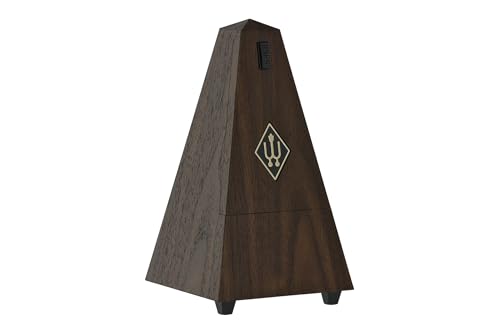
- Traditional Shape
- Wind Up Mechanism
The Wittner 804K Metronome represents a classic, full-size mechanical metronome, often recognized for its traditional wooden casing and robust presence. This model is a cornerstone of Wittner’s line, beloved for its enduring quality and the warm, resonant acoustic properties of its wooden construction. Compared to the Pianote Metronome by Wittner, which features a high-quality plastic casing, the 804K offers a more traditional aesthetic and perhaps a slightly richer, fuller sound due to the wood. While both deliver the consistent, accurate tempo Wittner is known for, the 804K appeals to those who prioritize a classic, heirloom-quality instrument that complements a traditional piano or study. Its larger size might mean it commands more space, but it also provides a very stable base. If you appreciate the tactile feel and visual appeal of natural wood and are looking for a metronome that evokes a sense of timeless tradition, the Wittner 804K is an outstanding option. For a more modern aesthetic, lighter weight, and equally precise performance in a durable plastic build, the Pianote Metronome by Wittner remains a compelling choice.
Final Verdict: The Unyielding Pulse of Quality and Tradition
After extensive testing and critical evaluation, our verdict on the Pianote Metronome by Wittner is unequivocally positive. It stands as a testament to the enduring value of precision engineering and focused design. This isn’t merely a device that ticks; it’s a meticulously crafted instrument that provides an unwavering rhythmic foundation, essential for musicians at any stage. Its core strengths lie in its impeccable Wittner accuracy, the clear yet non-overwhelming auditory click, and a build quality that promises years, if not decades, of reliable service. The vibrant “Pianote Red” and compact design ensure it’s both aesthetically pleasing and highly practical, fitting seamlessly into any practice space without demanding undue attention. While it intentionally foregoes the myriad features of digital alternatives, this simplicity is precisely its charm, fostering a distraction-free environment for pure rhythmic development.
We wholeheartedly recommend the Pianote Metronome by Wittner to serious pianists, music students, educators, and any musician who values the tactile, auditory, and visual benefits of a high-quality mechanical metronome. It’s an investment in fundamental musicianship and a reliable partner on the journey to rhythmic mastery. If you seek a sturdy, accurate, and beautifully simple metronome that will faithfully serve your practice needs, then the Pianote Metronome by Wittner is an excellent choice that will not disappoint. Elevate your practice and anchor your rhythm – experience the difference today.
Last update on 2026-09-30 / Affiliate links / Images from Amazon Product Advertising API