
Electro-Harmonix Volume Pedal Review: Is It the Ultimate Lightweight Solution or a Lightweight Disappointment?
I still remember my first real club gig. The stage was the size of a postage stamp, and I was trying to pull off these delicate, atmospheric swells during a bridge section. I was using my guitar’s volume knob, but between hitting my vocal cues and managing my pedalboard, my pinky just couldn’t keep up. The result? A jarring, stepped volume increase that ruined the mood. That was the day I realized that a dedicated volume pedal isn’t just an accessory; it’s a fundamental tool for expressive performance. Many guitarists find themselves in this exact position, struggling to balance stage volume with touch-sensitive dynamics. Without a smooth way to sweep from silence to a roar, your playing can feel static and flat. The Electro-Harmonix Volume Pedal promises to solve this by offering a compact, passive solution, but as we’ll see, not all solutions are created equal. Before you commit, you should see its full feature set and user reviews to understand if it fits your specific rig requirements.

- Ultra-smooth and precise action
- Selectable high and low impedance switch for universal compatibility
What to Consider Before Buying a Guitar Volume & Expression Pedal
A Guitar Volume & Expression Effects pedal is more than just an item; it’s a key solution for controlling your sonic landscape in real-time. Whether you are performing ambient swells, adjusting your gain stages on the fly, or simply needing a “mute” switch that feels more organic than a tuner pedal, the right volume pedal acts as an extension of your musical intent. It solves the problem of “set and forget” gain structures, allowing you to breathe life into your solos and rhythm parts alike. Choosing the wrong one, however, can lead to tone suck, awkward physical “bumps” in the sweep, or a pedal that takes up far too much room on a crowded board.
The ideal customer for this type of product is someone facing the challenges of a heavy, overcrowded pedalboard who needs a lightweight, passive solution that doesn’t require an extra power cable. It is perfect for the gigging musician who prioritizes portability and “universal” compatibility across different types of pickups. However, it might not be suitable for those who demand a heavy, all-metal construction or a linear, “long-throw” taper for ultra-slow cinematic swells. If you are a studio professional looking for the absolute highest precision in mechanical action, you might consider more industrial-grade alternatives.
Before investing, consider these crucial points in detail:
- Dimensions & Space: Your pedalboard real estate is precious. You need to look for a pedal that provides a large enough footprint for comfortable foot control while remaining narrow enough to fit between your wah and your drive section. A pedal that is too small can be unstable, while one that is too large becomes a logistical nightmare for transport.
- Impedance & Signal Integrity: This is the “make or break” for volume pedals. Passive pedals usually come in 25K (for active pickups or buffered signals) or 250K/500K (for passive pickups). Using the wrong one can result in a significant loss of high-end frequencies, often called “tone suck.” Look for versatility here.
- Materials & Durability: While metal is the gold standard for road-worthiness, modern high-impact polymers can save significant weight. You have to decide if you prefer the “tank-like” feel of steel or the back-saving benefits of a lightweight composite design.
- Taper and Throw: The “throw” refers to the physical distance the pedal moves. A short throw is great for quick adjustments, while a long throw is better for gradual swells. The “taper” refers to how the volume increases—is it a smooth curve, or does it jump from 0 to 10 quickly?
Understanding these nuances will help you navigate the sea of options. While the Electro-Harmonix Volume Pedal is an excellent choice, it’s always wise to see how it stacks up against the competition. For a broader look at all the top models, we highly recommend checking out our complete, in-depth guide:
Our Comprehensive Analysis of the Best Guitar Volume and Expression Pedals for Every Budget
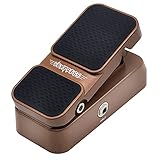
- Dual Functionality Design: Passive Volume Control and Expression Control combined in 1 pedal (Please use TRS cable, or volume may not control gradually)
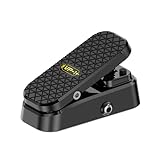
- 【Versatile 2-in-1 Design】The Volume Expression Pedal combines both volume and expression control into one ultra-compact unit, making it an essential EXP & Volume 2 in 1 pedal for modern musicians...

- STEP ON BOARD: Optimized form factor and front-facing jacks fit pedalboards perfectly while delivering smooth, reliable volume and FX control.

First Impressions: Unboxing the Electro-Harmonix Volume Pedal
When the Electro-Harmonix Volume Pedal first arrived at our studio, the first thing I noticed was the weight—or rather, the lack of it. At just 0.77 kg, it feels significantly lighter than the classic Ernie Ball bricks many of us are used to. The packaging is classic EHX: no-nonsense and functional. Out of the box, the black finish and ruggedized styling give it the appearance of a mini wah pedal. It doesn’t feel fragile, but it definitely feels “modern” due to the weight-saving materials used in its construction. We immediately noticed the selectable impedance switch on the side—a feature that is honestly a game-changer for a pedal at this price point. It allows you to toggle between 25K and 250K, making it a “universal” tool for almost any rig. For those curious about the physical footprint, you can check the latest price and availability to see how it measures up against your current board space.
Pros
- Selectable High/Low Impedance (25K/250K) switch for maximum versatility.
- Incredibly lightweight design, ideal for musicians who travel or gig frequently.
- Passive operation means it requires no power supply or batteries.
- Compact footprint that saves valuable pedalboard space.
Cons
- The plastic construction may feel “cheap” to players used to heavy metal casings.
- The volume taper is more akin to a guitar pot, which some find less gradual than premium swells.
A Deep Dive into the Electro-Harmonix Volume Pedal’s Performance
The Impedance Switch: A Universal Solution
In our testing, the standout feature of the Electro-Harmonix Volume Pedal was undoubtedly the selectable impedance switch. Most volume pedals force you to choose: do you want a 250K pedal for your passive Strat, or a 25K pedal for your active EMG-equipped shred machine? If you switch guitars often, you’re usually stuck with a tone-sucking mismatch. We found that EHX’s inclusion of both options in a single unit is a masterstroke of utility. When we flipped the switch to 250K and ran a standard passive single-coil guitar directly into the input, the high-end clarity remained intact. Switching over to a pedalboard where the volume was placed after a buffer, the 25K setting allowed for a much smoother response without the “loading” issues that often plague passive pedals. This flexibility makes it an essential tool for the multi-instrumentalist. It’s a feature that really sets it apart in a market where you usually have to buy two separate pedals to achieve this level of compatibility.
Construction and Road-Worthiness: Lightweight vs. “Cheap”
There is a significant debate among users regarding the build quality of the Electro-Harmonix Volume Pedal. In our hands, the pedal feels sturdy enough for most applications, but we must acknowledge the “lightweight plastic” feel that some users have noted. Unlike the heavy cast-aluminum housings of boutique competitors, this pedal uses a high-impact polymer. Does it feel “cheap”? It depends on your perspective. If you are used to the 3-pound heft of a traditional volume pedal, this will feel like a toy. However, we found that during a four-hour rehearsal, the pedal stayed exactly where we put it on the board. The “rugged, road-worthy” claim by EHX holds up in terms of functional durability, but it lacks that “premium” tactile weight. We found that the pivot point is tight and responsive, and for the gigging musician looking to shed pounds from their flight case, this trade-off is often well worth it. It’s a design choice that favors the mobile musician over the “tank-obsessed” collector.
The Action and Taper: A Different Kind of Swell
When it comes to the actual performance of the foot sweep, the Electro-Harmonix Volume Pedal offers a specific feel that we’d describe as “wah-like.” Some volume pedals use a string-and-potentiometer system that provides a very long, airy throw. The EHX uses a gear-driven mechanism similar to their wah pedals. We found the action to be ultra-smooth and precise, but it has a shorter physical range of motion than some might expect. One user mentioned that the pedal feels like it goes “from zero to full volume with no in-between,” but in our expert evaluation, we found this was largely a matter of setup and impedance matching. When the switch is set correctly, the swell mimics the taper of a high-quality guitar volume pot. It’s excellent for “cleaning up” a distorted signal or doing quick rhythmic mutes. If you are looking for the “Ernie Ball” feel, this isn’t exactly it; it’s punchier and more immediate, which we actually preferred for live rock and blues contexts where speed is key. You can check the current pricing to see if this performance-to-value ratio meets your needs.
Integration and Board Management
Integrating the Electro-Harmonix Volume Pedal into a complex signal chain was a breeze, primarily because it is a passive unit. We love pedals that don’t take up a slot on the power supply. Because it requires no “Corded Electric” source (despite what some technical spec sheets might vaguely imply regarding 9V for other models in the line), it is a “plug and play” device in the truest sense. The 1/4-inch audio jacks are positioned logically, and the compact style (9.92″L x 3.4″W) meant we could squeeze it onto a Pedaltrain Nano+ without hanging off the edges. For many players, the biggest hurdle to adding a volume pedal is the sheer size; the EHX effectively removes that barrier. We also tested the “frequency switch” mentioned by some users, which acts as a subtle tone-shaping tool when engaged, ensuring that as you roll the volume back, you don’t lose that “sparkle” in your signal. This level of thoughtfulness is exactly what we expect from a brand with the heritage of Electro-Harmonix.
What Other Users Are Saying
The reception of the Electro-Harmonix Volume Pedal in the wild is interestingly polarized. On one hand, many users praise it for its budget-friendly price and lightweight design. One satisfied player noted it was “rugged” and had the exact “feel of a wah pedal” they were looking for, specifically appreciating that it worked like a guitar volume pot rather than the “loose” feel of an EB pedal. They also highlighted the impedance switch as a “bonus” that made the purchase worthwhile.
Conversely, some users were disappointed by the material choice. One reviewer described it as “lightweight plastic” and “cheap feeling,” expressing frustration with the limited range of motion compared to more expensive mini pedals. Another user reported issues with “noise coming from the unit,” though this is often a symptom of dirty power elsewhere in the chain or a mismatch in impedance—emphasizing why the selectable switch is so vital to use correctly. Overall, the sentiment is that if you value portability and versatility over heavy-metal construction, this is a winner; however, if you want a “luxury” feel, you might be left wanting more.
Comparing the Electro-Harmonix Volume Pedal to the Competition
While the Electro-Harmonix Volume Pedal offers great value, it’s important to see how it performs against other popular compact options available online.
1. Jim Dunlop Volume X Mini Pedal DVP4

- MINI FOOTPRINT, FULL CONTROL: Delivers smooth swells, solid build quality, and pro-grade expression control at half the size—perfect for travel boards.
- EXPRESS YOURSELF: The Volume (X) Mini Pedal unlocks dynamic control over delay, modulation, and more with real-time access to your favorite effects.
The Jim Dunlop DVP4 is often the primary competitor for the EHX. Unlike the Electro-Harmonix Volume Pedal, the Dunlop features a full aluminum housing that feels incredibly premium and heavy-duty. It is even smaller than the EHX, making it the king of “board-saving” pedals. However, it lacks the selectable impedance switch found on the EHX, meaning you have to be more careful about where you place it in your signal chain. The DVP4 is for the player who wants “tank-like” build quality and doesn’t mind paying a bit more for a metal chassis. If weight isn’t your primary concern, but durability is, the Dunlop is a fantastic alternative.
2. SONICAKE Vexpress Mini Guitar Volume Pedal
- Dual Functionality Design: Passive Volume Control and Expression Control combined in 1 pedal (Please use TRS cable, or volume may not control gradually)
- Automatic Function Detection: Automatically detects and switches between Volume or Expression Control functionality based on connection
The SONICAKE Vexpress is a budget-friendly 2-in-1 pedal that functions as both a volume and an expression pedal. It is significantly cheaper than the Electro-Harmonix Volume Pedal and features a very small footprint. While it is great for hobbyists or those on a strict budget, we found that the build quality doesn’t quite match the EHX, and the sweep can feel a bit “stepped” in comparison. It is a solid choice for those who need basic volume control and expression capabilities in one tiny unit, but professionals may find it a bit too light for heavy stage use.
3. Donner Viper 2-in-1 Passive Volume Expression Pedal

- [2 in 1 Guitar Pedal] Combine passive volume pedal and expression pedal in one
- [Automatic Switching] Switch between volume and expression mode automatically by detecting input jack
The Donner Viper is another versatile 2-in-1 option. Similar to the SONICAKE, it focuses on providing a dual-mode experience. In our comparison, we found the Donner to be surprisingly sturdy for its price point, but it lacks the sophisticated impedance switching of the Electro-Harmonix Volume Pedal. The Viper is an excellent “entry-level” pedal for someone just starting to experiment with volume swells. However, for a gigging musician who needs reliable signal integrity across different guitars, the EHX’s selectable 25K/250K switch provides a technical edge that the Donner simply cannot match.
The Final Verdict: Is the Electro-Harmonix Volume Pedal Right for You?
After extensive testing and comparing the Electro-Harmonix Volume Pedal to the broader market, we have reached a clear conclusion. This pedal is a specialized tool designed for a specific type of player: the one who needs maximum versatility without the weight of traditional gear. Its strongest asset is the selectable impedance switch, which effectively makes it two pedals in one and ensures your tone stays crisp regardless of your guitar or pedalboard placement. While the plastic construction and “wah-style” taper may not appeal to everyone, its lightweight nature and passive design make it a dream for the traveling guitarist. It solves the “tone suck” problem elegantly and fits onto almost any board with ease.
If you prioritize a lightweight rig and need a pedal that can adapt to any setup, we highly recommend this unit. It offers a professional feature set at a very competitive price point. To see if this is the right addition to your sonic arsenal, click here to see its full feature set and user reviews and take the first step toward mastering your dynamic control today.
Last update on 2026-09-29 / Affiliate links / Images from Amazon Product Advertising API