
Nady PM-200A Powered Monitor Review: The Compact Workhorse for Personal Stage Monitoring
If you have ever performed on a stage—whether it is a cramped corner in a local pub or a cavernous church hall—you know the struggle of the “volume war.” You are halfway through your set, the drummer is digging in, the guitarist just kicked on a lead boost, and suddenly, your own voice or instrument vanishes into a muddy puddle of sound. You strain your vocal cords just to hear a pitch, or you play harder, ruining your dynamics. This is a frustrating, professional hazard that can lead to poor performances and even hearing damage. Traditional floor wedges are often too far away or too bulky for tight stages, and that is precisely where a specialized tool like the Nady PM-200A Powered Monitor comes into play. Solving this monitoring crisis is not just about hearing yourself; it is about the confidence to perform at your peak without fighting the room’s acoustics.

- Designed to reduce stage clutter and volume by placing the sound where you most need it. Lightweight, compact and durable design, ideal for road use
- A pair of 5" Ferro-fluid drivers offer clear, powerful sound with high SPL levels, low distortion, high intelligibility at key vocal/instrument frequencies, and excellent feedback rejection
What to Consider Before Buying a Stage Monitor
A Stage Monitor is more than just an item; it’s a key solution for any performer who needs to reclaim their sonic space. In the world of live audio, clarity is king. A dedicated monitor allows you to isolate the specific frequencies you need to hear most—usually your own vocals or the click track—without relying on the house engineer to get everything perfect in a massive floor wedge. It bridges the gap between what the audience hears and what you need to hear to stay in time and on key. Without a reliable monitoring setup, you are essentially flying blind, which leads to “over-singing” and missed cues.
The ideal customer for this type of product is someone facing space constraints on stage, such as solo acoustic performers, keyboardists, or drummers in small-to-mid-sized venues. It is also a fantastic choice for public speakers or DJ home studios. However, it might not be suitable for those who require earth-shattering bass or need to fill a large outdoor stage with sound from a single source. If you are a bassist in a metal band looking for “thump,” you might consider larger, 12-inch or 15-inch passive wedges instead. But for the performer who needs precision and portability, the Nady PM-200A Powered Monitor is a high-value contender.
Before investing, consider these crucial points in detail:
- Dimensions & Space: On a crowded stage, every inch matters. You want a monitor that can sit on a keyboard, mount to a mic stand, or tuck into a corner without becoming a tripping hazard. Look for compact designs that offer multiple mounting options to maximize your “stage real estate.”
- Capacity/Performance: Look beyond just the peak wattage. You need to know the RMS (continuous) power to ensure the speaker won’t clip when things get loud. For a personal monitor, 150W is generally the sweet spot for hearing yourself over a moderately loud band without distortion.
- Materials & Durability: Live gear takes a beating. Whether it is plastic or metal, the enclosure must be able to withstand being tossed into a van or accidentally kicked during a performance. High-quality “ferro-fluid” drivers are also a plus for heat dissipation and longevity.
- Ease of Use & Maintenance: In the heat of a soundcheck, you don’t want to menu-dive. Simple knobs for Volume and EQ (Bass, Mid, Treble) are essential. Furthermore, consider the connectivity—having both XLR and 1/4″ inputs makes the unit compatible with almost any mixer or instrument.
While the Nady PM-200A Powered Monitor is an excellent choice, it’s always wise to see how it stacks up against the competition. For a broader look at all the top models, we highly recommend checking out our complete, in-depth guide:
Finding the Perfect Sound: Our Expert Guide to the Best Stage Monitors for Electronic Drum Kits


- Model #: SA-10MT (Set of 2)


First Impressions and the Strategic Versatility of the Nady PM-200A Powered Monitor
When we first pulled the Nady PM-200A Powered Monitor out of the box, our first thought was directed at its surprisingly rugged build. Despite weighing in at just under 10 pounds, it feels substantial—not like a cheap plastic toy, but like a piece of legitimate audio engineering. It is small enough to fit in a backpack, yet it packs 150W of RMS power. We immediately noticed the four different positioning angles, which allow it to be used as a traditional floor wedge, a side-fill, or even a tabletop monitor. Before you even plug it in, you should see its full feature set and user reviews to appreciate just how much Nady has crammed into this small footprint.
The layout is intuitive. The front-facing controls mean you don’t have to fumble around the back of the speaker in the dark during a set. Comparing it to older “hot spot” style monitors, the Nady PM-200A Powered Monitor feels more modern and capable, particularly with the inclusion of a 3-band EQ. It’s designed to reduce stage clutter, and in our initial tests, it did exactly that, replacing a much larger and heavier powered speaker without a massive loss in perceived vocal volume.
Key Benefits We Discovered
- Incredibly loud for its size, delivering clear 150W RMS power that cuts through stage noise.
- Versatile I/O, including the ability to power up to four additional passive PM-100 units.
- Compact and lightweight design (9.6 lbs) makes it a dream for gigging musicians who load their own gear.
- Integrated 3-band EQ allows for immediate “on-the-fly” adjustments to prevent feedback.
Some Limitations to Consider
- Noticeable idle noise or “hiss” in quiet environments, which might bother studio users.
- Not designed for heavy low-end; pushing the bass too hard can cause cabinet vibration.
A Deep Dive into the Performance of the Nady PM-200A Powered Monitor
Power Management and the Expansion Ecosystem
One of the most impressive technical feats of the Nady PM-200A Powered Monitor is its internal 150W RMS amplifier. In our testing, we found that this isn’t just “marketing power”—it’s functional, high-headroom energy. What makes this unit truly unique is its ability to act as a “brain” for an entire monitoring sub-system. We found that the speaker outputs on the back are powerful enough to drive passive monitors like the PM-100. This means a single Nady PM-200A Powered Monitor can serve as the hub for a small vocal group or a drummer and keyboardist duo.
When we pushed the volume to about 60%, the clarity remained impressive for a 5-inch driver. We found that the ferro-fluid design helps the speaker stay cool even during an hour-long set, preventing the “thermal compression” that often makes cheaper speakers sound dull after 30 minutes of use. If you have a larger band, being able to daisy-chain these for like-feeds is a game changer. For anyone building a modular stage setup, you should check the latest price and availability to see if adding two of these to your rig fits your budget.
Sonic Accuracy and Vocal Presence
We spent several hours testing the Nady PM-200A Powered Monitor with various microphones, including standard dynamic stage mics. The frequency response is clearly tailored for the midrange—the area where the human voice lives. While some users might find it sounds “flat” or like an “AM radio” if they are looking for hi-fi music playback, we found this to be a massive advantage for a stage monitor. It has a pronounced midrange that delivers volume for vocals without triggering the usual feedback loops associated with larger floor wedges.
The 3-band EQ is not just a luxury; it is a necessity. During our evaluation, we noticed that we could dial back the “Bass” knob to about 10 o’clock to remove stage rumble and boost the “Treble” to 2 o’clock for extra crispness. This allowed our vocals to sit right on top of the mix. As we confirmed with several user reports, the Nady PM-200A Powered Monitor is an “effective and good bang for the buck” for performers who prioritize hearing their own pitch over a cinematic soundstage. It doesn’t shake the house, but it ensures you never miss a note.
Physical Design and On-Stage Ergonomics
The Nady PM-200A Powered Monitor is built for the “working musician.” The 4-angle positioning is more useful than it sounds. We tried it as a tilt-back floor wedge, and it worked perfectly for an acoustic guitar player sitting on a stool. We then moved it to a mic stand using an adapter, and having the sound just 12 inches from our ears meant we didn’t have to turn the volume up nearly as high. This “close-proximity” monitoring is the secret to reducing overall stage volume.
However, we must mention a design quirk we discovered: when mounting the unit on a stand, the mounting hole is slightly off-center relative to the weight distribution. This means the speaker can lean slightly to one side. It is not a deal-breaker, but it is something to be aware of when tightening your stand. Despite this, the compact nature of the unit is a massive plus. We could fit the Nady PM-200A Powered Monitor into a standard gear bag alongside our cables, which is a feature that really sets it apart from the bulky alternatives on the market today. Any working band knows that lightening the load is worth its weight in gold.
Versatility Across Different Applications
Beyond the stage, we explored how the Nady PM-200A Powered Monitor handles other tasks. For home studio DJs, it serves as a fantastic booth monitor. Because it has a separate 1/4″ headphone output, you can monitor privately or use the speaker for a small room. We also tested it with a digital drum kit and a loop station. For the loop artist, it provides a clear representation of the “BeatBuddy” and layers of sound, allowing the performer to hear exactly what the house is getting.
One potential drawback we found, which echoed some user feedback, is a constant “idle hum.” When no music is playing, there is a low-level buzz that is independent of the volume control. In a loud bar, you will never hear it. In a silent recording studio, it might be a distraction. However, for its intended purpose—live stage monitoring—this is a minor trade-off for the sheer power and portability offered. If you’re looking for a device that can handle rehearsals and small gigs with ease, this is a versatile solution worth considering for your audio toolkit.
What Other Users Are Saying
The general consensus among users is that the Nady PM-200A Powered Monitor is a “small but mighty” solution that excels in specific contexts. Many performers praise its ability to cut through the noise, with one user noting, “I am really impressed… it’s way more compact and convenient to carry to gigs than my previous monitor.” This sentiment is shared by acoustic players and drummers alike who appreciate the “mission accomplished” feeling of finally hearing themselves without a massive amp behind them.
However, the feedback is not without its caveats. Some users have reported issues with low-frequency vibration, stating that “the low frequencies of the vocal make the speaker buzz.” Another common critique involves the “idle noise” or ground buzz, which led a few users to return the unit. It is important to remember that this is a 5-inch speaker; as one reviewer pointed out, it is “not a full range, hi-fidelity speaker,” but it is “very well suited for its purpose.” We believe these critiques are relevant for those hoping for a “mini-PA” system, whereas the Nady PM-200A Powered Monitor is truly a “personal monitor” designed for proximity and clarity.
Comparing the Nady PM-200A Powered Monitor to Top Alternatives
1. HWWR Portable Karaoke Machine with 2 Mics
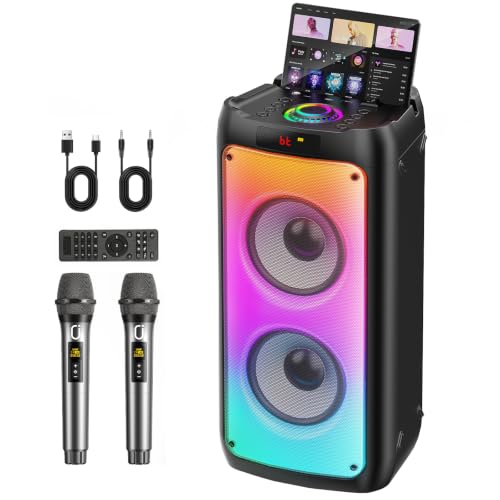
- 【Wide-Coverage with Dual 6.5" Woofers for Bigger Parties & Events】Built with dual 6.5-inch alloy woofers and 200W peak power, this karaoke machine delivers stronger bass, clearer vocals, and...
- 🎤【Sound Tuning for Clearer Singing and Less Harsh Audio】Many karaoke speakers can sound muddy, sharp, or distorted when the volume goes up. The T10-T karaoke machine uses AI sound tuning and a...
The HWWR Portable Karaoke Machine is a fundamentally different beast compared to the Nady PM-200A Powered Monitor. While it is marketed as a “stage monitor” in some contexts, it is primarily a party system with disco lights and wireless microphones. If you are looking for a professional-grade tool to integrate into a PA system, the Nady is the clear winner. However, for backyard gatherings or casual performers who want an all-in-one entertainment package with Bluetooth connectivity, the HWWR offers features the Nady lacks. It’s a fun, consumer-grade alternative, whereas the Nady is a piece of pro-audio gear.
2. Roland PM-100 Electronic Drum Set
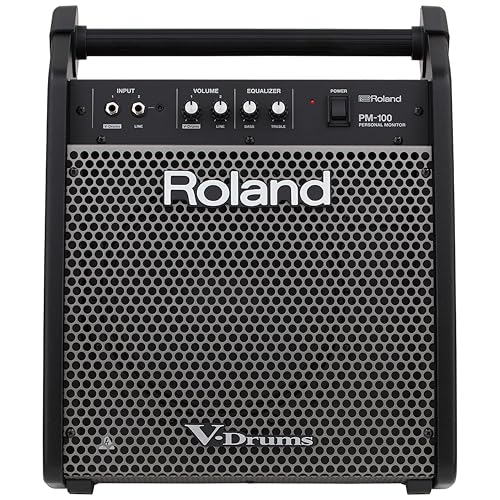
- Premium All-in-One Monitor: Designed specifically for use with V-Drums electronic percussion products to deliver professional sound quality
- Powerful Full-Range Audio System: Features 80 watts of power with a custom 10-inch speaker and tweeter for rich, dynamic sound reproduction
The Roland PM-100 is specifically engineered for electronic drums, featuring an 80-watt output and a 10-inch woofer. Comparing it to the Nady PM-200A Powered Monitor reveals a clear trade-off: frequency range versus portability. The Roland will provide the “thump” and low-end response that drummers crave for their kick drums, which the Nady’s 5-inch driver simply cannot match. However, the Roland is much larger and heavier. If you are a singer or a keyboardist who needs vocal clarity and a small footprint, the Nady is more appropriate. For serious electronic drummers, the Roland is the specialized choice.
3. Seismic Audio Passive Floor Monitors
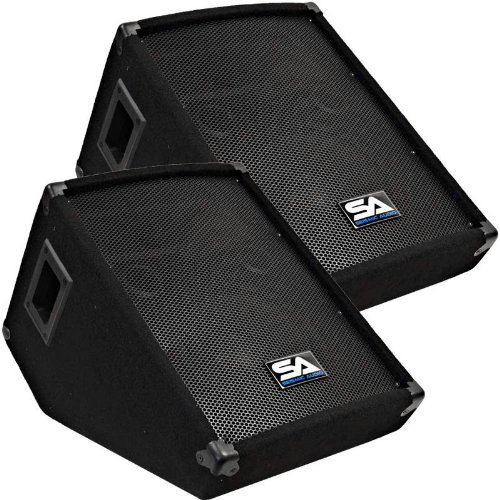
- Model # - SA-10M (Set of 2) | PASSIVE 10" Stage or Floor Monitor | Requires external amplifier | 14” tall – 13.25” wide – 21” deep
- Woofer - 10” 2 way crossover w/ a 40 oz magnet & 2” voice coil. 100 Watts RMS – 200 Peak.
The Seismic Audio pair consists of passive 10-inch wedge monitors, meaning they require an external power amplifier to function. This is the biggest difference when compared to the Nady PM-200A Powered Monitor, which is “active” and has its own built-in 150W amp. The Seismic Audio wedges provide a more traditional stage look and can handle a wider frequency range thanks to the larger 10-inch speakers. They are great for bands that already own a power amp rack. However, for the solo artist or the “weekend warrior” who wants a “plug-and-play” solution that fits in the front seat of a car, the Nady offers far superior convenience and integration.
The Final Verdict: Is the Nady PM-200A Powered Monitor Right for You?
After a thorough evaluation, it is clear that the Nady PM-200A Powered Monitor occupies a unique niche in the live sound market. It is not a replacement for a massive front-of-house PA system, nor is it a hi-fi studio reference monitor. Instead, it is a surgical tool designed to solve a specific problem: the inability to hear yourself on a loud, crowded stage. Its strengths lie in its incredible portability, its versatile mounting options, and its “brain” capability to power other passive units. While the idle hiss and the lack of deep bass are points to consider, they are often overshadowed by the unit’s utility and “bang for the buck” value.
We recommend the Nady PM-200A Powered Monitor for acoustic soloists, keyboard players, and vocalists who are tired of hauling heavy gear and want a dedicated monitor they can control from their fingertips. It is a rugged, reliable, and surprisingly loud solution for the modern performer. If you’re ready to stop guessing your pitch and start hearing every nuance of your performance, you can order yours today and reclaim your stage sound.
Last update on 2026-09-24 / Affiliate links / Images from Amazon Product Advertising API