
LEKATO Mini Pitch Shifter Pedal Review: A Budget Secret Weapon or a Digital Compromise?
If you have ever been in the middle of a creative flow, only to realize that the song you are writing requires a half-step drop, or worse, a full C-standard tuning, you know the immediate mood-killer that is manual retuning. For those of us with Floyd Rose bridges, this isn’t just a minor inconvenience; it is a twenty-minute ordeal involving Allen wrenches and fine-tuning. We have all been there—juggling three different basses or guitars just to handle various setlist requirements or recording sessions. This constant gear-swapping is not only expensive but clutters the studio and complicates live performances. The search for a solution leads many to the world of digital pitch shifting, looking for a way to transform their tone with the flick of a switch. We decided to put the LEKATO Mini Pitch Shifter Pedal to the test to see if this budget-friendly box could truly replace the need for multiple instruments and save us from the “tuning trap.”
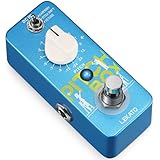
- Three Versatile Effects Modes: Harmony, Pitch Shift, Detune. The LEKATO Mini Pitch Box Harmonizer offers three powerful effects: Harmony (shift tones up/down by 2 octaves for rich, layered sounds...
- Precise Polyphonic Pitch Shifting: Experience accurate polyphonic pitch conversion with the LEKATO Drop Pedal. Designed for ease of use, it delivers full, rich tones for songs and meets all your music...
What to Consider Before Buying Electric Guitar Pitch & Octave Effects
An Electric Guitar Pitch & Octave Effects pedal is more than just an item; it’s a key solution for expanding your harmonic range without physical limitations. These devices work by taking your analog signal, converting it to digital data, shifting the pitch mathematically, and then converting it back to audio. This process allows you to simulate 12-string guitars, create lush organ-like pads, or drop your tuning for heavy metal riffs without touching your machine heads. The main benefits are versatility and efficiency—giving you access to sounds that are physically impossible on a standard six-string setup.
The ideal customer for this type of product is someone facing space constraints on their pedalboard or budget limitations, such as a home studio producer or a gigging musician who needs occasional tuning shifts. It’s perfect for the “bedroom shredder” who wants to play along to different tracks in various keys. However, it might not be suitable for those who require absolute zero latency or “intelligent” harmonizing that follows complex musical scales automatically. If you are a professional touring musician where every millisecond of lag is a deal-breaker, you might eventually consider high-end rack units, but for most of us, these compact pedals are the sweet spot.
Before investing, consider these crucial points in detail:
- Dimensions & Space: In the modern era of “mini” pedals, board real estate is at a premium. You want a pedal that offers a small footprint without sacrificing the durability of the switches or the accessibility of the knobs. A rugged metal shell is non-negotiable if you plan on stepping on it during a live set.
- Capacity/Performance: Look for “polyphonic” capabilities. Older or cheaper pitch shifters often struggle with chords (monophonic), resulting in a “warbling” or “glitchy” sound. A high-quality digital processor should be able to handle full six-string chords with minimal artifacts.
- Materials & Durability: Since these are electronic devices, the quality of the internal AD/DA converters is just as important as the external housing. You want high-quality electronic components that minimize signal hiss and a True Bypass switch to ensure your tone remains pure when the effect is off.
- Ease of Use & Maintenance: A complicated interface can hinder creativity. Look for intuitive controls—usually a mode toggle and a primary pitch knob. Long-term care involves using a clean, isolated 9V power source to prevent digital hum and keeping the jacks free of dust.
While the LEKATO Mini Pitch Shifter Pedal is an excellent choice for those starting their journey into pitch manipulation, it’s always wise to see how it stacks up against the competition. For a broader look at all the top models, we highly recommend checking out our complete, in-depth guide:
Our Comprehensive Guide to the Best Octave and Pitch Shifting Pedals for Modern Musicians

- [Octave/Pitch shifter Pedal] With 7 shift types and 3 tone mode toggles, Harmonic Square guitar pedal gives you 21 options of semitonal, octave and detune sounds

- Industry-Standard Octave Pedal: The updated version features enhanced capabilities for modern guitarists


- Three shift modes: up, down or dual
First Impressions: Unboxing the LEKATO Mini Pitch Shifter Pedal
When the LEKATO Mini Pitch Shifter Pedal first arrived at our studio, the first thing that struck us was its incredibly diminutive size. It fits easily in the palm of your hand, yet it feels surprisingly substantial thanks to the rugged full metal shell. The metallic blue finish is vibrant and professional, and the toggle switch for Harmony, Pitch Shift, and Detune feels clicky and secure. We’ve tested many “budget” pedals that feel like plastic toys, but this is not one of them. It feels like a piece of gear designed to be used, not just looked at.
Out of the box, setup was a breeze—standard 1/4-inch input and output. We immediately noticed that it does not take a battery, which is standard for mini pedals; you will need a 9V DC center-negative adapter. Before you plug it in, we suggest you see its full feature set and user reviews to understand the various modes. Our first test run involved placing it right at the beginning of our signal chain, which is the gold standard for pitch effects to ensure the cleanest possible tracking.
Key Benefits
- Highly affordable price point for a polyphonic digital pedal.
- Incredibly compact “mini” footprint saves valuable pedalboard space.
- Versatile 3-mode operation (Harmony, Pitch Shift, Detune) covers a wide range of needs.
- True Bypass circuit ensures zero tone coloration when the effect is disengaged.
Limitations
- Does not include a “Blend” or “Mix” knob for fine-tuning wet/dry ratios in Harmony mode.
- Some users may experience a slight digital latency or “delay” sensation during fast technical playing.
Deep Dive: Performance Analysis of the LEKATO Mini Pitch Shifter Pedal
The Power of Precise Polyphonic Pitch Shifting
The core of any pitch pedal is its ability to track notes accurately, and we were pleasantly surprised by the polyphonic processing power of the LEKATO Mini Pitch Shifter Pedal. In our testing, we threw complex jazz chords and heavy power chords at it, and for the most part, it held its own. In the “Pitch Shift” mode, the pedal allows for a ±2 Octave range. When we dropped our bass guitar down a full step to reach D-standard, the tone remained remarkably clear. We found that it allows us to drop or raise the tuning of an instrument with the turn of a dial, which effectively eliminates the need to carry multiple guitars to a session. This is a massive win for session players or home composers who need to quickly audition a riff in a different key.
Supporting our findings, several users have noted that the sound quality is “more than acceptable for practice” and recording. While it might not have the high-end sheen of a $300 boutique processor, it provides a functional, usable signal that sits well in a mix. For the price, the tracking is surprisingly fast. We recommend that users check the latest price and availability to see why so many guitarists are choosing this as their primary “utility” pedal. It’s particularly effective for those “disgusting” metal tones where a little bit of digital grit actually adds to the aesthetic of the music.
Three Distinct Modes: Harmony, Pitch Shift, and Detune
The versatility of the LEKATO Mini Pitch Shifter Pedal comes from its three-way toggle switch. Each mode transforms the pedal’s character entirely. The “Harmony” mode adds a shifted note to your original signal, creating a thick, multi-instrumental sound. The “Pitch Shift” mode replaces your signal entirely with the shifted note—this is your go-to for “virtual retuning.” Finally, the “Detune” mode provides a slight pitch offset, creating a lush, chorus-like effect that doesn’t have the “wobble” of a traditional LFO-based chorus. We found the Detune mode to be a hidden gem for shoegaze and ambient textures; it adds a sense of “uneasiness” and depth that is perfect for psychedelic soundscapes.
One detail we noticed—and this is echoed by several users—is the lack of a dedicated blend knob. In Harmony mode, the balance between your dry and wet signal is fixed. While the main dial allows you to customize the interval (16 customizable parameters), you can’t dial back the volume of the harmony note. This can be “a bit much” for some, but for others, it creates a “shimmer” effect that is quite inspiring. If you’re looking for a tool to help you “create outside your comfort zone,” this three-mode layout provides plenty of experimental territory. You can see more details on the 16 parameters here to plan your sonic palette.
Real-World Utility: The Floyd Rose and Bass Guitar Solution
For us, the most impressive practical application of the LEKATO Mini Pitch Shifter Pedal was its synergy with “difficult” instruments. If you own a guitar with a Floyd Rose tremolo, you know that changing tunings is a nightmare. This pedal solves that problem instantly. We tested it with a Floyd-equipped guitar, and by simply clicking the switch and turning the knob, we went from standard E to drop D and even B-standard without ever touching the bridge. It stayed in tune and allowed us to jam along with lower-tuned tracks effortlessly. For bass players, it’s equally revolutionary. If your favorite bass lives in D-standard with heavy strings, trying to tune up to E can put dangerous tension on the neck. This pedal makes “switching to standard tuning a breeze” for practice or following along with an instructor.
We found that placing this first in the chain before a multi-effects pedal or computer interface works best. It “frees up an FX slot” in your digital processor, allowing you to use that DSP for more complex delays or reverbs. We’ve used this pedal for months without a problem; it “stays adjusted and clicks easily” every time. If you’re a bassist who doesn’t want to lug three different instruments to a small gig, we say get this first before you buy an expensive one—it might be all you ever need.
Build Quality and Signal Integrity
The LEKATO Mini Pitch Shifter Pedal features a “True Bypass” switch, which is a critical feature for any serious musician. When the pedal is off, your signal bypasses the digital circuitry entirely, ensuring a “clean, lossless signal path.” We tested this by A/B testing our tone with the pedal in and out of the chain, and to our ears, there was no perceptible tone suck. The rugged full metal shell feels like it could survive being tossed into a gig bag or being stomped on repeatedly. The barrel connector for the power is standard, and the 1/4-inch jacks are tight and secure.
Some users have raised concerns about “input delay,” which is a common byproduct of digital pitch shifting. In our expert evaluation, while there is a tiny amount of processing time—as there is with any digital pedal—it is only really noticeable if you are playing extremely fast, percussive lines with a very high “wet” mix. For standard riffing, chordal work, and “disgusting” metal tones, it isn’t a deal-breaker. In fact, many users love the “detuned uneasiness” it adds to their sound, calling it their “secret weapon.” For a pedal in this price bracket, the build quality is far above average. It’s a feature that really sets it apart from the flimsy plastic alternatives you might find elsewhere.
What Other Users Are Saying
The general sentiment among users is overwhelmingly positive, especially when considering the price-to-performance ratio. Many guitarists praise its simplicity and effectiveness for virtual retuning, with one user calling it the “best pedal ever” for their Floyd Rose equipped guitar. Bassists have also found it to be a lifesaver for following instructors without having to fight with heavy string tensions. The phrase “does exactly what I wanted it to do” appears frequently in reviews, highlighting its reliability as a utility tool.
However, the feedback is not without its critiques. A small segment of users has noted an “unwanted chorus effect” in certain settings and a perceptible “input delay.” One reviewer mentioned that it makes it “awkward to play in time” if your ears are highly sensitive to latency. Another point of contention is the lack of “intelligent” harmonizing—it won’t automatically know the key you are playing in; you have to set it manually. These are valid points for professional use, but as many users conclude, for the money, it offers “cool specific uses” that make it a “great budget-wise” investment. We recommend you read more user experiences to see if these specific quirks would impact your playing style.
Comparing the LEKATO Mini Pitch Shifter Pedal to Top Alternatives
1. DigiTech Whammy 2-Mode Pitch Shift Effect

- Classic Whammy Sound
- Chordal Whammyv-01 Pitch Shifting
The DigiTech Whammy is the industry standard for a reason. Unlike the LEKATO Mini Pitch Shifter Pedal, the Whammy features a massive expression pedal that allows for real-time pitch bends and “dive bombs.” It is significantly larger and more expensive, but it offers a level of expressive control that a mini pedal simply cannot match. If you are looking to recreate the iconic sounds of Tom Morello or Jack White, the Whammy is the choice for you. However, for those who just need to drop their tuning or add a simple harmony note, the Whammy might be overkill and take up too much space on a small board.
2. DigiTech DROP Compact Polyphonic Pitch-Shifter

- Polyphonic drop tune allows you to drop tune from 1 semi-tone to a full octave
- Momentary or latching mode footswitch
The DigiTech DROP is perhaps the closest competitor in terms of function, focusing specifically on drop-tuning. It is widely considered to have the best tracking and lowest latency in the industry. Compared to the LEKATO Mini Pitch Shifter Pedal, the DROP is more specialized and generally higher quality in terms of its DSP (Digital Signal Processing). However, it is also much more expensive. If your primary goal is professional-grade recording where zero latency is required, the DROP is the gold standard. But if you want the added versatility of Harmony and Detune modes at a fraction of the cost, the LEKATO holds its own for hobbyists and practice sessions.
3. Donner Octave Guitar Pedal Digital Octave Mini Pitch Shifter
- [Octave/Pitch shifter Pedal] With 7 shift types and 3 tone mode toggles, Harmonic Square guitar pedal gives you 21 options of semitonal, octave and detune sounds
- [3 Tone Modes]: 3 tone modes including Sharp, Flat, and Detune; Sharp: Pitch up; Detune: Adjustable pitch signal shifted by 10 cents; Flat: Pitch down
The Donner Octave is another strong contender in the budget mini-pedal category. It offers 7 shift types and 3 tone modes, making it very similar to the LEKATO. In our experience, the Donner tends to focus slightly more on “octave” sounds rather than full ±2 octave pitch shifting. The build quality is comparable, and it also features a mini-toggle and a rugged metal shell. Choosing between the two often comes down to the specific voicing of the “Detune” and “Harmony” modes. The LEKATO’s “Pitch Shift” mode feels a bit more robust for full instrument retuning, whereas the Donner is excellent for adding that classic “octave up/down” thickness to a solo.
Final Verdict: Is the LEKATO Mini Pitch Shifter Pedal Right for You?
After extensive testing and comparing it with both budget peers and industry giants, we’ve reached a clear conclusion. The LEKATO Mini Pitch Shifter Pedal is an incredible value proposition for the modern guitarist and bassist. Its main strengths lie in its compact footprint, rugged build, and the sheer convenience of its “Pitch Shift” mode for virtual retuning. While it may not replace a $250 specialized drop pedal for a world-touring professional, it is more than capable for home recording, daily practice, and small-venue gigs. It turns a frustrating twenty-minute tuning session into a two-second turn of a dial, which is worth the price of admission alone.
We recommend this pedal to anyone looking for a “secret weapon” to thicken their tone, experiment with shoegaze textures, or simplify their life with a Floyd Rose bridge. It is a small investment that offers a massive amount of utility. If you are ready to expand your sonic horizons without breaking the bank, we highly suggest you click here to add the LEKATO Mini Pitch Shifter Pedal to your rig today and experience the freedom of digital pitch manipulation for yourself.
Last update on 2026-09-26 / Affiliate links / Images from Amazon Product Advertising API