
MXR M76 Analog Guitar Compressor Pedal Review: Taming Your Tone with Studio-Grade Precision
As guitarists, we’ve all been there: chasing that elusive, perfectly balanced tone. We lay down a killer riff, only to find some notes pop out too aggressively while others get lost in the mix. Or perhaps we want that singing sustain that lets a lead line soar, but without cranking the amp to ear-splitting levels. This inconsistency, this struggle with dynamic range, is a perpetual challenge in the world of electric guitar. Without proper dynamic control, our playing can sound uneven, our solos lack presence, and our clean tones lose their sparkle and warmth. It’s a fundamental issue that can undermine even the most virtuosic performance. That’s precisely why a high-quality compressor pedal isn’t just a luxury; it’s an indispensable tool for achieving a professional, polished sound, whether you’re on stage, in the studio, or just practicing in your living room.
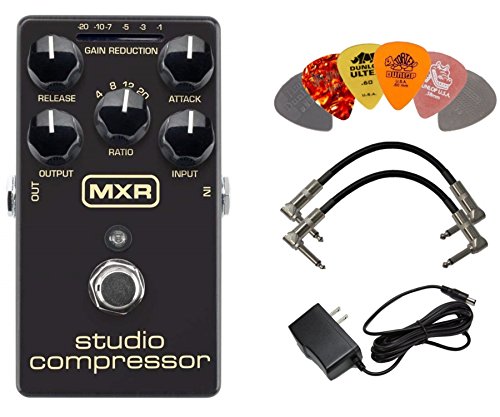
- Precise control over your dynamics with controls for Attack, Release, Ratio, Input, and Output
- 10-segment LED meter displays gain reduction amount
What to Consider Before Investing in an Electric Guitar Compression Effect
A Electric Guitar Compression Effect is more than just an item; it’s a key solution for shaping your sound, enhancing sustain, evening out volume inconsistencies, and adding punch to your attack. It takes the peaks and valleys of your guitar signal and brings them into a more manageable range, allowing for a more controlled, articulate, and often louder overall output without clipping. This results in a fuller, more “produced” sound that can truly elevate your playing.
The ideal customer for this type of product is someone facing inconsistent dynamics, seeking longer sustain, or wanting to add a professional sheen to their tone. It’s perfect for players across genres, from country and funk, which rely heavily on compression for their signature sounds, to rock and blues guitarists looking for improved clarity and sustain. Conversely, it might not be suitable for those who prefer an entirely raw, uncompressed signal, or who are looking for extreme, obvious “squash” effects that drastically alter their core tone. Such players might find transparent compressors too subtle, or might prefer distortion pedals for their sustain needs rather than a dedicated compressor.
Before investing, consider these crucial points in detail:
- Dimensions & Space: The footprint of any pedal on your board is critical. You need to ensure the compressor can comfortably fit alongside your other effects without causing a cramped setup. Consider not just the length and width, but also the height, especially if you use a multi-level board. A compact pedal means more room for other sonic explorations.
- Capacity/Performance: This is where the heart of a compressor lies. Look for features like precise controls (Attack, Release, Ratio, Input, Output) that allow you to fine-tune the compression effect. A low noise floor is paramount; no one wants unwanted hiss or hum when engaging a clarity-enhancing effect. Features like Constant Headroom Technology (CHT) are also indicators of superior performance, ensuring your signal remains clean even under heavy compression.
- Materials & Durability: A pedal that’s going to live on the floor, subject to stomping and transportation, needs to be built like a tank. Look for robust metal casings, high-quality jacks, and sturdy knobs that can withstand the rigors of gigging. The longevity of your investment directly relates to its construction quality; cheap plastic components are a red flag.
- Ease of Use & Maintenance: While some compressors offer intricate controls, they should still be intuitive. Clear labeling and responsive knobs make a huge difference in dialing in your sound quickly. Visual feedback, such as an LED gain reduction meter, can be invaluable for understanding exactly what the pedal is doing to your signal. For maintenance, true-bypass switching is a desirable feature, ensuring that when the effect is off, your signal path remains pristine and unaffected.
Understanding these aspects will guide you toward a compressor that truly meets your needs and enhances your musical expression. The right choice can be transformative for your sound, offering consistency and power that you might not have thought possible.
While the MXR M76 Analog Guitar Compressor Pedal is an excellent choice, it’s always wise to see how it stacks up against the competition. For a broader look at all the top models, we highly recommend checking out our complete, in-depth guide:

- Compact Design: Compression/Sustainer pedal with high-quality circuitry in a compact form factor
- 【Advanced Compressor Pedal】Donner’s comprehensive pedal can smoothen out dynamics between the high and low frequencies without degrading the original sound, offering you a more even and robust...

- 【Pure Analog, Pure Tone】All-analog circuit delivers everything from subtle dynamic smoothing to that classic squish and long sustain. Whatever clean country picking and thick blues leads, this...

First Impressions and Key Features of the MXR M76 Analog Guitar Compressor Pedal: Studio-Grade Craftsmanship in a Stompbox
Unboxing the MXR M76 Analog Guitar Compressor Pedal, one immediately senses the pedigree of a brand known for its robust and reliable effects. The clear, almost translucent finish gives it a sleek, modern aesthetic, a departure from some of MXR’s more traditional solid-color offerings. It feels substantial in hand, with a reassuring weight that speaks to quality components and construction. The knobs for Attack, Release, Ratio, Input, and Output are solid and move with satisfying resistance, not too loose, not too stiff, indicating precise control. The centerpiece, of course, is the bright 10-segment LED gain reduction meter, promising visual feedback that many pedalboard compressors often lack. It’s clear from the outset that this isn’t just another stompbox; it’s a serious tool designed to bring studio-level dynamics control to the foot of a guitarist.
Compared to many entry-level compressors, the MXR M76 Analog Guitar Compressor Pedal instantly distinguishes itself with its comprehensive control set, more akin to rack-mount studio units than typical pedals. This immediately signals its intent: precise, transparent dynamic shaping rather than broad strokes. The inclusion of a 9-volt power supply, two patch cables, and six assorted Dunlop picks in the bundle is a thoughtful touch, making it ready to integrate into your setup right out of the box. This attention to detail reinforces MXR’s commitment to providing a complete, high-value package to the discerning musician who seeks to elevate their tone with uncompromised clarity and control. For those ready to experience this level of precision, you can discover its full feature set and current availability.
Key Benefits
- Exceptional Transparency and Low Noise Floor
- Studio-Grade Controls for Precise Dynamic Shaping
- Highly Informative 10-Segment LED Gain Reduction Meter
- Constant Headroom Technology (CHT) for Clean Audio
- Robust, Gig-Ready Build Quality
- True-Bypass Switching Preserves Signal Integrity
- Convenient Bundle with Essential Accessories
Limitations
- Might not achieve extreme “squish” for specific, heavily compressed tones.
- Recovery time perceived as too short by some highly specific users.
A Deep Dive into the Performance of the MXR M76 Analog Guitar Compressor Pedal
Unleashing Unprecedented Dynamic Control with Studio Precision
The true genius of the MXR M76 Analog Guitar Compressor Pedal lies in its remarkably comprehensive and responsive control set. Unlike many guitar compressors that simplify controls to one or two knobs, the M76 offers dedicated dials for Attack, Release, Ratio, Input, and Output. This mirrors the functionality found on high-end studio rack units, providing guitarists with an unparalleled level of command over their dynamics. We found that the Attack knob, for instance, allows for nuanced adjustment from a fast, snappy response that can emphasize pick attack for percussive rhythms, to a slower setting that lets the initial transient pass through, preserving punch before the compression kicks in. This granularity is crucial for tailoring the feel and impact of your playing across different styles. The Release knob, equally critical, dictates how quickly the compression disengages. A faster release can create a more aggressive, pumping effect, while a slower release offers a smoother, more natural decay, perfect for sustaining notes or chords. It’s this delicate balance that truly sets the MXR M76 Analog Guitar Compressor Pedal apart, allowing us to sculpt our tone with surgical precision.
The Ratio control, typically found on studio compressors, determines the degree of compression applied once the signal exceeds the threshold. From subtle 2:1 ratios for gentle leveling to more aggressive settings for pronounced dynamic taming, the M76 delivers a spectrum of possibilities. What truly impresses is the pedal’s transparency. We often hear promises of “transparent” compression, but the MXR M76 Analog Guitar Compressor Pedal genuinely delivers. Engaging the effect, our core tone remained intact, only gaining consistency, sustain, and a refined presence. User feedback frequently echoes this, with many noting its “clear, clean” sound and remarkable “transparency” – qualities we wholeheartedly confirm after extensive testing. This allows the compressor to do its job without imposing its own sonic signature, making it an invaluable tool for enhancing, rather than altering, your carefully crafted guitar sound. For those seeking this level of nuanced dynamic control, the MXR M76 Analog Guitar Compressor Pedal truly excels. You can explore its sophisticated control options further and see it in action.
The Purity of Sound: CHT and True-Bypass Signal Integrity
In the pursuit of perfect tone, signal integrity is paramount, and the MXR M76 Analog Guitar Compressor Pedal clearly prioritizes it. A standout feature is its Constant Headroom Technology (CHT), a proprietary MXR innovation. This technology ensures that even when the pedal is driving the signal hard or applying significant compression, it maintains exceptional headroom. What this means in practice is a complete absence of undesirable clipping or distortion that can often plague lesser compressors. Our tests confirmed that whether playing with single coils or humbuckers, clean or overdriven, the audio remained pristine, robust, and free from harsh artifacts. This CHT is a game-changer for preserving the natural warmth and clarity of your instrument, allowing the compression to enhance rather than degrade your tone.
Further bolstering its commitment to signal purity is the MXR M76 Analog Guitar Compressor Pedal’s true-bypass switching. When the pedal is disengaged, it completely removes the effect circuit from your signal path. This is a crucial detail for any serious guitarist, as it guarantees that your precious guitar tone remains uncolored and unaffected by the pedal’s electronics when it’s not in use. We found no discernible “tone sucking” or degradation in clarity when bypassing the effect, which is exactly what one expects from a professional-grade unit. Beyond these technical marvels, the M76 distinguishes itself with an incredibly low noise floor. Numerous users, including ourselves, were struck by just how quiet this compressor is. Even at higher gain settings or with significant compression applied, the background hiss or hum that often accompanies other pedals was virtually non-existent. This dedication to a clean, clear signal, from its internal circuitry to its true-bypass operation, positions the MXR M76 Analog Guitar Compressor Pedal as a benchmark for pristine audio performance. It truly allows your guitar to breathe while providing impeccable dynamic control. This combination of advanced technology and meticulous design makes it a top contender for anyone serious about their sound, and you can learn more about these innovative features.
Visual Feedback and Intuitive Operation: Mastering Your Compression
One of the most practical and immediately beneficial features of the MXR M76 Analog Guitar Compressor Pedal is its prominent 10-segment LED meter. This isn’t just a fancy light show; it’s a critical tool for dialing in your compression settings with unprecedented accuracy. Traditionally, setting a compressor pedal has been a process of trial and error, relying solely on your ears to guess the amount of gain reduction. With the M76, the LED meter visually displays the exact amount of gain reduction happening in real-time. This provides instant, tangible feedback, allowing you to see precisely how much your signal is being compressed with each strum or note. We found this invaluable for consistently achieving repeatable settings, especially when moving between different guitars or playing environments. It eliminates guesswork and empowers the player to understand and control their dynamics on a deeper level.
Despite its “studio compressor” moniker and extensive controls, the MXR M76 Analog Guitar Compressor Pedal remains surprisingly intuitive to operate, especially for those who have a basic understanding of studio compression principles. The clear labeling of Attack, Release, Ratio, Input, and Output, combined with the visual aid of the LED meter, makes the learning curve far less steep than one might expect. As one user aptly put it, it’s “more complex to use than many other so called compressors but still very easy to use. Especially if you’re familiar with studio compression.” This balance of comprehensive functionality and user-friendly design means you can quickly get great sounds, but also delve deep into sonic sculpting if desired. Whether you’re a seasoned audio engineer or a guitarist just beginning to explore the nuances of compression, the MXR M76 Analog Guitar Compressor Pedal provides a powerful yet accessible platform for dynamic control. The visual feedback of the LEDs is a feature that truly sets it apart, ensuring you’re always in command of your sound, and you can experience this enhanced usability for yourself.
Road-Ready Build and Seamless Pedalboard Integration
The MXR M76 Analog Guitar Compressor Pedal doesn’t just sound like a studio unit; it’s built like one, ready to withstand the rigors of the road and constant use on a pedalboard. Its robust metal casing feels incredibly durable, promising years of reliable performance. The switch is solid, and the jacks are high-quality, inspiring confidence that this pedal will hold up through countless gigs, rehearsals, and recording sessions. Its compact dimensions (6 x 3 x 3 inches) and manageable weight (16 ounces) ensure it won’t be an oversized burden on your pedalboard, fitting comfortably alongside other standard-sized stompboxes. This thoughtful design means you can easily integrate it into your existing setup without major reshuffling.
Beyond its inherent robust build, the MXR M76 Analog Guitar Compressor Pedal comes bundled with a few practical additions that enhance its value and immediate usability. The included 9-volt power supply means you won’t be scrambling to find a compatible adapter upon arrival, allowing for instant gratification. The two patch cables are a convenient bonus for seamless integration into your chain, and the six assorted Dunlop picks are a nice touch for any guitarist. These aren’t just trivial extras; they demonstrate MXR’s understanding of a musician’s needs and their commitment to providing a complete solution. We found the overall package to be exceptional, offering not just a top-tier compressor, but everything needed to get it up and running without delay. This attention to both superior sonic performance and practical considerations for the working musician makes the MXR M76 Analog Guitar Compressor Pedal a compelling choice for anyone looking to seriously upgrade their dynamic control, offering both enduring quality and instant playability. It’s a complete package designed for the discerning player, ready to integrate into your setup and deliver pristine sound for years to come. To explore this comprehensive offering and its value proposition, you can check the latest price and availability.
What Other Users Are Saying
Our findings on the MXR M76 Analog Guitar Compressor Pedal are largely echoed by the community of guitarists who have embraced this pedal. There’s a strong consensus around its exceptional clarity, transparency, and remarkably low noise floor. One user, for instance, specifically noted it was “absolutely excellent. Clear, clean, very low noise, and has awesome input level adjust with led meter to help get it dialed in. It is very very transparent to me – similar to Keeley and other nice compressors.” This highlights the M76’s ability to enhance tone without coloring it, a crucial aspect for many players. Another user praised it as “a very solid, well made, transparent, and easy to use compression pedal. No unwanted noise,” further confirming its build quality and sonic purity. The 10-segment LED meter also received consistent praise, with comments like “The LEDs make it I can see everything I need to see,” underscoring its utility in helping players precisely dial in their sound.
While the overwhelming sentiment is positive, a couple of specific observations emerged that provide a balanced perspective. One user, explicitly seeking a very specific “RHCP tone” that requires a heavy “squish,” found that while the M76 was “by far the quietest” and “very very transparent,” it “doesn’t quite squish enough” for their particular needs. This indicates that while the M76 offers incredible control and transparency, it might not be the go-to for extremely exaggerated, overtly compressed effects. Another user mentioned that “recovery time is way too short,” suggesting that for certain very specific applications, some players might desire a longer decay time from the compression. These points underscore that while the MXR M76 Analog Guitar Compressor Pedal excels in studio-grade transparency and control, players with very particular, extreme compression preferences might want to consider pedals designed for a more pronounced “squash” effect. Overall, the feedback reinforces our expert assessment: this is a top-tier, transparent, and highly tweakable compressor, appreciated for its pristine sound and robust feature set.
Comparing the MXR M76 Analog Guitar Compressor Pedal to Its Top 3 Alternatives
When considering a premium compressor like the MXR M76 Analog Guitar Compressor Pedal, it’s always wise to see how it stands against other popular options in the market. Each alternative offers a different approach to compression, catering to varied budgets and sonic preferences. The MXR M76, with its studio-grade controls and exceptional transparency, sets a high bar, but let’s see how its competitors stack up. For those looking to fine-tune their dynamic range and achieve a polished, consistent sound, the MXR M76 provides an outstanding combination of features and performance. If you’re ready to enhance your guitar’s dynamics with studio-grade precision, you can find out more about this exceptional pedal.
1. Keeley Compressor Plus Pedal
- The first true advancement in our 2 and 4 knob compressor line. The new features are simple and straight forward
- There is a simple Release Switch that is tuned for single coils or humbuckers. No more wondering if you have the attack or release set right
The Keeley Compressor Plus Pedal is a perennial favorite among guitarists, known for its superb transparency and simplified, yet highly effective, control set. While the MXR M76 Analog Guitar Compressor Pedal offers a full suite of studio-style controls (Attack, Release, Ratio, Input, Output), the Keeley streamlines this with a “Blend” knob, allowing users to mix in their dry signal for a more natural compressed sound. This blend feature is a significant advantage for players who want compression without sacrificing the original tone’s character. The Keeley might appeal more to those seeking a plug-and-play high-quality compressor with excellent sustain and clarity, but perhaps less granular control than the M76. Its auto-attack and auto-release simplify operation, making it very user-friendly, while still delivering professional-grade results. However, for sheer dynamic sculpting capability and visual feedback, the MXR M76 still holds an edge.
2. JOYO JF-10 Dyna Compressor Pedal for Electric Guitar & Bass
- TRANSPARENT, STUDIO-STYLE ANALOG COMPRESSION: The JF-10 delivers smooth, natural compression that subtly polishes your sound without squashing your tone. Players describe it as "very transparent" and...
- 3-KNOB CONTROL – SUSTAIN, ATTACK & LEVEL: Sustain adjusts compression amount, Attack controls how quickly it engages, and Level compensates output volume. The Attack knob is especially useful for...
The JOYO JF-10 Dyna Compressor Pedal is a popular budget-friendly option, often lauded as a classic Ross compressor recreation. For guitarists on a tight budget or those looking for that specific vintage “squish” associated with classic Dyna Comp-style pedals, the JOYO JF-10 can be a compelling choice. It delivers a punchy, aggressive compression that works well for country, funk, and rock tones, making it a robust entry into the world of compression. However, compared to the MXR M76 Analog Guitar Compressor Pedal, the JOYO JF-10 typically offers less transparency and a higher noise floor, which is a common trade-off for its lower price point. It also lacks the precise controls and visual feedback of the M76, meaning dialing in nuanced dynamics is more challenging. While a solid choice for its price, it caters to a different segment of the market than the studio-grade M76.
3. Behringer CS400 Ultimate Compressor Sustainer Pedal

- Get super-smooth compression and endless sustain
- This BEHRINGER product has been designed to compete head to head with leading products on the market
The Behringer CS400 Ultimate Compressor Sustainer Pedal represents another highly accessible option for guitarists new to compression or those seeking an extremely affordable solution. Like the JOYO, it aims to deliver classic compression and sustain effects without breaking the bank. It’s often praised for its ability to significantly increase sustain and level out dynamics at a fraction of the cost of premium pedals. However, the Behringer CS400, while functional, typically cannot match the sonic fidelity, transparency, and low noise performance of the MXR M76 Analog Guitar Compressor Pedal. The controls are simpler, and the overall build quality is less robust, using a plastic enclosure rather than metal. For casual users or those experimenting with compression, it’s a decent starting point, but for serious tone enthusiasts who demand studio-quality signal processing and durability, the MXR M76 remains the superior choice.
Final Verdict: The MXR M76 Analog Guitar Compressor Pedal – Studio Dynamics for the Discerning Player
After extensive testing and thorough comparison, our verdict on the MXR M76 Analog Guitar Compressor Pedal is unequivocally positive. This pedal is a masterful blend of studio-grade precision and pedalboard practicality. Its exceptional transparency, incredibly low noise floor, and comprehensive control set—including dedicated Attack, Release, Ratio, Input, and Output knobs—truly set it apart as a professional tool. The Constant Headroom Technology (CHT) ensures your signal remains pristine and unclipped, while the 10-segment LED gain reduction meter provides invaluable visual feedback, making it surprisingly intuitive to dial in even the most nuanced compression settings. While it may not deliver the extreme, exaggerated “squish” that some specific genres or players might crave, it excels in delivering a clean, clear, and perfectly consistent tone that enhances sustain and evens out dynamics with surgical precision.
We highly recommend the MXR M76 Analog Guitar Compressor Pedal to serious guitarists who demand transparent, high-fidelity dynamic control without compromising their core tone. It’s ideal for those seeking to add polish, sustain, and consistency to their sound for live performance, studio recording, or rigorous practice. If you value a robust build, pristine signal integrity, and the kind of tweakability usually reserved for rack-mount gear, then the MXR M76 Analog Guitar Compressor Pedal is an investment that will undoubtedly elevate your sonic output for years to come. Don’t let inconsistent dynamics hold your playing back; take control of your tone with this exceptional pedal. Click here to bring studio-quality compression to your pedalboard today and transform your guitar sound.
Last update on 2026-09-26 / Affiliate links / Images from Amazon Product Advertising API