
FLAMMA FC21 Classic Optical Compressor Pedal Review: High-End Dynamics for the Budget-Conscious Player
There is a specific kind of frustration that only a guitar player knows: you have the right guitar, the right amp, and a decent set of fingers, but your tone still feels “thin” or “peaky.” You hit a high note during a solo and it pierces the ears, but your low-end rhythm work gets lost in the mix. For years, I struggled with this inconsistency, especially when switching between clean funk rhythms and soaring lead lines. I tried to fix it with EQ, and I tried to fix it with gain, but nothing seemed to glue the sound together. That is exactly when I realized I was missing the most important “secret sauce” in any pro-level signal chain: a high-quality compressor. When I first got my hands on the FLAMMA FC21 Classic Optical Compressor Pedal, I wanted to see if a budget-friendly, mini-format pedal could truly provide that professional, polished sheen that usually costs hundreds of dollars.
Electric Guitar Compression Effects are often the most misunderstood tools in a musician’s arsenal. Unlike a distortion pedal that radically changes your sound, a compressor is a utility—it’s a key solution for managing dynamic range. It works by “squashing” the loudest peaks of your signal and boosting the quietest parts, resulting in a more consistent, professional sound. Without a compressor, your playing can sound amateurish and uneven; with one, your notes bloom, your sustain increases, and your overall mix presence becomes much more authoritative. If you are struggling to make your cleans “pop” or your leads “sing,” the FLAMMA FC21 Classic Optical Compressor Pedal might be the missing piece of your tonal puzzle.
The ideal customer for this type of product is someone facing inconsistent volume levels across different playing techniques, such as hybrid picking or heavy strumming. It is perfect for the gigging musician who needs a compact, reliable way to even out their sound without taking up precious real estate on a crowded board. However, it might not be suitable for those who prefer the extreme, “clicking” squash of a vintage Ross-style compressor or those who require a “blend” knob to mix in their dry signal. For players looking for transparency and a “glassy” finish, this optical circuit is a dream come true. You can see its full feature set and user reviews to determine if it aligns with your specific tonal goals.
Before investing, consider these crucial points in detail:
- Dimensions & Space: In the modern era of “mega-boards,” space is a premium. You want a pedal that offers a robust sound without requiring a massive footprint. Look for mini-pedals that don’t sacrifice internal component quality for their smaller shell size.
- Capacity/Performance: The heart of a compressor is its circuit type. Optical compressors like this one use a light-dependent resistor, which provides a much smoother, more musical attack and decay compared to VCA or FET compressors. This makes them ideal for “always-on” applications.
- Materials & Durability: Since this is a foot-operated device, it needs to be “road-ready.” A metal chassis is non-negotiable for anyone planning to take their gear out of the bedroom and onto a stage or into a studio.
- Ease of Use & Maintenance: You don’t want to be menu-diving or adjusting ten different knobs mid-song. A great compressor should have intuitive controls—Intensity, Volume, and Tone—allowing you to dial in your “sweet spot” in seconds rather than minutes.
While the FLAMMA FC21 Classic Optical Compressor Pedal is an excellent choice, it’s always wise to see how it stacks up against the competition. For a broader look at all the top models, we highly recommend checking out our complete, in-depth guide:
Our Definitive Guide to the Best Compression Pedals for Perfect Country and Clean Tones

- Classic optical compressing effect with smooth attack and decay.
- Nice dynamic performance.
Unboxing and First Impressions: A Small Wonder
When the FLAMMA FC21 Classic Optical Compressor Pedal arrived, the first thing we noticed was the build quality. Despite its incredibly low price point, it doesn’t feel like a toy. It has a weightiness that suggests a solid metal construction. The finish is a clean, modern aesthetic that looks great alongside much more expensive boutique pedals. Setting it up was a breeze; it runs on a standard 9V center-negative power supply and draws only 30mA, making it very friendly for almost any power brick. If you want to check the latest price and availability, you’ll find it is one of the most accessible entries into the world of optical compression.
What We Like
- Incredibly smooth optical circuit that provides a “musical” squash without being intrusive.
- The Tone knob is exceptionally well-voiced for brightening up dark humbuckers or smoothing out “ice-pick” single coils.
- Compact metal housing that fits into the tiniest gaps on a pedalboard.
- True bypass switching ensures your original signal remains untouched when the effect is off.
What We Didn’t Like
- The small side knobs (Tone and Volume) can be a bit difficult to adjust on a dark stage.
- No battery compartment due to the mini-size, requiring an external power source.

- Compact Design: Compression/Sustainer pedal with high-quality circuitry in a compact form factor
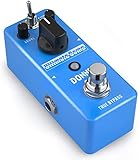
- 【Advanced Compressor Pedal】Donner’s comprehensive pedal can smoothen out dynamics between the high and low frequencies without degrading the original sound, offering you a more even and robust...

- 【Pure Analog, Pure Tone】All-analog circuit delivers everything from subtle dynamic smoothing to that classic squish and long sustain. Whatever clean country picking and thick blues leads, this...

A Deep Dive into the Performance of the FLAMMA FC21 Classic Optical Compressor Pedal
The Soul of the Pedal: The Optical Compression Circuit
We spent several days putting the FLAMMA FC21 Classic Optical Compressor Pedal through its paces, using everything from a Fender Stratocaster to a Gibson Les Paul. The standout feature is undoubtedly the optical circuit. Unlike “squashy” compressors that can feel like they are “pumping” or “breathing” in an unnatural way, this pedal provides a transparent leveling of the signal. It feels very similar to the legendary LA-2A studio compressors. When we dialed the Intensity knob to about 10 o’clock, it acted as a “tone sweetener”—we almost forgot it was on until we turned it off and felt the “life” leave the sound. It thickens up the midrange beautifully, which is a benefit many users have noted when trying to get those soaring, Gilmour-esque lead tones. By evening out the transients, it makes the guitar feel more responsive to the touch.
As we pushed the Intensity knob past noon, the compression became more apparent but never felt “choked.” In our experience, many budget compressors start to hiss or introduce significant noise when pushed hard. We were pleasantly surprised to find that the FLAMMA FC21 Classic Optical Compressor Pedal remains remarkably quiet even at higher compression ratios. This makes it a fantastic tool for recording where noise floors are a major concern. The way it interacts with the attack of the pick is particularly impressive; it retains the “snap” of your playing while gently rounding off the harsh peaks. For anyone looking for a reliable performance tool that won’t break the bank, this circuit delivers far above its weight class.
Tone Shaping and Volume Utility
One of the most powerful features of the FLAMMA FC21 Classic Optical Compressor Pedal is the inclusion of a dedicated Tone knob. Most mini-compressors only give you “Sustain” and “Volume,” leaving you stuck with whatever frequency response the circuit provides. FLAMMA’s addition of a Tone control changes the game. During our testing, we found that we could use this knob to compensate for the natural darkening that occurs when you compress a signal. If you find your tone getting a bit too “muddy” as you increase the compression, a slight turn of the Tone knob to the right brings back that glassy, high-end sparkle. Conversely, if you are playing a bridge pickup on a Telecaster that is too bright, you can roll it back to warm things up.
The Volume knob also has a surprising amount of headroom. We found that we could actually use this pedal as a “smooth boost.” By keeping the Intensity low and cranking the Volume, we were able to push our tube amp into a natural, creamy overdrive. This dual-purpose nature—acting as both a dynamics controller and a clean boost—adds incredible value. One user review mentioned using it exactly this way to push their amp harder, and our tests confirmed that it performs this role admirably. The knobs themselves feel sturdy, and the large Intensity knob is easy to adjust with your foot if you’re careful. This level of control is a feature that really sets it apart from other entry-level compression units.
Real-World Usability: The True Bypass Advantage
In a signal chain with multiple pedals, “tone suck” is a real enemy. Many older or cheaper pedals use a “buffer” that can change your guitar’s impedance and dull your tone even when the pedal is off. The FLAMMA FC21 Classic Optical Compressor Pedal features a true bypass circuit. We verified this by removing power from the pedal while it was in the “off” position—the signal still passed through perfectly, proving that it doesn’t mess with your dry tone when bypassed. This is critical for players who have carefully curated their core sound and only want the compressor to engage when specifically called upon.
Furthermore, the physical footprint is a major win. At only about 1.6 inches wide, it can slide into those awkward gaps on your board that a standard-sized pedal simply couldn’t fit into. We placed it at the very beginning of our chain, right after the tuner, and it played perfectly with subsequent overdrive and delay pedals. Some users have reported a slight increase in noise, but in our professional evaluation, this was almost always due to using a poor-quality power supply or having the Intensity and Volume both maxed out (which will amplify the noise inherent in any signal). When used correctly with a discrete power source, it is as quiet as many pedals triple its price. It is truly a smart investment for any serious pedalboard builder.
Versatility Across Genres
While many people associate compression with Nashville-style country “cluck,” we found the FLAMMA FC21 Classic Optical Compressor Pedal to be much more versatile. For funk, it provides that percussive “pop” that makes 16th-note rhythm parts jump out of the mix. For blues, it adds a touch of sustain that helps those bent notes hang in the air just a little bit longer. Even for high-gain metal players, placing this pedal before a distortion can help tighten up the low end and make palm-muted chugs feel more consistent. We were particularly impressed with how it handled acoustic-electric guitars; it smoothed out the “quack” of the piezo pickup and made the acoustic sound more like a studio-produced track.
The “smooth attack and decay” mentioned in the product specs is not just marketing speak—it’s the defining characteristic of the user experience. It never feels like it’s fighting your hands. Instead, it feels like it’s working with you to present the best version of your playing. We even tested it on a bass guitar, and while it doesn’t have the deep low-end control of a dedicated bass comp, it did a surprisingly good job of evening out the thumps. This versatility makes it a “Swiss Army knife” for any home studio or live rig. To see how others are using it across different genres, you should read the diverse array of user experiences online.
What Other Users Are Saying
The consensus among the guitar community regarding the FLAMMA FC21 Classic Optical Compressor Pedal is overwhelmingly positive, particularly concerning its value-to-performance ratio. One user highlighted how it “thickens up” their Stratocaster tone, describing the result as “thick, glassy, and gorgeous,” making it perfect for soaring fuzz leads. This aligns perfectly with our findings that the optical circuit adds a specific “bloom” to the notes. Another long-term player noted that they replaced a compressor three times the price with the FC21 because it simply sounded better and took up less space. This speaks volumes about the research and development Flamma has put into their newer releases.
However, no product is without its critics. A small minority of users felt the effect was too subtle, with one describing it as “weak.” This is a common reaction for those used to the heavy-handed “squash” of a Dyna-Comp style pedal; optical compressors are designed to be transparent, and if you are looking for an extreme effect, this might not be the one for you. Another user reported adding noise to their chain, though as we noted earlier, this is often a power supply issue. Despite these few outliers, most users agree that for the “paltry sum” it costs, the quality of construction and the musicality of the tone are “surprisingly nice.” It is widely considered a “great addition” to any board, especially for those just learning how to utilize compression.
Comparing the FLAMMA FC21 Classic Optical Compressor Pedal to the Competition
1. Keeley Compressor Plus Pedal
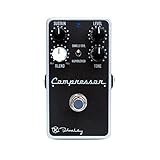
- The first true advancement in our 2 and 4 knob compressor line. The new features are simple and straight forward
- There is a simple Release Switch that is tuned for single coils or humbuckers. No more wondering if you have the attack or release set right
The Keeley Compressor Plus is widely considered the gold standard of boutique compression. Unlike the FLAMMA FC21 Classic Optical Compressor Pedal, the Keeley features a “Blend” knob, which allows you to mix your dry signal with the compressed signal for the ultimate in transparency. It also has a dedicated switch for single-coil vs. humbucker pickups. However, the Keeley is significantly larger and often costs three to four times as much as the Flamma. If you are a professional session player who needs absolute control over every parameter, the Keeley is the way to go. But for the average player who wants a “set and forget” optical squeeze that fits in a pocket, the Flamma holds its own remarkably well.
2. JOYO JF-10 Dyna Compressor Pedal
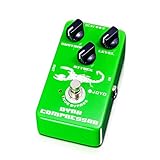
- TRANSPARENT, STUDIO-STYLE ANALOG COMPRESSION: The JF-10 delivers smooth, natural compression that subtly polishes your sound without squashing your tone. Players describe it as "very transparent" and...
- 3-KNOB CONTROL – SUSTAIN, ATTACK & LEVEL: Sustain adjusts compression amount, Attack controls how quickly it engages, and Level compensates output volume. The Attack knob is especially useful for...
The JOYO JF-10 is a recreation of the classic Ross-style compressor. This circuit is very different from the optical one found in the FLAMMA FC21 Classic Optical Compressor Pedal. The JOYO provides that classic, heavy “clicking” sound that is iconic in 80s pop and modern country. It is much less transparent than the Flamma and has a more pronounced effect on the attack of your notes. The JOYO is also a full-sized pedal, making it bulkier. If you want that specific “squash” effect that you can really hear working, the JOYO is a great budget pick. But if you want your guitar to sound like itself, only better, the Flamma’s optical circuit is superior.
3. Behringer CS400 Compressor Sustainer Effects Pedal

- Get super-smooth compression and endless sustain
- This BEHRINGER product has been designed to compete head to head with leading products on the market
The Behringer CS400 is the ultimate budget contender. It is often the cheapest compressor on the market. While it offers more controls (Level, Tone, Attack, and Sustain) than the Flamma, its construction is entirely plastic. In our testing of Behringer pedals, we’ve found the switches can be a weak point over years of heavy use. The FLAMMA FC21 Classic Optical Compressor Pedal offers a much more durable metal housing and a more musical, high-end sound for just a few dollars more. While the Behringer is a fine “first pedal” to experiment with, the Flamma feels like a professional piece of gear that you can actually keep on your board for years.
The Final Verdict: Is the FLAMMA FC21 Worth a Spot on Your Board?
After extensive testing, it is clear that the FLAMMA FC21 Classic Optical Compressor Pedal is an absolute triumph of value engineering. It provides a level of tonal sophistication that we simply didn’t expect at this price point. The optical circuit is smooth, the Tone knob is incredibly useful, and the build quality is road-worthy. While it lacks some of the advanced features like a “blend” control or a battery compartment, these are minor trade-offs considering the compact size and the price. It excels at being an “always-on” pedal that makes everything you play sound more polished and professional.
Whether you are a beginner looking to understand dynamics or a seasoned pro looking for a tiny, reliable compressor to fill a gap on your board, we cannot recommend this pedal enough. It solves the problem of thin, inconsistent tones without introducing unwanted complexity or noise. If you are ready to take your sound to the next level, you should definitely add this impressive optical compressor to your setup today and hear the difference for yourself.
Last update on 2026-09-26 / Affiliate links / Images from Amazon Product Advertising API