
ROTOSOUND RS77LD Flatwound Bass Strings Review: The Timeless Secret to Vintage Thump and Modern Precision
We’ve all been there: you pick up a beautiful bass, plug it into a high-end amp, and yet something feels… off. For many of us, the culprit isn’t the wood or the pickups, but the “zing” of brand-new roundwound strings that just won’t quit. While bright, piano-like tones have their place in modern metal or slap-heavy funk, they often lack the gravitas, warmth, and “thump” required for classic jazz, Motown, or psychedelic rock. I remember spending years trying to EQ out the finger noise and harsh overtones of standard strings before I finally realized that the solution was much simpler: I needed a set of strings designed with heritage in mind. This is where the ROTOSOUND RS77LD Flatwound Bass Strings enter the conversation, promising a return to the golden era of bass tone without sacrificing the reliability of modern manufacturing.

- Warm Sound
- Made in the UK
What to Consider Before Buying Bass Guitar Strings
Bass guitar strings are more than just an item; it’s a key solution for defining your sonic identity and the physical relationship you have with your instrument. The right set of strings can transform a budget-friendly bass into a recording powerhouse or make a high-end boutique instrument feel like an extension of your own hands. Conversely, the wrong strings can lead to finger fatigue, excessive fret wear, and a tone that gets lost in the mix. When choosing a set like the ROTOSOUND RS77LD Flatwound Bass Strings, you are making a deliberate choice to prioritize fundamental warmth over harmonic brightness.
The ideal customer for this type of product is someone facing the “clack” of roundwounds and seeking a smoother, more percussive sound typical of jazz, blues, and classic rock, while it might not be suitable for those who rely heavily on aggressive slapping or need the high-end “bite” required for modern metal genres. If you want to see its full feature set and user reviews, you’ll find that these are a favorite among players who value a “broken-in” feel right out of the box.
Before investing, consider these crucial points in detail:
- Winding Type (Flatwound vs. Roundwound): This is the most significant factor. Flatwounds, like the ROTOSOUND RS77LD Flatwound Bass Strings, feature a flattened outer wrap that creates a smooth surface. This reduces finger noise and provides a mellower, bass-heavy tone compared to the textured, brighter roundwounds.
- Material Composition: Most strings are nickel or stainless steel, but these Rotosounds use Monel—a specialized nickel-copper alloy. Monel is known for its high resistance to corrosion and a unique tonal profile that sits somewhere between the brightness of steel and the warmth of pure nickel.
- String Tension and Gauge: The RS77LD set is a medium gauge (45-105). It’s important to note that flatwounds generally feel “stiffer” than roundwounds of the same gauge. You should ensure your bass’s neck can handle the increased tension, as a truss rod adjustment is often necessary when switching.
- Longevity and Value: While flatwounds often carry a higher initial price tag, they tend to last significantly longer than roundwounds. Because there are no grooves for dirt and skin oils to hide in, the tone remains consistent for months or even years, making them a cost-effective long-term investment.
Understanding these variables is the first step in unlocking your instrument’s true potential. To ensure you’re making the most informed decision for your specific rig, it’s helpful to see how these compare to the broader market.
While the ROTOSOUND RS77LD Flatwound Bass Strings is an excellent choice, it’s always wise to see how it stacks up against the competition. For a broader look at all the top models, we highly recommend checking out our complete, in-depth guide:
Check Out Our Definitive Rankings of the Best Bass Guitar Strings for Every Playing Style

- Ernie Ball Bass Slinkys are played by legendary bands around the world including Tool, Rage Against the Machine, Zac Brown Band, Green Day, and Avenged Sevenfold

- Ernie Ball Bass Slinkys are played by legendary bands around the world including Tool, Rage Against the Machine, Zac Brown Band, Green Day, and Avenged Sevenfold

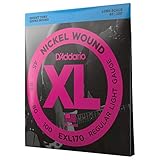
- THE PLAYERS CHOICE – With their clear fundamentals, booming tight lows, and reliable D’Addario construction, they’re trusted by players everywhere to handle any performance.
The Monel Legacy: First Impressions of the ROTOSOUND RS77LD Flatwound Bass Strings
Unboxing a set of ROTOSOUND RS77LD Flatwound Bass Strings feels like holding a piece of music history. Rotosound has been manufacturing these in the UK since the late 1960s, using the same “old fashioned” methods on machines that have been running for over half a century. When we first took them out of the package, the visual quality was immediately apparent. The strings have a dull, sophisticated sheen rather than a flashy chrome look, and the silk windings at the ends provide that classic “pro” aesthetic that looks fantastic on a Fender Precision or Jazz bass.
Physically, the strings feel incredibly smooth. There is none of the “stickiness” sometimes found on cheaper flatwounds. When you check the latest price and availability, you realize you’re paying for a handcrafted product that has been physically inspected at every stage. In our initial tests, the tuning stability was impressive right from the start, requiring very little “stretching” time compared to budget alternatives. They feel substantial, conveying a sense of durability that suggests they can withstand the rigors of heavy touring.
Key Benefits We Loved
- The unique Monel alloy provides a warm, rich tone that is unmatched for jazz and classic rock.
- Exceptional manufacturing consistency thanks to the hand-inspected UK production process.
- The smooth surface eliminates finger noise and is incredibly gentle on your frets and fingertips.
- Long-lasting tonal life that actually improves as the strings “settle” over time.
Drawbacks to Consider
- Significantly higher tension than standard roundwounds, which may require a professional setup/truss rod adjustment.
- Initial brightness can be surprising for a flatwound before they break in after a few hours of play.
Deep Dive: Why the ROTOSOUND RS77LD Flatwound Bass Strings Stand Out
The Monel Advantage and Tonal Profile
We found that the heart of the ROTOSOUND RS77LD Flatwound Bass Strings lies in the choice of material: Monel. Unlike standard stainless steel flats which can sometimes sound a bit “clanky” or pure nickel which can feel a bit too “tubby,” Monel offers a sophisticated middle ground. In our studio evaluations, these strings delivered a punchy, tight low-end that didn’t become muddy, even when playing fast walking bass lines. This is a a feature that really sets it apart from the sea of generic steel strings.
When you first install them, there is a “bell-like” quality to the high-mids that is quite surprising for a flatwound. However, after about 5 to 10 hours of playing, they settle into a glorious, warm, and mellow state. We found that they capture that Roger Waters or Steve Harris “clank-less” power perfectly. They provide a massive “thump” when played with a pick and a smooth, chocolatey resonance when played with the pads of the fingers. This versatility is why they’ve remained a staple in British recording studios for decades.
Physical Feel and Playability
One of the most immediate benefits of switching to the ROTOSOUND RS77LD Flatwound Bass Strings is the physical relief they provide. If you’ve been playing roundwounds and find your fingers getting sore or “shredded” during long sets, these are a revelation. We found them to be “smooth as silk,” allowing for effortless slides across the neck without the screeching sound of fingers dragging across wire. For players who frequently do slides or want to play fretless-style lines on a fretted bass, the texture here is perfect—not too oily, but certainly not rough.
However, we must emphasize the tension. These are 45-105 gauge strings, but because they are flatwounds, they have a higher “stiffness” index. We noticed that on several test instruments, we had to tighten the truss rod about a quarter-turn to compensate for the extra pull. This higher tension isn’t necessarily a bad thing; in fact, we found it allowed us to lower the action significantly without inducing fret buzz. This creates a very fast, responsive playing experience once the instrument is properly calibrated.
Unrivaled Durability and “The Break-In” Factor
We’ve tested many strings that sound great for a week and then “die” suddenly. The ROTOSOUND RS77LD Flatwound Bass Strings behave the opposite way. They actually seem to improve with age. Because the Monel alloy is naturally resistant to sweat and environmental grime, the strings don’t lose their “life”—they simply evolve. We found that after six months of heavy use, the strings sounded even better than they did on day two, possessing a deep, fundamental-heavy character that sits perfectly in a mix.
This longevity is a massive benefit for the working musician. You don’t have to worry about changing strings before every gig to maintain your tone. In fact, many legendary bassists keep their Rotosound flats on for years. The manufacturing process—what Rotosound calls the “old fashioned way”—ensures that the core-to-wrap ratio is perfectly balanced, which we found results in excellent intonation across the entire length of the string. Even at the 12th fret and beyond, the notes remain clear and true, which is often a weak point for lesser flatwound brands. You can learn more about their manufacturing process and specs here.
The “Pro” Choice for Recording and Live Work
In a recording environment, finger noise is the enemy. We found that the ROTOSOUND RS77LD Flatwound Bass Strings are virtually silent when it comes to incidental handling noise. This allows for a much “cleaner” bass track that requires less gate or compression. When playing live, the tight bottom end ensures that the bass doesn’t compete with the kick drum, but rather locks in with it to create a unified rhythmic foundation. Whether you are playing in a Pink Floyd tribute band or a modern jazz quartet, these strings provide a professional “finished” sound that roundwounds struggle to replicate without heavy processing.
What Other Users Are Saying
The general sentiment among the bass community regarding the ROTOSOUND RS77LD Flatwound Bass Strings is one of deep loyalty, often spanning decades. Users frequently mention that these strings “breathed new life” into instruments they previously found uninspiring. For instance, one user shared a story of putting these on an older bass they rarely gigged with, only to find the tone so transformed—”crisp and bright with unrivaled bottom”—that it immediately became their favorite instrument. This mirrors our own findings that these strings have a transformative quality.
Another common theme in user feedback is the “silky” feel, with several players noting that they transitioned from guitar to bass and found these strings much more comfortable for their fingertips. On the negative side, some users have reported receiving sets with “dead” strings (specifically the D and G strings occasionally sounding muffled compared to the E and A). While this seems to be a rare quality control issue, it highlights the importance of buying from a reputable source with a good return policy. Additionally, many users echoed our warning about tension, noting that a significant truss rod adjustment was required to keep their neck straight. Overall, the consensus is that for those seeking the “Roger Waters sound,” there is simply no substitute.
Comparing the ROTOSOUND RS77LD Flatwound Bass Strings to Top Alternatives
While we believe these Rotosounds are world-class, different players have different needs. Let’s see how they compare to three other popular options on the market.
1. Elixir NANOWEB Nickel Plated Bass Strings 5-String Light
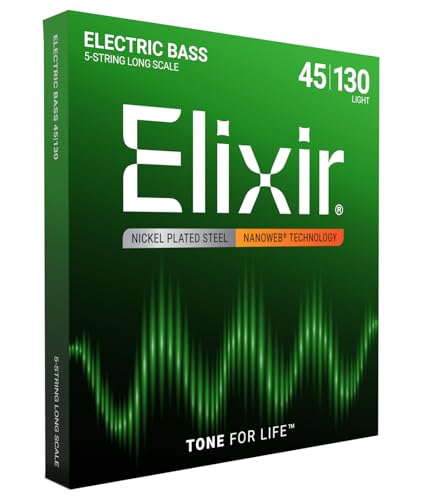
- LONGEST-LASTING TONE: Made with nickel plated steel wrap wire and our proprietary NANOWEB Technology, these strings deliver a warm and rounded tone, with a comfortable and natural feel
- BRILLIANT TONE: Often top-rated, you can trust Elixir Strings for their consistently reliable performance. From our light bass strings to our heavier gauges
If you love the longevity of the Rotosounds but simply cannot live without the bright, modern sound of roundwounds, the Elixir NANOWEB set is your best bet. These strings feature a thin polymer coating that protects the gaps between the windings from gunk. While the ROTOSOUND RS77LD Flatwound Bass Strings achieve longevity through their flat surface and Monel alloy, Elixir uses technology to keep a roundwound sounding fresh. We recommend these for 5-string players who need a clear low-B string and prefer a lighter, more flexible tension for modern fusion or gospel styles.
2. Elixir NANOWEB 5-String Bass Strings Light 45-130
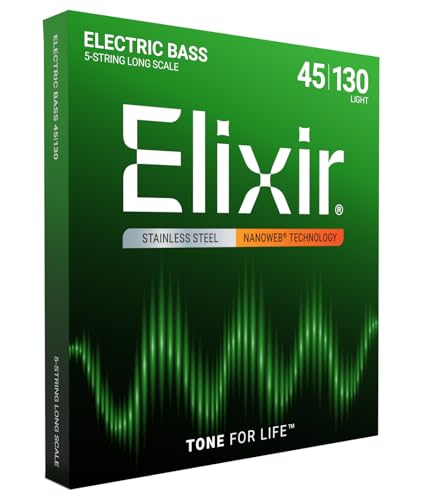
- LONGEST-LASTING TONE: Made with stainless steel wrap wire and our proprietary NANOWEB Technology, these strings deliver a bright tone, with a comfortable and smooth feel
- BRILLIANT TONE: Often top-rated, you can trust Elixir Strings for their consistently reliable performance. From our light bass strings to our heavier gauges
For those who want maximum “clank” and brightness that lasts for months, these stainless steel Elixirs are the polar opposite of the Rotosound flats. While the Rotosounds are warm and mellow, these are aggressive and piano-like. We found that these are ideal for slap players or those in heavy rock bands who need to cut through a wall of distorted guitars. They offer a similar “low maintenance” benefit as the Rotosounds due to the coating, but the tonal profile is at the other end of the spectrum. Choose these if the “thump” of a flatwound sounds too muffled for your taste.
3. Ernie Ball Super Slinky Flatwound Bass Strings 45-100

- Slinky Flatwound bass strings bring together the smooth feel of traditional flats with the power of Cobalt
- Cobalt alloy wrap wire delivers added clarity and output without the finger noise of a roundwound string
The Ernie Ball Super Slinky Flats are perhaps the closest competitor to the Rotosounds in terms of purpose, but they feel quite different. These use a Cobalt underwrap which provides a bit more output and “growl” than the Monel used in the Rotosounds. We found that the Ernie Balls have a slightly lower tension, making them a bit easier to play “out of the box” without a major bass setup. However, they lack that specific UK-made vintage character that the ROTOSOUND RS77LD Flatwound Bass Strings possess. They are a great “middle-ground” choice for players who want a flatwound feel with a slightly more modern, active-sounding punch.
Final Verdict: Are the ROTOSOUND RS77LD Flatwound Bass Strings Right For You?
After extensive testing and comparison, it’s clear that the ROTOSOUND RS77LD Flatwound Bass Strings are a specialized tool for a specific type of excellence. They are not “all-purpose” strings in the way a cheap nickel roundwound might be; they are a deliberate choice for tone and feel. Their main strengths lie in their incredible warmth, their smooth-as-glass playability, and a lifespan that puts almost any other string to shame. While the high tension and break-in period require a bit of patience and perhaps a trip to your local guitar tech, the reward is a professional-grade low end that sounds like a classic record.
We highly recommend these for any bassist playing jazz, R&B, classic rock, or anyone who simply wants to eliminate finger noise and enjoy a more comfortable playing experience. If you are ready to move away from the harsh brightness of standard strings and embrace a legendary sound, you should pick up a set of ROTOSOUND RS77LD Flatwound Bass Strings today and experience the Monel difference for yourself. Your fingers—and your audience—will thank you.
Last update on 2026-10-16 / Affiliate links / Images from Amazon Product Advertising API