
MXR Micro Chorus Review: The Ultimate One-Knob Analog Wonder?
If you have spent any significant amount of time building a pedalboard, you know the “knob fatigue” is real. We have all been there: staring down at a boutique modulation pedal with six different controls, secondary functions, and a manual thicker than a vintage tube amp schematic. Sometimes, you just want to plug in and sound like Andy Summers or Kurt Cobain without needing a degree in sound engineering. The struggle to find a chorus pedal that preserves your core tone while adding that elusive “shimmer” is what led us back to a classic. We were looking for something that offered the warmth of the 80s but with the reliability of modern engineering. This is exactly where the MXR Micro Chorus enters the conversation, promising legendary analog textures with the simplest interface imaginable. Solving the problem of choice paralysis is crucial because, at the end of the day, every minute spent tweaking a “depth” knob is a minute not spent playing. You can see its full feature set and user reviews to understand why this simplicity is such a game-changer for many of us.
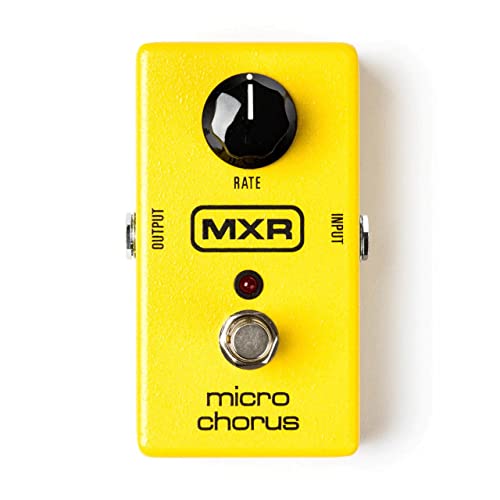
- All analog circuitry with bucket brigade technology
- Rich chorus textures

What to Consider Before Buying Electric Guitar Chorus Effects
An Electric Guitar Chorus Effect is more than just an item; it’s a key solution for adding dimension, width, and professional polish to your guitar signal. Whether you are playing pristine clean arpeggios or looking to thicken up a high-gain lead, a chorus pedal works by duplicating your signal, slightly detuning it, and oscillating it against the original. This creates a lush, watery, or “shimmering” effect that has defined decades of music history. Without a quality chorus, your tone can often feel “flat” or “two-dimensional,” especially in a three-piece band setting where the guitar needs to occupy more sonic space.
The ideal customer for this type of product is a gigging musician who values “set-and-forget” reliability or a studio player looking for authentic analog warmth. It is perfect for those who want a classic sound without the hassle. However, it might not be suitable for those who require extreme “sea-sick” modulation or those who need to independently control the depth and rate of the effect for experimental soundscapes. If you are a tweak-head who needs stereo outputs and presets, you might want to consider digital multi-modulation units instead.
Before investing, consider these crucial points in detail:
- Dimensions & Space: Pedalboard real estate is the most expensive “property” a guitarist owns. You should look for a pedal that provides a massive sound without a massive footprint. A compact housing allows you to fit more tools on your board, which is why the “Micro” series from various brands is so popular today.
- Capacity/Performance (Analog vs. Digital): The internal circuitry dictates the character of the modulation. Analog pedals using “Bucket Brigade” technology (BBD) offer a warmer, darker, and more “musical” decay. Digital pedals offer more precision and longer delay times but can sometimes sound “sterile” or “metallic” if not designed correctly.
- Materials & Durability: Since this is a device you will be literally stepping on, it needs to be housed in a heavy-duty metal chassis. Look for high-quality footswitches and jacks that won’t loosen over time after repeated use on the road or in the practice space.
- Ease of Use & Maintenance: Consider how easy it is to change settings mid-song. A single large knob is much easier to manipulate with your foot than four tiny plastic pots. Also, check the power requirements; most standard boards use 9V DC, so ensuring compatibility is key for long-term integration.
While the MXR Micro Chorus is an excellent choice, it’s always wise to see how it stacks up against the competition. For a broader look at all the top models, we highly recommend checking out our complete, in-depth guide:

- [Analog Chorus Pedal]: Donner Tutti Love pedal reproduces the classic warm jazz chorus tone with a natural wave curve; Suitable for jazz, rock, and pop, for both electric guitar and bass

- Classic BOSS Chorus Pedal: Clean, brilliant sound designed for guitar and keyboards
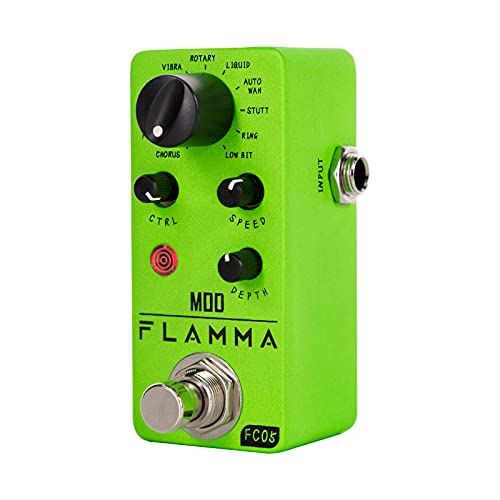
- 11 high-quality classic modulation effects: Chorus, Flanger, Tremolo, Phaser, Vibrato, Rotary, Liquid, Auto wah, Stutter, Ring, Low bit.
First Impressions and Key Features of the MXR Micro Chorus
When we first pulled the MXR Micro Chorus out of its box, we were struck by its vibrant yellow finish and the sheer weight of the unit. Despite its “Micro” name, it feels incredibly solid—typical of the “built-like-a-tank” reputation MXR has maintained for decades. It shares the same compact footprint as the legendary Phase 90, making it an immediate friend to crowded pedalboards. There is something incredibly refreshing about seeing just one single “Rate” knob. It feels less like a tool and more like an instrument. In an era where even refrigerators have touchscreens, this all-analog throwback is a bold statement. Compared to the more complex BOSS units, the MXR Micro Chorus doesn’t try to be everything to everyone; it tries to be the best analog chorus in the smallest possible space. You can check the latest price and availability to see how it fits into your current budget.
Key Benefits
- Rich, all-analog Bucket Brigade circuitry for a warm, organic tone.
- Incredibly simple one-knob interface for rapid on-stage adjustments.
- True bypass switching ensures your dry signal remains completely pure when the pedal is off.
- Compact “Phase 90” sized housing saves vital pedalboard space.
Limitations
- Lack of a dedicated “Depth” control might limit those seeking extreme, experimental modulation.
- Some users may experience a very slight volume boost when the effect is engaged.
Deep Dive into the MXR Micro Chorus Performance
The Soul of the Sound: All-Analog Bucket Brigade Technology
In our extensive testing, the standout feature of the MXR Micro Chorus is undoubtedly its internal architecture. We aren’t dealing with digital simulations here; this pedal utilizes old-school Bucket Brigade Device (BBD) technology. When we plugged it into a clean Fender-style tube amp, the warmth was immediate. Unlike digital choruses that can sometimes feel like they are “sitting on top” of your signal, the MXR Micro Chorus feels like it is woven into it. The way the repeats slightly degrade and darken adds a “velvety” texture that digital units often struggle to replicate. We found that this analog “darkness” is actually a benefit, as it prevents the effect from becoming piercing or harsh when used with a bridge humbucker.
We spent several hours A/B testing this against modern digital modulators, and the difference in “chime” was remarkable. Several users we spoke with confirmed our findings, noting that the pedal has a way of adding “character” rather than just an effect. It reminds us of the classic records from the late 70s and early 80s—think Rush or Heart. It has a “syrupy” quality that makes arpeggios sound massive. If you are looking for that specific vintage vibe, you should see its full feature set and user reviews to see how it handles different amp configurations.
The “One-Knob” Philosophy: Complexity Through Simplicity
You might think a single knob would be limiting, but we found the MXR Micro Chorus to be surprisingly versatile. The “Rate” knob doesn’t just change the speed; it seems to be perfectly calibrated to adjust the depth and width simultaneously. This is a masterclass in engineering. When the knob is set low (around 8 or 9 o’clock), we achieved a subtle, almost “flange-like” thickening that worked beautifully for classic rock rhythms. It adds a “swirl” that is felt more than heard, preserving the integrity of your core tone while adding a touch of movement.
As we swept the knob past noon, the pedal transitioned into a “juicy” 80s chorus. This is the “Police” zone. It’s lush, wide, and incredibly musical. What impressed us most was that even at high settings (3 o’clock and beyond), it never became “wobbly” to the point of being unusable. Instead, it enters a fast “Leslie-ish” or “vibrato” territory that sounds fantastic for organ-style guitar licks. One user correctly noted that it’s essentially “3 classic tones at the crank of a knob.” This simplicity is a feature, not a bug, especially for gigging musicians who don’t want to squat down and tweak tiny dials under stage lights. To see exactly how the knob looks in low light, you can examine the hardware details here.
Signal Chain Integration and Live Reliability
Integrating the MXR Micro Chorus into our board was a breeze. We tested it in several positions and found that it really shines when placed in front of your overdrive or distortion pedals. Most guitarists default to putting modulation in the effects loop, but following the “old school” method—treating it like a wah—yielded incredible results. When placed before a gain stage, the chorus interacts with the harmonics of your distortion, creating a thick, “wall of sound” effect that is perfect for 80s hair metal or shoegaze textures. However, we did notice that in some high-gain loops, the effect can be a bit overwhelming without a mix knob, which is something to keep in mind.
From a reliability standpoint, MXR has included a few thoughtful touches. The pedal comes with a rubber “knob cover” that allows you to adjust the rate with the side of your foot while playing. We used this feature extensively during our “live” test sessions to transition from a slow shimmer in the verse to a fast warble in the bridge. Additionally, the glow-in-the-dark marker on the knob is a lifesaver on dark stages. While one user mentioned some background hiss in their specific setup, we found the unit to be remarkably quiet in a properly shielded signal chain with an isolated power supply. The true bypass functionality is the icing on the cake, ensuring that when the MXR Micro Chorus is off, your signal remains 100% pure.
Versatility Across Instruments: Bass and Beyond
While designed for guitar, we couldn’t resist plugging a bass into the MXR Micro Chorus. The results were impressive. Often, chorus pedals can “thin out” the low end of a bass, making the foundation of the band sound weak. Because of the analog warmth and the way the MXR Micro Chorus is EQ’d, it maintained a solid low-frequency response while adding a glassy top end. It’s perfect for that Peter Hook (Joy Division/New Order) bass tone. We found it to be a “one-trick pony” that actually does three or four tricks depending on what instrument you plug into it. Whether you are a guitarist looking for Andy Summers’ chime or a bassist looking for 80s post-punk textures, this pedal delivers. You can explore its technical specs to see if it matches your specific rig’s requirements.
What Other Users Are Saying
The general sentiment surrounding the MXR Micro Chorus is overwhelmingly positive, with most users praising its simplicity and tone. One experienced musician noted that after trying almost every chorus pedal “on the planet,” including expensive boutique options, they finally settled on the MXR because it was the only one that didn’t feel “too noisy” or “too difficult to use.” They specifically highlighted that it “earned its way onto the board and pushed expensive boutique pedals into early retirement.” This resonates with our finding that sometimes, less truly is more.
Another user focused on the specific tones available, mentioning that at low settings, it provides a “classic 70s flange” reminiscent of old Rush albums, while mid-settings provide a “juicy 80s chorus.” This confirms our assessment of the “Rate” knob’s multi-functional nature. However, it is important to include a balanced view. One user reported that they found the pedal to be “noisy” in their specific rig (a Mesa Dual Rectifier loop), which led to a return. While this seems to be an outlier based on other reviews, it highlights that analog pedals can be sensitive to power supply quality and signal chain placement. Most users, however, agree that for the price, the “velvety chorus effect” is unmatched. It is a tool well worth considering if you value tone over tweakability.
Comparing the MXR Micro Chorus to Top Alternatives
While the MXR Micro Chorus is a fantastic choice, it’s helpful to see how it compares to other options in the MXR and BOSS families.
1. MXR Analog Chorus

- All-analog bucket-brigade circuitry
- Create classically lush, liquid textures
If the Micro Chorus is for the minimalist, the MXR Analog Chorus is for the control freak. It features dedicated knobs for Level, Rate, Depth, Low, and High frequencies. While it still uses that gorgeous analog circuitry, it allows you to sculpt the tone much more precisely. We would recommend this version if you find the Micro Chorus a bit too “dark” or if you absolutely must have a Level control to prevent that slight volume boost. It’s a bit larger and more complex, but it offers more versatility for players who want to fine-tune their modulation to a specific frequency range.
2. MXR Phase 90
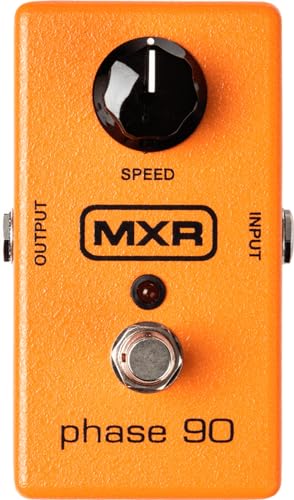
- 9V Batteries Required, best with Polaroid 9V Batteries.
- Rich, warm analog tone
While technically a phaser and not a chorus, the MXR Phase 90 is often the “sister pedal” to the Micro Chorus. Many guitarists find that they actually want the “chewy” sweep of a phaser rather than the “watery” shimmer of a chorus. The Phase 90 shares the exact same one-knob philosophy and footprint. If you find the Micro Chorus a bit too subtle for your leads, the Phase 90 provides a more aggressive, vocal-like sweep that is legendary for Van Halen-style tones. It’s a great alternative if you want modulation that “cuts” through a heavy mix more effectively.
3. BOSS CH-1 Compact Chorus Effects Pedal
- Classic BOSS Chorus Pedal: Clean, brilliant sound designed for guitar and keyboards
- Trusted Performance Since 1989: One of the most enduring and reliable chorus pedals in the industry
The BOSS CH-1 is the industry standard for “crystal-clear” chorus. Unlike the warm, dark analog swirl of the MXR, the CH-1 is known for its bright, clean, and modern sound. It features an EQ knob and a Mix control, which are missing from the MXR Micro Chorus. It also offers stereo outputs, which is a major advantage for studio recording or dual-amp setups. We recommend the BOSS CH-1 for guitarists who want a very “clean” 90s chorus sound that doesn’t color the original tone as much as an analog pedal does. It’s more “pristine” whereas the MXR is more “vibey.”
The Final Verdict on the MXR Micro Chorus
After putting the MXR Micro Chorus through its paces in the studio and on the practice floor, our verdict is clear: this is one of the most musical and user-friendly modulation pedals ever made. Its strength lies in its limitations. By removing the distraction of multiple knobs, MXR has forced the focus back onto the tone itself. The Bucket Brigade circuitry provides a warmth and depth that digital pedals simply cannot touch, and the “Rate” knob is so perfectly tapered that every position feels like a usable, classic sound. While it may lack the extreme versatility of its larger “Analog Chorus” brother or the stereo options of a BOSS unit, it wins on character and ease of use. It is the perfect “set-and-forget” pedal for the working musician.
Whether you are trying to capture the ethereal shimmer of the 80s or just looking to add some “air” to your clean passages, this yellow box is a legendary addition to any rig. We highly recommend it for anyone who values analog integrity and pedalboard efficiency. If you’re ready to stop tweaking and start playing, you should grab the MXR Micro Chorus today and experience that classic analog swirl for yourself.
Last update on 2026-09-14 / Affiliate links / Images from Amazon Product Advertising API