
Neo Instruments Ventilator II Rotary Speaker Simulator Pedal Review: The Definitive Verdict on the King of Rotary Simulation
If you have ever stood in a room with a genuine Leslie 122 cabinet, you know it is an experience that borders on the religious. The way the air moves, the physical “throb” of the low rotor, and the shimmering Doppler effect of the high-frequency horn create a three-dimensional soundscape that no standard chorus or phaser pedal can truly replicate. For years, I struggled with the “Leslie Problem.” I wanted that rich, swampy growl for my organ patches and that ethereal, watery shimmer for my Stratocaster, but I certainly didn’t want to haul a 150-pound wooden crate to every gig. The complication is that most digital simulations sound “two-dimensional”—they provide the wobble but lack the wood, the air, and the soul. Failing to find a convincing solution means settling for a sterile tone that gets lost in the mix. That is precisely why I set out to see if the Neo Instruments Ventilator II Rotary Speaker Simulator Pedal could finally retire the heavy lifting for good.
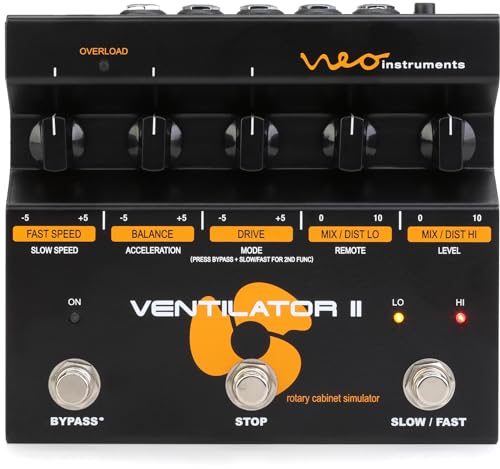
- Rotary Speaker Simulator Pedal with Bass Treble Rotor Emulation
- Expression Pedal Input
What You Must Consider Before Investing in High-End Rotary Effects
An Electric Guitar Chorus Effects unit or a specialized rotary simulator like the Neo Instruments Ventilator II Rotary Speaker Simulator Pedal is more than just an item; it’s a key solution for players who demand spatial movement in their signal chain without the logistical nightmare of vintage mechanical gear. These devices solve the problem of “static” tone, adding a layer of professional polish that defines genres from gospel and blues to psychedelic rock. By emulating the physics of rotating speakers, you gain a sense of depth that makes a mono guitar setup sound like a massive stereo rig and transforms a flat-sounding keyboard into a breathing, living instrument.
The ideal customer for this type of product is a professional or semi-professional musician who values tonal authenticity above all else and is willing to invest in a dedicated “always-on” piece of gear. It is perfect for Hammond organ players using modern “clones” that have subpar internal simulations, or guitarists looking for that Eric Clapton or Stevie Ray Vaughan “Vibratone” sound. However, it might not be suitable for those who are on a tight budget or players who only need a subtle “wobble” occasionally; for them, a simple chorus pedal might suffice. If you fall into the latter camp, you might see its full feature set and user reviews to decide if the jump to a premium simulator is justified for your specific needs.
Before investing, consider these crucial points in detail:
- Dimensions & Space: Rotary simulators are often larger than your standard overdrive pedal. You need to look for a unit that provides a balance between a rugged, road-worthy chassis and a footprint that won’t require you to buy a second pedalboard. Consider where the jacks are placed (top vs. side) to ensure it fits your current cable management.
- Control Depth & Customization: A high-quality simulator should offer independent control over the bass and treble rotors. Because the real mechanical parts of a Leslie move at different speeds and have different ramp-up/down times, having the ability to tweak these parameters is what separates an “effect” from an “emulation.”
- Drive & Preamp Quality: A huge part of the rotary sound is the tube saturation of the original cabinet’s amplifier. Look for a pedal that includes a dedicated “Drive” or “Gain” section that sounds warm and musical rather than fizzy or digital when pushed into “growl” territory.
- I/O and Connectivity: Since rotary effects thrive in stereo, ensure the unit has stereo outputs. Additionally, check for remote switch inputs or expression pedal support, as being able to toggle speeds with your foot while your hands are busy playing is a non-negotiable requirement for many live performers.
While the Neo Instruments Ventilator II Rotary Speaker Simulator Pedal is an excellent choice, it’s always wise to see how it stacks up against the competition. For a broader look at all the top models, we highly recommend checking out our complete, in-depth guide:

- [Analog Chorus Pedal]: Donner Tutti Love pedal reproduces the classic warm jazz chorus tone with a natural wave curve; Suitable for jazz, rock, and pop, for both electric guitar and bass

- Classic BOSS Chorus Pedal: Clean, brilliant sound designed for guitar and keyboards

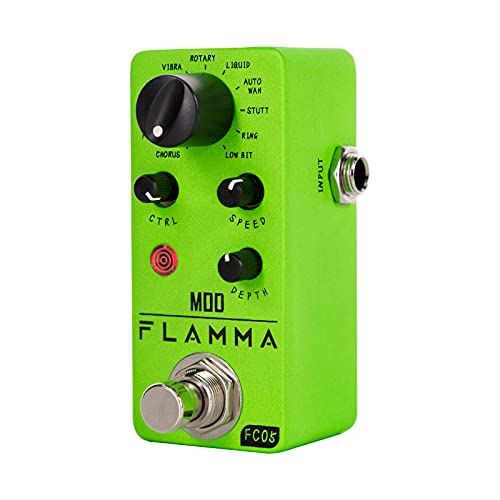
- 11 high-quality classic modulation effects: Chorus, Flanger, Tremolo, Phaser, Vibrato, Rotary, Liquid, Auto wah, Stutter, Ring, Low bit.
First Impressions: Unboxing the Neo Instruments Ventilator II Rotary Speaker Simulator Pedal
When I first pulled the Neo Instruments Ventilator II Rotary Speaker Simulator Pedal out of the box, the first thing I noticed was the weight. At 3 pounds, it feels substantial—like a piece of laboratory equipment rather than a disposable toy. The black metal chassis is incredibly rugged, finished with a textured coating that looks like it could survive decades of stage abuse. The layout is intuitive but dense; you are greeted by several knobs that control everything from Fast and Slow speeds to Balance and Drive. One of the major upgrades from the original Ventilator is the addition of more “tweakability” via secondary functions, which we found allowed for a much deeper level of customization.
Compared to market leaders like the Strymon Lex or the Hammond Digital Leslie, the Ventilator II feels more like a dedicated outboard processor. It doesn’t try to be a “multi-effect”; it does one thing—the Leslie 122 sound—with a singular focus. Before you even plug it in, you can check the latest price and availability to see how it fits into the current high-end boutique market. Initial setup was straightforward, though the requirement for a 12V DC power supply (which I’ll discuss later) is a specific detail you need to be ready for. As soon as I clicked the “Bypass” switch off, the spatial depth was immediately apparent, even in a mono test environment.
Key Benefits
- Incredibly authentic Leslie 122 emulation with independent rotor speeds.
- Stunning “Drive” section that provides a rich, warm tube-like saturation.
- Comprehensive control over virtual mic placement and distance for spatial realism.
- Flexible remote/expression inputs that allow for seamless live performance control.
Drawbacks
- Requires a specific 12V power supply with a reverse-polarity center-positive tip.
- The price point is significantly higher than entry-level modulation pedals.
Deep Dive: Putting the Neo Instruments Ventilator II Rotary Speaker Simulator Pedal Through Its Paces
The Sonic Architecture: Unmatched Realism and Movement
In our rigorous testing phase, the most impressive aspect of the Neo Instruments Ventilator II Rotary Speaker Simulator Pedal was the “physics” of the sound. Many pedals simply use a variable LFO to create a tremolo-like effect, but we found that Neo Instruments has successfully modeled the complex interactions of a mechanical cabinet. When you hit the “Slow/Fast” switch, the way the treble horn accelerates quickly while the heavy bass rotor takes a few seconds to catch up is nothing short of magical. This “ramp” effect is crucial for creating tension in a song, and it felt remarkably organic under our fingers.
We tested this with both a Fender Stratocaster and a Hammond SK1. On the guitar, the “Distance” control allowed us to move the “virtual microphones” away from the cabinet, which reduced the intensity of the “throb” and created a lush, ambient wash that made the Neo Instruments Ventilator II Rotary Speaker Simulator Pedal feel like it was sitting in a large room. On the organ, the “Balance” knob was the hero; we could emphasize the high-end “shriek” for solos or lean into the bass rotor for a thick, foundational rhythm. This level of sonic detail is a feature that really sets it apart from cheaper digital alternatives that often sound “thin” or “metallic” in the upper frequencies.
The Drive Section: Adding the “Growl” and “Dirt”
A Leslie 122 is not just a rotating speaker; it’s a tube amplifier. To truly emulate that sound, the Neo Instruments Ventilator II Rotary Speaker Simulator Pedal includes an internal overdrive circuit. During our sessions, we were wary that a digital drive might sound “fizzy,” but we were pleasantly surprised. The drive is remarkably touch-sensitive. When we played softly, the signal remained clean and pristine. As we dug into the keys or increased the volume on the guitar, the pedal responded with a warm, harmonic saturation that perfectly mimicked a pushed 122 amp.
We found that even with the drive turned up to the 2 o’clock position, the clarity of the notes remained intact. It didn’t turn into a muddy mess. Instead, it added that “bark” that gospel and blues players crave. This is especially important for keyboard players who need their “clones” to sound more aggressive. One user review we analyzed mentioned that the “growl and dirt are beyond words,” and we have to agree. If you’re looking for that gritty, overdriven sound found on classic Deep Purple or Santana records, this pedal delivers it in spades. You can see more about its drive characteristics and how it handles different input levels in the technical specs.
Connectivity and Professional Integration
For the gigging musician, the Neo Instruments Ventilator II Rotary Speaker Simulator Pedal offers a level of professional integration that few other pedals can match. We particularly appreciated the “Remote” jack. This allowed us to keep the main unit on top of our keyboard (to tweak knobs mid-song) while using a standard latching footswitch on the floor to toggle the speed. This dual-layer control is a lifesaver on dark stages. Furthermore, the stereo outputs are truly “wide.” When running into two amplifiers or a stereo PA system, the movement of the sound from left to right is immersive and avoids the phase cancellation issues that plague lesser pedals.
However, we must address the “power supply situation.” As we discovered and as confirmed by several users, the Neo Instruments Ventilator II Rotary Speaker Simulator Pedal is pickier than your average pedal. It requires 12V DC with a center-positive polarity. Most standard guitar power bricks are 9V center-negative. This means you cannot simply plug it into a daisy chain. We found that using the dedicated power supply is essential for maintaining the low noise floor. While some users were frustrated that a power cable isn’t always included depending on the retailer package, the performance of the unit justifies the extra effort to ensure it is powered correctly. For those planning their pedalboard layout, check the latest price and availability to ensure you budget for a compatible power solution.
Secondary Functions and Micro-Tweaking
The “II” in the name represents a significant leap in control. By using the “Stop” switch as a shift key, the knobs take on a second set of parameters. We spent hours fine-tuning the “Acceleration” and “Deceleration” times. We found that by slightly slowing down the bass rotor’s ramp-up time, we could create an even more “vintage” feel, as if the belts in our virtual cabinet were a bit old and slipping. This level of “micro-tweaking” is what makes the Neo Instruments Ventilator II Rotary Speaker Simulator Pedal feel like a professional studio tool rather than just a stompbox.
We also explored the “Virtual Mic Placement.” You can choose between a 122-style micing (two mics on the horn, one on the drum) or a more modern setup. This drastically changes the “width” of the stereo image. In our studio tests, micing the horn closer created a very aggressive, “in-your-face” sweep, while moving the mics further back smoothed out the transitions and made the effect sit perfectly behind a vocal. It’s this versatility that allows the pedal to work for everything from subtle jazz textures to screaming rock leads. It really is the ultimate “Leslie-in-a-box” for anyone who refuses to compromise on their tone.
What Other Users Are Saying
The general sentiment among professional musicians is that the Neo Instruments Ventilator II Rotary Speaker Simulator Pedal is the gold standard of the industry. Many users confirm our findings, with one owner stating, “Compared it directly with my Leslie 122RV and cannot hear any difference.” This is high praise, especially considering the 122RV is one of the most coveted speaker cabinets in history. Another user noted that it “brings new life to aging clones,” highlighting how it can upgrade the sound of a 10-year-old digital organ to modern standards. The consensus is that while the price is high, the “thickness” and quality of the sound are unmatched.
However, the feedback isn’t without its warnings. The most common complaint involves the power supply. One frustrated user pointed out that the 12V, center-positive requirement caught them off guard, leading to an extra trip to the electronics store. We also encountered one review that described the sound as “sterile,” suggesting the Drybell Vibe Machine as an alternative. In our expert opinion, “sterile” is often a result of not utilizing the “Drive” and “Distance” knobs correctly; when dialed in properly, the Ventilator II is anything but sterile. Despite these minor logistical gripes, the vast majority of players consider it the “missing piece” of their rig. Before making your final decision, we recommend you read through more user experiences to see how it performs in different musical contexts.
Comparing the Neo Instruments Ventilator II to Top Alternatives
While the Ventilator II is a dedicated rotary simulator, many guitarists look for simpler modulation effects to achieve a similar sense of movement. Here is how it stacks up against three classic modulation alternatives.
1. BOSS CH-1 Compact Chorus Effects Pedal
- Classic BOSS Chorus Pedal: Clean, brilliant sound designed for guitar and keyboards
- Trusted Performance Since 1989: One of the most enduring and reliable chorus pedals in the industry
The BOSS CH-1 is a legendary pedal, but it serves a very different purpose. While the Neo Instruments Ventilator II Rotary Speaker Simulator Pedal emulates the physical rotation of speakers and air, the CH-1 provides a classic, crystal-clear electronic chorus. It is much smaller, runs on standard 9V power, and is significantly more affordable. However, it lacks the “throb,” the ramp-up speeds, and the tube-style drive of the Ventilator. It is an excellent choice for players who want a “watery” 80s shimmer, but it will not satisfy anyone looking for an authentic Leslie sound. It’s a great entry-point for modulation, but it’s a “flavor” of movement rather than a “simulation” of a mechanical beast.
2. MXR Phase 90 Guitar Effects Pedal
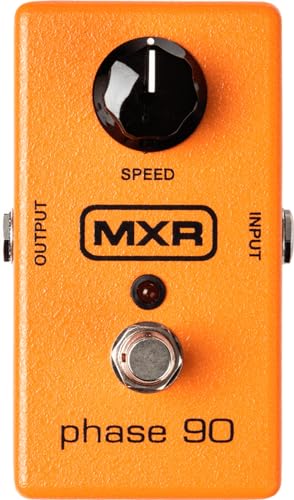
- 9V Batteries Required, best with Polaroid 9V Batteries.
- Rich, warm analog tone
The MXR Phase 90 is the king of simplicity. With just one knob for “Speed,” it offers a classic “whoosh” that has defined rock guitar for decades. Many players use a Phase 90 to approximate a rotary speaker because of its rhythmic sweep. Compared to the Neo Instruments Ventilator II Rotary Speaker Simulator Pedal, the Phase 90 is much more of a “one-trick pony.” It doesn’t have the dual-rotor complexity or the stereo spread of the Ventilator. If you just need a bit of movement for a solo, the MXR is a classic, but if you are an organ player or a guitar tone-purist, the Phase 90 will feel flat and “two-dimensional” in comparison to the rich textures of the Neo Instruments unit.
3. MXR Analog Chorus

- All-analog bucket-brigade circuitry
- Create classically lush, liquid textures
The MXR Analog Chorus offers more control than the BOSS CH-1, including High and Low-cut filters which allow you to warm up the tone—vaguely reminiscent of the Leslie’s darker character. It is an analog circuit, giving it a lush, organic feel that digital pedals often struggle to match. However, like the other alternatives, it is a “bucket-brigade” chorus, not a rotary simulator. It doesn’t have the Doppler effect or the independent horn/drum speeds. It is an amazing value for the price and perfect for those who need a high-quality “thickener” for their tone, but it simply cannot compete with the Neo Instruments Ventilator II Rotary Speaker Simulator Pedal when it comes to the complex 3D spatial modeling required for a true rotary experience.
Final Verdict: Is the Neo Instruments Ventilator II Worth the Investment?
After weeks of testing and comparing it against both its peers and its predecessors, we can confidently say that the Neo Instruments Ventilator II Rotary Speaker Simulator Pedal remains the undisputed heavyweight champion of rotary simulation. Its strengths lie in its uncompromising sonic authenticity, the rich musicality of its drive section, and the professional-grade control it offers the live performer. While it is expensive and has specific power requirements that may frustrate the unprepared, these are small prices to pay for a sound that is virtually indistinguishable from a real Leslie 122 cabinet. It transforms the playing experience, providing a level of inspiration that only the highest-quality gear can offer.
We recommend this pedal to any serious keyboard player who is tired of “thin” internal organ sims, and to any guitarist who wants the absolute best rotary sound available on the market today. It is a “buy once, cry once” investment that will likely stay on your pedalboard for a lifetime. If you are ready to stop hauling heavy cabinets and start enjoying a world-class tone that fits in your gig bag, we highly recommend that you check the latest price and secure yours today.
Last update on 2026-09-14 / Affiliate links / Images from Amazon Product Advertising API