
TC Electronic Stereo Chorus Flanger Pedal Review: The Definitive Verdict on a Legend Reborn
For decades, guitarists have been on a relentless pursuit of “that sound”—the shimmering, three-dimensional texture that defined the clean tones of the 1980s and the lush, atmospheric soundscapes of the 90s. We’ve all been there: you plug into a standard chorus pedal, and it sounds… fine. But it lacks that “expensive” studio sheen. It feels flat, or worse, it introduces a noticeable hiss that ruins your quiet passages. The struggle is finding a modulation source that provides depth without sacrificing the integrity of your core tone. This is exactly why the original Stereo Chorus Flanger (SCF) became a mythic piece of gear, and why we were so eager to get our hands on the TC Electronic Stereo Chorus Flanger Pedal SCF GOLD for this review. Failing to find the right modulation often leads to a cluttered signal chain where the “effect” masks the “music,” a complication no professional or serious hobbyist wants to deal with.

- Legendary analog modulation pedal with chorus, flange and pitch modes
- Original BBD circuit used by world renowned artists, reissued for true retro tone
What to Consider Before Buying an Electric Guitar Chorus Effects Pedal
An Electric Guitar Chorus Effects pedal is more than just an item; it’s a key solution for adding movement, width, and professional polish to your guitar signal. It solves the problem of “dry” or “thin” sounding guitars by doubling the signal and slightly modulating the pitch and timing of the second voice, mimicking the sound of multiple instruments playing in unison. The main benefit is a sense of space and “bloom” that makes your playing feel more immersive and professional.
The ideal customer for this type of product is someone facing the limitations of digital “one-size-fits-all” pedals and who craves the organic, warm response of analog Bucket Brigade Device (BBD) circuits. It’s perfect for studio musicians who require a zero-noise floor and live players who want a wide stereo spread. However, it might not be suitable for those who want extreme, “glitchy” modern modulation or those who have very little room on their pedalboard, as these units often carry a slightly larger footprint than mini-pedals. If you are a “set and forget” player, you will love the simplicity, but if you need 50 presets, you might consider a digital multi-effect instead.
Before investing, consider these crucial points in detail:
- Dimensions & Space: Consider how much “real estate” you have. While modern pedals are getting smaller, legendary circuits often require more space for their analog components. The TC Electronic Stereo Chorus Flanger Pedal is slightly wider than a standard compact pedal, so ensure you have the room for its dual-output glory.
- Headroom & Power: Not all chorus pedals handle high-output pickups or active electronics well. Look for a pedal with a high internal voltage or an adjustable input gain. This ensures your “clean” chorus doesn’t turn into unwanted “crunch” when you dig in with your pick.
- Signal-to-Noise Ratio: Many analog pedals are notoriously noisy, producing a “whooshing” sound even when you aren’t playing. A high-quality pedal should be virtually silent, maintaining the “high-fidelity” nature of your original signal without adding unwanted artifacts.
- Stereo Capability: If you run a dual-amp rig or record in stereo, a true stereo output is non-negotiable. Some pedals just “split” the signal, but the best ones create a unique spatial dimension by manipulating the phase between the left and right channels.
While the TC Electronic Stereo Chorus Flanger Pedal is an excellent choice, it’s always wise to see how it stacks up against the competition. For a broader look at all the top models, we highly recommend checking out our complete, in-depth guide:

- [Analog Chorus Pedal]: Donner Tutti Love pedal reproduces the classic warm jazz chorus tone with a natural wave curve; Suitable for jazz, rock, and pop, for both electric guitar and bass

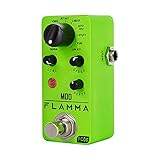
- 11 high-quality classic modulation effects: Chorus, Flanger, Tremolo, Phaser, Vibrato, Rotary, Liquid, Auto wah, Stutter, Ring, Low bit.

- Delivering different styles of chorus effects from Surreal, Deep tone to Fierce and Vintage Distortion tone
Unboxing the Legend: First Impressions of the TC Electronic Stereo Chorus Flanger Pedal SCF GOLD
When we first pulled the TC Electronic Stereo Chorus Flanger Pedal out of its box, the “Gold” moniker immediately made sense. It feels like a premium piece of kit. The original version was famous for its hardwired power cord—a nightmare for modern pedalboards—so we were thrilled to see the updated standard 9V DC socket. The chassis is robust, finished in a sleek matte black with gold lettering that screams “studio-grade.” It feels heavy enough to be durable but light enough (340g) not to weigh down your gig bag.
Initial setup was a breeze. Unlike many boutique pedals that require “magic” power supplies, this one plays well with standard power bricks. We noticed the knobs have a very smooth, damped feel, which allows for precise adjustments. Comparing it to the original, the “Gold” reissue feels more refined, and the inclusion of an adjustable input gain knob with a dedicated clip LED is a feature we wish every pedal had. You can see its full feature set and user reviews to understand just how much of an upgrade this is over the vintage units.
What We Like
- Exceptional signal-to-noise ratio; it is easily the quietest analog chorus we have ever tested.
- The built-in analog preamp with adjustable gain provides incredible headroom for any instrument.
- True BBD analog circuit delivers a lush, three-dimensional tone that digital pedals can’t replicate.
- Three distinct modes (Chorus, Flange, Pitch) offer incredible versatility in a single enclosure.
What We Didn’t Like
- The footprint is wider than a standard Boss pedal, which might require some board rearranging.
- The toggle switch for modes is manual, meaning you can’t switch between Chorus and Flange via a footswitch.
The Sound of a Thousand Records: A Deep Dive into Performance
The Purity of the BBD Circuit and High-Fidelity Preamp
In our testing, the first thing that struck us about the TC Electronic Stereo Chorus Flanger Pedal was the transparency. Most analog chorus pedals “color” your tone as soon as you kick them on, often rolling off the high end or adding a mid-hump. Not this one. Because of the high-fidelity analog preamp, our base tone remained perfectly intact. We found that by adjusting the Input Gain knob until the LED just flickered on the loudest peaks, we achieved a dynamic range that made the guitar feel “alive.” It didn’t feel like an effect “on top” of the guitar; it felt like the guitar itself was expanding. This is a rare quality in modulation pedals, and it’s why professional session players have kept the original on their boards for forty years. If you’re looking for that studio-clean, Eric Johnson-esque shimmer, this preamp is the secret sauce. To experience this level of clarity, you should check the latest price and availability for this modern classic.
Three Modes of Modulation: Chorus, Flanger, and Pitch
The versatility of having three distinct analog modes cannot be overstated. The “Chorus” mode is the star of the show—it’s wide, glassy, and never becomes “seasick” even at higher settings. But we were equally impressed by the “Pitch Modulation” mode. Unlike a standard vibrato that can feel a bit thin, the pitch mode here adds a subtle, “detuned” thickness that works wonders on clean arpeggios. It creates a sense of movement that is much more sophisticated than a simple wobble. The “Flanger” mode is also a standout. It’s not the “jet plane” style flange that takes over your sound; instead, it’s a musical, liquid-like sweep that excels at adding texture to driven tones. We spent hours dialing in a slow, deep flange that reminded us of late-70s prog-rock records. The fact that all three are driven by the same legendary BBD circuit ensures a cohesive, warm character across all settings.
Stereo Spread and the “No-Noise” Promise
We tested the TC Electronic Stereo Chorus Flanger Pedal in a true stereo configuration using two tube amps, and the results were, frankly, mind-blowing. In stereo, the pedal uses its dual outputs to create a spatial dimension that feels like it’s wrapping around your head. It’s not just a “wide” sound; it feels like the room itself has grown. One of the most significant claims TC Electronic makes is about the signal-to-noise ratio. In our studio environment, even with the gain pushed, the pedal was dead silent. There was no “clock noise” or LFO thumping—problems that plague even some of the most expensive boutique chorus pedals on the market today. This silence makes it an indispensable tool for recording, where every bit of hiss is amplified. This “black” background allows the subtle nuances of your playing to shine through the modulation, a feature that really sets it apart from its rivals.
Tactile Control and Pedalboard Integration
Using the pedal in a live setting revealed some interesting ergonomic choices. The “Speed,” “Width,” and “Intensity” knobs are highly interactive. We found that the “Width” control has a huge sweep, allowing for everything from a barely-perceptible thickening to a deep, dramatic pulse. While the pedal is indeed wider than a standard unit, the top-mounted jacks (on the gold version) and the updated power input make it much easier to fit into a modern signal chain than the vintage version. We did note that because it uses a toggle switch to change modes, you have to choose your sound before the song starts. You won’t be stomping from chorus to flange mid-solo. However, the sheer quality of each mode is so high that we often found ourselves leaving it on for entire sets, simply adjusting our touch to interact with the modulation. This is a “player’s pedal” through and through.
What Other Users Are Saying
The consensus among the guitar community is overwhelmingly positive, especially regarding the “Gold” version’s fidelity. One long-time user, who has owned the original since 1987, noted that this reissue “sounds just as good” as the vintage unit but with the added convenience of modern power. This sentiment is echoed by many who praise the “glassy” and “wide-ranging” nature of the chorus and flanger modes. We found one particularly insightful review from a professional who had tried over six different chorus pedals before crowning this one the winner, specifically citing the quiet operation as the deciding factor.
On the flip side, some users have pointed out that the flanger is “restrained” compared to more aggressive, boutique “jet-engine” flangers. Another user mentioned that while the chorus is lush, it requires manual tweaking to switch between effects, making it less “switchable on the fly” than having separate pedals. We agree with this; if you need to go from a radical flange to a subtle chorus in one second, you might find the single-footswitch design limiting. However, for most players, the trade-off for such high-quality analog tone is well worth it. As one user aptly put it, “At the current price, you’d be crazy not to” pick one up.
Comparing the TC Electronic Stereo Chorus Flanger Pedal to Top Alternatives
While we believe the SCF GOLD is a top-tier contender, it’s important to see how it compares to other industry standards to ensure you’re making the right choice for your specific rig.
1. BOSS CH-1 Compact Chorus Effects Pedal

- Classic BOSS chorus pedal with clean, brilliant sound for guitar and keyboards
- One of our most enduring and trusted chorus pedals since 1989
The Boss CH-1 is a ubiquitous choice for a reason. Unlike the TC Electronic Stereo Chorus Flanger Pedal, which is fully analog BBD, the modern CH-1 uses digital circuitry to provide a very “bright” and “cutting” chorus. It is much smaller, fitting perfectly on cramped boards, and is built like a tank. However, it lacks the warmth and the three-mode versatility of the TC Electronic unit. If you want a chorus that “cuts” through a heavy metal mix with high-end sparkle, the Boss is great. But if you want the “3D” depth and the high-fidelity preamp of a studio-grade piece of gear, the TC is in a different league entirely.
2. MXR Phase 90
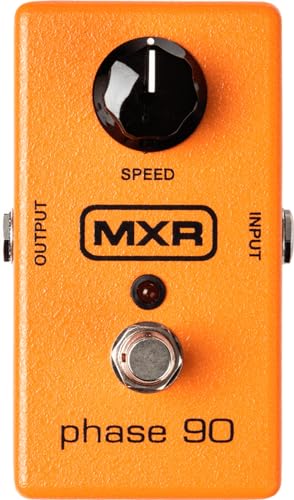
- 9V Batteries Required, best with Polaroid 9V Batteries.
- Rich, warm analog tone
The MXR Phase 90 is a different beast entirely, focusing on phasing rather than chorus or flanging. We include it here because many players looking for modulation often weigh “phase vs. chorus.” The Phase 90 is the ultimate in simplicity—one knob, one sound. It provides a chewy, script-like swirl that is iconic. However, it is mono-only and offers none of the “width” or “shimmer” associated with the TC Electronic Stereo Chorus Flanger Pedal. If you want a vintage “vibe,” get the MXR. If you want a sophisticated, stereo soundscape with adjustable gain and multiple modes, the TC is the superior choice.
3. MXR Analog Chorus

- All-analog bucket-brigade circuitry
- Create classically lush, liquid textures
The MXR Analog Chorus is a direct competitor in terms of technology, as it also uses an all-analog BBD circuit. It offers more granular control with High and Low cut filters, which is fantastic for tailoring the effect to your specific amp. It’s smaller than the TC pedal and very affordable. However, in our side-by-side comparison, it doesn’t quite match the sheer “spatial” wideness or the incredibly low noise floor of the TC Electronic unit. The MXR is a “standard” analog chorus, while the TC Electronic feels like a “luxury” studio processor in pedal form. For those who prioritize headroom and a quiet signal, the TC remains the gold standard.
The Final Verdict: Is the TC Electronic Stereo Chorus Flanger Pedal Worth It?
After weeks of testing, we can confidently say that the TC Electronic Stereo Chorus Flanger Pedal SCF GOLD is one of the finest modulation pedals ever made. It successfully bridges the gap between vintage analog soul and modern studio reliability. Its greatest strengths lie in its incredible headroom, its virtually non-existent noise floor, and the three-dimensional “bloom” it adds to any guitar signal. While it may be a bit wider than your average pedal and lacks digital presets, these are small prices to pay for a tone that has been a benchmark in the industry for forty years. Whether you are a bedroom enthusiast looking for that “pro” shimmer or a touring pro who needs a reliable, high-fidelity modulation source, this pedal delivers in spades.
In conclusion, if you value tonal purity and the unique, organic character of true Bucket Brigade modulation, this is a must-have addition to your setup. It transforms a simple guitar signal into a lush, cinematic experience. We highly recommend you click here to secure yours and elevate your tone today—your ears (and your audience) will thank you.
Last update on 2026-08-01 / Affiliate links / Images from Amazon Product Advertising API