
Zoom R20 16-Track Multi-Track Tabletop Recorder Review: The Ultimate Standalone Studio for Modern Creators
In the modern era of music production, we are often tethered to our computer screens. The endless cycle of software updates, latency issues, and the distracting lure of social media notifications can stifle the creative spark before a single note is recorded. We have all been there: you have a brilliant melody in your head, but by the time your DAW (Digital Audio Workstation) has finished loading and your plugins are scanned, the inspiration has vanished. This is exactly why the Zoom R20 16-Track Multi-Track Tabletop Recorder has become such a focal point for musicians, podcasters, and sound engineers alike. It promises a return to the tactile, focused world of hardware recording without sacrificing the visual editing benefits we’ve grown accustomed to in the digital age. Solving the “computer fatigue” problem is crucial for any artist looking to capture authentic performances in the moment, and failing to find a streamlined workflow often results in unfinished demos and creative burnout.
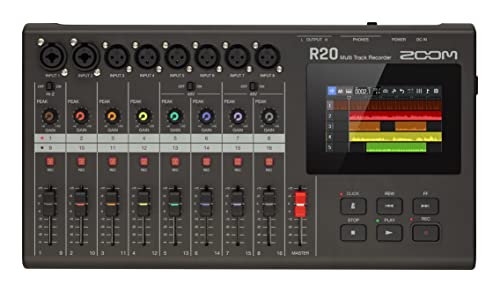
- RECORD WITHOUT A COMPUTER – DAW-style touchscreen interface lets you record, edit, and mix directly on the device with an intuitive, hands-on workflow
- CAPTURE FULL PROJECTS WITH MULTI-TRACK RECORDING – Record up to 16 tracks (8 simultaneously) with multiple XLR and combo inputs, perfect for music production and demos

What to Consider Before Buying a Digital Multitrack Recorder
A Digital Multitrack Recorder is more than just an item; it’s a key solution for capturing high-fidelity audio without the complexities of a PC-based setup. For many of us, these devices serve as the “brain” of a home studio or a portable rig for capturing rehearsals. Unlike simple field recorders, a tabletop unit like the Zoom R20 16-Track Multi-Track Tabletop Recorder allows for overdubbing, mixing, and even mastering within a single box. When you see its full feature set and user reviews, you realize that the goal is to bridge the gap between old-school “Portastudios” and modern software-driven production.
The ideal customer for this type of product is someone facing technical hurdles with software or a musician who wants a dedicated, “always-ready” recording station. It is perfect for bands needing to track live sessions, solo artists who want to build songs layer by layer, and podcasters who require multiple XLR inputs. However, it might not be suitable for those who require hundreds of virtual instruments or deep, surgical MIDI editing that only a high-end PC can provide. In those cases, a simple audio interface might be a better alternative.
Before investing, consider these crucial points in detail:
- Dimensions & Space: Consider where this device will live. Tabletop recorders vary from pocket-sized to large console-style units. The Zoom R20 16-Track Multi-Track Tabletop Recorder strikes a balance, being large enough for comfortable tactile control but small enough to fit in a backpack for remote sessions.
- Capacity & Performance: Look at the “Simultaneous Recording” vs. “Playback” tracks. While a device may boast 16 tracks, you need to know how many inputs you can record at once. For a full drum kit or a live band, having at least 8 simultaneous inputs is the industry standard for professional results.
- Materials & Durability: Since these devices are often moved between studios and practice rooms, the build quality matters. High-quality plastic or metal chassis, reinforced XLR jacks, and a responsive, scratch-resistant touchscreen are features that ensure your investment lasts for years of heavy use.
- Ease of Use & Maintenance: The learning curve is the most significant factor. If the interface is too menu-heavy, you won’t use it. Look for devices that offer “one-touch” recording and intuitive navigation, as this ensures the technology gets out of the way of your creativity.
While the Zoom R20 16-Track Multi-Track Tabletop Recorder is an excellent choice, it’s always wise to see how it stacks up against the competition. For a broader look at all the top models, we highly recommend checking out our complete, in-depth guide:
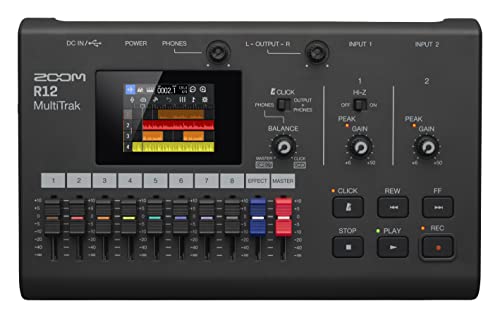
- EIGHT TRACKS WITH A TOUCHSCREEN – Records up to 8 tracks with two XLR/TRS inputs, a full-color LCD touchscreen, and DAW-style editing tools for cutting, copying, looping, and mixing without a...

- CAPTURE BIGGER PROJECTS WITH CONFIDENCE – Record music, interviews, podcasts, video audio, and live performances with a 4-track recorder that helps you capture more of the moment without worrying...
- RECORD WITHOUT A COMPUTER – DAW-style touchscreen interface lets you record, edit, and mix directly on the device with an intuitive, hands-on workflow
First Impressions: Unboxing the Zoom R20 16-Track Multi-Track Tabletop Recorder
When we first pulled the Zoom R20 16-Track Multi-Track Tabletop Recorder out of the box, the first thing that struck us was the 4.3-inch color touchscreen. In a world of monochrome LCDs and tiny buttons, this feels like a massive leap forward. The unit feels lightweight at under 2kg, yet it doesn’t feel “cheap.” The color-coded faders and gain knobs correspond directly to the tracks on the screen, which is a brilliant design choice that makes navigation instantaneous. You can check the latest price and availability to see why this has become a favorite for those transitioning away from purely software-based setups. Comparing it to previous Zoom R-series models, the R20 feels significantly more modern, ditching the clunky menu-diving of the past for a smartphone-like experience that feels natural to anyone born in the last three decades.
What We Like
- The 4.3″ color touchscreen makes editing audio as easy as using a tablet.
- 6 XLR inputs plus 2 combo inputs allow for recording a full band simultaneously.
- The internal synth and drum loops provide a complete “studio-in-a-box” experience.
- Color-coded hardware faders provide immediate visual feedback during a mix.
What We Didn’t Like
- The plastic housing, while lightweight, requires a dedicated gig bag for safe transport.
- Limited to 44.1 kHz sample rate, which might be a drawback for high-end cinematic sound design.
Deep Dive: Putting the Zoom R20 16-Track Multi-Track Tabletop Recorder to the Test
The Touchscreen Workflow: A DAW Without the PC
The standout feature of the Zoom R20 16-Track Multi-Track Tabletop Recorder is, without question, the touchscreen interface. We found that the ability to drag, drop, swipe, and pinch to zoom into audio waveforms completely changes the standalone recording experience. In the past, editing on a hardware recorder was a nightmare of clicking “Enter” and “Exit” buttons a hundred times just to trim a clip. On the R20, it feels exactly like using an iPad. We were able to move regions of audio around, cut out mistakes, and even loop sections with just a few finger gestures. This is a feature that really sets it apart from its predecessors. We also found that the visual representation of the mix—with the color-coded tracks—made it much harder to get lost in a complex 16-track arrangement. During our testing, the screen remained responsive even when we were working quickly, and the brightness was more than sufficient for indoor studio use.
Input Versatility and Preamp Performance
When it comes to actual recording, the Zoom R20 16-Track Multi-Track Tabletop Recorder provides an impressive array of connectivity options. With six dedicated XLR inputs and two combo jacks (XLR/TRS), we were able to mic up a drum kit with four mics while still having room for two guitars and a bass. Input 1 even features a Hi-Z switch, which we used to plug an electric guitar directly into the unit. The preamps are remarkably clean; we found they provided plenty of gain for our dynamic microphones without introducing the hiss that often plagues budget-friendly recorders. While it doesn’t offer the 96kHz resolution found in some high-end field recorders, the 44.1kHz/24-bit audio is more than enough for professional-quality demos and albums. The inclusion of phantom power on inputs 5-8 is a thoughtful touch, allowing us to use high-quality condenser mics for overheads or vocals. We found the overall sonic character to be transparent, providing a “blank canvas” that responds well to the onboard EQ and compression.
Creative Tools: Synths, Drums, and Effects
One aspect that surprised us during our evaluation was the depth of the internal sound engine. The Zoom R20 16-Track Multi-Track Tabletop Recorder isn’t just a recorder; it’s a creative workstation. It includes a built-in synthesizer with 18 different sounds that can be played via a connected MIDI keyboard through the USB-C port. We found the synth sounds to be punchy and usable, ranging from classic pads to lead sounds that can add texture to a track. Furthermore, the 150 built-in rhythm patterns are a godsend for solo songwriters. Instead of playing to a boring click track, we were able to dial in a realistic drum groove to keep the energy up during recording. When you explore the onboard effects suite, you’ll find high-quality compression, EQ, and even guitar amp modeling from Zoom’s Guitar Lab software. Having these tools available at the tracking stage meant we could get a “vibe” going immediately, rather than waiting until we exported the tracks to a computer.
Integration and Exporting: The Hybrid Advantage
While the R20 excels as a standalone unit, Zoom hasn’t ignored the fact that most people will eventually want to move their files to a DAW. We tested the Zoom R20 16-Track Multi-Track Tabletop Recorder as an 8-in/4-out USB audio interface, and it performed flawlessly on both macOS and Windows. This hybrid functionality is a huge benefit; you can record your band live in the rehearsal room onto an SD card, then take the unit home, plug it into your computer, and use it as an interface to record final vocals or mix in Logic or Pro Tools. Additionally, the unit can function as a DAW control surface. We found it incredibly satisfying to use the physical faders on the R20 to control the mixers inside our software. This flexibility makes it a versatile tool that grows with your needs. The file management system is also straightforward; tracks are saved as standard WAV files, making the transfer process to any external device a breeze.
What Other Users Are Saying
The general sentiment surrounding the Zoom R20 16-Track Multi-Track Tabletop Recorder is overwhelmingly positive, particularly among musicians who prioritize workflow. One user noted that it is “excellent for creating on the fly,” highlighting that the touchscreen navigation is simply “genius.” This aligns perfectly with our experience; the interface removes the technical barriers that often stall the creative process. Many users also praised the inclusion of the synth and drum loops, noting that it allows them to build full arrangements without ever needing to touch a computer mouse.
On the other hand, some experienced users have pointed out that while the R20 is a powerhouse for creation, it “does not replace software in certain aspects,” such as deep spectral editing or high-track-count mixing. Some feedback also mentioned that they wished it had more than two combo inputs, as having only two 1/4″ inputs limits how many direct instruments (like keyboards or pedals) can be plugged in without an adapter. However, the consensus is that for the price and the form factor, the Zoom R20 16-Track Multi-Track Tabletop Recorder offers an unparalleled balance of features and ease of use.
Comparing the Zoom R20 16-Track Multi-Track Tabletop Recorder to Top Alternatives
1. Zoom L-8 Digital Podcast Mixer/Recorder

- EIGHT CHANNELS FOR BANDS AND PODCASTERS – Captures 12 tracks simultaneously at 24-bit/96kHz directly to SD card, delivering professional-quality audio for podcasts, live performances, and studio...
- SIX PREAMPS WITH -121DBU NOISE FLOOR – Features a -121dBu noise floor with up to +54dB of gain, 3-band EQ, and onboard effects on every channel for clean, versatile signal handling across your...
The Zoom L-8 is a fantastic alternative for those whose primary focus is podcasting rather than complex music production. While the R20 focuses on the touchscreen “DAW-style” workflow, the L-8 is built like a traditional mixer. It features sound pads for triggering jingles and effects, as well as easy phone-in capabilities for interviews. If you are a content creator who needs to mix live and doesn’t need the waveform editing of a touchscreen, the L-8 is a more specialized tool. However, for musicians, the R20’s editing capabilities and synth sounds make it the superior choice.
2. Tascam DP-24SD 24-Track Digital Multi-Track Audio Recorder
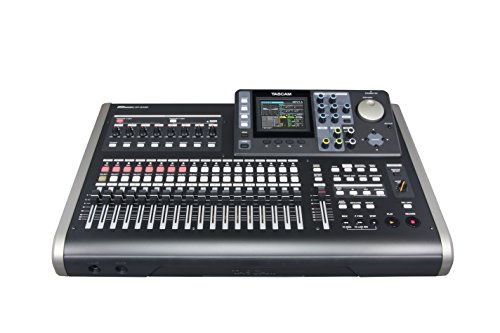
- Item Package Dimension: 23.97L x 17.49W x 7.49H inches
- Item Package Weight - 15.74 Pounds
The Tascam DP-24SD is the “old school” heavyweight in this category. It offers more total tracks (24) and more physical knobs and buttons for those who dislike touchscreens. We found the Tascam to be a bit more rugged for permanent studio installations, but it feels significantly more dated in its navigation. It lacks the modern USB-C connectivity and the synth/drum features of the Zoom. If you need the maximum number of tracks for a large ensemble and prefer a traditional hardware feel, the Tascam is a solid bet, but the R20 is far more intuitive for the modern user.
3. Zoom H8 Digital Multitrack Recorder

- ONE RECORDER THAT ADAPTS TO YOUR WORKFLOW – The Zoom H8 is built for creators who switch between setups, with dedicated modes for field recording, music, and multi-person recording.
- TEN TRACKS FROM FOUR XLR INPUTS AND TWO COMBOS – Capture up to 10 individual tracks plus a stereo mix using 4 XLR inputs and 2 combo jacks for microphones, instruments, and more.
The Zoom H8 is the ultimate choice for portability. While the Zoom R20 16-Track Multi-Track Tabletop Recorder is designed to sit on a desk, the H8 is a handheld field recorder that can be expanded with different capsules. It uses an “app-based” touchscreen system that is quite clever. However, the H8 lacks the long-throw physical faders that make mixing on the R20 such a joy. If you are a filmmaker or a field recordist who occasionally records music, the H8 is great. But if your goal is to actually produce and mix songs, the R20’s tabletop design is much more ergonomic and functional.
The Final Verdict: Is the Zoom R20 16-Track Multi-Track Tabletop Recorder Right for You?
After weeks of testing, we can confidently say that the Zoom R20 16-Track Multi-Track Tabletop Recorder is one of the most refreshing pieces of recording gear to hit the market in years. It successfully bridges the gap between the tactile satisfaction of hardware and the visual ease of a DAW. Its strengths lie in its incredible touchscreen interface, clean preamps, and the wealth of internal creative tools that make songwriting a pleasure rather than a chore. While it may lack the high-end sample rates of boutique field recorders, its utility as a standalone studio and a USB interface makes it a “Swiss Army Knife” for any audio creator.
We recommend the R20 to any musician who feels slowed down by their computer or any band looking for a simple, high-quality way to capture their sound. It is a robust, intuitive, and inspiring machine that genuinely puts the focus back on the music. If you’re ready to break free from the screen and streamline your creative process, we highly suggest you take a closer look at the Zoom R20 today and see how it can transform your studio workflow.
Last update on 2026-09-15 / Affiliate links / Images from Amazon Product Advertising API