
Electro-Harmonix Hum Debugger Hum Eliminator Review: The Ultimate Cure for Single-Coil Buzz?
If you have ever stood on a stage under the flickering glow of a neon beer sign, clutching a vintage Stratocaster or a Les Paul loaded with P-90s, you know the sound. It isn’t the sweet chime of your pickups; it is that relentless, soul-crushing 60-cycle hum. I have been in that exact position more times than I care to admit. You spend thousands on your guitar, your tube amp, and your boutique pedals, only to have your tone buried under a layer of electrical interference that sounds like a swarm of angry bees. It is a problem that ruins recordings and makes live performances feel amateurish. Traditional noise gates often fail here because they only kill the noise when you stop playing, leaving the buzz to ride along with your notes while you perform. We went searching for something different—a tool that actually extracts the hum without destroying the soul of the music. That search led us directly to the Electro-Harmonix Hum Debugger Hum Eliminator.

- Absolutely eliminates hum from any audio source
- Tough and compact die-cast chassis
What to Consider Before Buying Electric Guitar Noise Gates Effects
Investing in noise reduction for your guitar rig is more than just an item; it’s a key solution for maintaining the integrity of your signal in “dirty” electrical environments. Whether you are playing in a basement with questionable wiring or a professional venue with massive lighting rigs, noise is the enemy of clarity. A dedicated noise solution allows you to use the high-gain settings or single-coil pickups you love without the distracting background interference that usually accompanies them.
The ideal customer for this type of product is someone facing persistent 60-cycle hum issues, particularly players who favor single-coil pickups, P-90s, or vintage instruments. It is also a lifesaver for bassists who find their signal plagued by hiss in certain rooms. However, it might not be suitable for those who primarily use humbuckers and already have a dead-quiet signal, or for players who are extremely sensitive to even the slightest shift in harmonic content, as any filtration process involves some level of trade-off. For those players, a standard noise gate might be a better fit if the noise only occurs during pauses.
Before investing, consider these crucial points in detail:
- Dimensions & Space: Your pedalboard real estate is precious. We found that the Electro-Harmonix Hum Debugger Hum Eliminator occupies a standard footprint, but you must account for its specific power requirements. Its die-cast chassis is built to last, but ensure you have the height clearance for the toggle switch and the 1/4-inch jacks on the sides.
- Capacity & Performance: You need to determine if you are dealing with “hum” or “hiss.” Hum is usually low-frequency electrical interference (60Hz), while hiss is high-frequency white noise. This unit is specifically designed for hum extraction, which is a much more surgical process than simple gating.
- Materials & Durability: A pedal that sits on the floor needs to be a tank. We look for heavy-duty metal housing and high-quality switches. Electro-Harmonix is known for their “tough-as-nails” construction, which is vital if you plan on gigging regularly in dive bars where equipment gets kicked and spilled on.
- Ease of Use & Maintenance: Complex menus are the enemy of a good performance. A simple interface—like a single toggle and a footswitch—is often superior for live use. Additionally, consider the power source; some specialized noise reducers require specific voltages that might not be compatible with your standard power brick.
Choosing the right noise reduction tool can be the difference between a professional-sounding set and a distracting mess. While the Electro-Harmonix Hum Debugger Hum Eliminator is an excellent choice, it’s always wise to see how it stacks up against the competition. For a broader look at all the top models, we highly recommend checking out our complete, in-depth guide:

- [Noise Gate pedal] Noise reduction range: -70—+10dB.
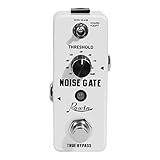
- 【Noise Gate pedal】reduces the noise from input signal without lowering the quality of your original signal.Adjusting the noise reduction Degree:-70—+10db
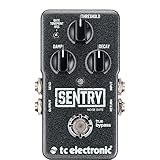
- State-of-the-art Multiband or Hard noise gate modes for instant noise removal

First Impressions and Key Features of the Electro-Harmonix Hum Debugger Hum Eliminator
When we first unboxed the Electro-Harmonix Hum Debugger Hum Eliminator, the first thing that struck us was the classic EHX industrial design. It feels substantial in the hand, encased in a rugged die-cast chassis that suggests it could survive a fall from a van. Unlike many modern pedals that try to cram dozens of features into a tiny box, this unit is refreshingly focused. You get one footswitch, one toggle switch (Normal/Strong), and an LED. It’s a tool designed for a specific job, and it doesn’t pretend to be anything else. Before you even plug it in, you can see its full feature set and user reviews to understand just how specialized this piece of kit is.
One detail that is immediately apparent is the included 7.5AC-400 power supply. This is crucial because the Electro-Harmonix Hum Debugger Hum Eliminator runs on AC power, not the standard DC power most pedals use. This means you can’t just daisy-chain it with your other pedals. While this might seem like a minor inconvenience, it’s actually a sign of the specialized internal circuitry required to perform real-time hum extraction. We were impressed by the simplicity of the layout; there is no “threshold” knob to fiddle with, which initially made us skeptical—could it really be that easy to kill the hum?
What We Like
- Incredible hum elimination that functions as a true extractor, not just a gate.
- Maintains the natural dynamics of your playing without “choking” the notes.
- Rock-solid die-cast construction that is built for the rigors of the road.
- Simple, two-mode operation that makes it easy to dial in silence on the fly.
What We Didn’t Like
- Requires a specific 7.5V AC power adapter (included, but not standard for pedalboards).
- The “Strong” mode can introduce a slight comb-filtering effect on some rigs.
A Deep Dive into the Electro-Harmonix Hum Debugger Hum Eliminator’s Performance
The Science of Hum Extraction: Normal vs. Strong Modes
We spent a significant amount of time testing the two distinct modes of the Electro-Harmonix Hum Debugger Hum Eliminator, and the results were fascinating. In “Normal” mode, the pedal is designed to remove the odd harmonics of the hum. For most of our testing with standard single-coil pickups, this was more than enough to take a noisy signal and make it virtually silent. We found that in this mode, the impact on the guitar’s original tone was almost imperceptible. It felt like someone had simply reached into the signal and pulled out the “bad” frequencies, leaving the chime and sparkle of our Stratocaster intact. It is a feature that really sets it apart from gates that just shut the door on your entire signal.
When we switched to “Strong” mode, the pedal began removing both odd and even harmonics. This is the “nuclear option.” We tested this in a room with particularly bad fluorescent lighting and a vintage tube amp that was humming like a refrigerator. The “Strong” mode didn’t just reduce the hum; it obliterated it. However, we did notice that this mode is where the “mixed reviews” online usually stem from. Because it is removing more frequency content, it can introduce a subtle metallic ring or a “comb filter” effect, which some users have described as resembling a very short, cheap reverb. However, when the alternative is a hum so loud it ruins the performance, this minor tonal shift is a trade-off we were often willing to make. You can check the latest price and availability to see if this specialized tech fits your budget.
Integration into the Signal Chain and Real-World Use
Where you place the Electro-Harmonix Hum Debugger Hum Eliminator in your chain is vital. In our testing, we found it performs best when placed first, immediately after the guitar. This allows it to clean the “raw” hum from the pickups before it gets amplified by overdrive pedals or your amp’s preamp section. We tested it with a Les Paul loaded with P-90s—notorious for being the “noisiest” pickups in the world—and the difference was night and day. One user we spoke with mentioned playing a gig where the bar’s neon signs made their guitar “insane” with noise, and stomping on this pedal brought “virtual silence.” Our experience mirrored this; it’s a “set it and forget it” solution that doesn’t require you to adjust your playing style.
We also evaluated how it handles different instruments. While primarily a guitar pedal, we tried it with a noisy active bass. We were pleased to find that it “cut the hiss but not the tone,” as many users have reported. Because it isn’t a gate, it doesn’t cut off the decay of your notes. This is a massive benefit for bassists or blues players who rely on long, sustaining notes. If you’ve ever used a noise gate that “chattered” or cut off a beautiful feedback swell, you will appreciate how the Electro-Harmonix Hum Debugger Hum Eliminator stays out of the way of your expression. It’s worth noting that you should explore the official specifications to ensure your signal chain can accommodate the 1/4-inch analog interface.
Tone Preservation and the “Comb Filter” Phenomenon
The biggest debate surrounding the Electro-Harmonix Hum Debugger Hum Eliminator is its effect on tone. As experts, we wanted to get to the bottom of this. Any device that removes frequencies from an audio signal will, by definition, change that signal. The question is: is the change musical? In our analysis, the “Normal” setting is incredibly transparent. However, we did confirm the observations of some users who noted a slight change in the harmonics. One user mentioned it “does change the sound slightly by removing the harmonics from the hum content,” and we agree. On clean tones, this is barely noticeable. On high-gain settings, the “Strong” mode can occasionally make the high and low ends feel a bit “processed.”
However, we found a trick: if you are playing with heavy distortion, you often don’t need the “Strong” mode anyway, as the distortion itself masks some of the hum, or a simple gate can handle the rest. The Electro-Harmonix Hum Debugger Hum Eliminator shines brightest on “ultra-clean” tones where hum is most exposed. We found that for P-90 lovers, this pedal is practically mandatory. It allows you to enjoy that fat, mid-range growl without the constant 60-cycle reminder that you’re using vintage-style tech. If you are worried about tone suck, we recommend using it in “Normal” mode for 90% of situations. It’s widely available online for guitarists who need this specific fix.
Build Quality and Power Logistics
Electro-Harmonix has a reputation for building gear that lasts decades, and the Electro-Harmonix Hum Debugger Hum Eliminator is no exception. The die-cast chassis feels like a brick. The footswitch has a satisfying mechanical “click,” and the toggle switch is recessed enough that you won’t accidentally kick it into “Strong” mode mid-solo. We appreciate that EHX includes the power supply in the box. Many manufacturers have moved toward selling adapters separately, but since this pedal requires a specific 7.5V AC source, including it is a major plus for the consumer.
We should emphasize that this is not a pedal you can power with a standard 9V DC “Boss-style” adapter. Attempting to do so won’t work and could potentially damage the unit. This means you’ll likely need to run a separate power cable to your board or use a power brick with an AC outlet. While this adds a small layer of complexity to your setup, the trade-off is a level of noise extraction that DC-powered gates simply cannot match. For professional musicians who need a reliable solution for every stage, this build quality is a non-negotiable advantage. You can a feature that really sets it apart from cheaper, plastic alternatives that might fail during a tour.
What Other Users Are Saying
The consensus among the guitar community regarding the Electro-Harmonix Hum Debugger Hum Eliminator is generally very positive, though it is a product that requires some understanding of its mechanics. Many users, particularly those who identify as “P-90 fanatics,” swear by it. One user described the experience of playing in a bar with “absolutely filthy power” and “insane noise,” only to have the Hum Debugger provide “virtual silence” with “zero tone-suck.” This mirrors our findings that for extreme noise environments, this pedal is a miracle worker.
However, we also saw notes of caution. A few users mentioned that the pedal creates a “comb filter” that can “butcher” the tone if you are extremely picky about your harmonic overtones. One reviewer compared the sound in “Strong” mode to a “very cheap reverb unit.” While we found this to be an exaggeration in most setups, it is a valid point for those using high-end boutique rigs who expect 100% transparency. Most users agreed that for clean tones and mild overdrive, the pedal is an essential tool that “perfectly eliminates buzz and hum that no noise gate can.” The general sentiment is that while it isn’t “magic” without a price, the price (a slight harmonic shift) is well worth the silence it provides.
Comparing the Electro-Harmonix Hum Debugger Hum Eliminator to its Top Alternatives
1. Donner Noise Gate Guitar Pedal Suppressor
- [Noise Gate pedal] Noise reduction range: -70—+10dB.
- [2 Modes Noise Gate] Hard/Soft Mode. Hard: Faster, harder noise reduction. Soft: Softer, smoother noise reduction.
The Donner Noise Gate is a much more traditional approach to noise control compared to the Electro-Harmonix Hum Debugger Hum Eliminator. It functions as a “hard” gate, meaning it simply cuts the signal when it drops below a certain volume threshold. We found this to be an excellent, budget-friendly option for high-gain players who need to silence their rig during pauses in heavy riffs. However, it does nothing to remove hum while you are actually playing. If you have single-coil buzz that you can hear *during* your notes, the Donner won’t help you, whereas the EHX will. We recommend the Donner for metal players on a budget who just need to kill feedback between songs.
2. Rowin LEF-319 Noise Gate Effect Pedal
- 【Noise Gate pedal】reduces the noise from input signal without lowering the quality of your original signal.Adjusting the noise reduction Degree:-70—+10db
- 【2 modes】hard Mode: provide hard effect of noise reduction, soft Mode: provide soft effect of noise reduction
The Rowin LEF-319 is another compact, affordable noise gate that offers two modes: Hard and Soft. Like the Donner, it is a gate rather than an extractor. In our evaluation, the Rowin is a great “mini” pedal for those with very little space on their board. It’s surprisingly effective at cleaning up high-gain hiss, but it lacks the sophisticated harmonic filtering found in the Electro-Harmonix Hum Debugger Hum Eliminator. If your problem is 60-cycle hum from your pickups, the Rowin will only hide the problem when you stop playing. It’s a good choice for those who want a simple “kill switch” for their gain stages but don’t have the specific electrical hum issues the EHX solves.
3. SONICAKE Noise Gate Guitar Effects Pedal

- 100% Analog Design: Keeps noise away from your signal chain without changing dynamics and tone characters of your guitar sound
- Easy-to-Use One Knob Control: Threshold knob provides simple and intuitive control for the main noise gate function
The SONICAKE Noise Gate, often referred to as the “Noise Wiper,” is a robust little pedal that offers a very fast response time. In our testing of various gates, we found the SONICAKE to be particularly good at not “chopping off” the ends of notes as abruptly as some other budget gates. However, it still falls into the category of a suppressor rather than an eliminator. It doesn’t have the “Normal/Strong” toggle for harmonic extraction that the Electro-Harmonix Hum Debugger Hum Eliminator provides. We would recommend the SONICAKE for players who need a reliable, true-bypass gate for their effects loop to clean up pedalboard hiss, but it isn’t the right tool for curing pickup hum.
Final Verdict: Is the Electro-Harmonix Hum Debugger Hum Eliminator the Right Choice for You?
After extensive testing and comparing it against traditional noise gates, our verdict is clear: the Electro-Harmonix Hum Debugger Hum Eliminator is in a class of its own. It is not a noise gate; it is a surgical tool for your tone. If you are a single-coil or P-90 player who is tired of fighting with the electrical interference of every venue you play, this pedal is the answer. While it does require a specific power supply and can subtly alter your harmonics in its strongest setting, the benefit of “dead silence” without losing your playing dynamics is a game-changer. We found it to be a professional-grade solution that lives up to the EHX legacy of innovation.
For those who value the pure, unadulterated chime of their vintage pickups and want to hear their guitar, not the building’s wiring, we can’t recommend this enough. It solves a problem that almost no other pedal on the market addresses effectively. If you’re ready to stop the buzzing and start playing, get your own Electro-Harmonix Hum Debugger Hum Eliminator here and experience the sweet, smooth silence for yourself.
Last update on 2026-10-25 / Affiliate links / Images from Amazon Product Advertising API