
Behringer 173 Quad Gate Module Review: Is This Vintage Utility Worth the Rack Space?
When building or expanding a modular synth rig, it is incredibly easy to get caught up in buying flashy complex oscillators, lush analog filters, and feature-packed generative sequencers. However, every synth enthusiast eventually hits a wall: the dreaded routing bottleneck. You want to send a clock signal to three different envelope generators simultaneously, split an LFO across multiple modulation destinations, or dynamically route audio signals on the fly using gates. Without dedicated signal switching and multiplication utility modules, your patch quickly turns into an inflexible, tangled mess.
When we encountered these exact patch routing constraints in our setup, we integrated the Behringer 173 Quad Gate Module to see if this recreation of a classic vintage utility could resolve our routing headaches. Integrating utility modules is critical for maintaining clean signal flow and unlocking generative flexibility. Without adequate signal splitting and switching capabilities, you limit your system’s sonic potential and cripple complex live performances. In this review, we dive deep into how this module performs under real-world studio conditions.

- Amazing quad Signal Gate/Multiple module from the '80s
- Authentic reproduction of original "System 100M*" circuitry
What to Consider Before Adding a Utility Sound Module to Your Setup
A sound module or utility routing unit is more than just an accessory; it is a fundamental architectural solution for modular audio synthesis, live sound rigs, custom sound effects generators, and specialized audio installations. Adding a multi-functional utility module ensures your signals go exactly where they are needed without requiring constant re-patching or risking signal degradation during complex sound design sessions.
The ideal user for this type of utility module is an electronic musician, sound designer, or Eurorack modular synth builder who requires high channel counts for modulation distribution and dynamic audio switching. It is exceptionally well suited for those building retro-inspired analog rigs or needing dedicated gate controls for generative audio patches. On the other hand, it might not be suitable for producers with ultra-compact travel cases where rack space is at a premium, or artists who exclusively require active, precision-buffered multiples for perfect pitch tracking across multiple oscillators.
Before investing, consider these crucial points in detail:
- Dimensions & Space: At 16 HP in width, a utility module must offer sufficient functionality to justify the physical real estate it consumes inside your rack case. Compact setups may struggle to accommodate wider utility panels, whereas larger racks benefit significantly from spacious jack spacing that makes hands-on tweaking during live performances fast and comfortable.
- Capacity & Signal Performance: Understanding whether signal splitting channels are active (buffered) or passive is critical. Passive multiples work fantastically for audio, gates, triggers, and control voltages (CV) where minor voltage drops do not ruin the sound, but they will alter the pitch calibration if split across multiple 1V/Octave tracking oscillators.
- Materials & Build Quality: Solid metal front panels, firm jack sockets, and durable internal switching components are vital. Modules that undergo frequent patching and unpatching must withstand mechanical stress over years of regular studio use without developing loose connections or noisy audio bleeding.
- Ease of Use & Maintenance: High visual clarity is imperative during complex patching sessions. Clear panel labeling, intuitive input/output layouts, and dedicated visual status indicators (such as status LEDs for gate signals) allow you to quickly troubleshoot patches and understand signal paths at a glance.
Carefully weighing these factors will prevent routing bottlenecks and ensure that your chosen hardware seamlessly integrates into your existing audio ecosystem.
While the Behringer 173 Quad Gate Module is an excellent choice, it’s always wise to see how it stacks up against the competition. For a broader look at all the top models, we highly recommend checking out our complete, in-depth guide:

- 8M MEMORY CAPACITY: Features 8 megabytes of storage space allowing you to record up to 10 minutes of personalized audio messages, music, or voice greetings for your DIY projects

- 16-Minute Recording Module :This 16-minute recording sound module is nice for personalizing greeting cards, music boxes, or other creative presents. Embed it in a greeting card to bring your wishes...
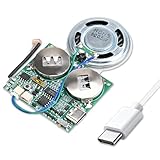
- 【DIY Greeting Card】DIY light sensor sound module is equipped with a 0.5W speaker and a 3.7V battery. The sound module is an ideal choice for mother's day and father's day DIY recordable greeting...
First Impressions and Key Features of the Behringer 173 Quad Gate Module
Unboxing the Behringer 173 Quad Gate Module reveals a unit that pays homage to classic 1980s System 100M synthesizer design aesthetics. The matte black metal panel with crisp white vintage typography instantly gives it an authoritative, retro look inside any standard Eurorack enclosure. Upon mounting the unit, we immediately noticed the generous spacing between jacks and control switches, which provides ample physical clearance for thick patch cables.
The module combines two distinct, highly functional utility tools into a single 16 HP faceplate: four independent signal gates with positive and negative trigger inputs, and six channels of four-socket parallel multiples. Unlike modern ultra-dense micro-modules that cram jacks tightly together, this unit prioritizes tactile playability and legibility, making it feel robust and straightforward right out of the box.
Key Benefits
- Authentic reproduction of vintage analog System 100M switching circuitry
- Four independent gates with clear LED visual feedback for active switching
- Six multi-channel groups featuring floating parallel connectors for extensive signal splitting
- Includes both positive (non-inverting) and negative (inverting) control trigger inputs
Drawbacks
- Takes up 16 HP of rack space, which may be large for compact cases
- Multiples behave passively and drop voltage when splitting 1V/Oct pitch CV
In-Depth Performance Analysis: Putting the Behringer 173 Quad Gate Module to the Test
Authentic System 100M Circuitry and Build Quality
In testing the build and circuit architecture of the Behringer 173 Quad Gate Module, we found that its design recreates the authentic character of vintage 1980s analog hardware. The module mounts cleanly into standard 3U Eurorack rails and includes standard ribbon power cables for straightforward installation. The 16 HP front panel is fabricated from sturdy metal, eliminating panel flex when inserting and removing tight patch cables.
The layout is logically divided: the top section houses six groups of 4-socket multiple arrays, while the lower portion features four signal switching gate channels. Every jack socket feels firmly soldered to the internal boards, offering clean insertion resistance without feel loose or cheap. For hardware inspired by vintage modular designs, having reliable, clean jack contact across all 24 multiple sockets and 16 gate jacks is essential for long-term studio dependability.
Evaluating the Quad Signal Gates and Dynamic Switching
The highlight of this module is undeniably its four independent signal gate channels. Each gate acts as a high-speed analog audio/signal switch. You feed an audio or modulation signal into the signal input, and it only passes through to the signal output when a control trigger or gate voltage is applied to the control inputs. What makes this section exceptionally versatile is the inclusion of dual control inputs for both positive (non-inverting) and negative (inverting) logic triggers.
During our testing, we utilized these gates to dynamically route secondary audio sources, chop continuous LFO waveforms, and alternate trigger patterns going into drum modules. Applying a high gate signal into the positive trigger jack turns the switch ON, letting your audio pass smoothly through without introduced pops or clicking. Conversely, patching into the negative trigger input causes an incoming trigger to turn the switch OFF, effectively acting as an active audio mute switch. The built-in status LEDs give immediate visual feedback on whether a gate is open or closed, which proved invaluable when troubleshooting complex patch states during dynamic studio sessions. If you want to see its full feature set and user reviews, the flexibility of these audio gates stands out as one of its strongest selling points.
Understanding the 6-Channel Multiples: Routing, Signal Flow, and Normaling
The top portion of the panel features six distinct multiple channels, each equipped with four parallel floating sockets. In modular synthesis, multiples are used to clone an incoming signal and distribute it to multiple places at once—for instance, sending one clock out to four different drum sequencers. We found that the patching configuration of these multiples offers clever internal signal flow behavior that synth designers will appreciate.
When operating these mults, we confirmed an important workflow detail that users should keep in mind: signal flow across adjacent rows relies on normaling configurations connected to the leftmost jacks. If you wish to split a single master clock or modulation trigger across multiple arrays (expanding beyond four outputs), your primary input source should always be plugged into the far-left jack of the row. This allows the internal connections to pass the signal sequentially down the chain. If you plug a source into middle jacks, the internal normaling breaks, and secondary channels will not receive the split signal. Once you master this signal-routing convention, splitting modulation across complex generative patches becomes second nature.
Pitch CV Limits, Voltage Drops, and Practical Rack Integration
To maximize the value of the Behringer 173 Quad Gate Module, it is critical to understand its performance limits regarding control voltage. The multiple channels inside this module function as passive parallel splits. While this means they do not require heavy internal amplification for basic operations, it also means that splitting precise 1V/Octave pitch voltages will result in subtle voltage drops.
When we patched a pitch sequence from a keyboard or step sequencer into one socket of a mult and sent it to three different VCOs simultaneously, the pitch of the receiving oscillators dropped slightly flat. Furthermore, every additional cable plugged into that mult row caused incremental voltage loss. Therefore, if your primary goal is to split tight 1V/Oct melodic sequence tracking across multiple oscillators without retuning, you will need active precision-buffered multiples instead. However, for splitting audio signals, LFOs, envelopes, gate triggers, and clock signals, the passive mults on this unit perform flawlessly without noticeable signal loss or audible degradation. You can check the latest price and availability to evaluate how this price-to-performance utility fits into your gear budget.
What Other Users Are Saying
Synthesizing feedback from synth enthusiasts and electronic music producers highlights a strong consensus regarding the practical value and performance realities of this module. Many users celebrate it as an essential utility piece that stays permanently patched in their main Eurorack systems. The combination of dynamic switched gates alongside extensive signal distribution options is frequently praised as an unbeatable value for the price point.
However, community feedback also highlights important operational nuances. Several users noted initial confusion regarding the layout of the multiple rows, emphasizing that you must patch your input source into the far-left jack to utilize linked outputs properly. Another common topic discussed by reviewers is the passive nature of the multiples; users correctly point out that attempting to split 1V/Oct pitch CV results in voltage drop across pitch-tracking oscillators. Despite this limitation, producers overwhelmingly agree that for triggers, clock distribution, audio switching, and modulation routing, the module offers exceptional utility that easily justifies its panel space.
Comparing the Behringer 173 Quad Gate Module to Alternative Sound & Audio Modules
While the Behringer 173 Quad Gate Module excels in modular synthesizer racks, different audio projects—such as prop building, custom sound effect playback, or personalized gift craft projects—require specialized standalone sound modules. Below is a comparison of alternative audio playback and recording modules designed for targeted audio applications.
1. EZSound 10 inch Extension Play Button
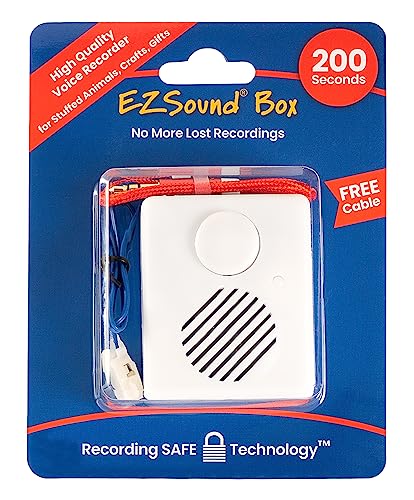
- ✅ [RECORDING SAFE TECHNOLOGY] Whether you are using our sound recorder as teddy bear voice recorder or as sound module for toys or for any other recording purpose, we know that your recordings are...
- Recordable Sound Box is ideal for adding sound effect to plush toys, stuffed animals, interactive school projects, photo frames, personalized gifts, kid activities, paints, hobbies, craft projects...
The EZSound 10 inch Extension Play Button is tailored specifically for custom audio craft projects, plush toys, and display exhibits requiring extended push-button access. Unlike Eurorack modules that require specialized 12V power rails and control voltage inputs, this self-contained audio playback box records up to 200 seconds of custom audio directly through an integrated 3.5mm audio port. It features an extended wire leading to a tactile play button, making it ideal for embedding inside props or display cases where the main sound chip must remain hidden. While it cannot route modulation or process dynamic audio gates like the Behringer utility module, it is an ideal choice for makers seeking direct, simple sound playback.
2. Talking Products Personalised Gift Module

- Ideal for creating your own talking gifts, cards and crafts. Perfect for adding sound effects to train sets, models, photo frames and Cosplay Accessories
- Download your own MP3 files via the USB socket. Add speech, music or sound effects
The Talking Products Personalised Gift Module offers a compact MP3 audio playback platform designed for lightweight integration into models, personalized gifts, or cosplay accessories. Featuring 4MB of onboard memory and a self-contained AAA battery box, this unit allows users to drag and drop custom high-fidelity MP3 sound files directly via USB. It operates via a direct push-button trigger, rendering it entirely standalone without needing complex rack hardware. While modular synthesis enthusiasts need patchable CV routing and gate switches found on utility synths, builders working on custom audio costumes or portable props will prefer this unit for its battery-powered simplicity and lightweight footprint.
3. XLW Voice Recorder Box

- 16-Minute Recording Module :This 16-minute recording sound module is nice for personalizing greeting cards, music boxes, or other creative presents. Embed it in a greeting card to bring your wishes...
- Download and Record and Delete Music :Long press the button for 3 seconds to start recording, and release the button to stop automatically. The maximum recording time is 16 minutes. Can download...
The XLW Voice Recorder Box is a budget-friendly, ultra-compact recordable sound module designed primarily for stuffed animals, personalized pillows, and basic audio novelties. It features a built-in microphone and simple top-mounted recording controls, allowing users to record and re-record custom voice messages on the fly without needing external computers or specialized patching gear. Compared to the professional audio signal switching and complex voltage handling of Eurorack modules, this small voice recorder box is built strictly for quick speech and sound effect playback in handheld craft applications.
Final Verdict: Should You Buy the Behringer 173 Quad Gate Module?
The Behringer 173 Quad Gate Module delivers an authentic recreation of classic vintage utility architecture at a price point that makes expanding a Eurorack system highly accessible. Its four independent gate switches provide dynamic control over audio routing, signal muting, and trigger gating, complete with intuitive LED visual feedback and dual positive/negative trigger logic inputs. Furthermore, the 24 patch points across six multiple channels offer immense flexibility for routing clocks, LFOs, and envelope triggers across complex patches.
While it consumes 16 HP of rack space and utilizes passive signal splitting on the multiple channels (which makes it unsuited for pitch CV splitting without external buffering), its ergonomic jack layout and reliable signal switching make it an indispensable workhorse for any modular synthesizer owner. If you want to eliminate patching bottlenecks and add vintage analog utility control to your setup, we highly recommend adding this module to your rack. Take your sound design flexibility to the next level and buy the Behringer 173 Quad Gate Module today.
Last update on 2026-10-19 / Affiliate links / Images from Amazon Product Advertising API